
In-depth article: Beyond visibility - Stories of change from the WIN awareness campaign in the Styrian Iron Road region
When the Verein Steirische Eisenstraße set out to raise awareness for women’s roles in industrial labour markets through the EU project WIN, the ambition went far beyond communication metrics. The goal was not simply to inform, but to resonate—to make stories visible, to spark conversations, and to create moments where women in the region could see themselves reflected in new possibilities.
Looking back, what stands out most is not a single activity, but the diversity of approaches that together created a rich and layered narrative across the region. From print media to public spaces, from cultural formats to informal gatherings, the campaign unfolded less like a linear programme and more like an ongoing dialogue with the community.
One of the most powerful elements was the role model campaign. Featuring women from industrial and technical fields in a widely read regional magazine and in social media, these portraits brought visibility to career paths that often remain hidden. Yet the real impact only became apparent through the reactions: readers reached out, shared articles, and expressed appreciation for finally seeing relatable examples of women succeeding in these sectors. The role models themselves described the experience as empowering, not only as recognition of their achievements but also as an opportunity to inspire others. What initially seemed like a classic media activity evolved into a platform for identification and pride.
Equally inspiring was the creativity competition that resulted in a travelling ambassador: a regional bus, designed by young people, now carrying the campaign’s message through towns and villages. Its presence in everyday life turned awareness into something tangible and visible. It was no longer confined to events or articles—it became part of daily routines, sparking curiosity and conversation in the most unexpected moments. This blending of youth engagement, creativity and public visibility proved to be a particularly effective way of anchoring the topic locally.
What worked especially well throughout the campaign was the deliberate mix of formats. Low-threshold activities like a pub quiz created relaxed spaces for engagement, where participants could approach the topic playfully while still reflecting on the historical and current position of women in the region. At the same time, more in-depth formats—such as panel discussions with women in technical careers—offered opportunities for exchange, networking and mutual support.
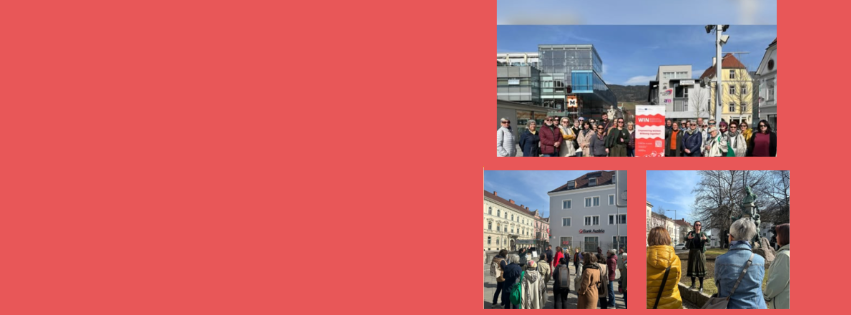
Perhaps the most striking examples of impact, however, emerged from the cultural dimension of the campaign. The travelling exhibition on “100 Years of Women in the Coal-Mining Region” attracted a wide and diverse audience, from students to professionals, and revealed how deeply rooted, and often overlooked women’s contributions have been. Visitors frequently expressed surprise at the richness of these histories, suggesting that awareness is not only about the present, but also about reinterpreting the past.
Building on these narratives, the upcoming theatre production “The Only One in the Room” represents another step forward. Based on real interviews with women from the region, it translates lived experiences into an emotional and accessible format. This approach acknowledges that awareness is not purely informational - it is also about empathy, about understanding the subtle barriers and everyday realities that statistics alone cannot capture.
Across all activities, one key insight became clear: people engage most deeply when they feel addressed on a personal level. Stories, faces and voices create connections that numbers cannot. At the same time, the campaign highlighted the importance of persistence. Identifying and motivating role models, for instance, proved more challenging than expected—an indication that visibility gaps still exist. Yet this very challenge reinforced the relevance of the work.
In the regional context of the Styrian Iron Road, the campaign contributed to a gradual but noticeable shift. Conversations about women in industry became more present, more nuanced and more widely shared. Stakeholders from industry, education and public institutions engaged with the topic, and new connections were formed.
Ultimately, the success of the awareness-raising activities lies not in a single measurable outcome, but in the accumulation of many small moments: a reader recognising herself in a story, a student reconsidering her career path, a passer-by noticing a message on a bus. Together, these moments form the real impact of the campaign—an evolving awareness that change is possible, and that women’s roles in industrial regions are not only part of the past, but essential to the future.

20/04/2026
By
Share on social media:



News & Events
Read the most recent updates and explore the upcoming events.











Would you like to receive project updates?
You're already part of our community!
Welcome to our newsletter community!
Subscribe to our newsletter