
DIGI Stories - Slovakia
From Cure to Care: How AI Screening is Protecting the Vision of Diabetic Patients in SlovakiaFrom Cure to Care: How AI Screening is Protecting the Vision of Diabetic Patients in Slovakia
In healthcare, timing can mean the difference between prevention and permanent damage. This is particularly true for people with diabetes, where complications can develop silently and often remain unnoticed until it’s too late. One of the most severe and preventable complications is diabetic retinopathy—a condition that can lead to vision loss or blindness if not detected early.
Yet, according to data from the Slovak health insurance company Dôvera, approximately 60% of diabetic patients in Slovakia do not attend regular eye examinations. This means that more than half of all people with diabetes risk losing their sight simply because they lack convenient access to preventive eye screening.
This status quo represents both a challenge and an opportunity: a challenge to current healthcare pathways and an opportunity to prove how digital innovation can shift healthcare from cure to care—from reactive treatment to proactive prevention.
Preventable Blindness Hidden in Plain Sight
Diabetic retinopathy is a silent condition. It progresses without pain or visible symptoms until vision is already compromised. Regular eye examinations can prevent up to 90% of severe vision loss caused by diabetes, yet accessibility, comfort, and logistics remain major barriers.
When we asked patients why they skip their annual eye checkups, the responses were strikingly consistent:
“I don’t have time.”
“It’s difficult to get an appointment.”
“The drops they use make my eyes blurry for hours.”
These might sound like small inconveniences, but together, they create a system-level barrier that leads to devastating consequences for individuals and increased burden for the healthcare system. The traditional care pathway—requiring patients to schedule separate ophthalmology appointments, often months in advance—simply doesn’t fit the realities of modern life.
The DIGI4Care Response: Digitalizing Screening, Simplifying Care
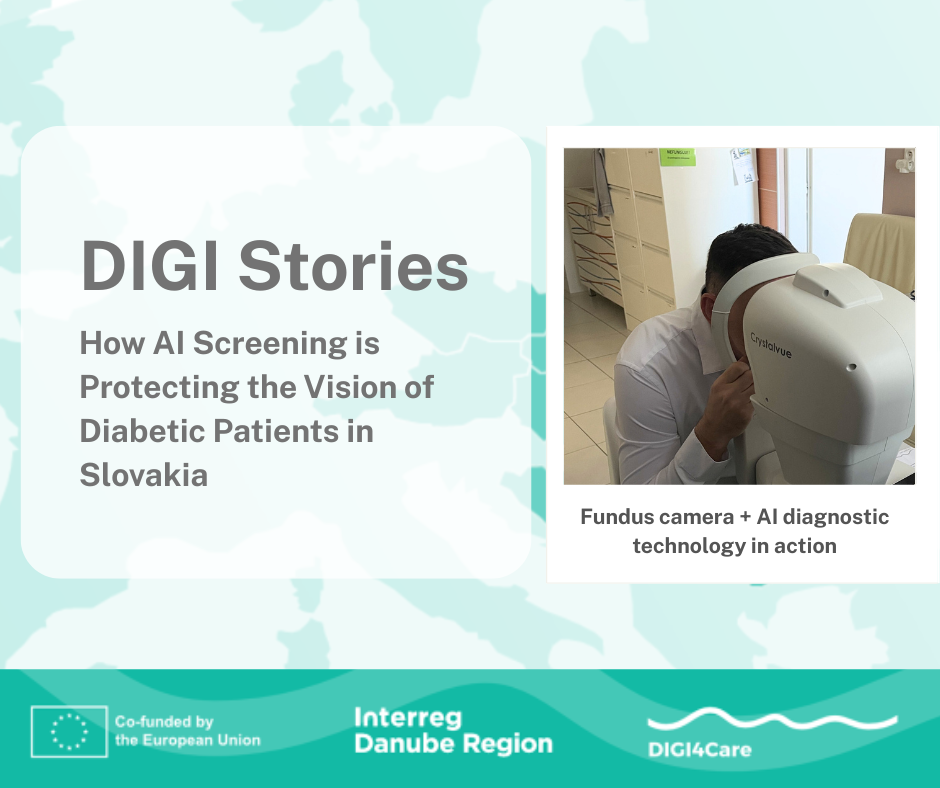
In Slovakia, the DIGI4Care Project, implemented by CEE HPN, is testing an innovative approach: bringing diabetic retinopathy screening directly to the diabetologist’s or general practitioner’s office, where the patient already comes for regular checkups.
Using AI diagnostic technology and a fundus camera captures an image of the patient’s retina in just a few minutes. The process is non-invasive, requires no dilation drops, and can be performed by a trained nurse. The AI system then analyzes the image, detecting early signs of retinopathy with remarkable accuracy.
If any abnormalities are detected, the patient is automatically referred to an ophthalmologist for further evaluation. This way, only those who truly need specialist care are directed onward.
This is a defining moment in healthcare transformation: “We are not just digitalizing a process; we are redesigning the patient journey to make prevention accessible, efficient, and human-centered.”
Our pilot program in Slovakia is a proof of concept for digitalized, patient-centered healthcare. In addition to implementing AI-based screening, we’re digitalizing key elements of patient interaction:
Informed consent forms are collected digitally, simplifying administration and ensuring compliance.
Patient satisfaction surveys are completed online, providing immediate feedback for improvement.
Specialist referrals and appointment scheduling are automated, ensuring smooth communication between diabetologists, ophthalmologists, and patients.
Each step represents a small but significant move toward a more connected and efficient healthcare ecosystem.
Digital transformation in healthcare is not about technology alone—it’s about mindset. It requires collaboration, trust, and an unwavering focus on the human element because innovation doesn’t happen in laboratories or boardrooms—it happens in real interactions between doctors, nurses, and patientsin a system where care is proactive, prevention is accessible, and patients remain at the center.
The DIGI4Care journey is still unfolding, but one thing is clear: digitalization is not the future of healthcare—it’s the present. And perhaps that’s what “digital healthcare” truly means:
Making every second of care count.
Written by: Noemi Forgáčová, CEE HPN

27/02/2026
By
Share on social media:



News & Events
Read the most recent updates and explore the upcoming events.



Would you like to receive project updates?
You're already part of our community!
Welcome to our newsletter community!
Subscribe to our newsletter