

Inside the EDIH Conference 2026: How Europe's Digital Innovation Hubs Are Turning Ambition into Action
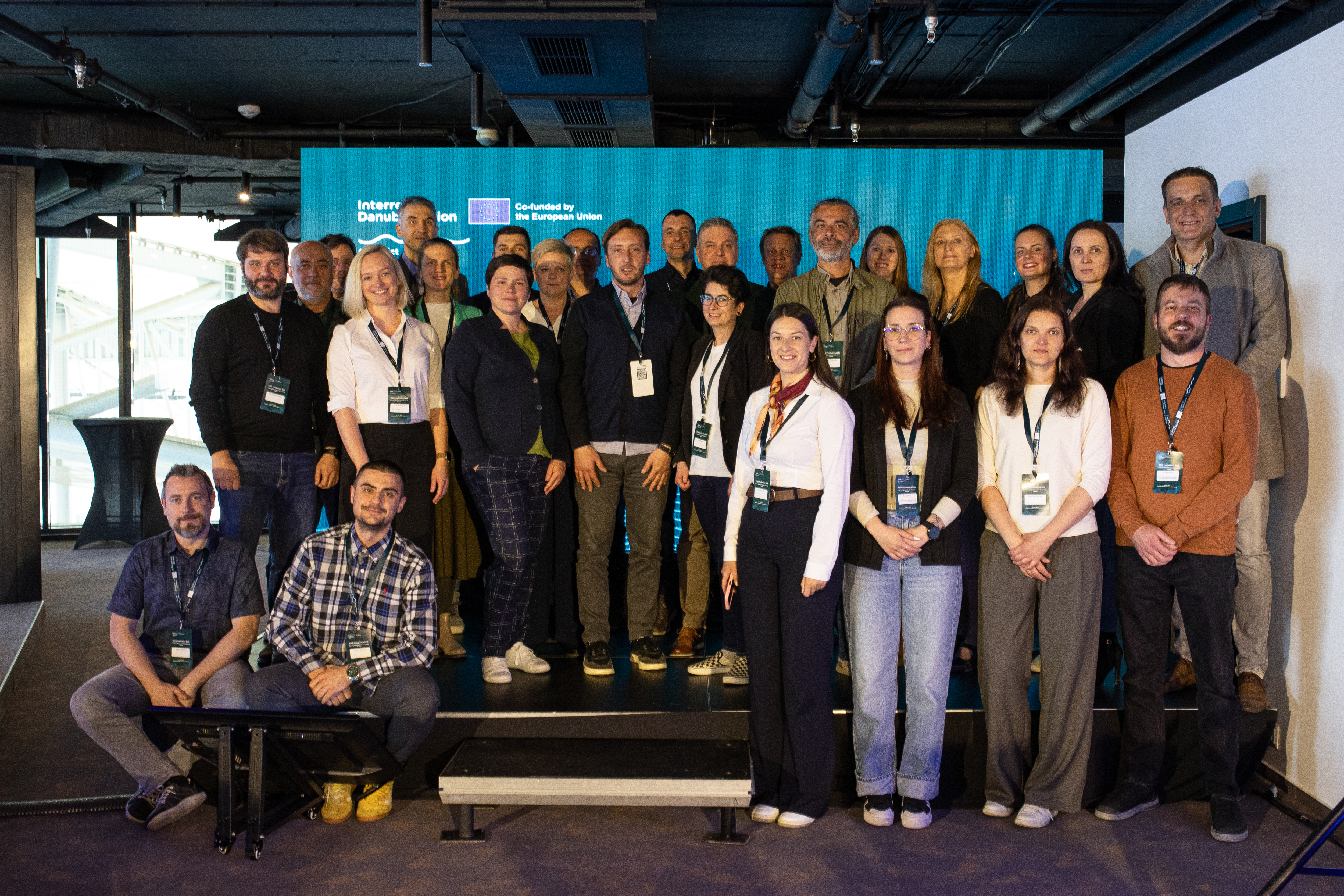
On April 21 2026, Bratislava hosted the European Digital Innovation Hubs Conference 2026, organised within CapTTict by SAPIE Slovakia. The conference ran alongside the SAPIE Forum 2026 (a major gathering of business leaders, public institutions, and academia focused on SMEs) creating a broader space for exchange between the digital innovation community and the wider business ecosystem. Representatives of European Digital Innovation Hubs, the Enterprise Europe Network, and innovation leaders from nine countries across the Danube region came together with a shared commitment to making digital transformation tangible for SMEs and public sector organisations. For those who could not attend in person, the full recording of the conference is available on YouTube.
The day was structured around the four types of services that EDIHs provide.
The first session featured four EDIH representatives sharing concrete success stories from their "test before invest" services.
Miky Škoda from EDIH CTU (Czech Republic) presented several AI-powered solutions developed in collaboration with public institutions, including an AI assistant that navigates 40,000 pages of Ministry of Finance documents in natural language, a predictive system for waste collection in Prague, and a tool supporting ICU doctors in monitoring patient ventilation in real time.
Wilko Westphal from DInO EDIH (Germany) offered an honest account of the challenges of reaching SMEs in rural areas, noting that cold outreach consistently failed. And that trust, built through regional multipliers and hands-on demonstrations, was ultimately the key.
Anja Barešić from AI4Health.Cro (Croatia) described her hub's approach to bridging the gap between MedTech startups and healthcare professionals, including an annual data challenge that attracted 150 applicants in its latest edition.
Stelian Brad from DIH4Society (Romania) presented a range of industrial use cases and highlighted the importance of building sustainable business models for EDIH labs beyond the project funding period.
The keynote From Digitisation to Autonomous Enterprises, delivered by Libor Bešenyi of Xolution, followed next, challenging the audience to think beyond AI tools and towards genuine digital transformation. Using the evolution of the car as a metaphor, tracing the journey from horse replacement to fully autonomous vehicle, he mapped out the maturity stages of companies on their path towards autonomy, arguing that most organisations remain stuck at an early stage not due to lack of technology, but due to mindset and organisational structure.
The afternoon opened with a session on financing, where Eva Šimeková from Hopero (Slovakia) shared five lessons learned from helping startups become investment-ready – emphasising that "investment readiness is a state of mind, not a document." Vojtěch Kadlec from UNICO (Czech Republic) followed with a practical overview of blended financing strategies, combining public grants with private equity, and noted that deep tech startups benefit most from this approach.
The final thematic session returned to Anja Barešić, who presented AI4Health.Cro's extensive education programme for both MedTech SMEs and healthcare professionals. A standout initiative involved partnering with the Croatian Medical Chamber to have their courses count towards doctors' mandatory lifelong education credits – a move that dramatically increased attendance. Patrick Ruman from Techband (Slovakia) then demonstrated how non-technical employees can be trained to build their own AI-powered tools using a structured, software-engineering-informed approach rather than simply learning to use individual apps.
The conference closed with a live demonstration of the SME.support platform, developed by EXPERTS.AI within the CapTTict project and presented by Stanislav Kuznetsov. The platform aggregates services from 23 EDIHs across nine countries into a single searchable catalogue, available in both English and local languages, and can be embedded as a widget into individual EDIH websites.
The event confirmed a message that resonated across all sessions: digital transformation across Europe is not held back by a lack of technology, but by fragmentation – of systems, of knowledge, and of trust. Conferences like this one, connecting hubs across borders, are a small but meaningful step towards changing that.

29/04/2026
By Alena Brozova
Share on social media:



News & Events
Read the most recent updates and explore the upcoming events.





Would you like to receive project updates?
You're already part of our community!
Welcome to our newsletter community!
Subscribe to our newsletter