

RTIT>> at a Glance
RTIT>> Project Concludes After Two and a Half Years of Collaboration, but the Knowledge Network Continues to Grow
After two and a half years of intensive work, international cooperation, and joint development of innovation solutions, the RTIT>> Knowhow Communities for Accelerating RTI Transfer in the Danube Region project has been successfully brought to a close. However, what remains after the project goes far beyond its formal activities and duration.
During its implementation, a unique collaboration model was developed, connecting knowledge creators with those who transform it into market value. The focus was on the field of materials and materials technology, one of the strategically important sectors for the development of the Danube Region and the European green and digital transition.
One of the most important results of the project is the adoption of a joint Action Plan for accelerating the transfer of research, technology, and innovation. The plan was jointly developed by partners through a capacity-building process and exchange of experience, creating a shared development direction for the entire region.
Throughout its implementation, RTIT>> identified, tested, and validated more than 65 different tools for innovation transfer to the economy. These tools include methods for fostering cooperation between the research and business sectors, design management approaches, and tools for developing and strengthening knowledge communities. Their greatest value lies in the fact that they have been tested in real conditions and can be immediately used by organizations in their work.
A special role in the project was played by more than 200 companies from six countries of the Danube Region, which participated in pilot activities and territorial demonstrations in various ways. These companies were not only users of the project results but active partners in testing and improving the developed solutions, ensuring their practical applicability.
The project also established three thematic communities focused on bio-based materials, sustainable materials and technologies, and advanced materials. It is precisely in these areas that innovations shaping the industries of the future are being created today.
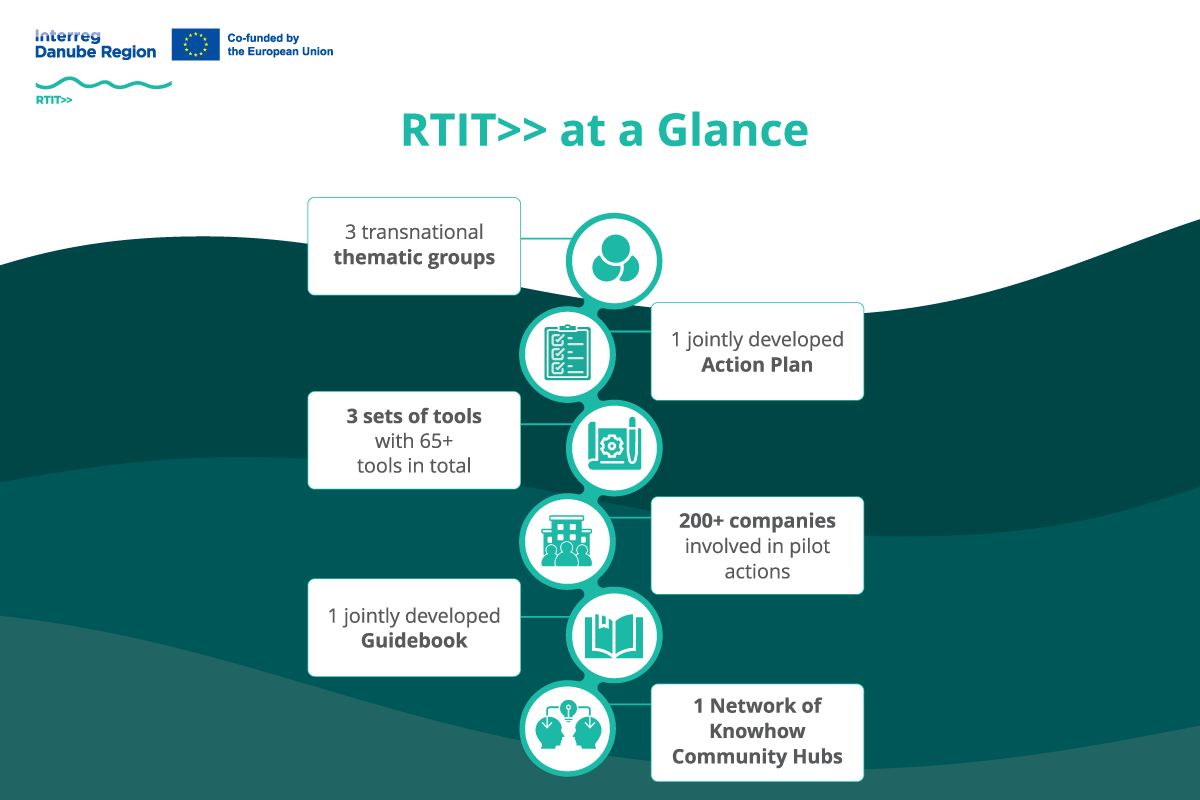
One of the most valuable outcomes of RTIT>> is the creation of the Knowhow Community Hub network, which continues to operate even after the project’s completion. Through this network, partners will continue to develop joint initiatives, projects, and activities aimed at strengthening the innovation ecosystem of the Danube Region.
The numbers behind the project speak for themselves: 13 partner organizations from eight countries, more than 200 involved companies, three international expert communities, over 65 tested tools, and one lasting network that continues to connect key stakeholders of the innovation ecosystem.
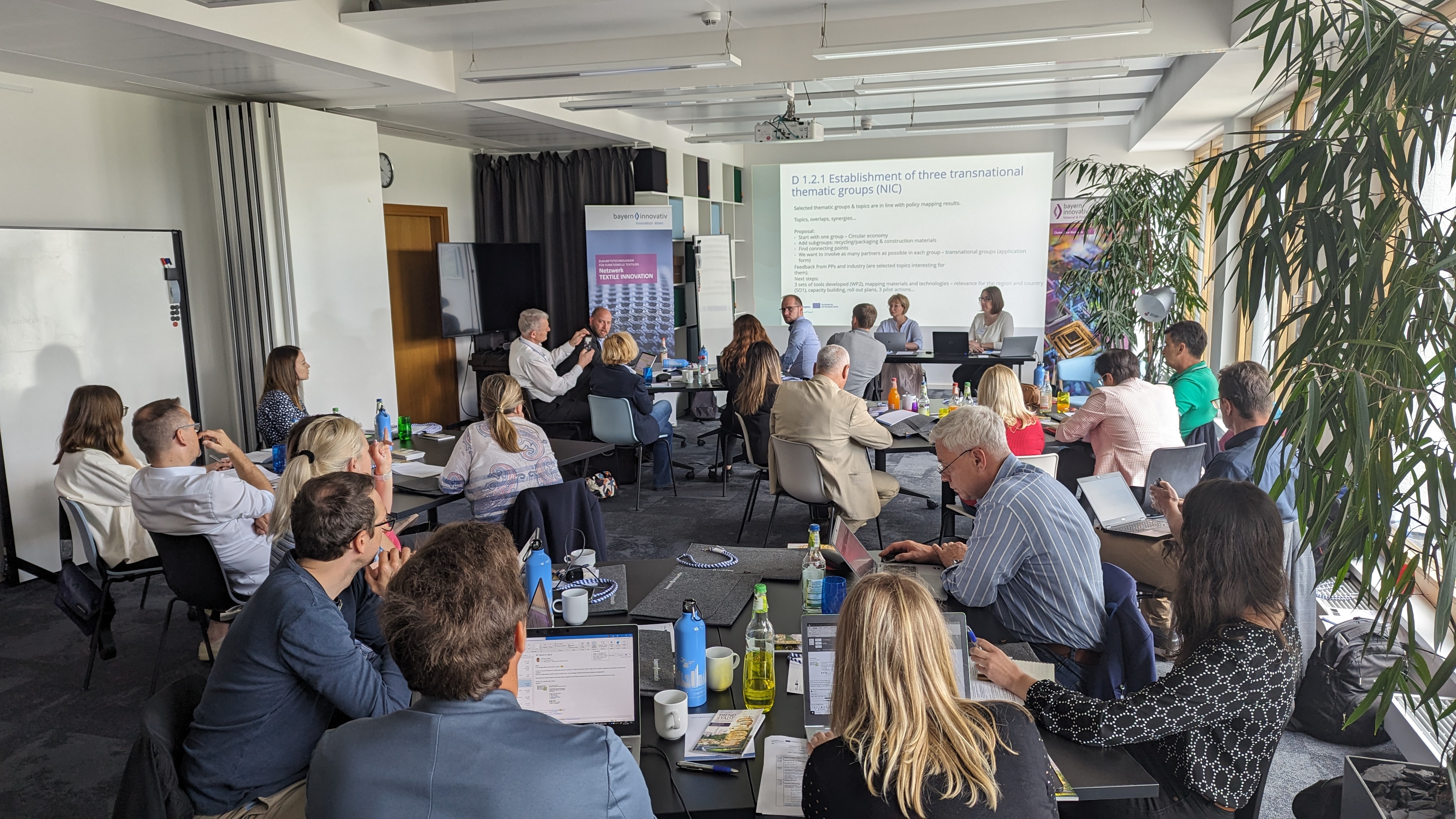
An additional value of the project was its strong transnational cooperation component, which enabled real knowledge and experience transfer between partners from different parts of the Danube Region. Organizations from countries with highly developed innovation support systems, such as Germany and Austria, shared their experience in connecting research and industry and in developing innovation ecosystems. Through study visits, joint workshops, and practical work, partners had the opportunity to first-hand explore successful models of innovation support and technology transfer and adapt the acquired knowledge to the needs of their local environments.
RTIT>> has not only accelerated the transfer of research and innovation—it has laid the foundations for long-term cooperation and a community that will continue transforming knowledge into new opportunities for the entire Danube Region.
The project was supported by the Interreg Danube Region Programme co-financed by the European Union.

25/06/2026
By
Share on social media:



News & Events
Read the most recent updates and explore the upcoming events.







Would you like to receive project updates?
You're already part of our community!
Welcome to our newsletter community!
Subscribe to our newsletter