
D-CLEAN field visit in Austria: small wastewater treatment plants and stormwater management in Lower Austria
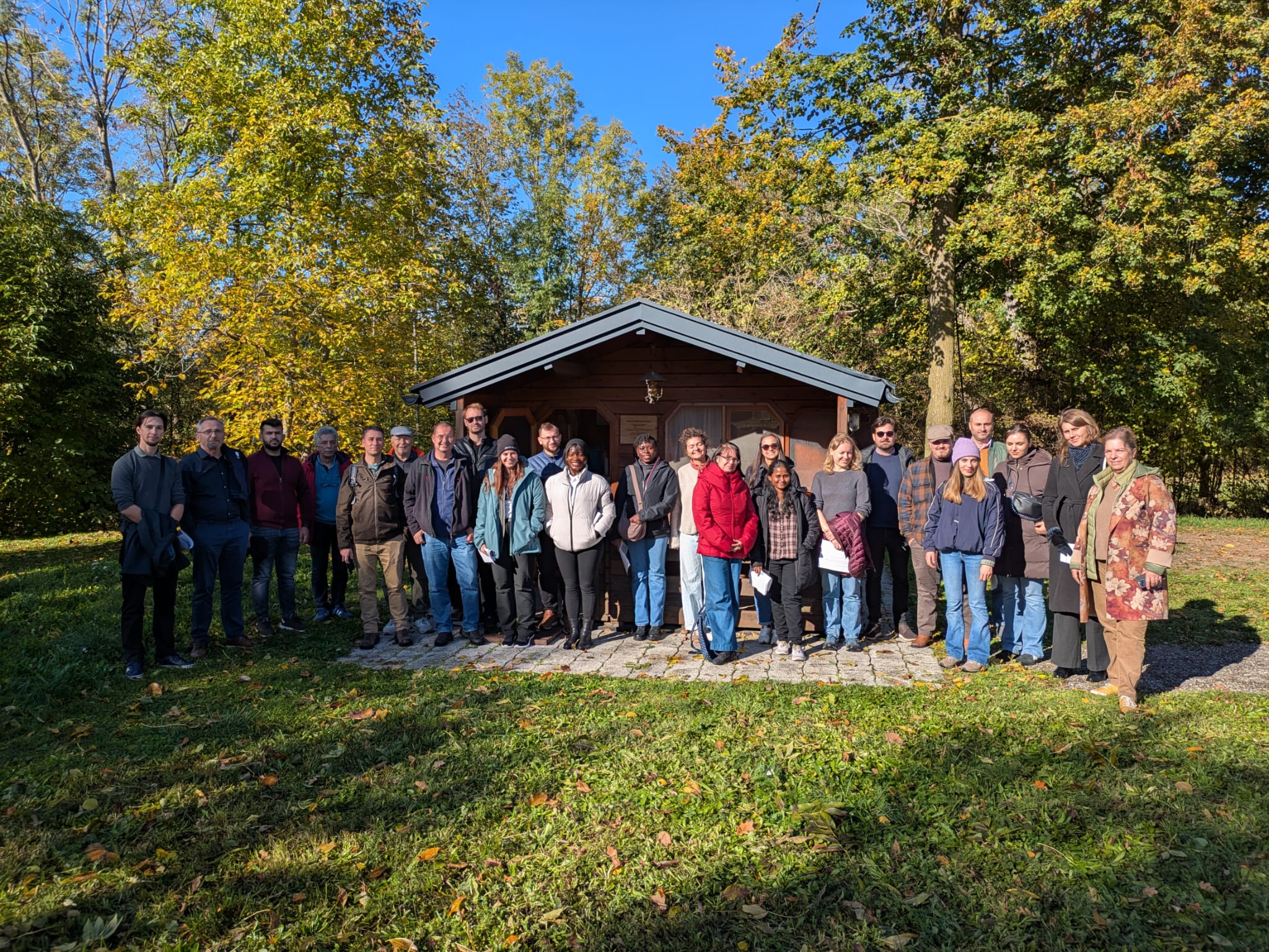
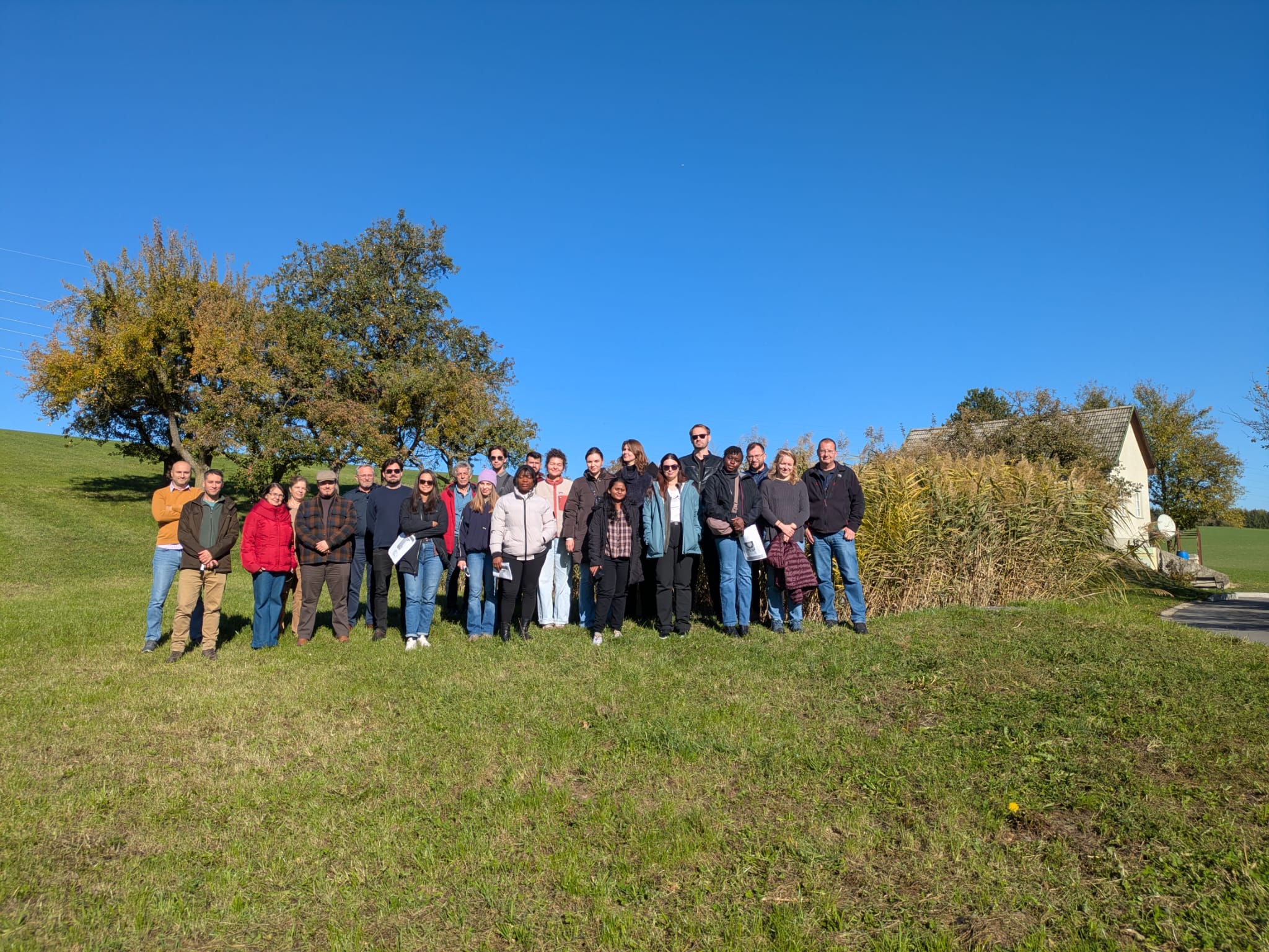
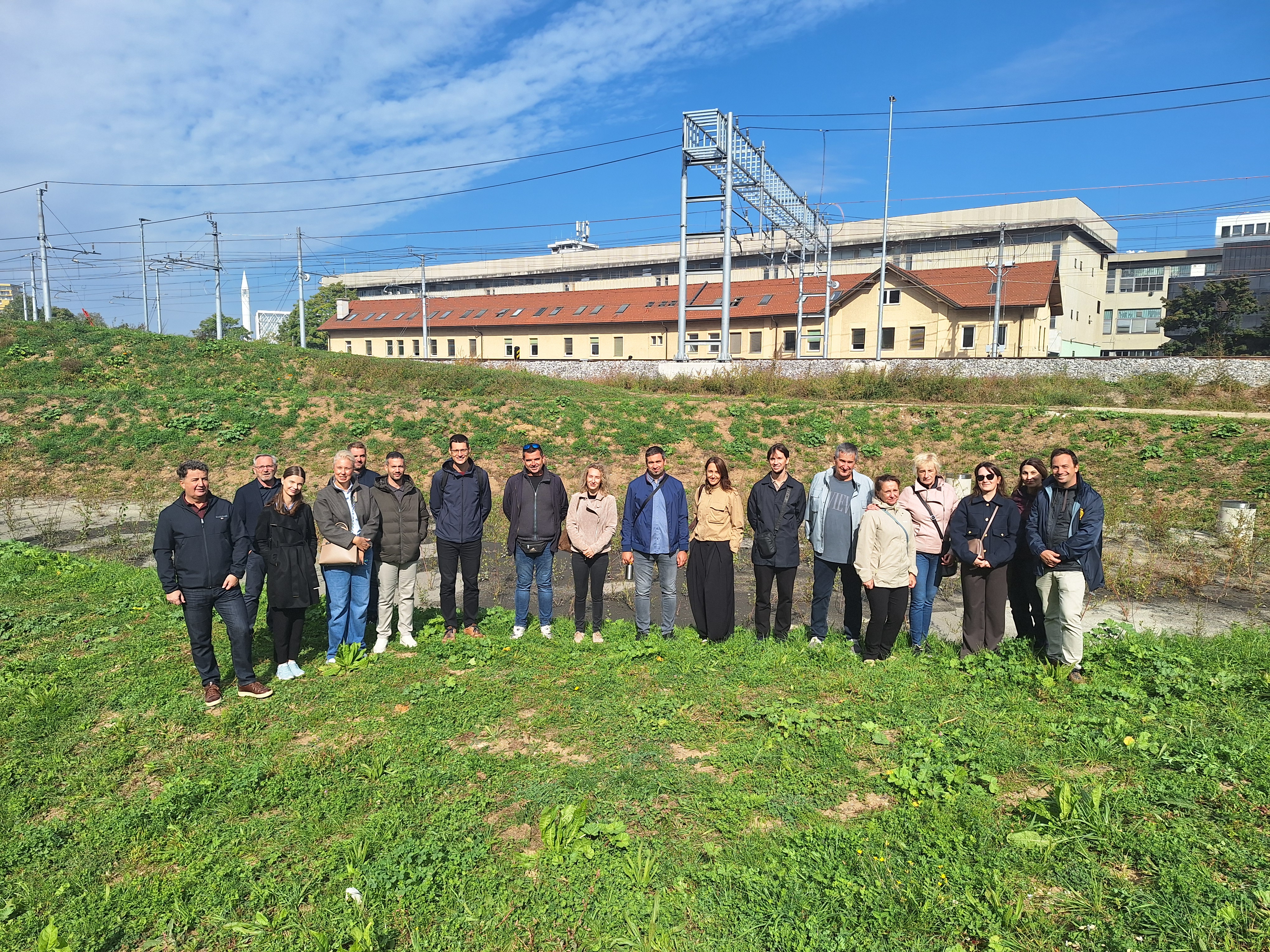
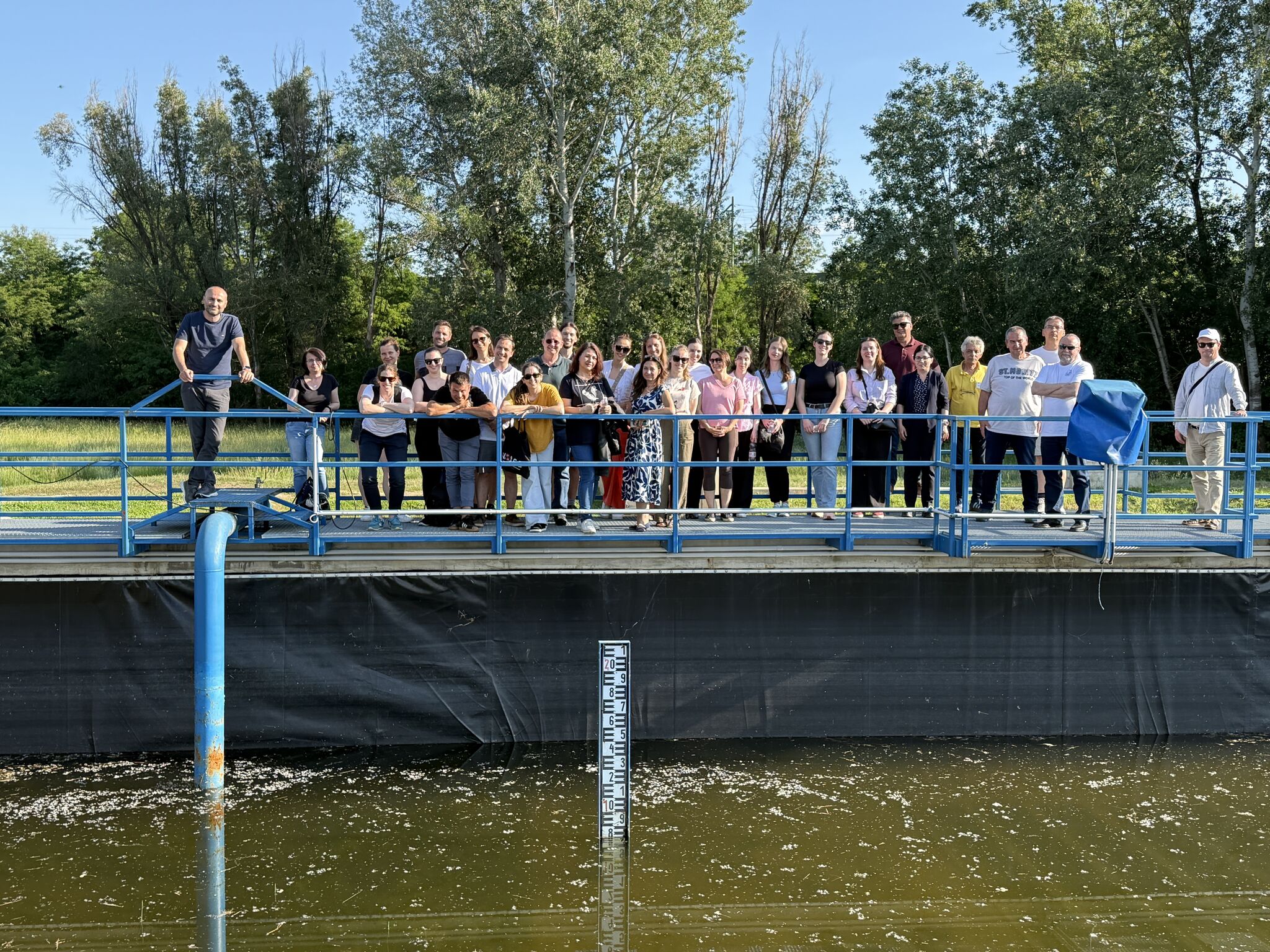
On 27 October 2026, some of the D-CLEAN partners joined a field visit in Austria, hosted by BOKU University, Vienna. Starting from the BOKU campus in Muthgasse, the group travelled to Oberndorf an der Melk and St. Pölten in Lower Austria. The day covered two topics: decentralised wastewater treatment and stormwater management.
Part 1: Small wastewater treatment plants in Oberndorf an der Melk
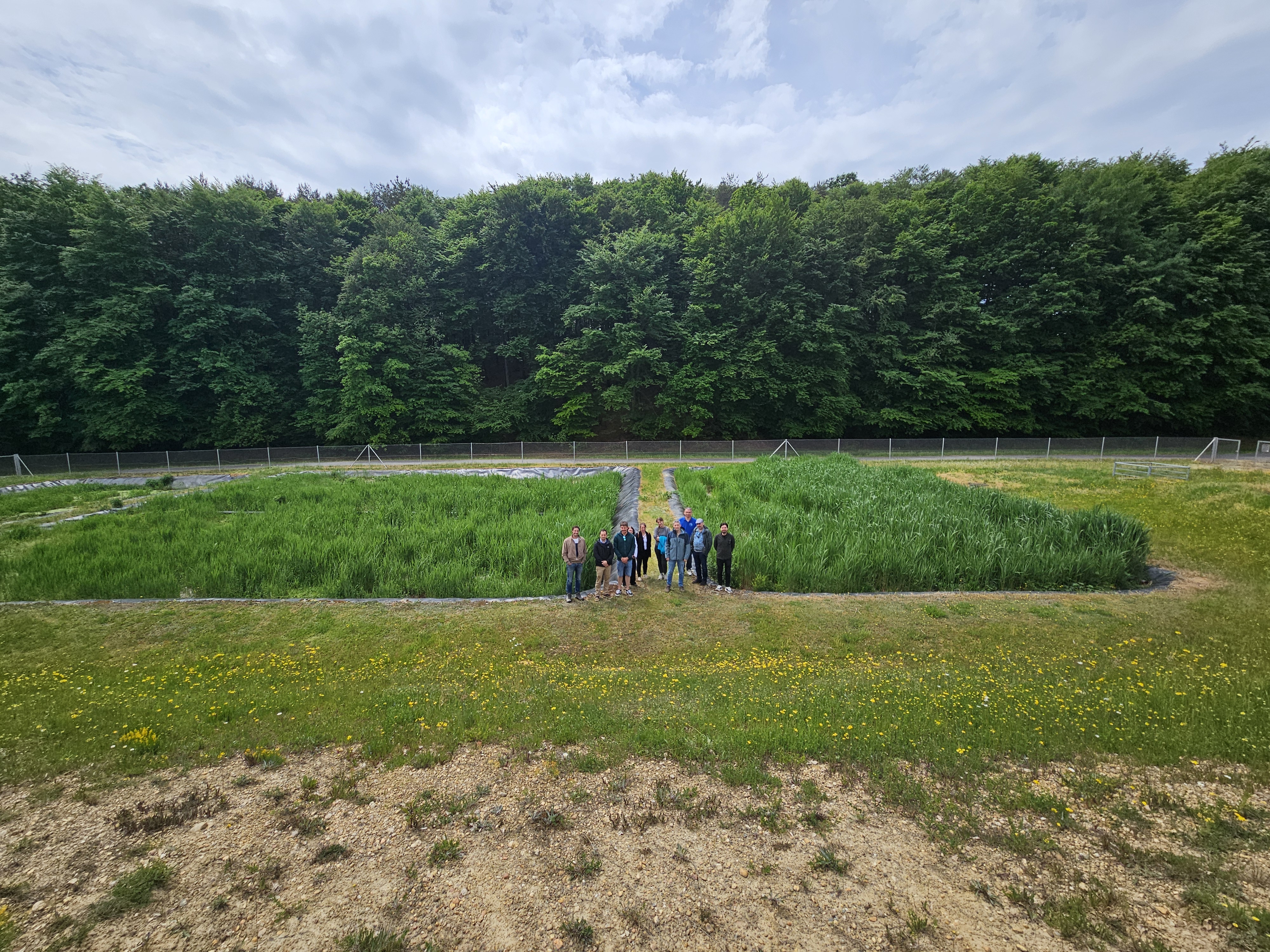
In the morning, the group visited four small wastewater treatment plants (WWTPs) that use different treatment technologies and serve very different numbers of people:
WWTP 1: A sequencing batch reactor (SBR) with external sludge storage. It serves a wastewater cooperative of 24 houses and 80 people.
WWTP 2: An SBR with internal sludge storage and a planted sludge drying bed. It serves 2 houses and 20 people, including a milk chamber.
WWTP 3: A vertical flow constructed wetland serving 10 people.
WWTP 4: A conventional activated sludge plant with external sludge storage, serving 8 people.
Seeing these plants side by side showed how technologies from near-natural to conventional can be applied at small scale.
Part 2: Stormwater management in St. Pölten
In the afternoon, the group travelled to St. Pölten for an introduction to the Stormwater Management Plan of the Province of Lower Austria, followed by a visit to an implementation site.
Why stormwater management matters. Climate change is making extreme precipitation events more frequent and dry periods longer. The consequences can include local flooding, overloaded sewer systems, drinking water shortages and urban heat islands. A stormwater management plan aims to actively manage the local stormwater balance to mitigate the impacts of these extreme events.
Guideline for municipalities. To support the planning process, a guideline document is available. It addresses three questions:
What is a stormwater management plan?
What might motivate a municipality to prepare one?
What support is available for preparing one?
Site visit: “Eisberg” in St. Pölten. The group visited the stormwater management example “Eisberg”, a rainwater retention basin with a total catchment area of 78 ha, designed for a 10-year flood. The project also created a sports and playground area and a reforestation area, which shows how flood protection can be combined with public space and green infrastructure.
Thanks to BOKU University for organising the field visit and to everyone who took part!

29/10/2026
By Katerina Schilling
Share on social media:


Green
Social
Cooperation

News & Events
Read the most recent updates and explore the upcoming events.






Would you like to receive project updates?
You're already part of our community!
Welcome to our newsletter community!
Subscribe to our newsletter