
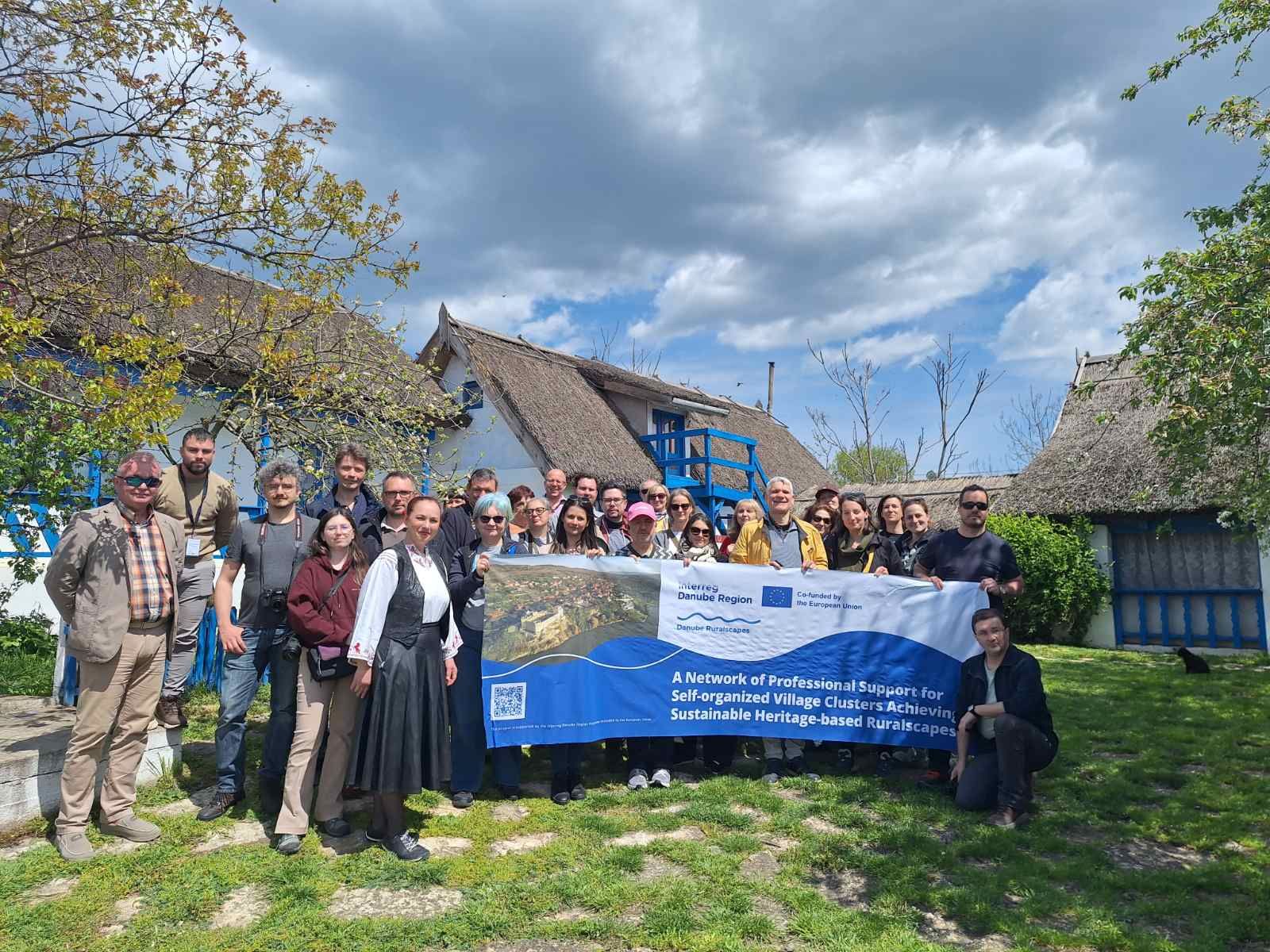

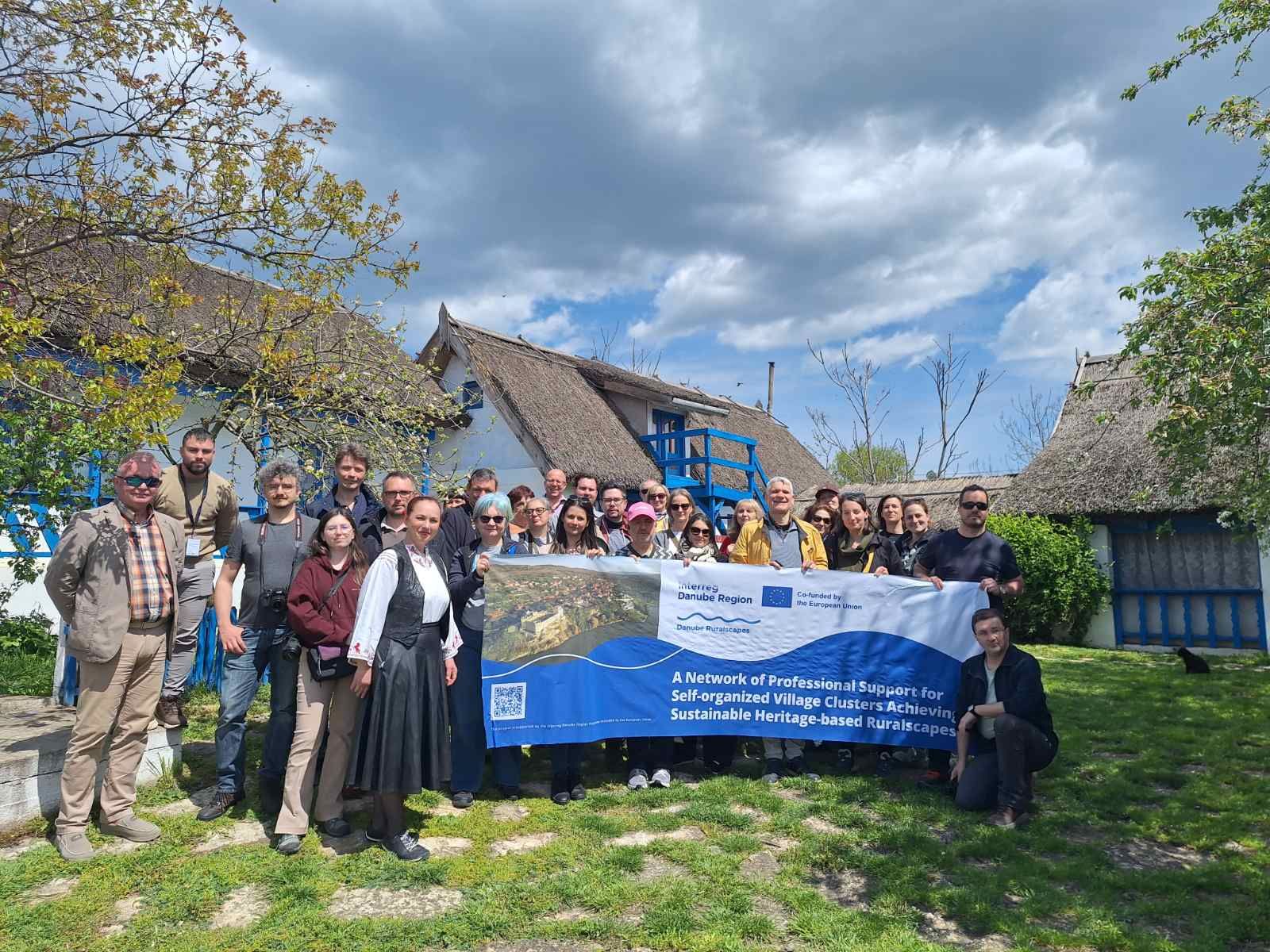
The Values of Rural Communities in the Danube Region. Part 2
Danube Ruralscapes Study Trip | Vișina – Jurilovca – Tulcea, 24 April 2026From Dialogue to the Field in Tulcea County
After a day of reflection, presentations and dialogue in Bucharest, the Danube Ruralscapes partnership moved from conference rooms to rural landscapes.
The questions raised during the First Year Review and the international conference did not remain abstract for long. The next morning, they followed the road toward Tulcea County - into villages, courtyards, restored houses, fishing traditions and places where local knowledge is not only discussed but lived.
If Bucharest opened the conversation, Tulcea County gave it texture.
Here, the values of rural communities appeared not as a concept, but as walls painted in blue and white, reed roofs, carefully restored rooms, shared meals, boat-building knowledge, local hospitality and the daily relationship between people and landscape.
This was the second chapter of our Danube Ruralscapes programme in Romania: a field journey through Vișina, Jurilovca and Tulcea, where the project’s central themes - living heritage, rural identity, architecture, local materials, sustainability and community capacity - became visible on the ground.
The route brought together three very different but connected learning moments.
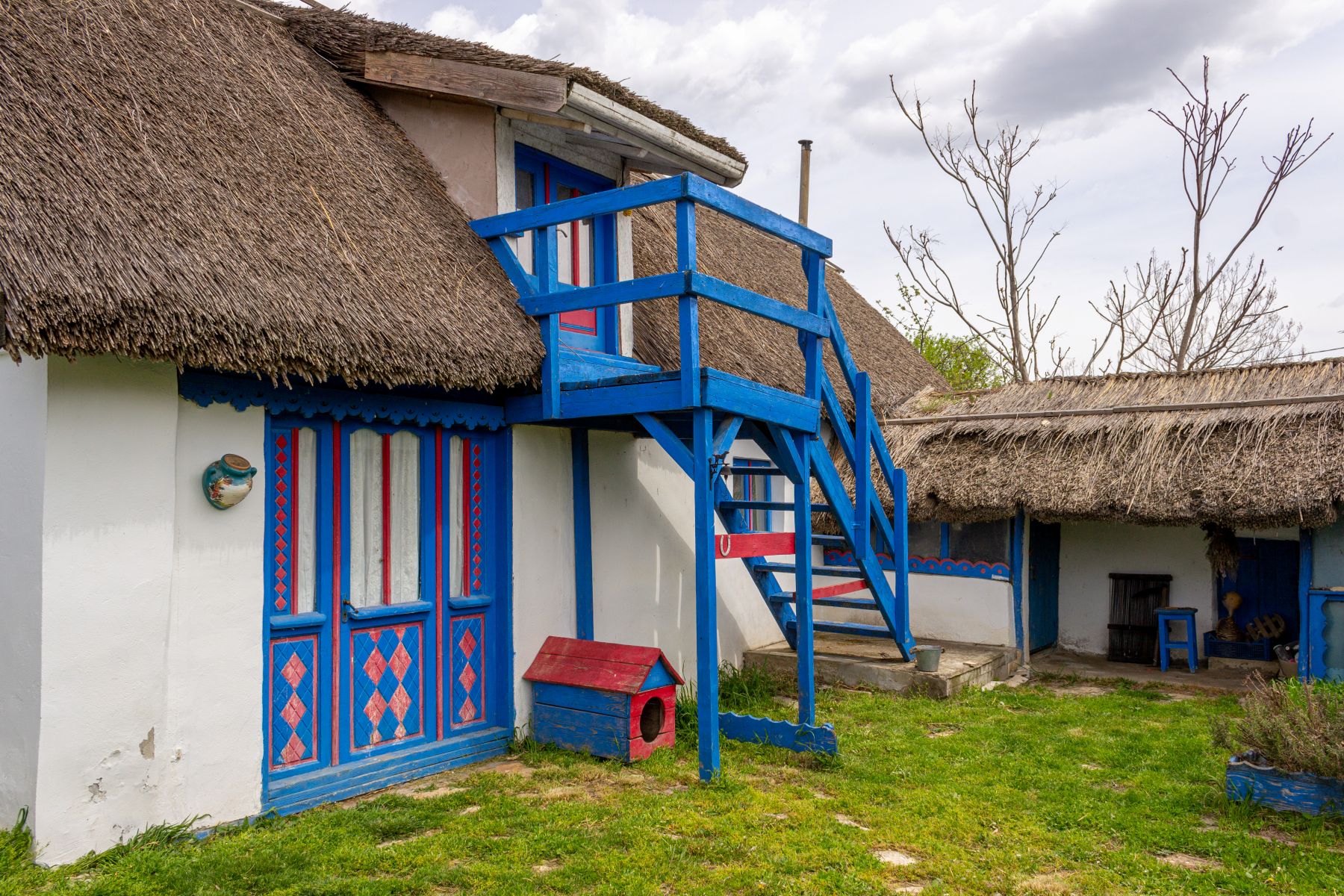
Visina (RO). Credits: Alexandru Tone
Vișina: where local initiative becomes living heritage
The first stop of the day was Vișina, a village with a timeless atmosphere, where traditional architecture is marked by white-washed walls, deep blue accents and the quiet rhythm of rural life.
Here, we visited a rehabilitated traditional household located in the school yard - the former house designated for the teacher - now connected to a private museum and local heritage initiative.
But what made Vișina especially meaningful was not only the house itself.
It was the way heritage was carried forward through people.
Through the work and personal commitment of Bianca Folescu, traditional spaces have been transformed into places for craft, storytelling, community memory, cultural exchange and local hospitality.
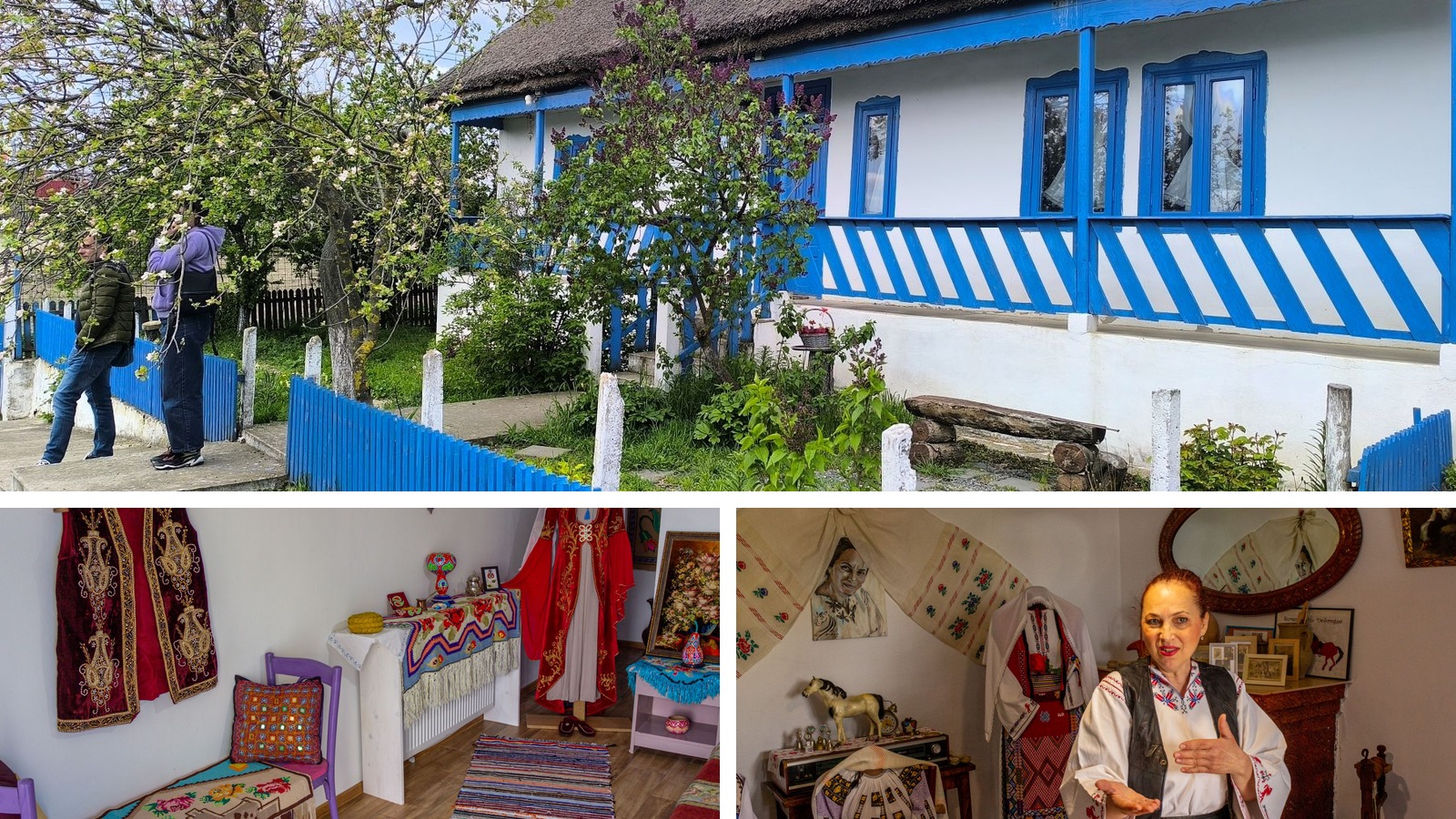
Photo credits: Alexandru Tone
In Vișina, heritage did not appear as something static or distant.
It appeared as a living practice.
A room becomes a story.
A courtyard becomes a meeting place.
A collection of objects becomes a bridge between generations.
A traditional house becomes a space where local identity can be seen, shared and understood again.
This is an important lesson for us, at Danube Ruralscapes.
Rural landscapes cannot be understood only through strategies, frameworks or architectural forms. They also need to be experienced through the people who continue to inhabit, interpret and carry them forward.
Vișina showed that community-based heritage can become a starting point for pride, learning and future cooperation - when local initiative is recognised not as an addition to rural development, but as one of its foundations.
Visina (RO). Credits: NTC BG Guide
Jurilovca: where a house becomes a lesson
From Vișina, the route continued to Jurilovca - one of the few villages in the Danube Delta area accessible by land, while still preserving a distinct traditional appearance.
Jurilovca has the quiet confidence of a village shaped by water. Its Lipovan blue houses, thick reed roofs and fishing traditions speak of a community closely connected to the landscape around it. Nearby, Lake Razim - Romania’s largest lake, stretching across roughly 400 square kilometres - adds another layer to this story. Known in antiquity as Halmyris, the former lagoon connects today’s village life with centuries of movement, settlement and exchange.
This was not only an interesting fact from the past. It helped explain the present.
Jurilovca is a place where water, fishing, architecture and landscape have shaped each other over time. Its identity is not contained in a single building or image. It lives in the relationship between houses, lake, materials, routes, roofs, colours, food and community.
At Lipovenesc Farm, we visited a rehabilitated Lipovan house. Here, a traditional house built in 1893 offered one of the clearest lessons of the day: sustainability in rural landscapes is not always something new. Sometimes, it is knowledge that has been there all along.
Reed, wood and earth/clay are not only materials. They are responses to climate, place, availability, craft and daily life.
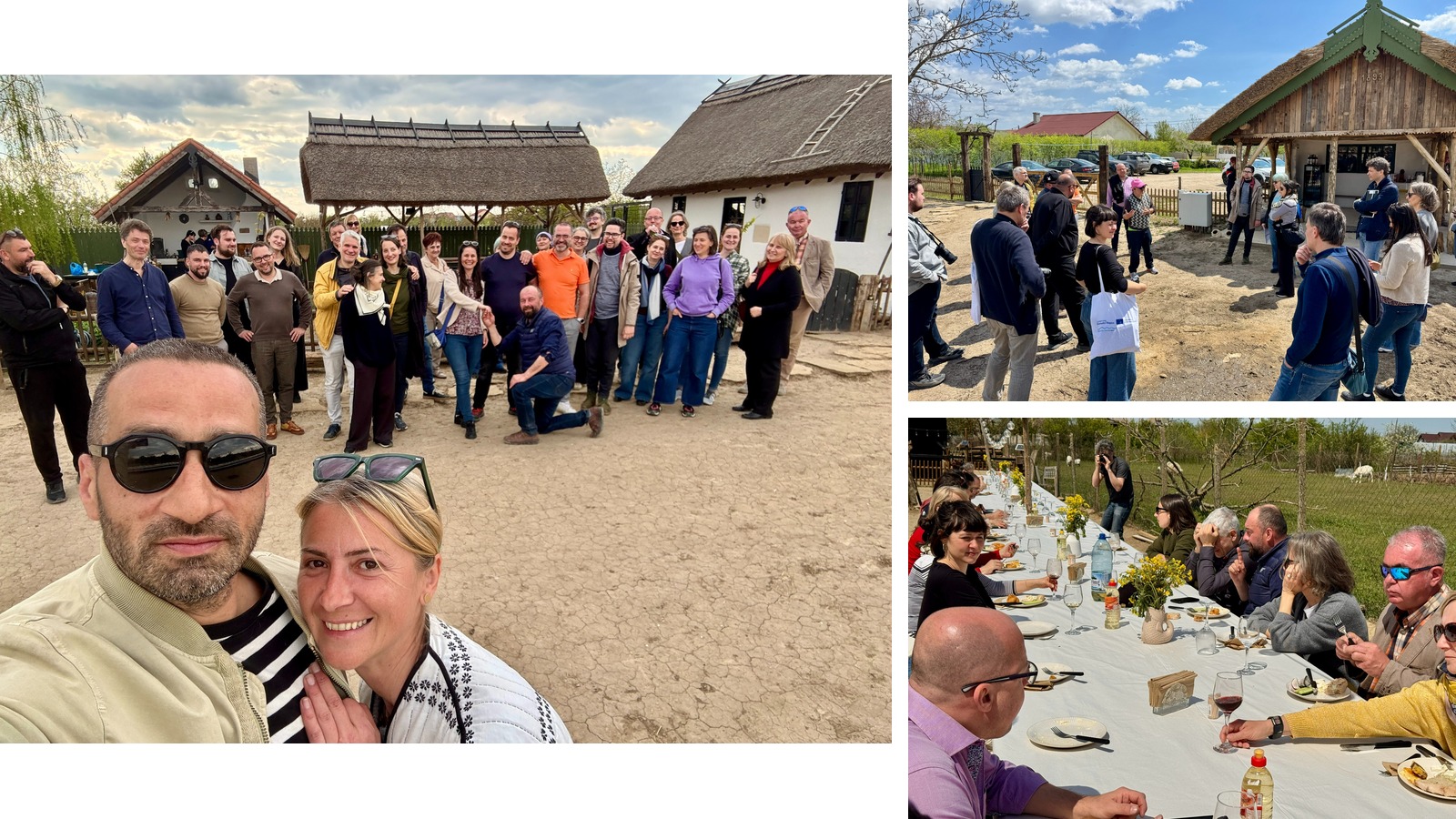
Photo credits: Marian Sterea/Lipovenesc Farm
The restoration of the house is itself part of the story - a collective effort initiated by Asociația Ivan Patzaichin - Mila 23, one of our project partners, and supported by restoration knowledge from Muzeul ASTRA in Sibiu.
Today, as a Local Gastronomic Point hosted with care by Marian Sterea and Daniela Sterea, the house continues to show how local values, community spaces and living heritage can become part of sustainable rural futures. Through their hospitality, commitment and deep connection to local culture, Lipovenesc Farm becomes more than a restored house.
It becomes a living lesson in local materials, traditional building techniques, rural identity, restoration, hospitality and community-based development.
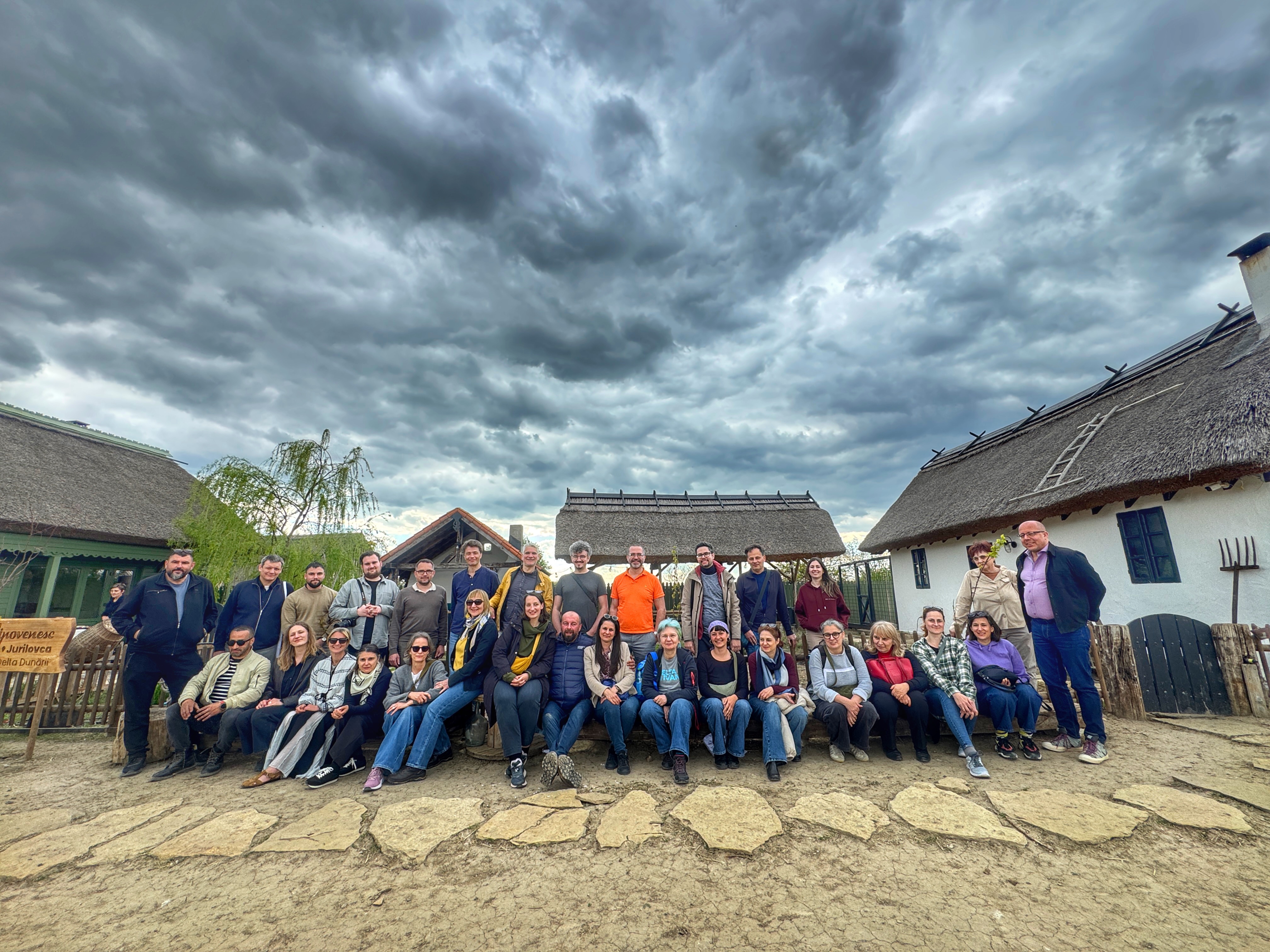
Lipovenesc Farm, Jurilovca (RO). Credits: Marian Sterea
Local knowledge as sustainable intelligence
One of the strongest messages from Jurilovca was that local knowledge should not be treated as nostalgia.
It is intelligence.
Traditional houses respond to landscape.
Reed roofs respond to climate.
Courtyards respond to everyday work.
Materials respond to what is locally available.
Hospitality responds to community and economy.
This is why the Danube Ruralscapes approach looks beyond individual buildings. The project works with the wider rural landscape identity of village clusters - the relationship between architecture, public space, materials, local traditions, landscape and governance.
In Jurilovca, this relationship could be seen and felt.
The house was not only a case of rehabilitation. It was a reminder that rural development can be more sustainable when it starts from what communities already know, value and practice.
Rural communities do not always need imported solutions. Very often, they need tools, confidence and professional support to recognise the value of their own identity - and to use that value as a basis for future planning.
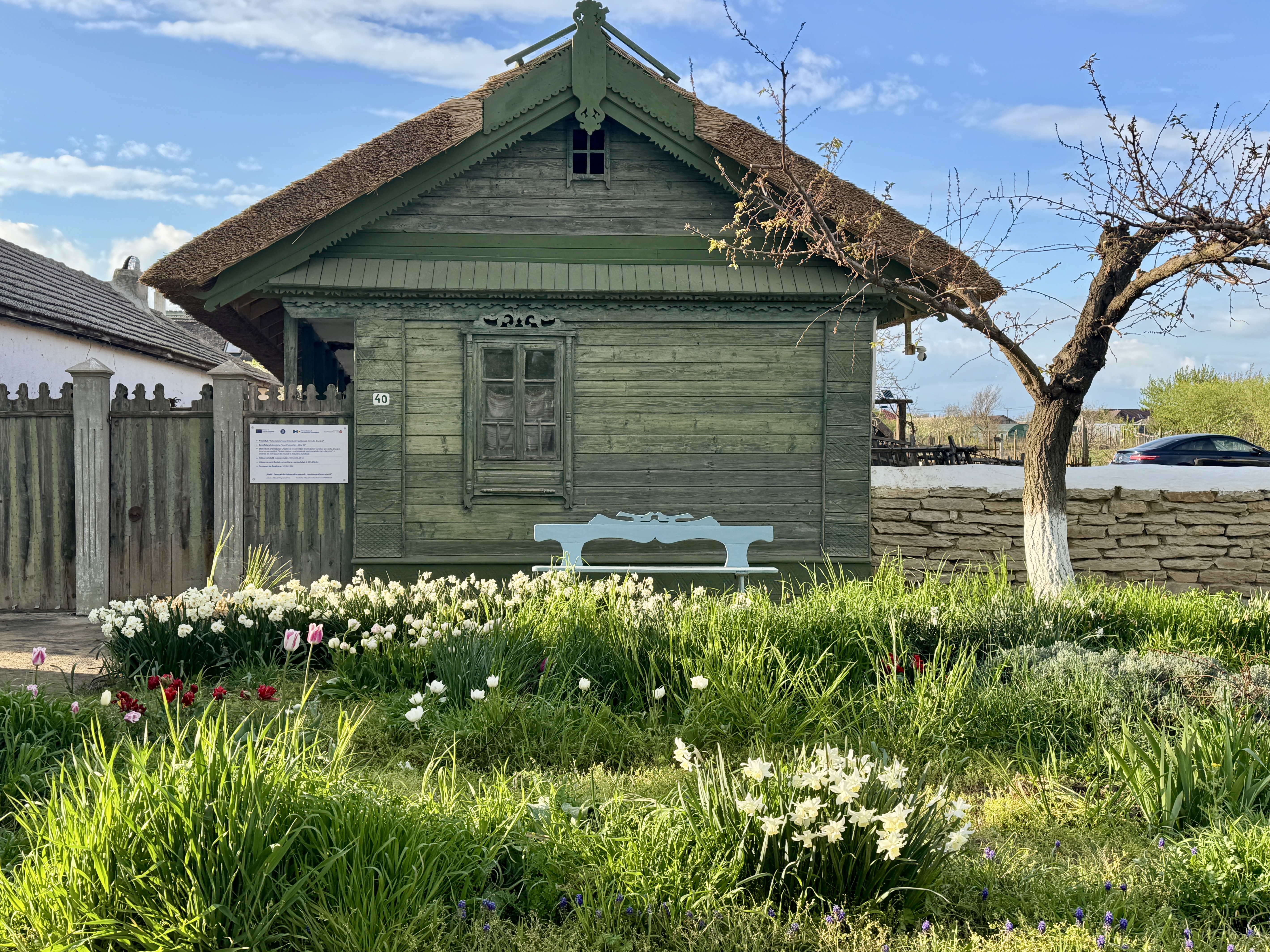
Lipovenesc Farm, Jurilovca (RO). Credits: Marian Sterea
Tulcea: where local knowledge takes the shape of a boat
By late afternoon, our study trip continued toward Tulcea and the Traditional Fishing Village, followed by a guided visit to the Ivan Patzaichin Monument.
After the houses and courtyards of Vișina and Jurilovca, Tulcea shifted the focus toward another essential layer of the Delta: water-based life.
At the Traditional Fishing Village, this story became visible through place, craft and memory. The village-museum covers around three hectares and brings together traditional houses, a cherhana, windmills and other buildings in an open-air thematic park. Its three main alleys recreate the Danube branches, guiding visitors through references to Delta villages and their local identities. The official site of the Fishing Village also identifies these alleys as Chilia, Sulina and Sf“ntu Gheorghe.
Here, the Delta is not presented only as scenery. It is read through routes, houses, tools, fishing culture and the everyday knowledge of communities shaped by water.
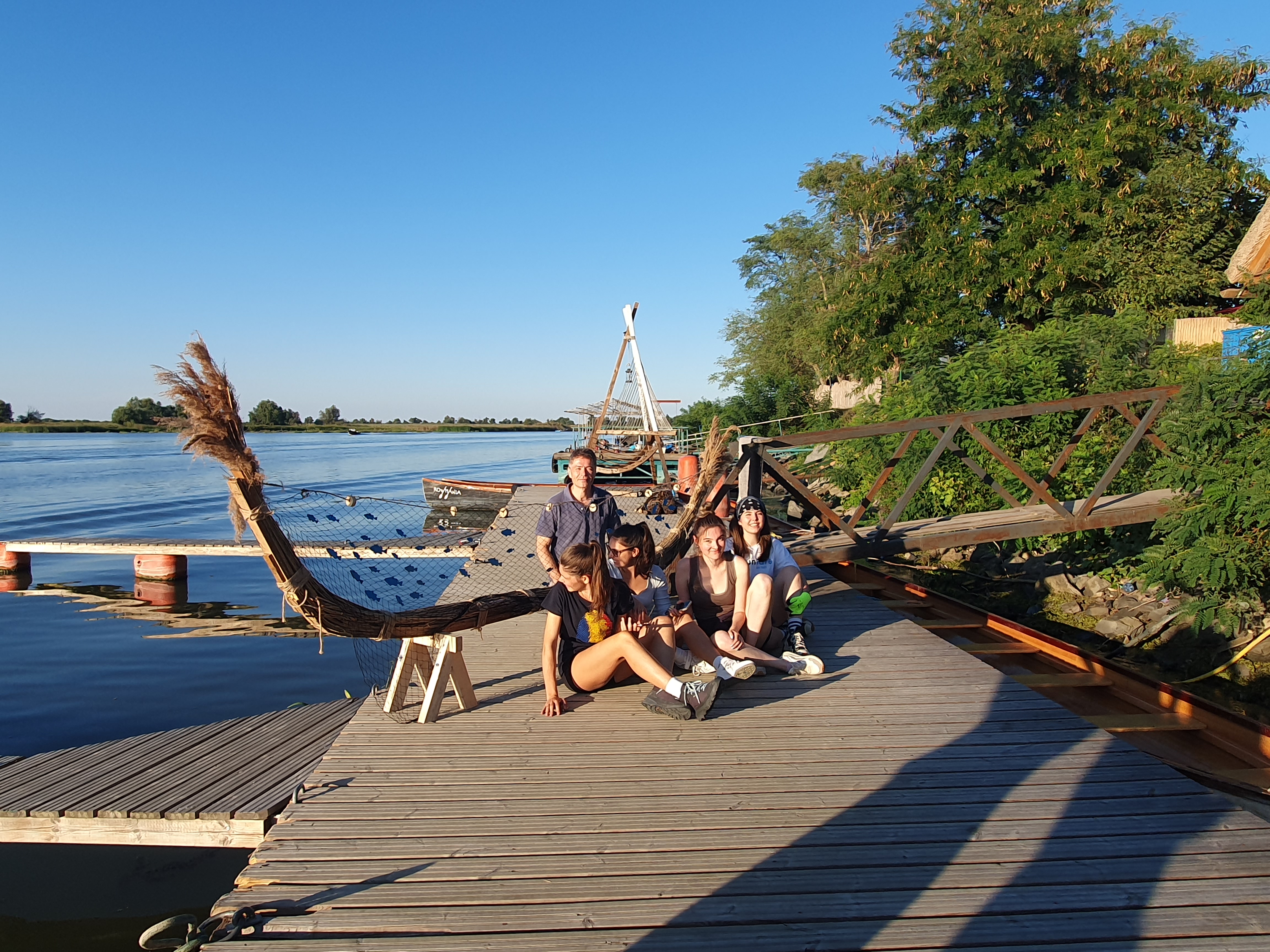
This became even clearer through the story of the boatbuilder Alex Onofrei and the traditional "lotca", the wooden boat of the Danube Delta. Alex Onofrei is president and founding member of Asociația Nod în Papură, an initiative that works with the cultural heritage of the Delta.
His work brings attention back to marangozerie - the craft of building wooden boats. He learned the craft by restoring an old boat and by learning from one of the last marangozi in the Delta. Today, his work is connected to a new workshop at the Traditional Fishing Village, where wooden boatbuilding is presented not as a static exhibit, but as living knowledge that can be seen, learned, repaired, adapted and passed forward.
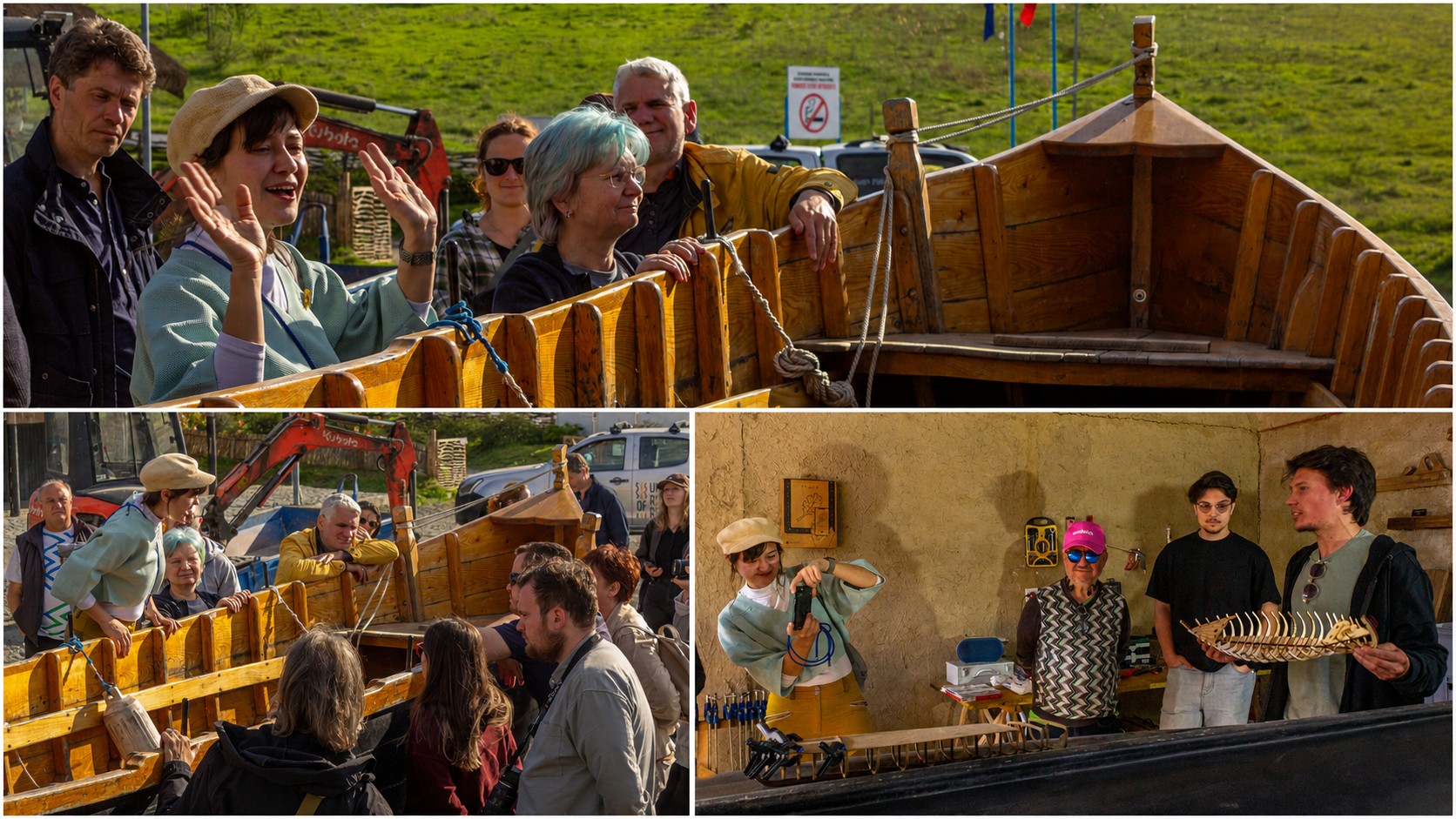
Photo credits: Alexandru Tone
For us at Danube Ruralscapes, this was one of the clearest lessons of the day: In the Danube Delta, a boat is not simply transport. It is livelihood, adaptation, movement, memory and connection. It carries people between places, but it also carries knowledge about water, weather, materials, repair and everyday life in a changing landscape.
Tulcea reminded us that rural landscapes are not always read from the road.
Sometimes, they are read from the water.
Sometimes, they are read through a craft.
And sometimes, they take the shape of a boat.
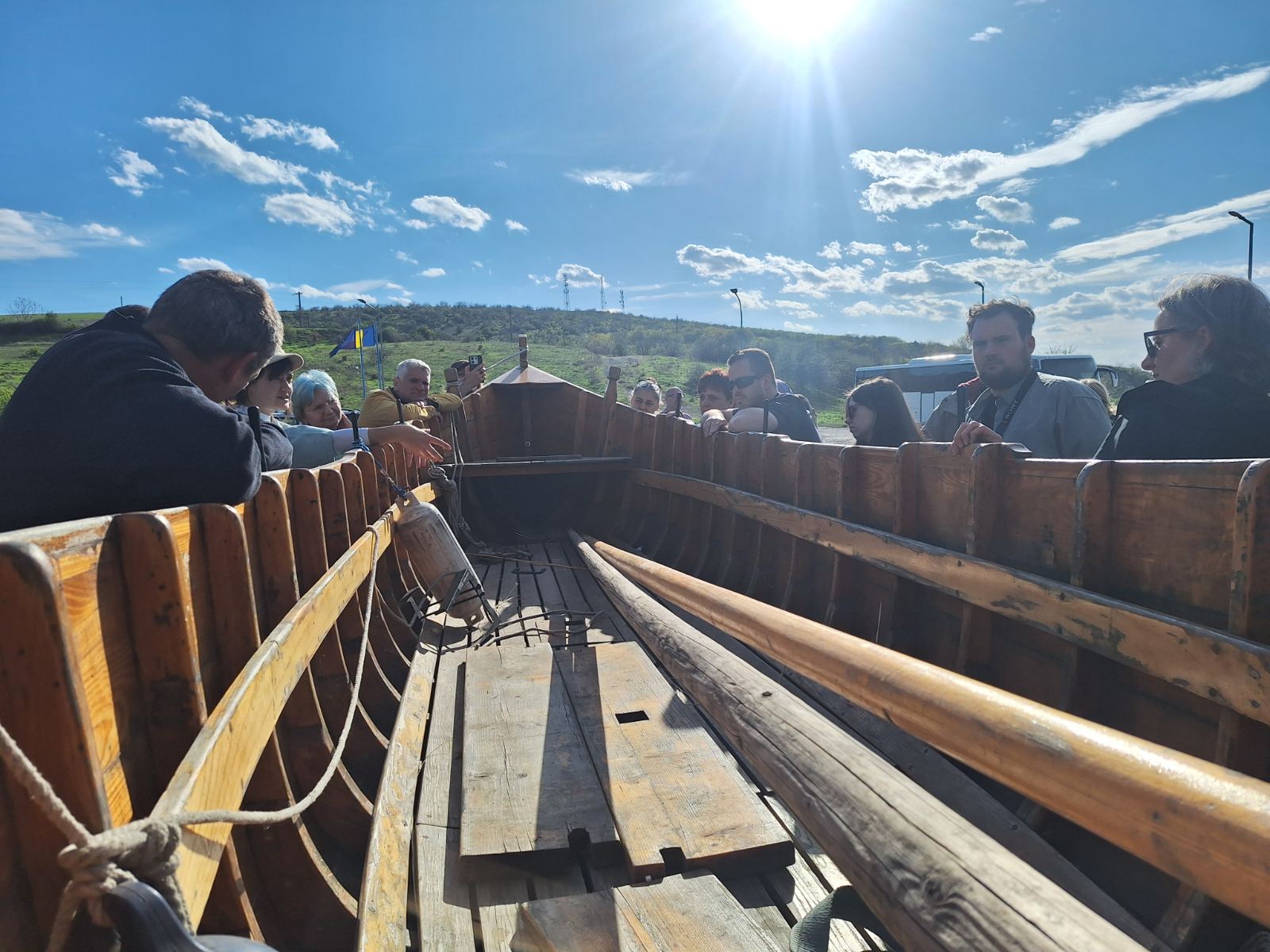
Traditional Fishing Village, Tulcea (RO). Credits: NTC BG Guide
Three stops, one shared lesson
Vișina, Jurilovca and Tulcea offered three different windows into the same question:
What makes a rural landscape valuable?
In Vișina, the answer came through initiative, memory and the care of local people.
In Jurilovca, it came through materials, restoration, food, hospitality and the intelligence of traditional building.
In Tulcea, it came through fishing culture, the traditional lotca, boat-building knowledge and the relationship between community and water.
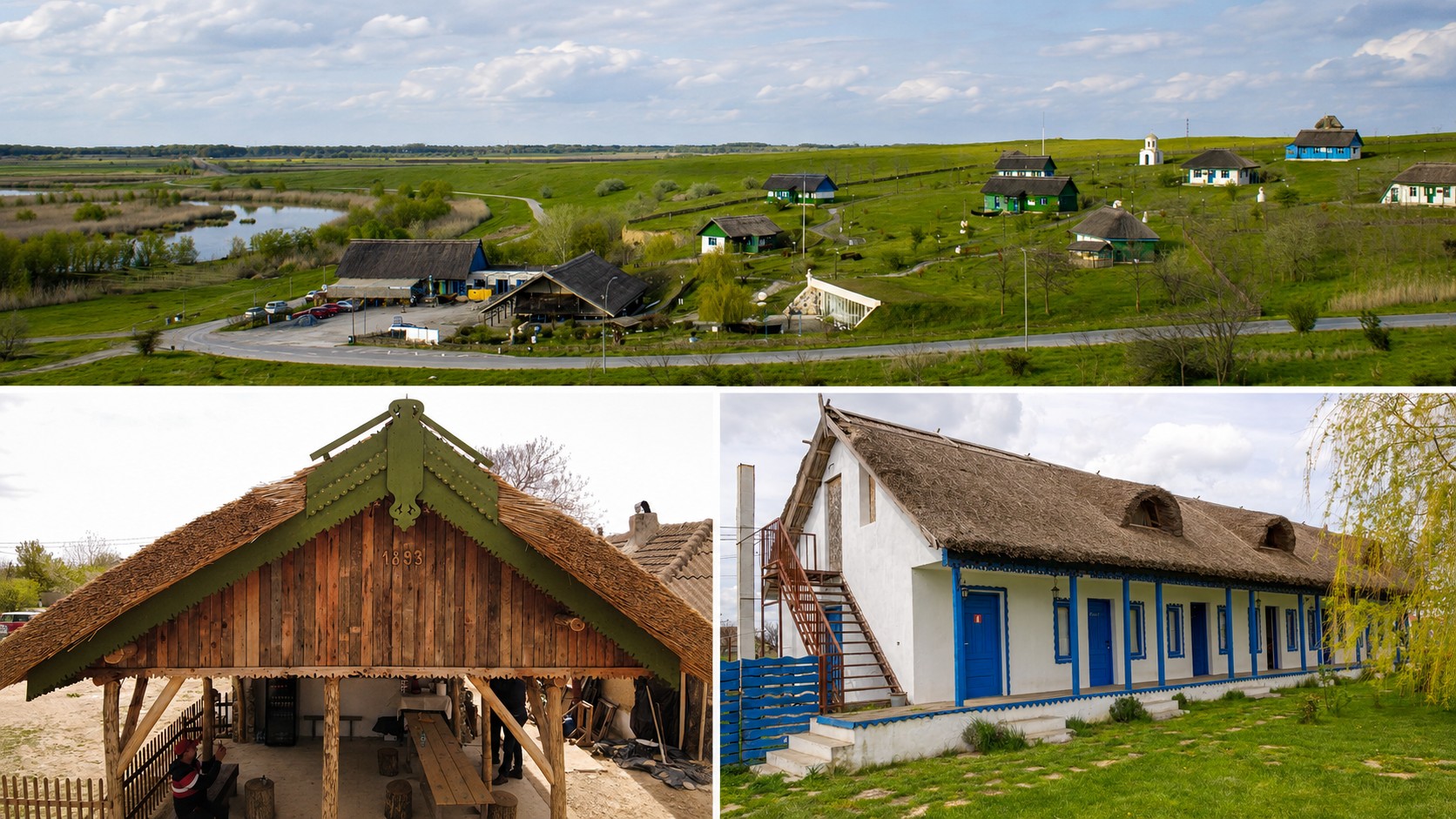
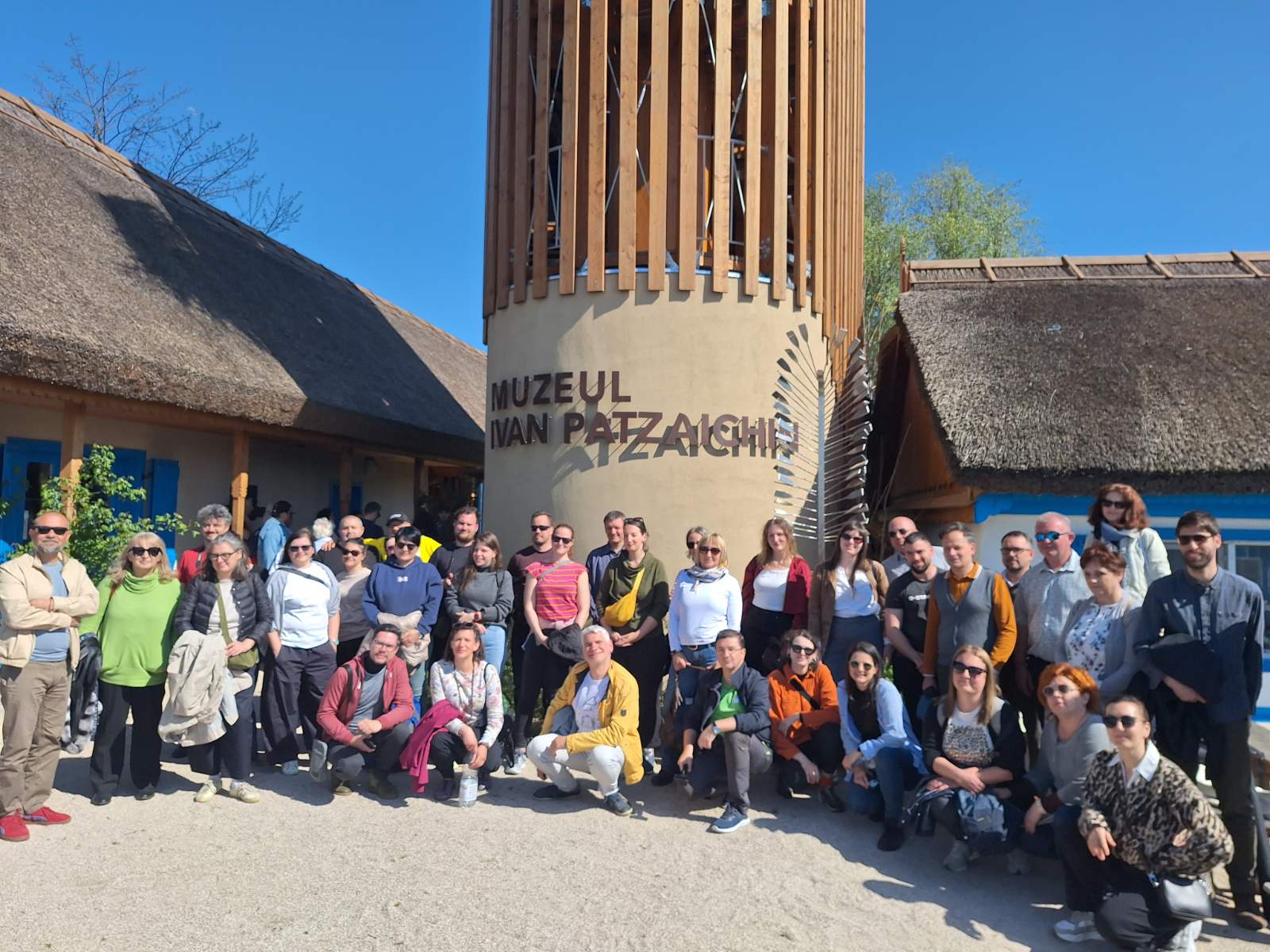
Photo credits: Alexandru Tone
Each place showed that rural heritage is not a single object to be preserved from a distance.
It is a living system.
It is made of houses, landscapes, practices, skills, stories, public spaces, food traditions, local economies and people who continue to carry them forward.
This is why field learning is so important for Danube Ruralscapes. The project’s Architecture and Rural Landscape Identity Guides are not built only from policy discussions or desk research. They need to grow from direct observation, local dialogue and the experience of places as they are lived. And this is what our study trip to Tulcea County showed us. The future of rural landscapes will not be written only in strategies. It will be shaped in courtyards, workshops, kitchens, boats, village streets and conversations with the people who know these places best.
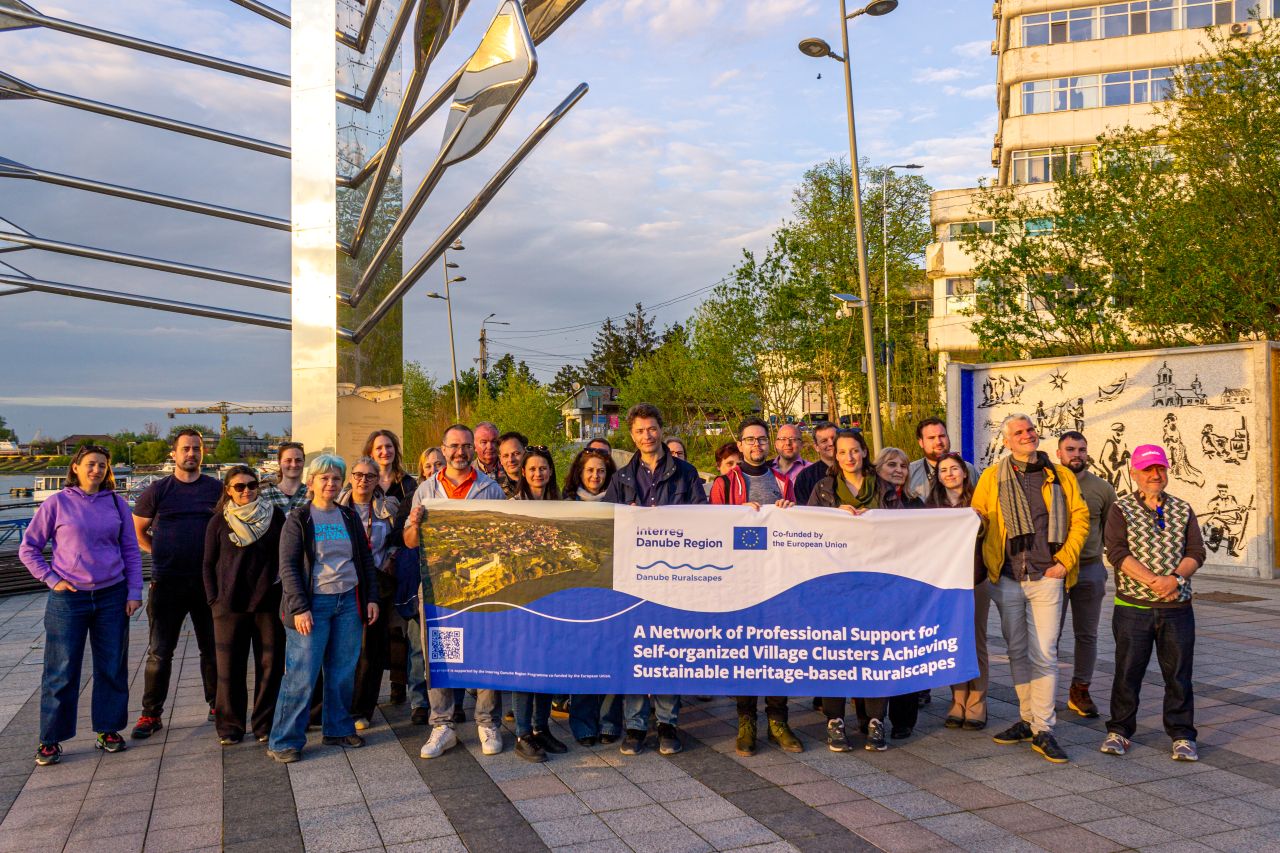
Monument of Ivan Patzaichin, Tulcea (RO). Credits: Alexandru Tone
Toward the water: the journey continues
From Vișina’s living heritage to Jurilovca’s restored Lipovan house and Tulcea’s fishing culture, the journey brought Danube Ruralscapes closer to the everyday knowledge of the Danube Delta region.
Across houses, courtyards, local initiatives, food traditions, fishing practices and community spaces, one message became clear: rural identity is not only preserved in places. It is carried by people who continue to use, repair, host, remember and share them. But the landscape story was only beginning.
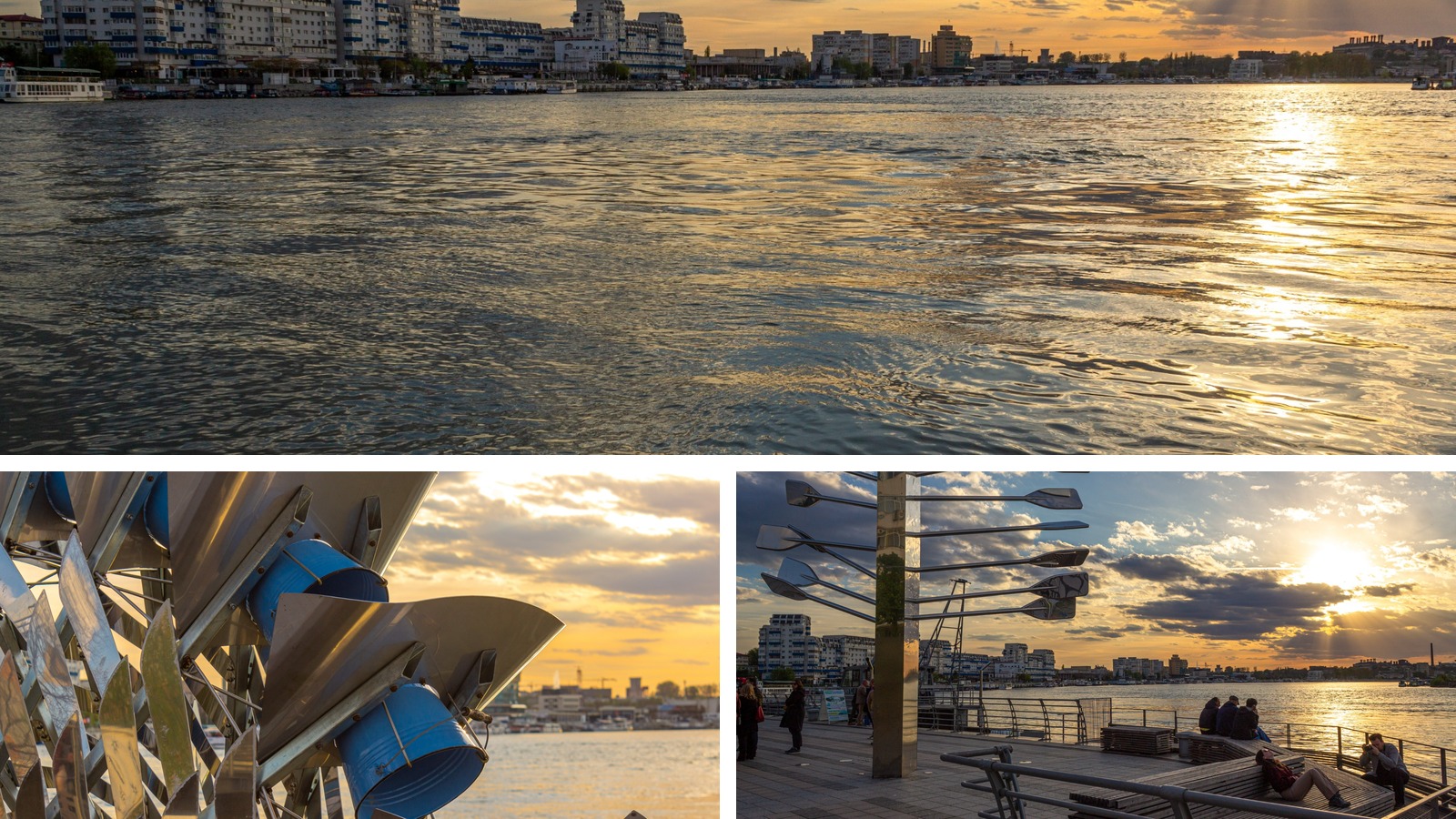
Photo credits: Alexandru Tone
From Tulcea, the route would turn toward water - by boat, through reeds, channels and open horizons - toward Mila 23 and Sulina.
There, the Danube Delta would reveal rural identity in another form: through movement, memory, community life and the meeting point between river and sea.
The Danube Ruralscapes partnership warmly thanks Ion Mincu University of Architecture and Urbanism, the Romanian Order of Architects, Asociația Ivan Patzaichin - Mila 23, and all local hosts, guides and community members in Vișina, Jurilovca and Tulcea for sharing their knowledge, places and stories - and for helping turn the study trip into a meaningful field experience of living heritage, local identity and shared rural futures.
Continue reading:
Part 3 follows the journey deeper into the Danube Delta - to Mila 23, Sulina and Izmail - where water becomes a way of understanding rural landscape identity.
#DanubeRuralscapes #DANUrB
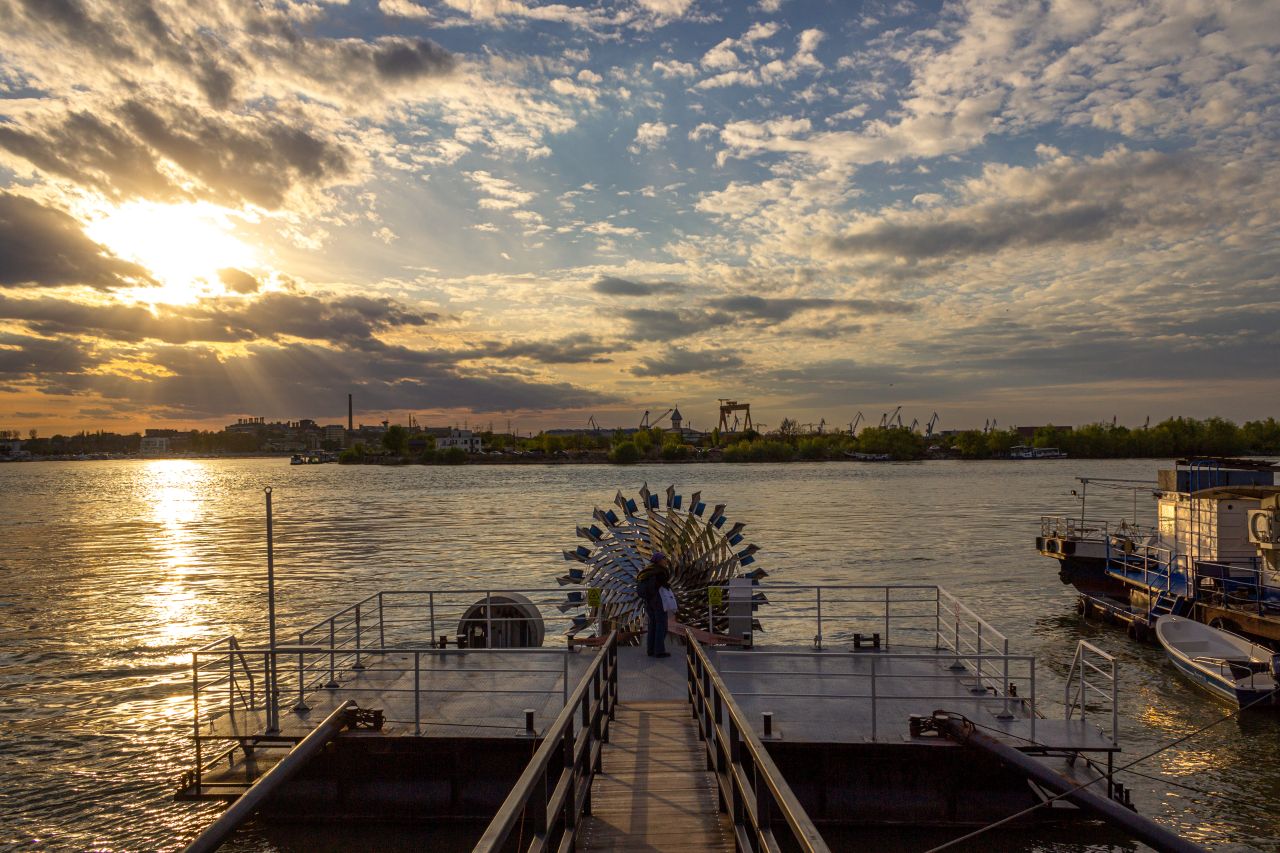
Sunset in Tulcea (RO). Credits: Alexandru Tone

14/05/2026
By Desislava Mincheva-Yordanova
Share on social media:


Cooperation

News & Events
Read the most recent updates and explore the upcoming events.


Would you like to receive project updates?
You're already part of our community!
Welcome to our newsletter community!
Subscribe to our newsletter