

The Values of Rural Communities in the Danube Region. Part 1
Danube Ruralscapes First Year Review and International Conference | Bucharest, 23 April 2026From Reflection to Dialogue in Bucharest
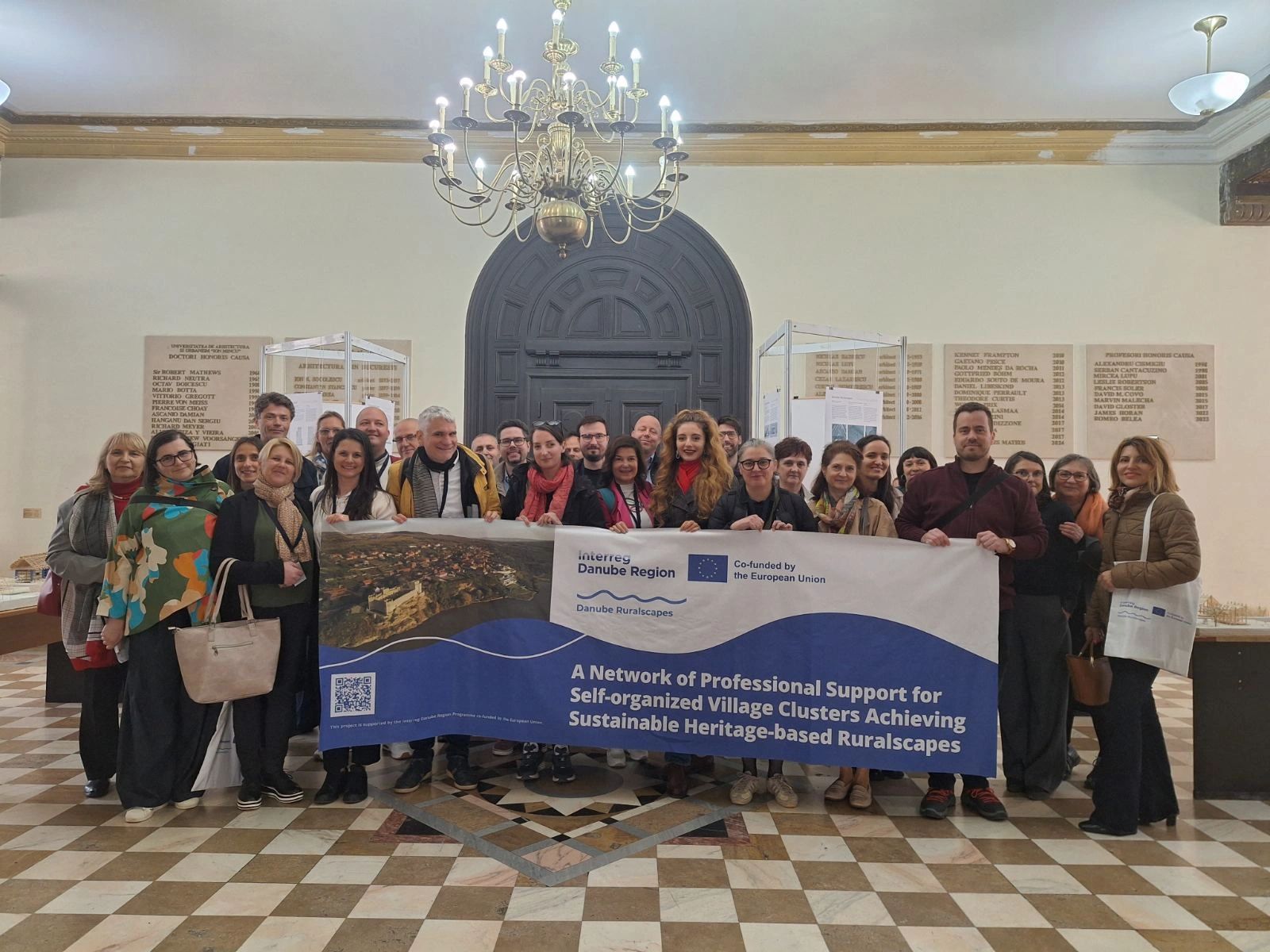
In Bucharest, the Danube Ruralscapes partnership marked an important moment in the life of the project: one year of shared work, reflection and cooperation across rural regions connected by the Danube.
Hosted at the Ion Mincu University of Architecture and Urban Planning, the programme brought together two closely connected moments: the First Year Review of the Danube Ruralscapes project and the international conference "The Values of Rural Communities in the Danube Region". The First Year Review took place in the morning, followed by two parallel international conference sessions in the afternoon and a joint closing discussion.
Together, they created more than a formal project meeting. They became a space for partners, researchers, practitioners, public authorities, local experts and stakeholders to reflect on progress, exchange knowledge and ask one of the project’s central questions: how can rural communities preserve their living heritage while responding to today’s social, environmental and economic challenges?
For Danube Ruralscapes, the answer begins with cooperation. Rural landscapes are not shaped by architecture alone, nor by policy alone. They are shaped by people, local knowledge, materials, memory, governance, tourism, public space and everyday decisions. Understanding these connections is essential for building more sustainable, attractive and resilient rural communities across the Danube Region.
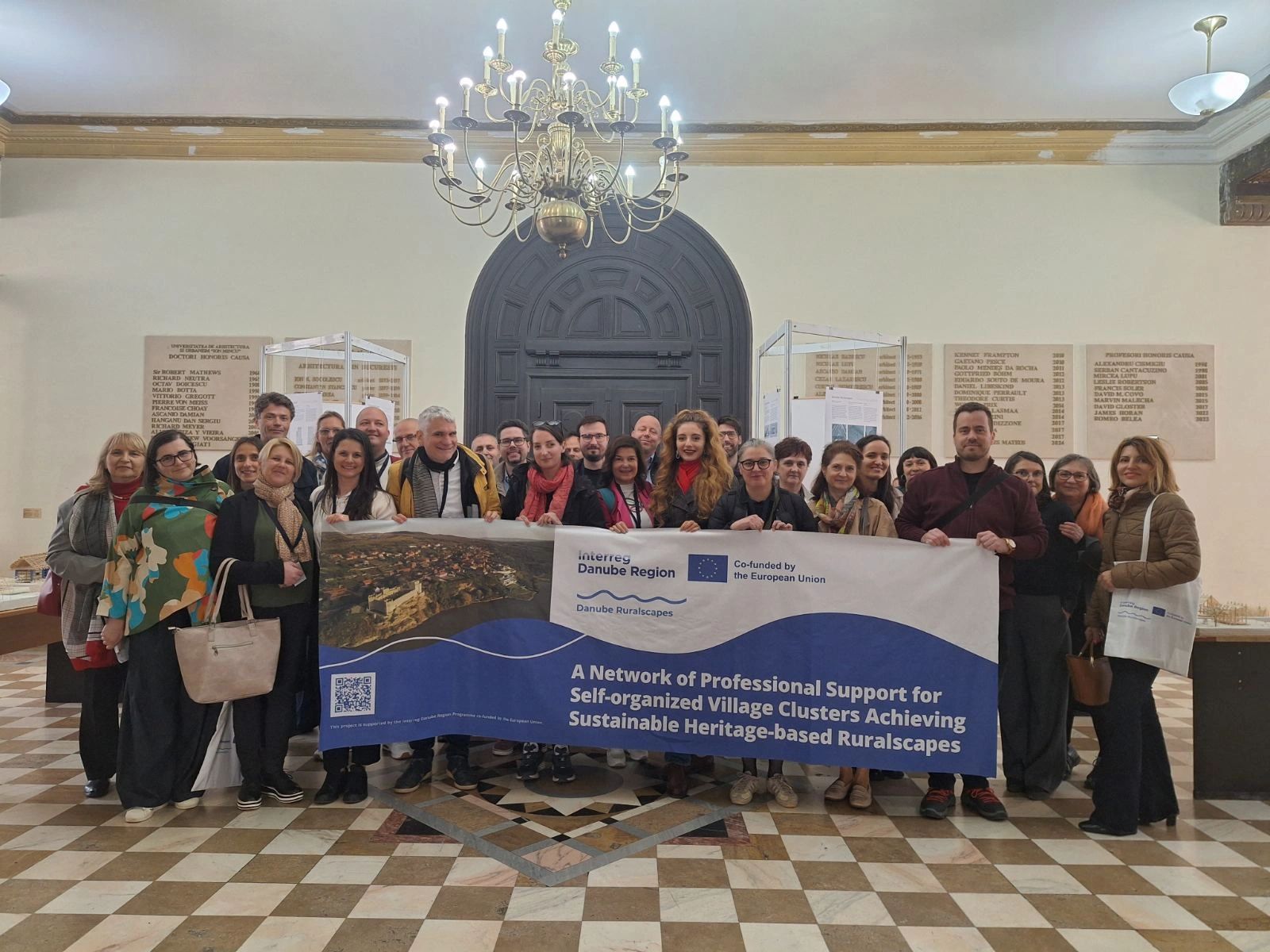
Credits: NTC BG Guide
Key figures from the Bucharest programme
The Bucharest day brought together two major project moments: the First Year Review and the International Conference. The morning session included implementation updates from the targeted microregions, while the afternoon conference programme featured two parallel sessions, 24 scheduled presentations and stakeholder contributions, and more than 30 named contributors from universities, professional organisations, public institutions and local stakeholder networks.
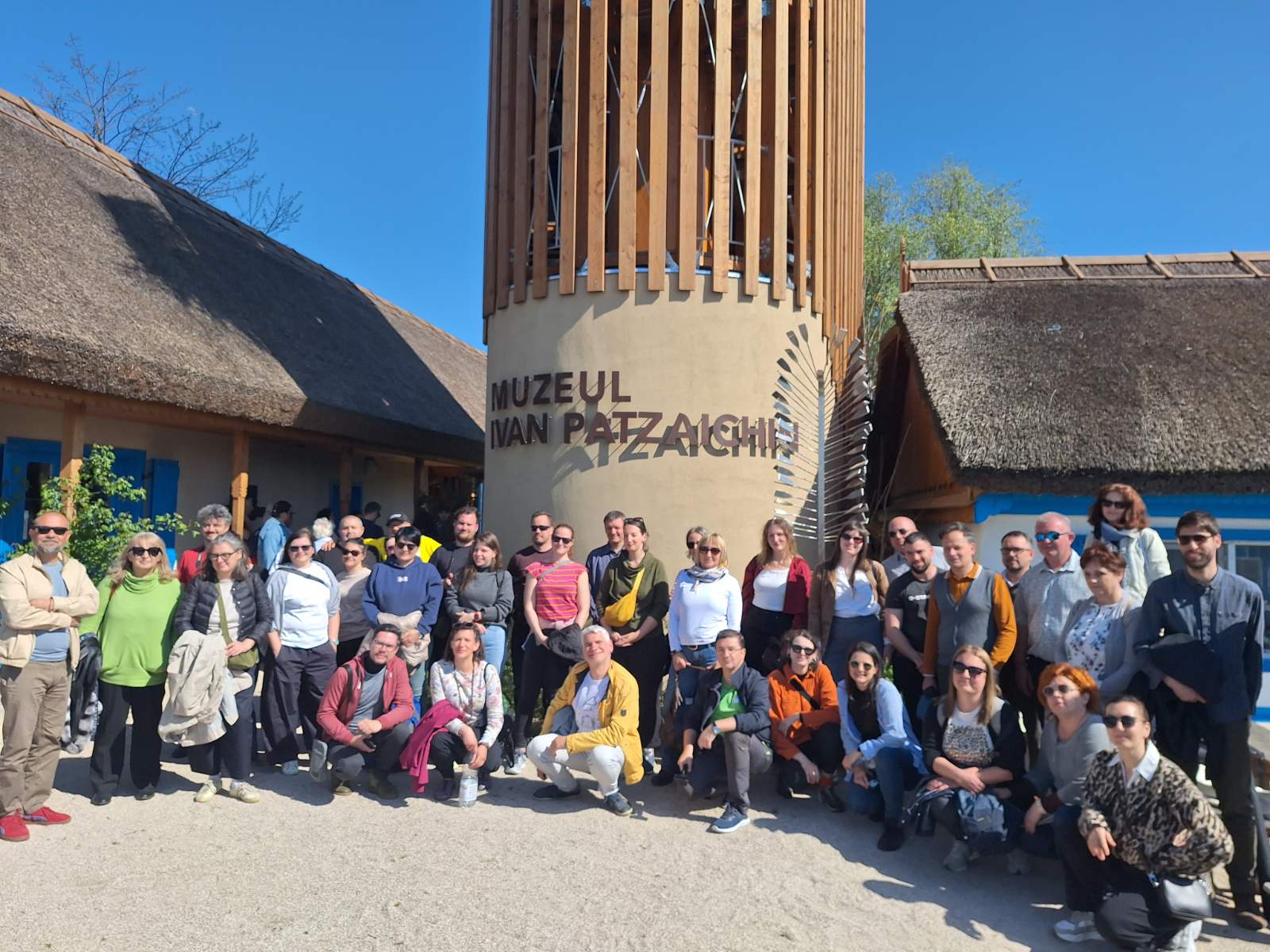
The event was part of the wider International Conference and Study Trip in the Danube Delta, organised between 23 and 27 April 2026, connecting the Bucharest dialogue with field learning in Tulcea County and the Danube Delta.
For us, at Danube Ruralscapes, this combination was important because it connected two levels of work: project implementation and wider professional debate. The First Year Review helped partners look at progress across pilot regions, while the conference opened the discussion toward researchers, public authorities, practitioners and stakeholders. This is exactly the kind of exchange needed for rural areas where local values, planning capacity, heritage protection and sustainable development must be addressed together.
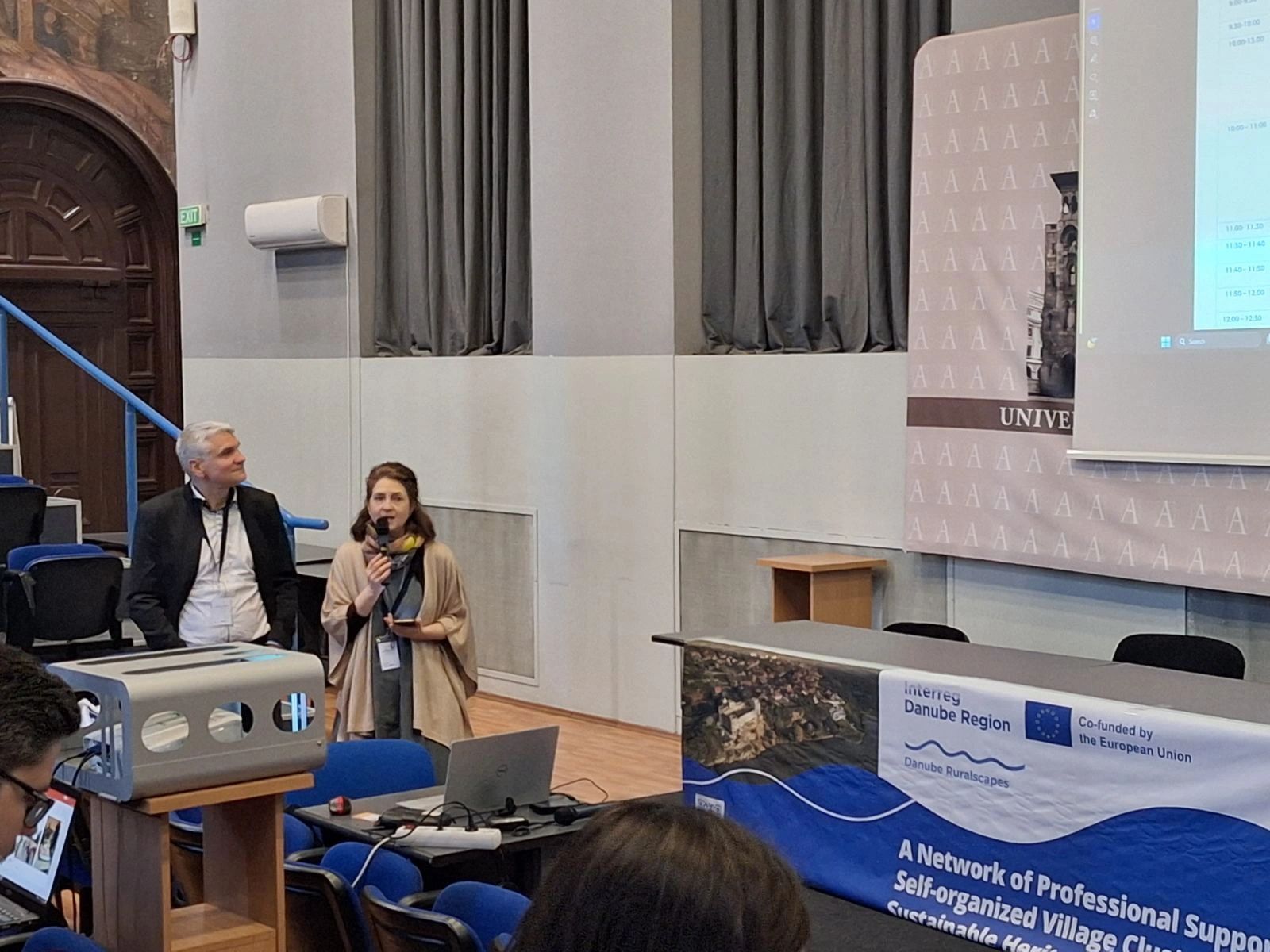
Credits: NTC BG Guide
Looking back at the first year
The morning session was dedicated to the First Year Review of the Danube Ruralscapes project. Partners presented the status of implementation across the targeted pilot microregions, including the Ipoly Valley, Baranja, Braničevo, the Banat Mountains, the Nikopol region, and the Danube Delta.
Each pilot region brought its own landscape, architectural character and governance context. Yet across the presentations, a shared challenge became visible: rural communities in the Danube Region hold remarkable cultural, architectural and landscape values, but often lack the professional and institutional capacity needed to protect, manage and develop them in a sustainable way.
This is the space where Danube Ruralscapes works. The project supports rural village clusters through practical tools, professional expertise and new models of cooperation, with the Architecture and Rural Landscape Identity Guides as one of its central instruments.
The First Year Review was therefore more than a reporting moment. It was a chance to align perspectives, discuss cooperation and communication, and prepare the partnership for the next stage of implementation.
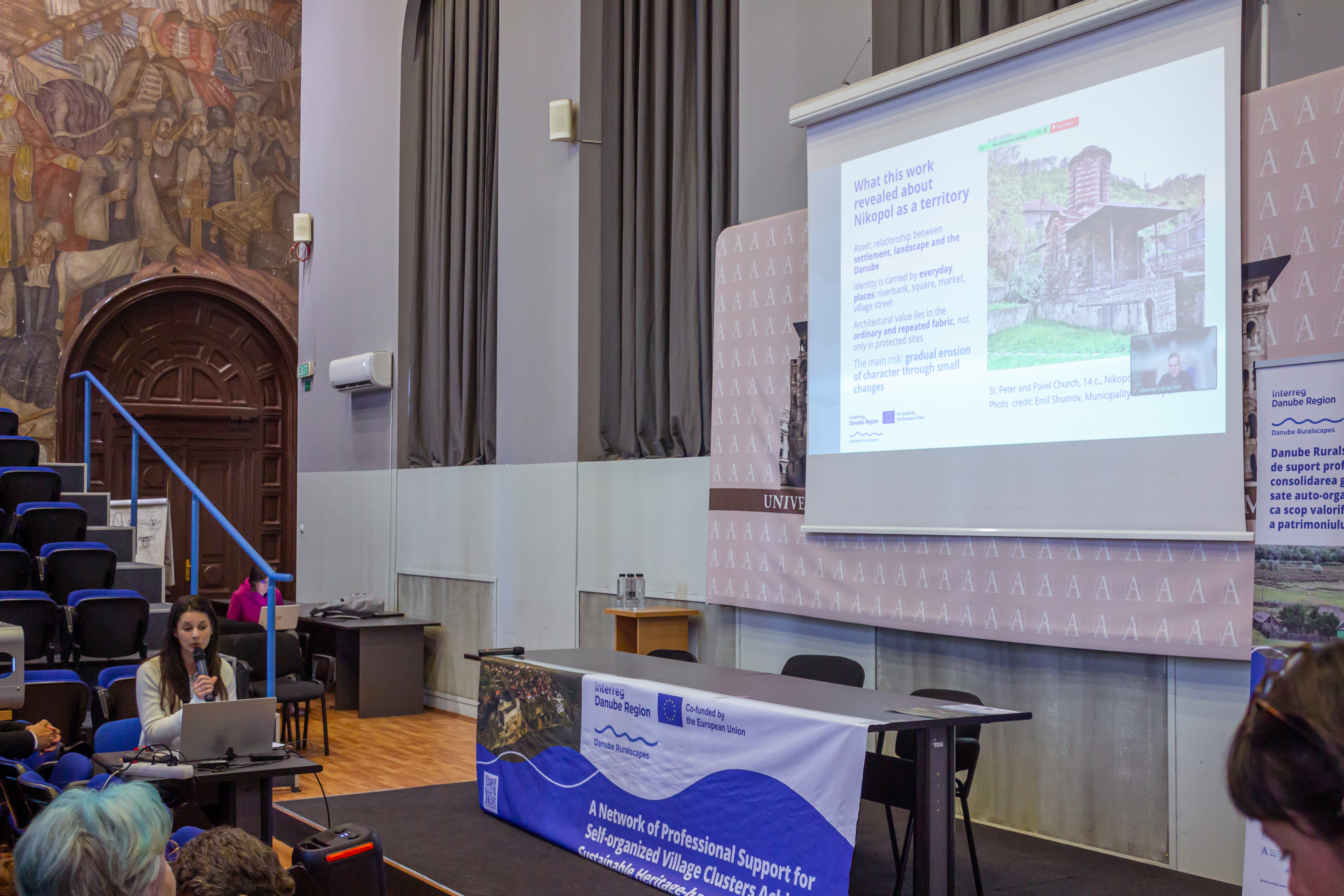
Credits: Alexandru Tone
Opening the dialogue
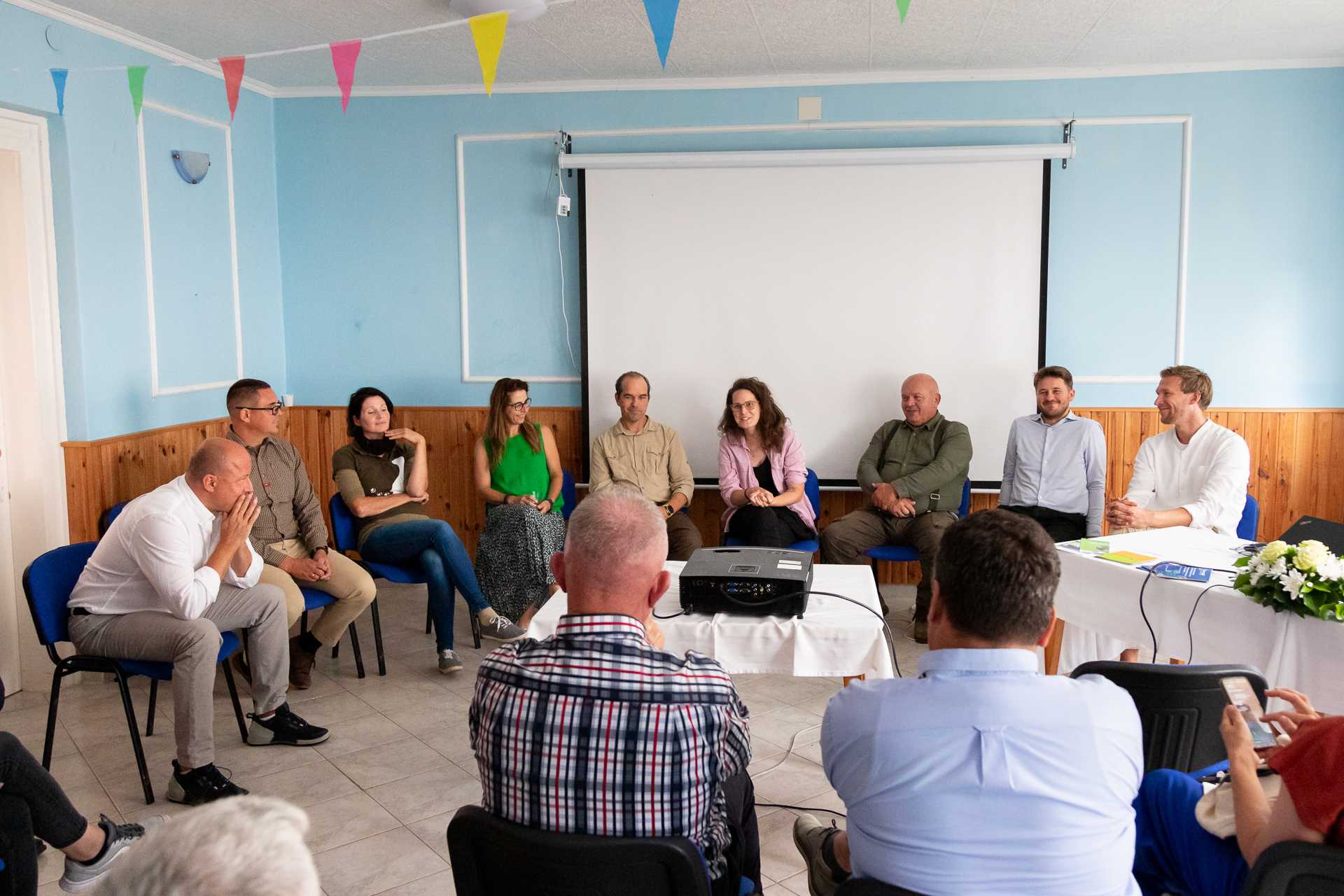
In the afternoon, the discussion opened outward through the international conference "The Values of Rural Communities in the Danube Region".
Across the two parallel sessions, the conference explored settlement networks, rural planning, vernacular architecture, experiential tourism, waterscape values, archaeological heritage, Danube logistics, nature-based solutions, rural identity, regenerative tourism and the development of Architecture and Rural Landscape Identity Guides.
The conference featured contributions by Bálint Kádár and Ágnes Bertyák, Marius Voica, Teodor Frolu, Emma Dumitru, Alina Catrina and Tudor Rusu, Dan-Felix Paraschiv, Kateryna Khmelenko, Alexandru Mexi, Ioana Săraru, Mónika Csőszi, Eliza Yokina, Angelica Stan, Aleksandra Đukić, Raluca Grama and Mihaela Hărmănescu, Nikola Mitrović, Tana Nicoleta Lascu, Elena Gogea, Ana-Maria Branea, Mirela Szitar-Sîrbu, Ștefana Bădescu, Marius Găman, Mihai Danciu, Milea Alexandru-Gabriel, Cristian Ionescu-Preotu, Dragan Drndarević, Cătălina Vărzaru, Krisztián Mészáros and Maria Bostenaru-Dan.
Together, these contributions showed that rural communities cannot be understood through a single lens. Their value lies not only in individual buildings, traditions or landscapes, but in the relationships between them - in how people inhabit places, transmit knowledge, manage resources and negotiate change.
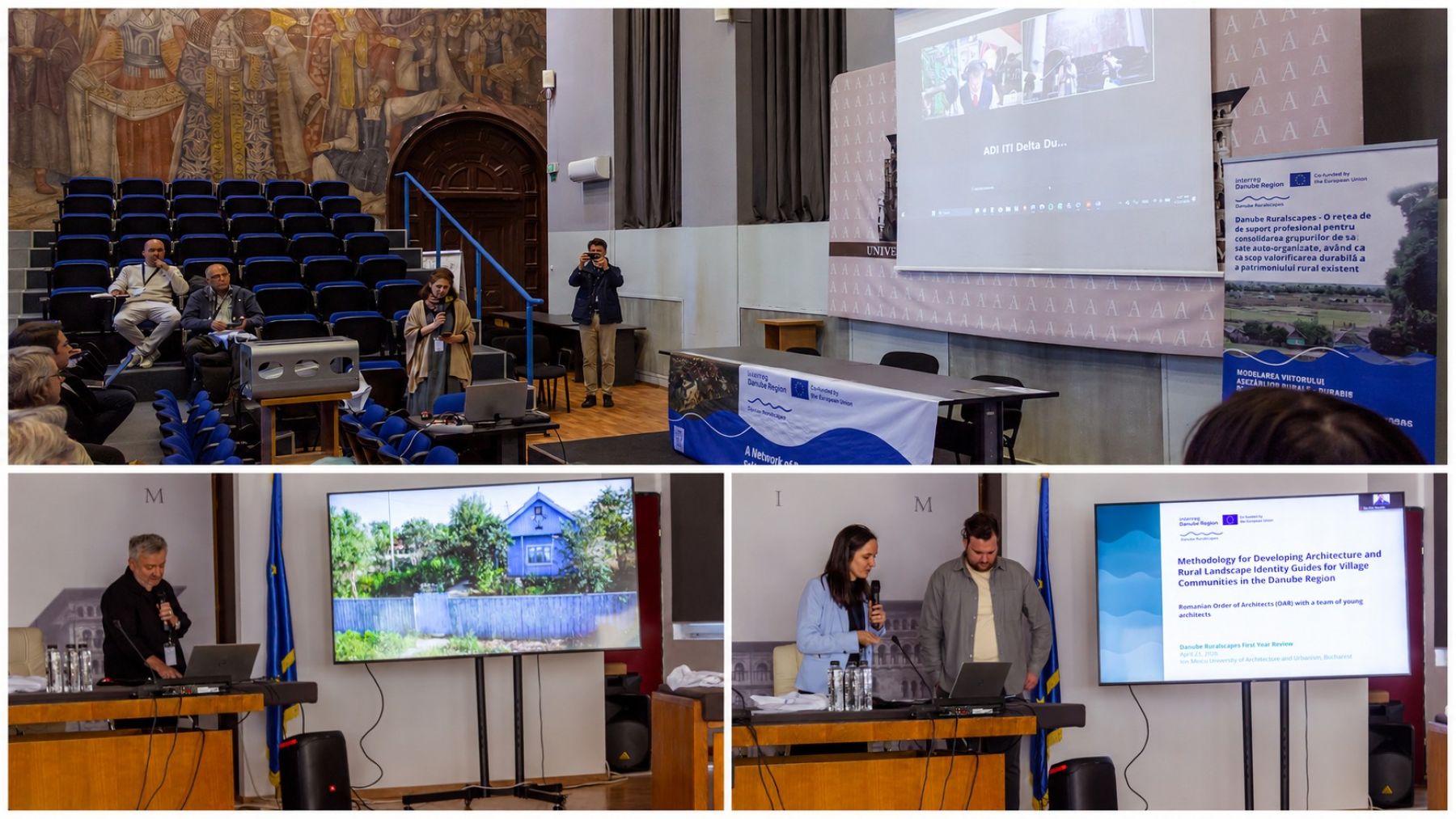
Photo credits: Alexandru Tone
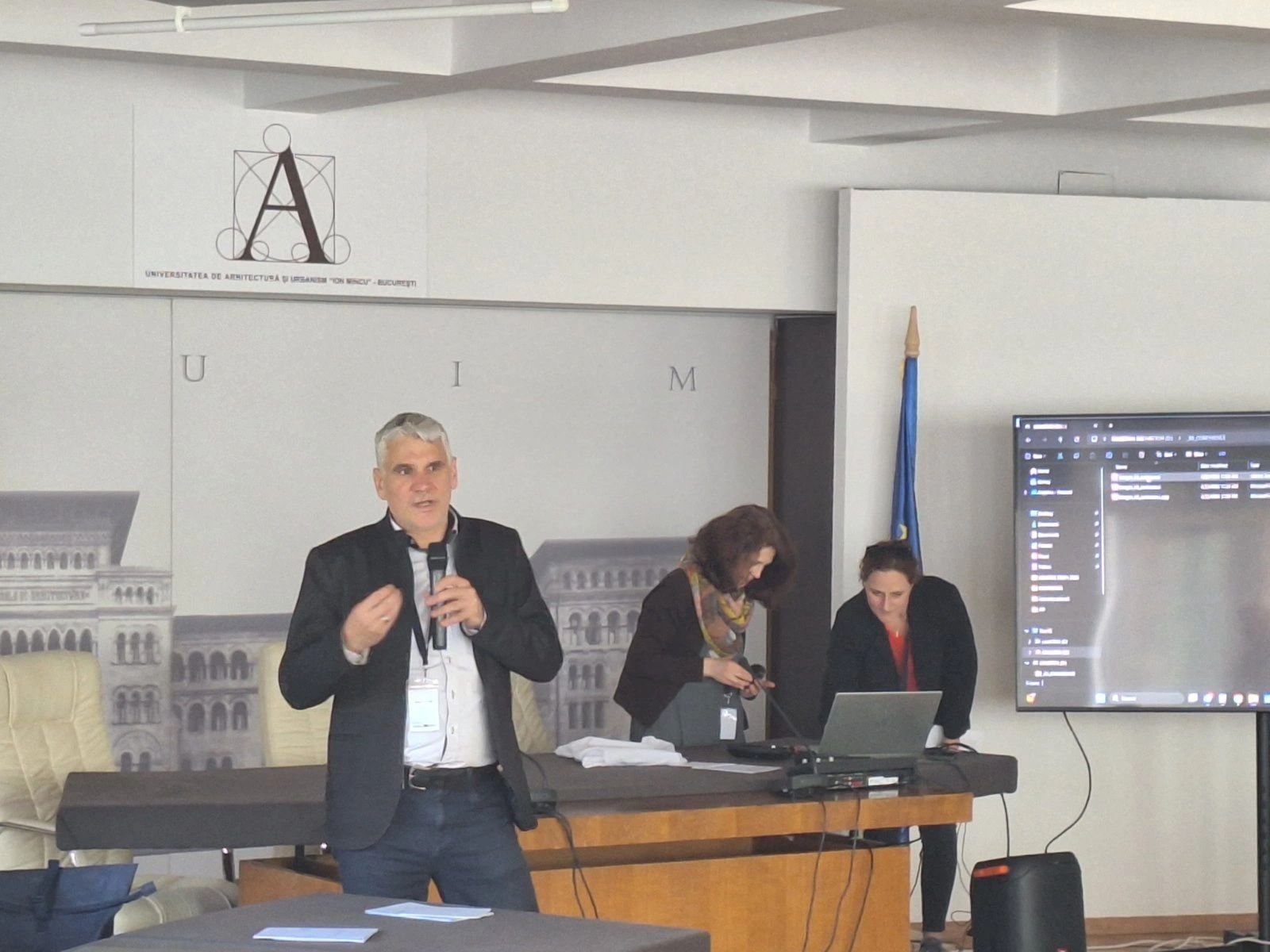
Credits: NTC BG Guide
Rural landscapes as living systems
One of the strongest messages of the day was that rural landscapes are living systems.
They are shaped by houses and streets, but also by rivers, gardens, crafts, routes, food traditions, public spaces, local economies and shared memory. They are also shaped by the decisions communities make about what to preserve, what to adapt and how to build for the future.
The stakeholder perspectives were especially important in grounding the discussion. Chief architects, local experts, public representatives and practitioners brought the conversation closer to the realities of governance and implementation. Their contributions underlined that rural development cannot remain abstract. Villages face real pressures: limited administrative capacity, fragile built heritage, demographic change, environmental risks and standardised construction practices.
At the same time, the discussions highlighted the strong resources rural areas already hold: traditional building knowledge, local materials, distinctive landscapes, community initiatives and the potential for more sustainable forms of local development.
This is why the Architecture and Rural Landscape Identity Guides are central to Danube Ruralscapes. Their value lies in connecting professional expertise with local realities. For the project, the Guides are not only technical outputs, but practical tools that can help rural communities recognise what is valuable in their landscapes and use this knowledge for better planning, stronger local identity and more sustainable futures.
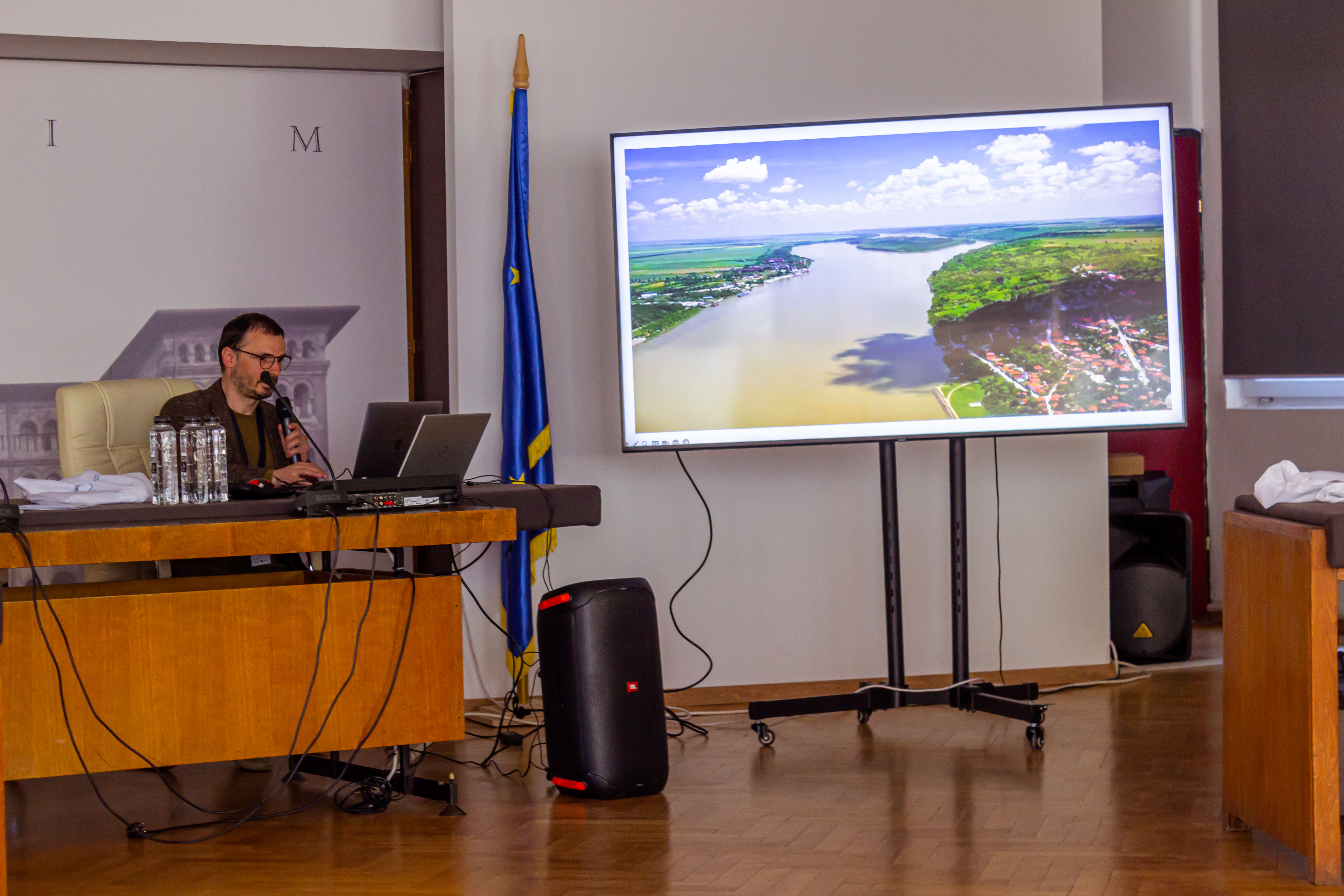
Credits: Alexandru Tone
A bridge toward field learning
The Bucharest programme opened the conversation. The next step was to follow those values into the villages, landscapes and local initiatives of Tulcea County and the Danube Delta.
What had been discussed in the conference hall - rural identity, vernacular architecture, local knowledge, governance, sustainability and community capacity - would become visible on the ground in Vișina, Jurilovca, Tulcea, Mila 23, Sulina and Izmail.
The Danube Ruralscapes partnership warmly thanks our partners “Ion Mincu” University of Architecture and Urbanism and the Romanian Order of Architects, all Romanian project partners, contributors, speakers and everyone who helped shape and host the Bucharest programme. Your work created the conditions for a day of meaningful exchange, professional reflection and shared commitment.
Continue reading: Part 2 follows the journey from Visina to Jurilovca and Tulcea, where the Bucharest dialogue became field learning.
#DanubeRuralscapes #DANUrB
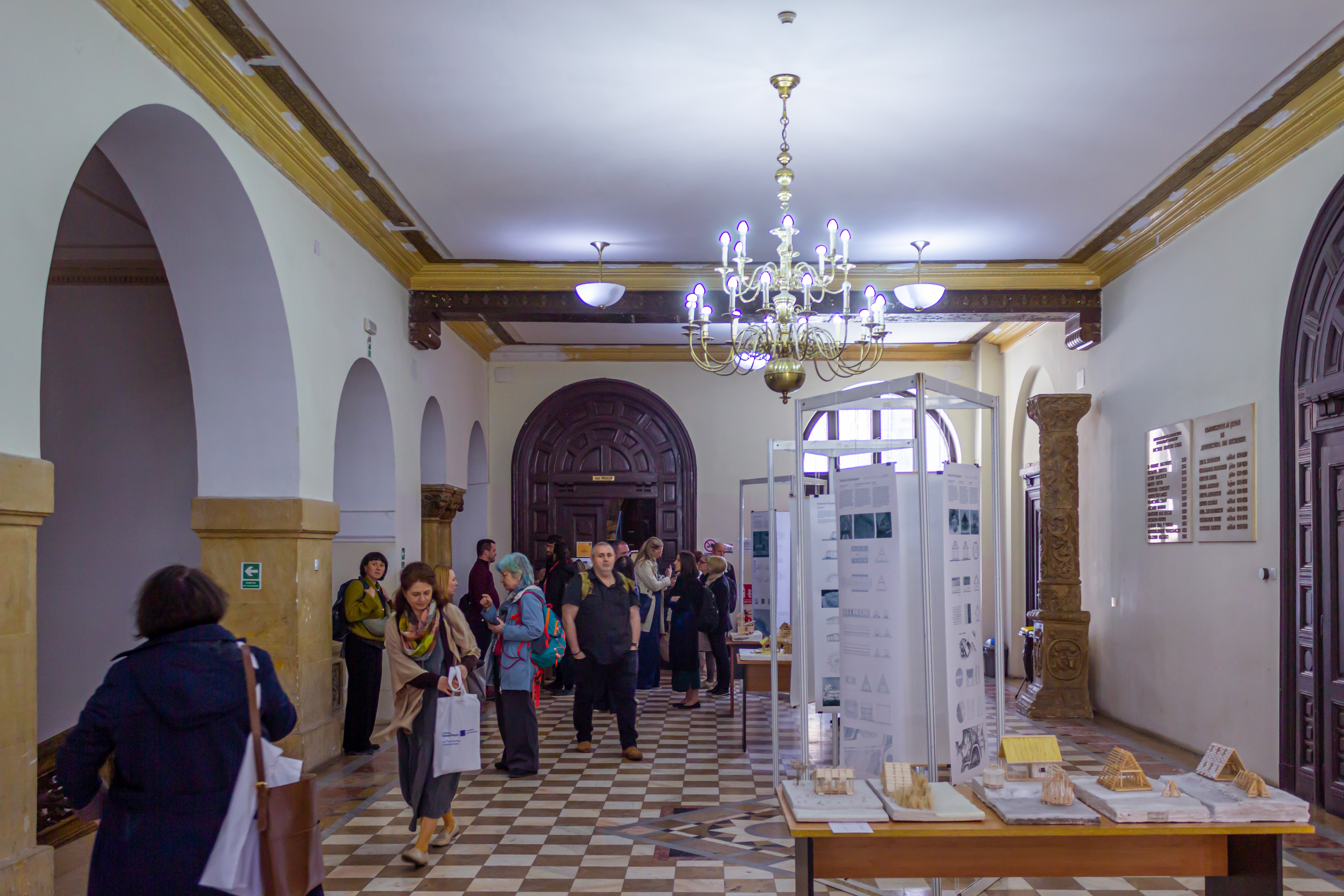
Credits: Alexandru Tone

07/05/2026
By Desislava Mincheva-Yordanova
Share on social media:


Cooperation

News & Events
Read the most recent updates and explore the upcoming events.


Would you like to receive project updates?
You're already part of our community!
Welcome to our newsletter community!
Subscribe to our newsletter