

Strengthening Knowledge and the Regulatory Framework for Energy Community Development in Montenegro
The Agency for Development and Business Support Cetinje is successfully implementing the DANUBE ENERGY COMMUNITIES ACCELERATOR – DECA project in Montenegro, with the aim of strengthening knowledge, local capacities, and the institutional and regulatory framework necessary for the development of energy communities.
Energy communities represent an innovative and participatory model of energy governance that goes beyond the mere production and consumption of renewable energy. They place citizens, local institutions, SMEs and public bodies at the centre of the energy system, enabling them to jointly invest in, manage and benefit from renewable energy projects. In the Montenegrin context—where energy transition is high on the policy agenda but citizen participation mechanisms are still limited—this concept opens space for more democratic, locally driven and socially just energy solutions.
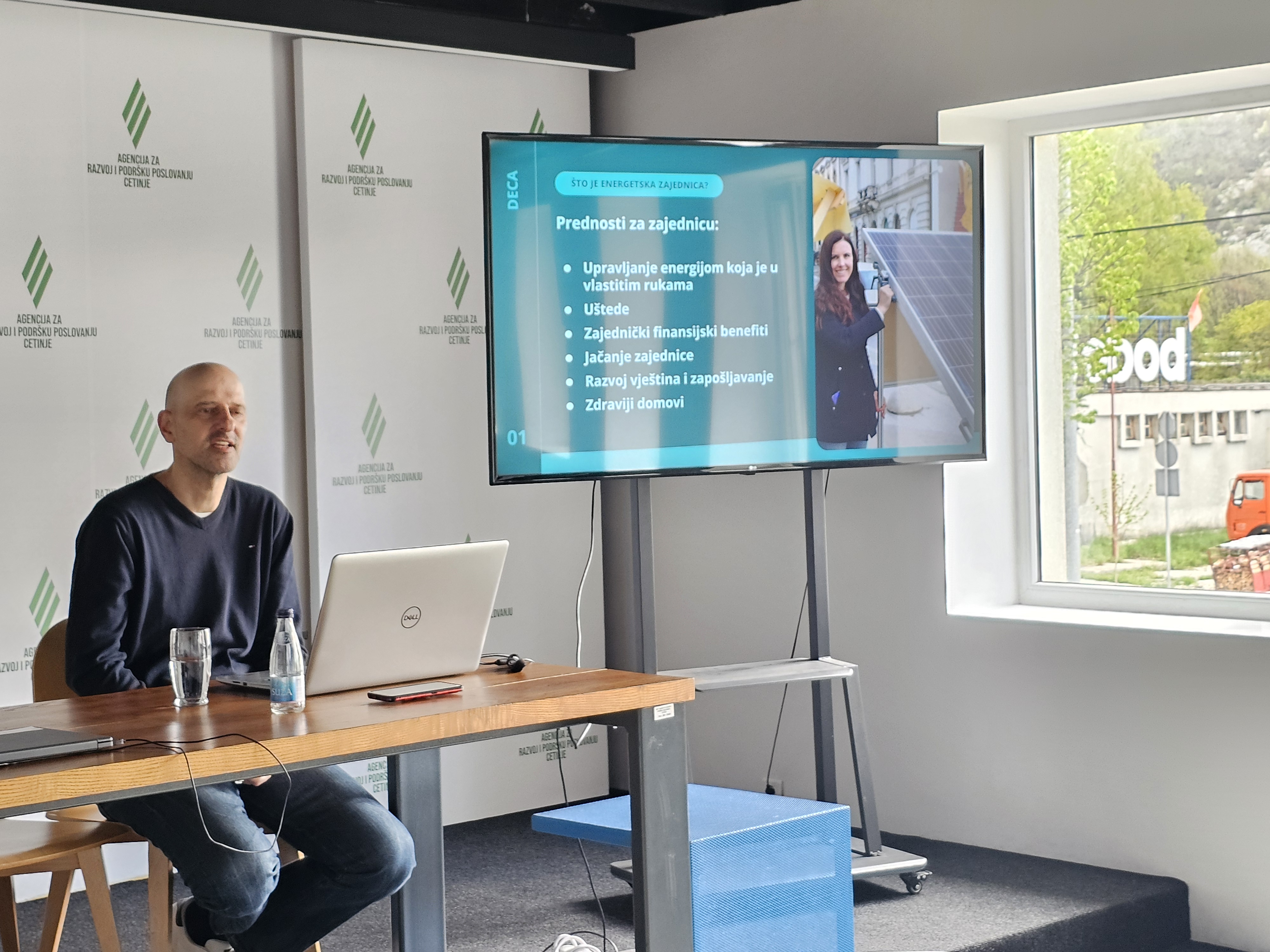
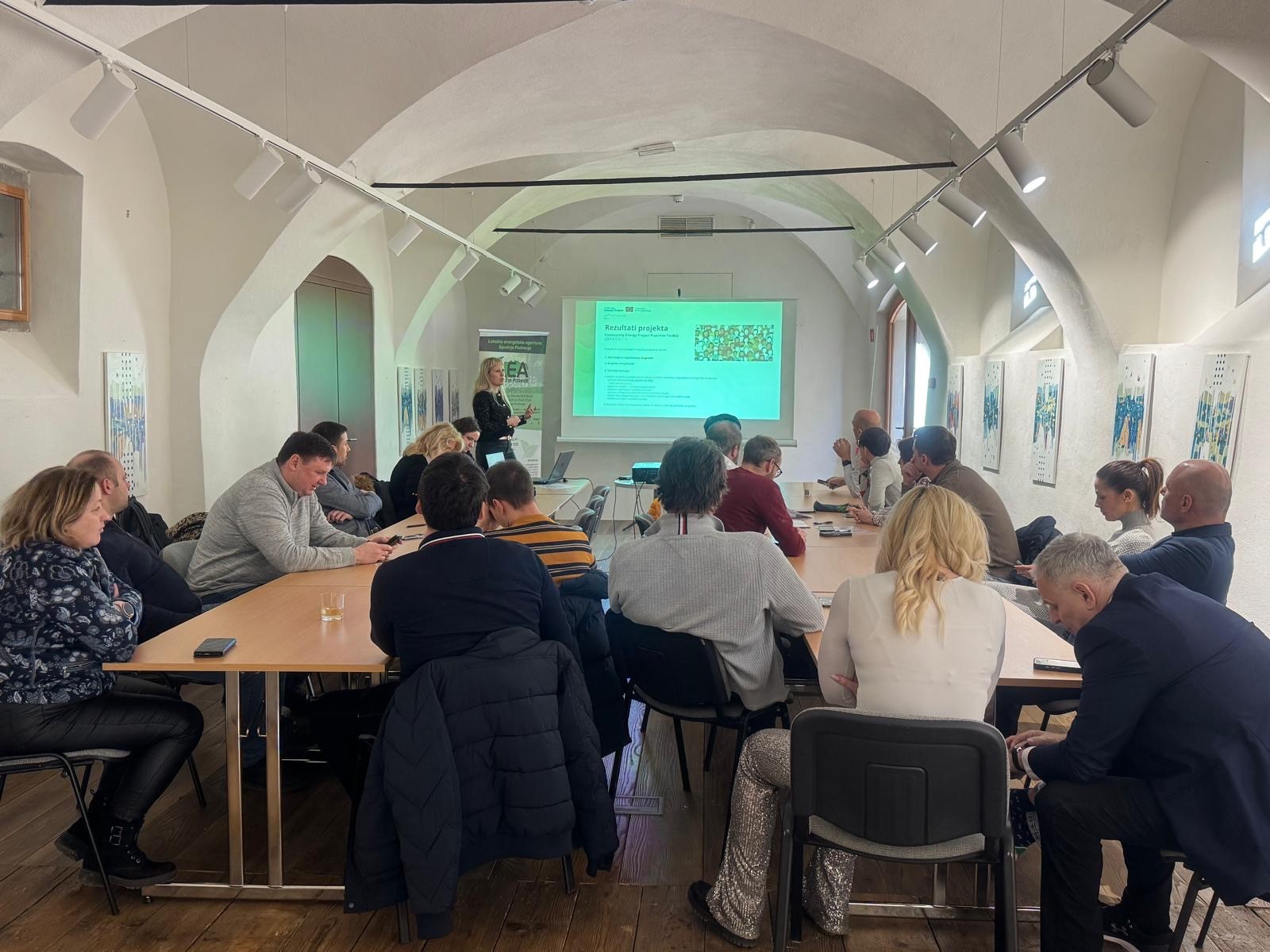
During 2025, within the DECA project framework, a comprehensive series of introductory and thematic training sessions, workshops and stakeholder consultations was implemented in Cetinje and beyond. These activities gathered representatives of local self-government, public institutions, businesses, civil society organisations and interested citizens. The focus was placed not only on understanding the legal and technical aspects of energy communities, but also on exploring practical pathways for their establishment in Montenegro.
One of the key results of these activities is the increased awareness and understanding among local stakeholders of how energy communities can function in practice, what benefits they can generate (reduced energy costs, energy independence, local economic development), and which institutional steps are necessary for their establishment. Participants demonstrated strong interest in collective solar investments, particularly in urban settings with shared public or business buildings.
Given the still restrictive and insufficiently clear legal framework in Montenegro, the initial phase of the project was strongly oriented towards dialogue with relevant national institutions. Through consultations and expert discussions, the Agency worked to clarify regulatory possibilities and identify the most feasible legal and organisational models for piloting an energy community without excessive administrative barriers. A key lesson learned is that early and continuous communication with regulators is essential in countries where energy community legislation is not yet fully operationalised.
As a concrete outcome, preliminary assessments indicate strong potential for establishing a pilot energy community linked to the installation of a rooftop solar power plant on the commercial building in Cetinje, in cooperation with approximately ten other users of the business premises. This model would serve as a demonstrative example of collective self-consumption in Montenegro and could be replicated in other municipalities.
Within the project, a Community Energy Collective Investment Options Appraisal for Montenegro was developed. This analytical document provides a detailed overview of possible collective investment models, financial structures and governance arrangements adapted to the Montenegrin legal and economic environment. It represents an important step towards creating a national knowledge base and practical guidelines for future energy communities.
Lessons learned from the trainings and workshops held in Cetinje and across Montenegro show that there is strong grassroots interest in renewable energy cooperation, but also a clear need for simplified procedures, clearer legal definitions and targeted financial instruments. Capacity building at the local level proved crucial: once stakeholders understood the economic logic and governance structure of energy communities, their perception shifted from seeing them as abstract policy concepts to realistic and achievable local initiatives.
By linking European good practices with local needs and realities, the DECA project is laying the groundwork for the first structured initiatives in the field of energy communities in Montenegro. In order to further strengthen cooperation, exchange experiences and present progress achieved at local level, a DECA project partners’ meeting is planned for March in Cetinje, where pilot developments and next steps will be discussed.

20/02/2026
By
Share on social media:



News & Events
Read the most recent updates and explore the upcoming events.





Would you like to receive project updates?
You're already part of our community!
Welcome to our newsletter community!
Subscribe to our newsletter