
2nd Report LSG meeting - Hungary
Hungarian stakeholders explored how better training and support can help women entrepreneurs
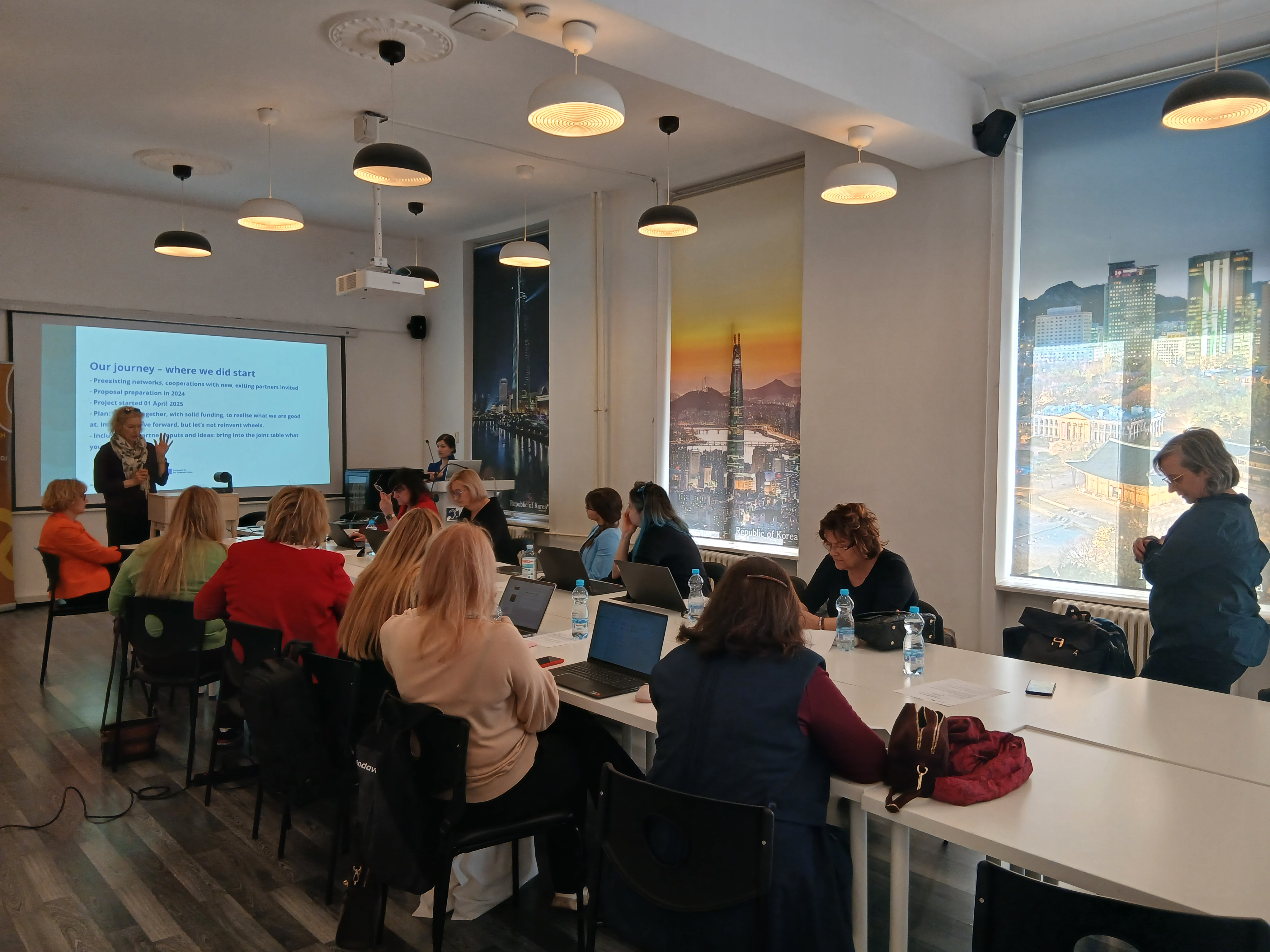
On 13 May 2026, HETFA Research Institute organised the second Hungarian Local Support Group meeting of the IMPACTA project in Budapest. The meeting took place as part of a wider stakeholder event hosted by the Hungarian Economic Development Agency and Pannon Business Network within the WE.Circular project. The day focused on women’s entrepreneurship, circular and digital transition, and possible cooperation between projects working on similar challenges.
Within this broader programme, HETFA held a dedicated IMPACTA workshop on the training and support needs of women entrepreneurs. This workshop was especially important for the project, as its results will feed into the further development of IMPACTA’s training methodology and stakeholder work in Hungary.
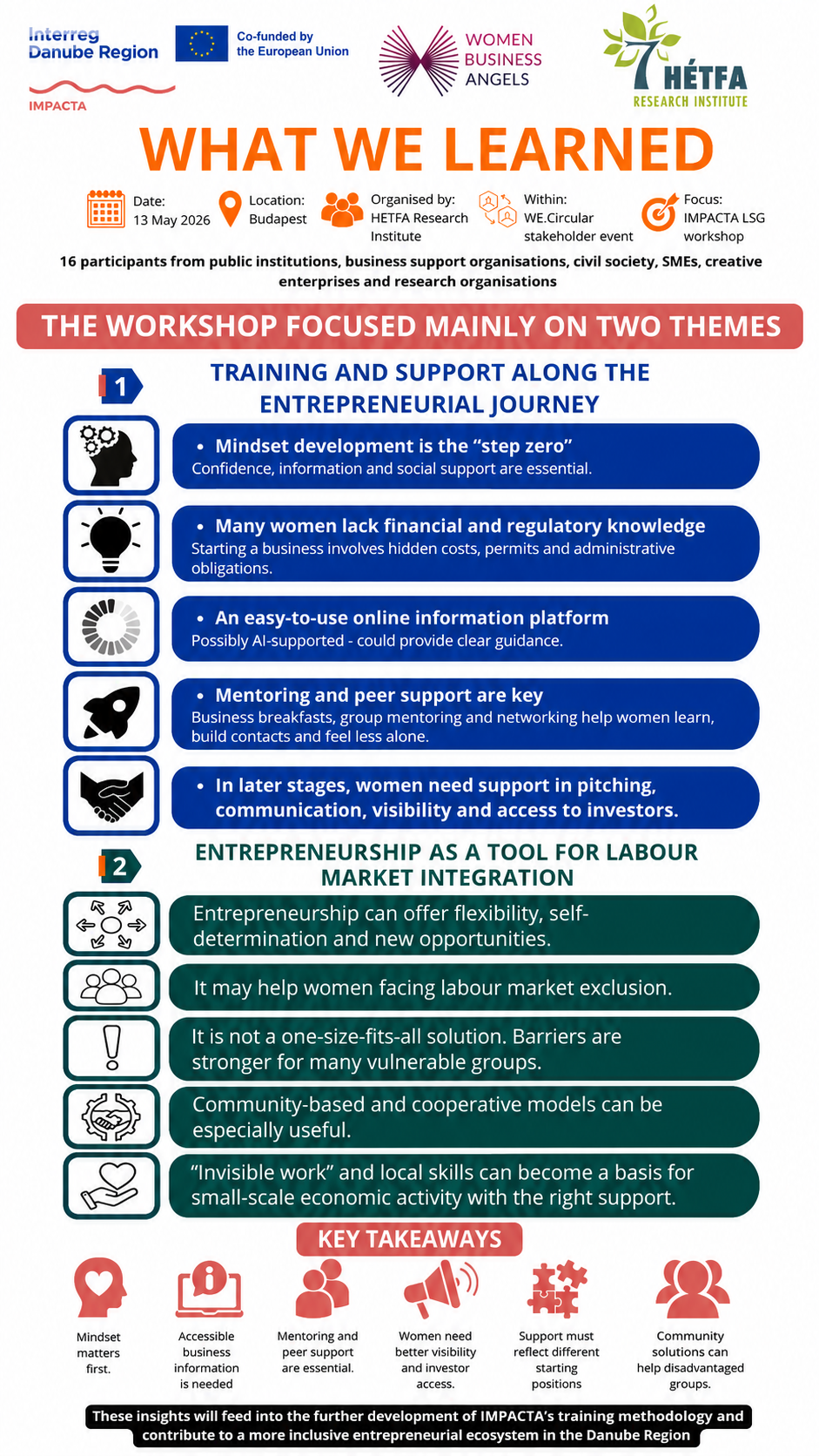
The event brought together 16 participants from different sectors, including public institutions, business support organisations, civil society, SMEs, creative enterprises and research organisations. This mix made it possible to discuss women’s entrepreneurship from several angles: policy, business development, social inclusion and the everyday reality of running a small enterprise.
At the beginning of the workshop, HETFA introduced the IMPACTA project, its objectives and the role of the Hungarian Local Support Group. Participants also received a short overview of the preliminary research findings and the draft training framework developed within the project. The main aim was to collect practical feedback from stakeholders and to better understand what kind of support women entrepreneurs need at different stages of their journey.
The discussion focused on two main questions. The first was how and when support should be provided along the entrepreneurial path. Participants reflected on four stages: mindset development, ideation, incubation and acceleration. A strong message from the group was that mindset development should be treated as a “step zero”. Many women do not start a business not because they lack ideas or skills, but because they lack information, self-confidence, social support or the feeling that entrepreneurship is a realistic option for them.
Participants also highlighted the importance of financial and regulatory knowledge at the very beginning of the entrepreneurial journey. Starting a business often involves hidden costs, permits, registrations and administrative obligations. These can create serious difficulties, especially for women who start their business next to family responsibilities or another job. The group suggested that an easy-to-use online information platform could help future entrepreneurs understand the main steps, costs and legal requirements before they start. An AI-supported tool was also mentioned as a possible way to provide more personalised guidance.
Mentoring and peer support were also seen as key elements of effective support. Participants emphasised that women entrepreneurs often need more than technical knowledge. They also need a community where they can ask questions, exchange experiences and feel less alone. Regular business breakfasts, group mentoring and informal networking spaces were mentioned as good examples. These formats can build trust, strengthen contacts and support learning through real-life experience.
The second discussion focused on entrepreneurship as a possible tool for social innovation and labour market integration. Participants agreed that entrepreneurship can offer flexibility and self-determination, especially for women who face difficulties in traditional employment. At the same time, they also stressed that entrepreneurship is not a universal solution. For Roma women, women with disabilities, women in rural areas or women returning to the labour market after a longer absence, the barriers can be much stronger. Administrative burdens, lack of capital, limited networks, cultural expectations and geographical isolation can all make business creation difficult.
For this reason, participants underlined the importance of community-based and cooperative models. Some women may not be able to build and maintain a business alone, but they could benefit from shared resources, local cooperation and collective forms of work. The discussion also touched on the value of “invisible work”, such as craft skills, care-related knowledge or domestic competencies. With the right support, these skills could become a starting point for small-scale economic activity.
The workshop confirmed that women entrepreneurs need different forms of support at different stages. In the early phase, confidence-building, basic business knowledge and regulatory literacy are essential. Later, mentoring, communication and pitching skills, visibility, and access to investors and networks become more important. The discussion also showed that support systems must be sensitive to the very different starting positions of women.
The feedback collected during the HETFA workshop will support the next steps of the IMPACTA project in Hungary. It will help make the training methodology more practical, more relevant and more closely connected to the real needs of women entrepreneurs. In this way, the Hungarian Local Support Group contributes to IMPACTA’s wider goal: building a more inclusive entrepreneurial ecosystem in the Danube Region, where women from different backgrounds can access the knowledge, networks and opportunities they need to turn their ideas into sustainable initiatives.

22/05/2026
By Renáta Anna Jaksa
Share on social media:


Social

News & Events
Read the most recent updates and explore the upcoming events.



Would you like to receive project updates?
You're already part of our community!
Welcome to our newsletter community!
Subscribe to our newsletter