

DHC Sector Continues to Grow and Decarbonise
On Wednesday, 6 May 2026, the REHEATEAST transnational online workshop entitled Accelerating the Future of District Heating: From Policy to Practice brought together participants from Hungary, Slovakia and Slovenia to discuss the future of district heating and cooling (DHC).
Achieving efficient, affordable, and resilient DHC systems is becoming a strategic priority for Europe, stressed Mr. Stane Merše, Head of the Energy Efficiency Centre at the Jožef Stefan Institute (JSI-EEC), which organised the event, describing the workshop as an important platform for exchanging experience, sharing best practices, and strengthening regional cooperation.
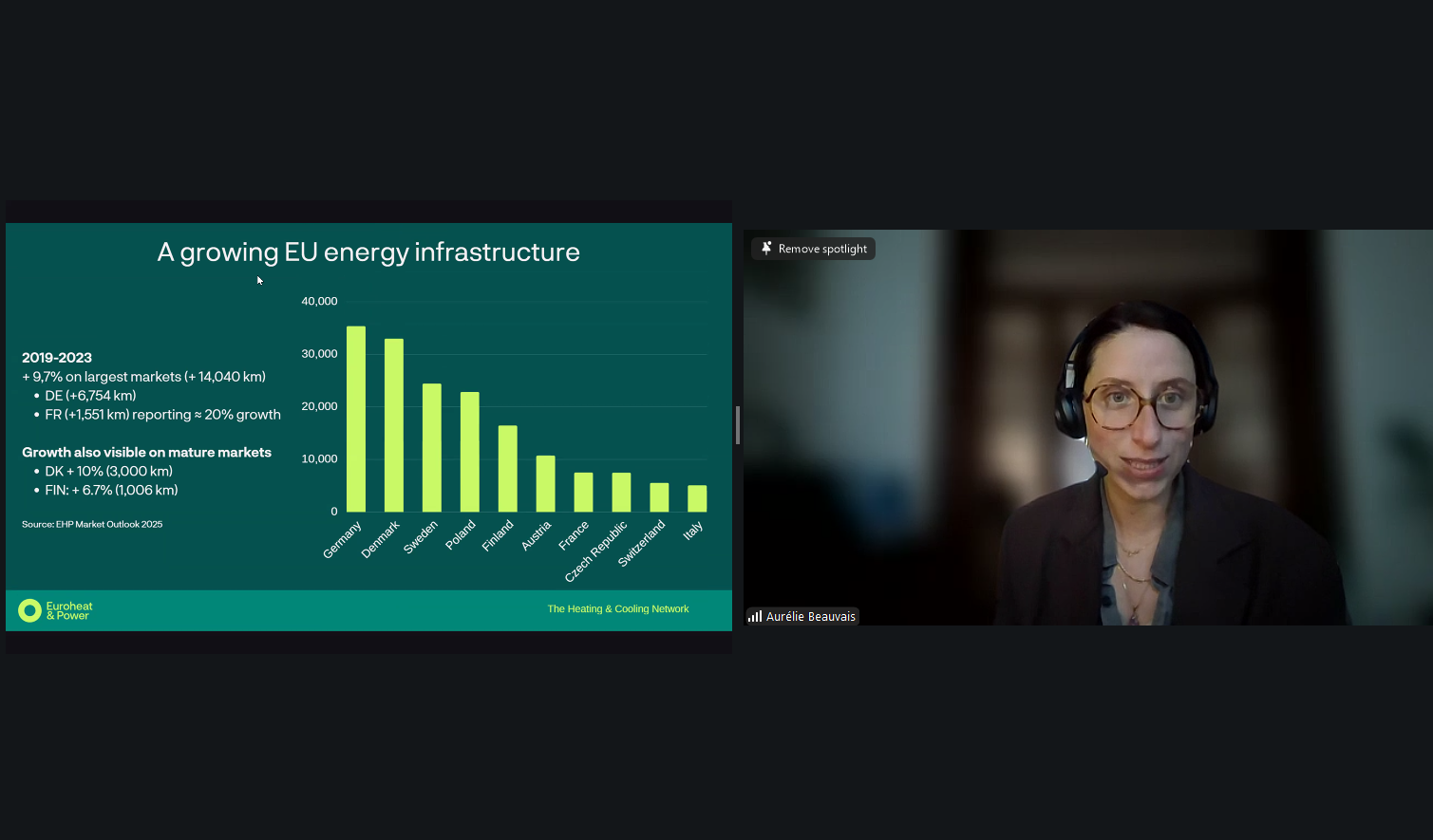
The first part of the event featured keynote presentations by two leading European experts in DHC: Ms. Aurélie Beauvais, Managing Director of Euroheat & Power - the international network for district energy bringing together more than 160 members from over 30 countries, and Mr. Birger Lauersen, Manager of International Affairs at the Danish District Heating Association.
Ms. Beauvais highlighted the growing importance of DHC in strengthening the EU’s energy resilience, also within the recently published AccelerateEU Communication. In order to deliver flexibility and achieve decarbonisation by 2050, the DHC sector is expected to reach a 55% share of the heat market by 2050 - four times today’s level. According to Beauvais, this ambitious target is achievable through strong local heat planning, better integration between energy sectors, and the development of well-prepared, bankable projects supported by effective implementation frameworks.
Mr. Lauersen presented the Danish experience, where more than 70% of all households are connected to DHC networks, while the share in multi-unit residential buildings reaches almost 93%. He noted that the area heated by DH increased by nearly 30% between 2011 and 2025, underlining the sector’s continued expansion. Mr. Lauersen also reminded that Denmark’s DH tradition dates back to the 1950s, and stressed that the country aims to achieve a fully carbon-neutral heating and electricity sector by the early 2030s.
The workshop also presented the outcomes of the REHEATEAST project, with Lea Leopoldović from the Energy Institute Hrvoje Požar showcasing the project’s key achievements. These include detailed analysis of the DH sector in the Eastern Danube Region, the digital platform containing regional DHC data, online training materials and establishment of a transnational network of decision-makers.
The event concluded with presentations of pilot projects implemented by the REHEATEAST project partners from Hungary, Slovakia and Slovenia. The projects particularly highlighted the importance of strong stakeholder cooperation and the early involvement of relevant actors throughout the planning and implementation processes on both the supply and demand side.
· European perspective on DHC and decarbonisation, Aurélie Beauvais, Euroheat & Power
· Modern DHC Approaches – Danish Example, Birger Lauersen, Danish District Heating Association
· On the way towards efficient and sustainable DHC – REHEATEAST lessons learned, Lea Leopoldović, Energy Institute Hrvoje Požar, Croatia
· Improving energy efficiency of central heating in Pécs, Judit Kis-Pongrácz, Pannon European Grouping of Territorial Cooperation, Hungary
· Stakeholder cooperation models for successful energy renovation of residential neighbourhoods, Tamas Solymosi, National Energy Agency, Hungary
· Mapping optimal energy sources and potential DH demand, Pamela Valentová, European Grouping of Territorial Cooperation Via Carpatia, Slovakia
· Enhancing operational efficiency of Cankova DH system, Štefan Žohar, Local Energy Agency Pomurje, Slovenia
Presentations can be downloaded from here.

11/05/2026
By dr. Judit Füzér
Share on social media:


Green

News & Events
Read the most recent updates and explore the upcoming events.








Would you like to receive project updates?
You're already part of our community!
Welcome to our newsletter community!
Subscribe to our newsletter