

First REHEATEAST Policy Brief Calls for Faster, Fairer District Heating Transformation
The REHEATEAST project has published its first Policy Brief, Accelerating the Transformation of District Heating in Central and Eastern Europe (CEE), delivering clear, evidence-based messages for policymakers at national, regional and local levels.
District heating is central to Europe’s clean energy future
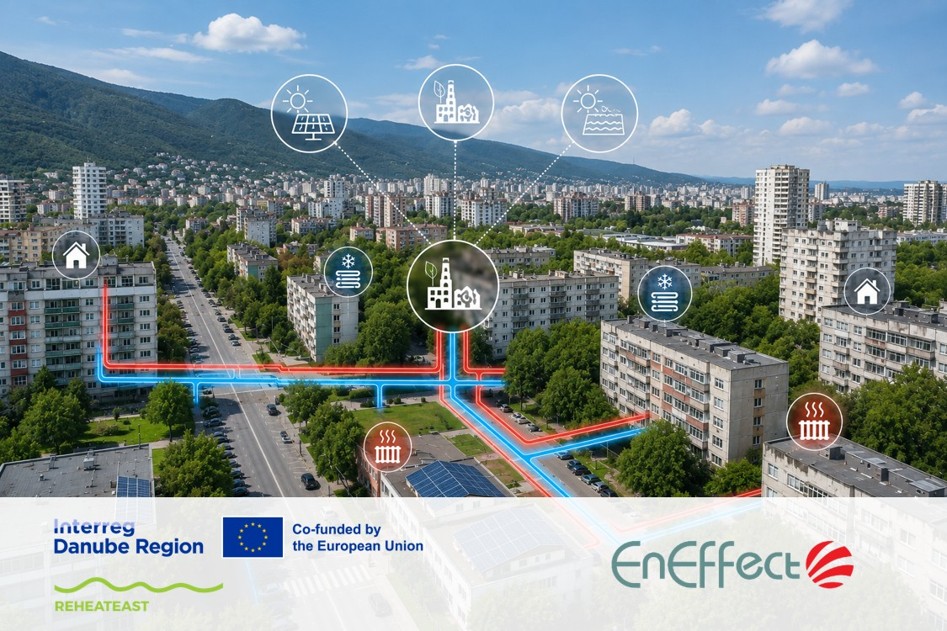
Heating accounts for more than 40% of building energy consumption in Europe, yet district heating systems in many CEE countries remain heavily fossil-based. This exposes consumers to price volatility, energy poverty and growing climate risks. The REHEATEAST analysis shows that modernising district heating—through energy efficiency, renewable and waste heat integration, system optimisation and smarter planning—is essential to meet climate objectives while improving affordability and energy security.
Strong consensus, but persistent structural barriers
Drawing on extensive consultations with policymakers, regulators and sector experts across eight countries, the Policy Brief confirms strong consensus that district heating will remain a cornerstone of future energy systems. At the same time, it highlights persistent challenges: regulatory frameworks that lag behind climate ambition, slow and complex permitting procedures, limited mobilisation of private investment, and weak coordination between municipalities, operators, housing managers and end-users. EU-level initiatives such as Fit for 55 and REPowerEU provide important momentum, but national and local implementation gaps continue to hinder progress.
Clear policy actions can unlock investment and protect consumers
To address these barriers, the Policy Brief sets out concrete policy recommendations. These include establishing long-term national district heating strategies aligned with climate targets, mandating municipal heat planning and zoning, introducing stable and transparent tariff frameworks, strengthening municipal leadership in integrated heat planning, and ensuring meaningful stakeholder and consumer participation. If implemented effectively, these measures can significantly reduce fossil fuel use, lower heating costs, mobilise investment and deliver more resilient, climate-proof urban heating systems.
Policymakers and stakeholders are invited to read the full Policy Brief to explore the detailed analysis, key findings and concrete policy actions needed to accelerate the transformation of district heating across CEE.


09/02/2026
By dr. Judit Füzér
Share on social media:


Green

News & Events
Read the most recent updates and explore the upcoming events.










Would you like to receive project updates?
You're already part of our community!
Welcome to our newsletter community!
Subscribe to our newsletter