

TEX-DAN Action Plan Café and 2nd Regional Campaign Croatia
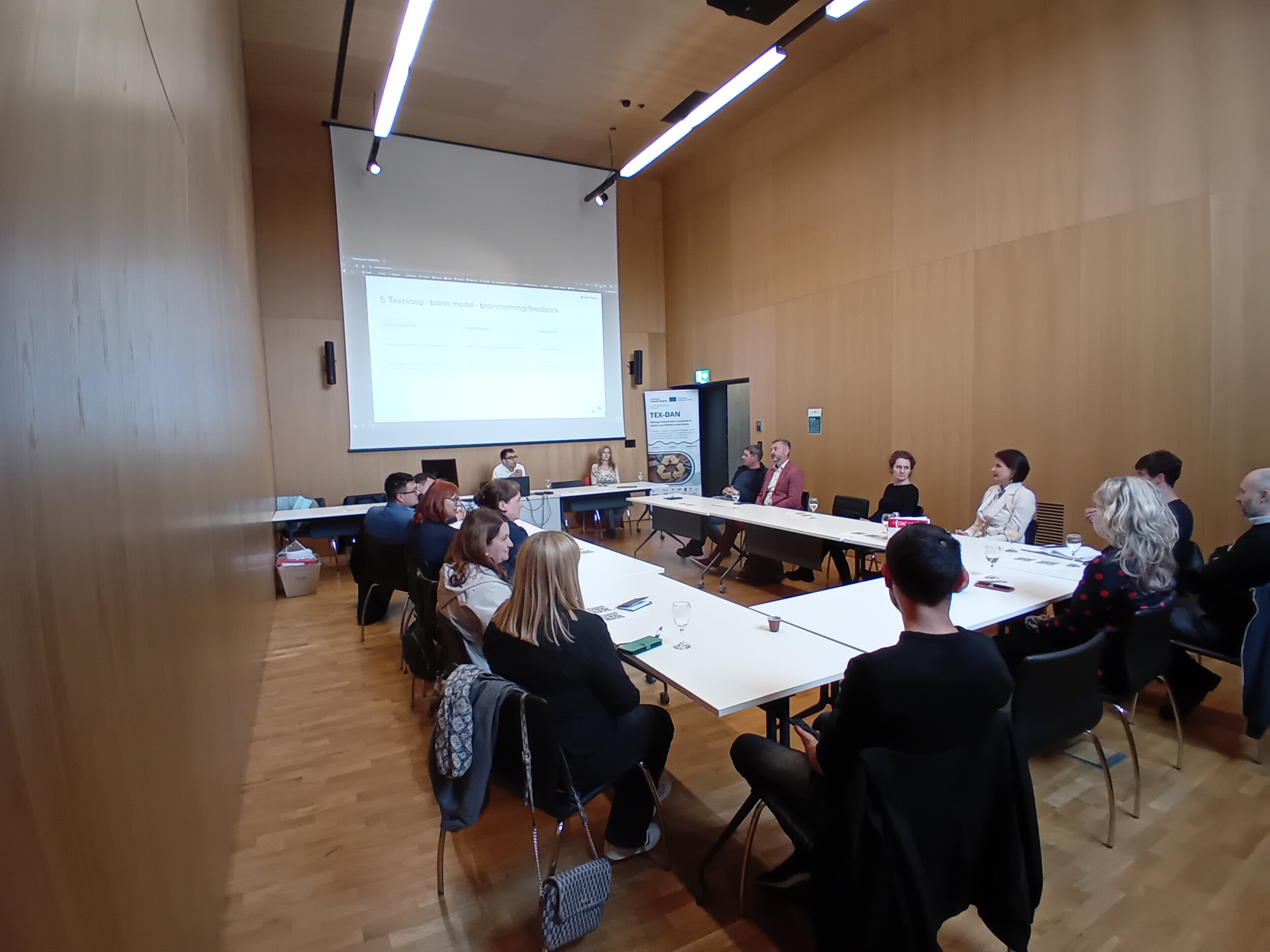
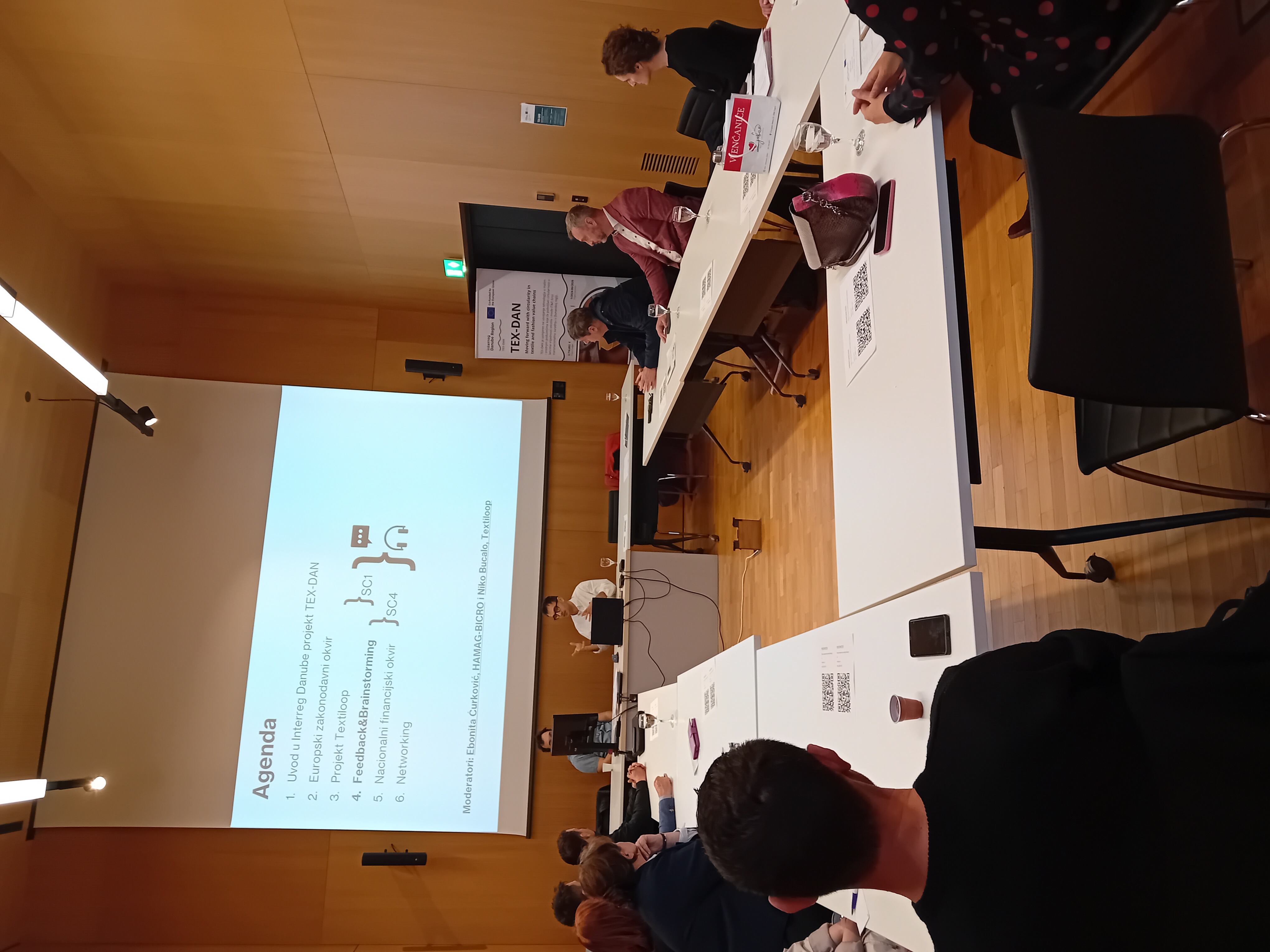
On 20 April 2026, HAMAG-BICRO, in collaboration with Textiloop d.o.o., hosted the Action Plan Café workshop and 2nd Regional Campaign/Fair and in Zagreb, bringing together 18 participants, including SMEs, associations, ( Galeb d.d. Borovo d.d., Labtex, Interzzero, Textiloop d.o.o., Salon vjenčanica Ljubav, Uriho, Param-Param, Grafko Caspar Ltd, and professors and researchers from the University of Zagreb, Faculty of Textile Technology (prof dr Branka Vojnović; https://www.ttf.unizg.hr/nastavnici-i-suradnici/branka-vojnovic/33
prof dr Snježana Firšt Rogale https://www.ttf.unizg.hr/nastavnici-i-suradnici/snjezana-first-rogale/17 ; prof dr Ivana Salopek Čubrić https://www.ttf.unizg.hr/nastavnici-i-suradnici/ivana-salopek-cubric/7 and prof dr Goran Čubrić https://www.ttf.unizg.hr/nastavnici-i-suradnici/goran-cubric/58 ).
The Action Plan Café workshop, titled “Financial Incentives for the Implementation of Innovative Technologies and Extended Producer Responsibility (EPR) in the Croatian Textile and Fashion Industry,” addressed two objectives of the TEX-DAN regional strategy: SO1 – Stimulating innovation and technological transfer and SO4 – Increasing the number and types of financial instruments. The discussion focused on advancing innovation, supporting technology adoption, and enabling the effective implementation of EPR in Croatia’s textile and fashion sector.
All participants actively contributed through real-time feedback using mobile phones, responding to a set of pre-designed questions on digital tools, circular economy practices, and EPR implementation.
Key Discussion Points on EPR
Participants discussed their level of awareness of Extended Producer Responsibility (EPR) regulations, including Croatia’s position on the free export of textile waste to India. The conversation also explored practical aspects of organizing textile waste collection and the main barriers currently affecting the system.
A key challenge identified was the almost non-existent textile waste collection infrastructure in Croatia. Participants highlighted that one of the contributing factors is the governmental centralized management of the sector, suggesting that opening the market to private companies could improve efficiency and innovation. Concerns were also raised about limited capacities, which could hinder the effective implementation of EPR requirements.
In addition, participants pointed out that the widespread use of mixed-material textiles makes recycling less efficient. Another issue discussed was the negative public perception of the domestic textile industry, driven by media coverage that tends to focus on challenges rather than positive examples and successful practices in Croatia and region.
Overall, the discussion emphasized the need for systemic improvements, increased investment, and more balanced public communication to support the transition toward a functional and sustainable textile waste management system.
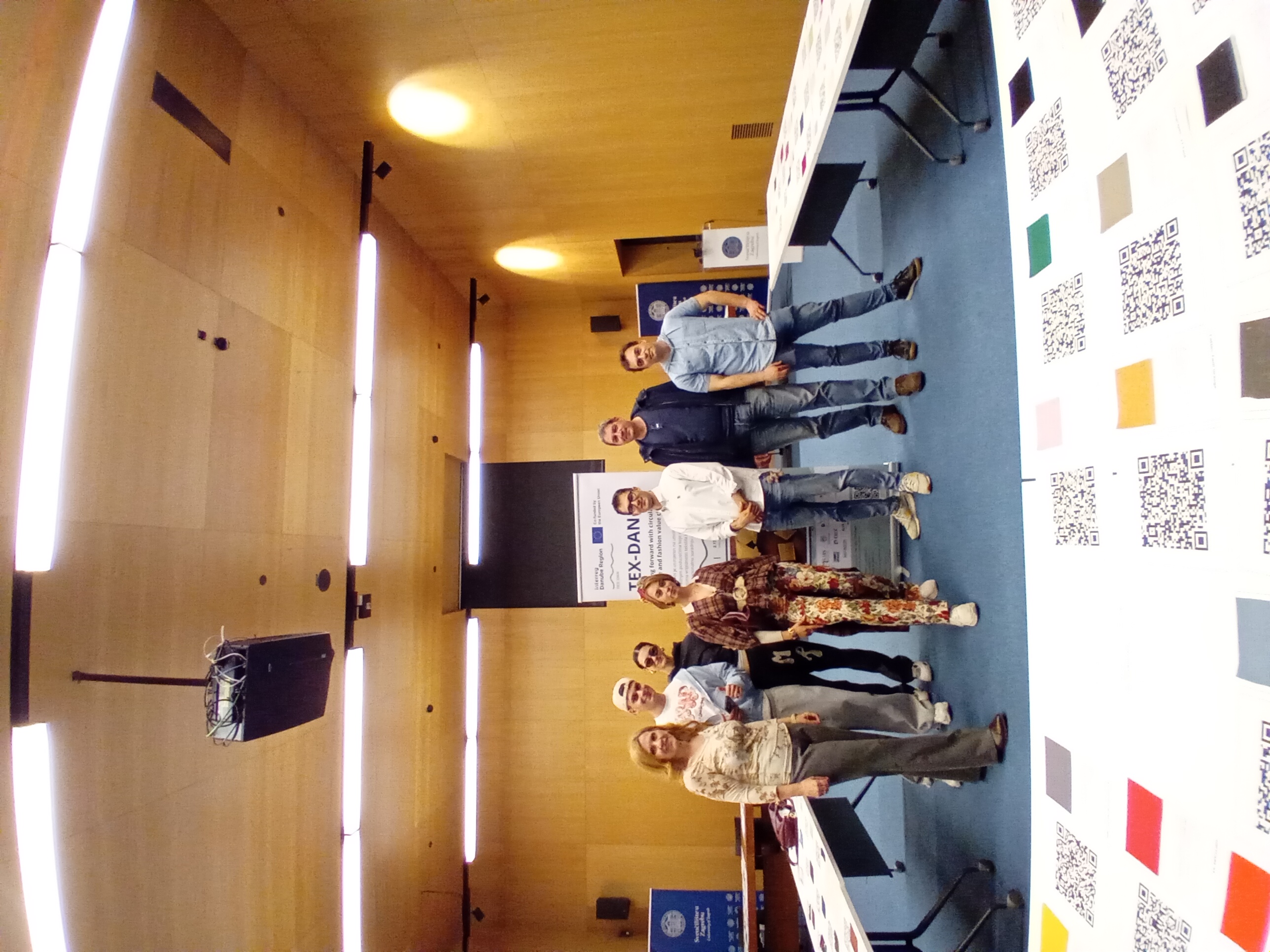
2nd Regional campaign / Exhibition and Fair
The second regional campaign featured the “Exhibition and Presentation of Technological Surplus in Clothing Processing,” where participants showcased and exchanged textile residues while exploring the Textiloop SaaS platform—a digital solution that enables real-time textile exchange and supports low-waste production.
The campaign aimed to raise awareness of digital technologies and their practical application in the textile industry, with a strong focus on advancing circularity and more sustainable production practices.
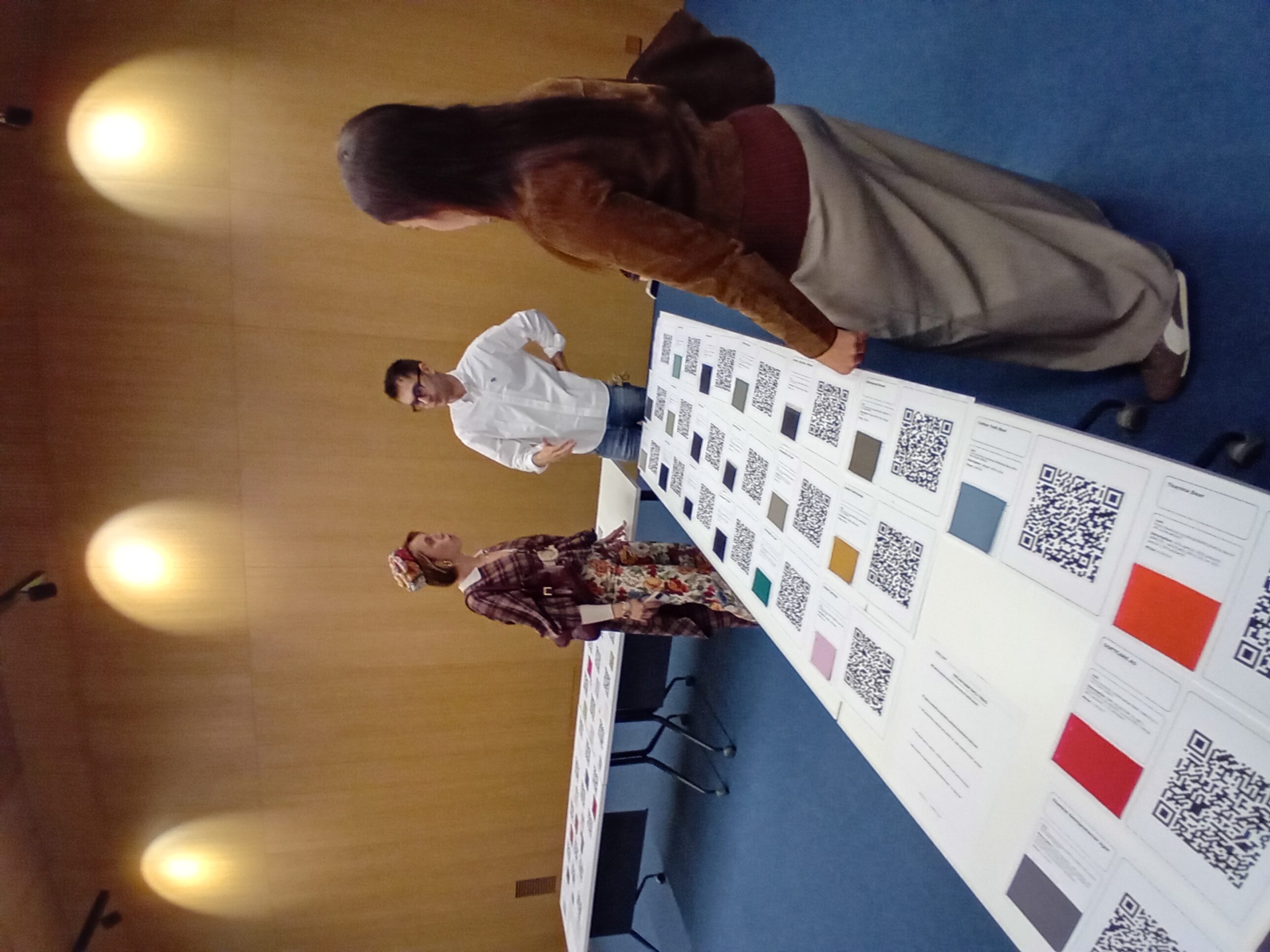
Exchange and promotion oof the textile scraps as a part of the 2nd national regional campaign

22/04/2026
Share on social media:



News & Events
Read the most recent updates and explore the upcoming events.






Would you like to receive project updates?
You're already part of our community!
Welcome to our newsletter community!
Subscribe to our newsletter