

National regional campaign in Slovenia - Building a Shared Vision for Slovenia’s EPR System
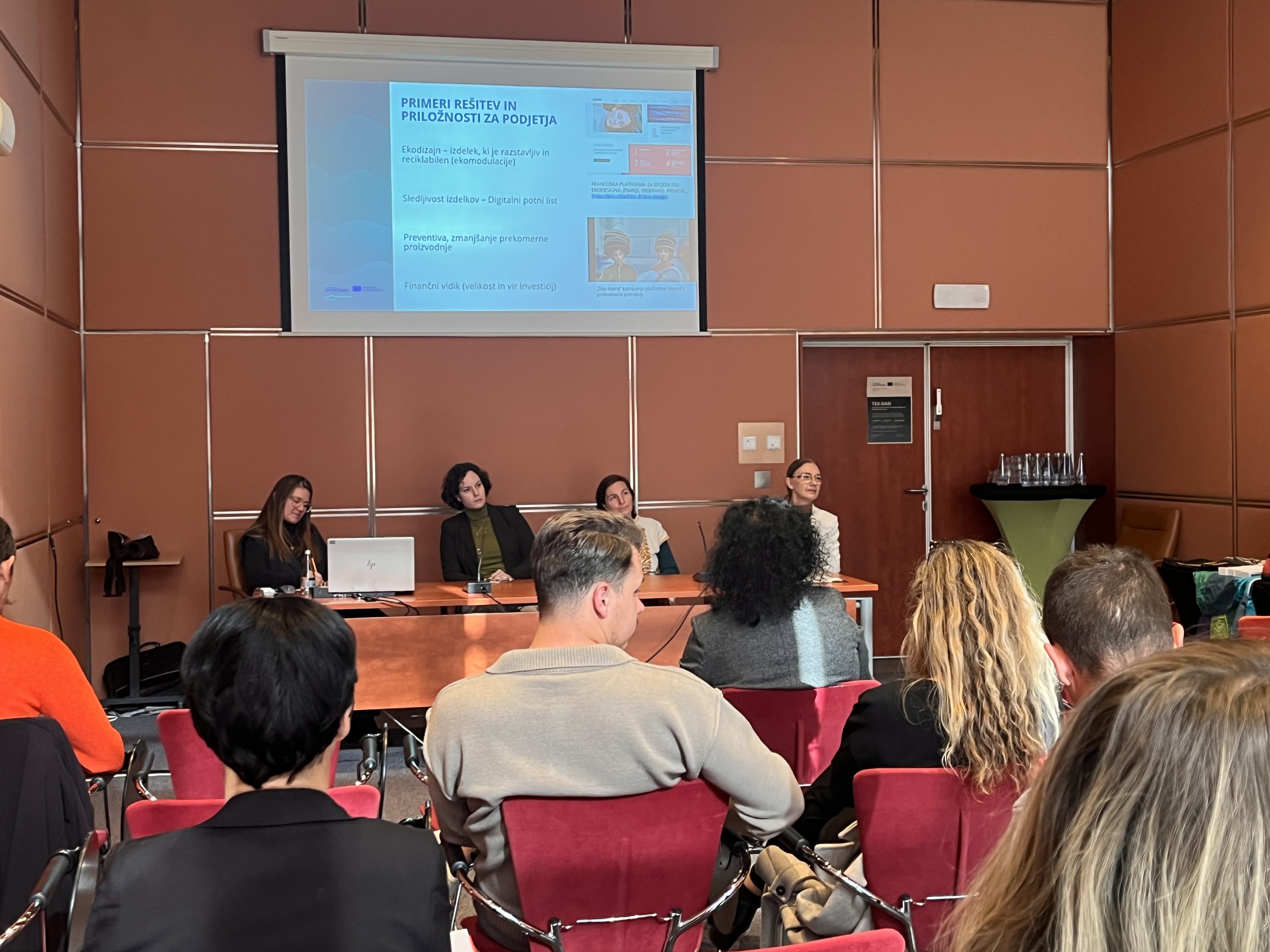
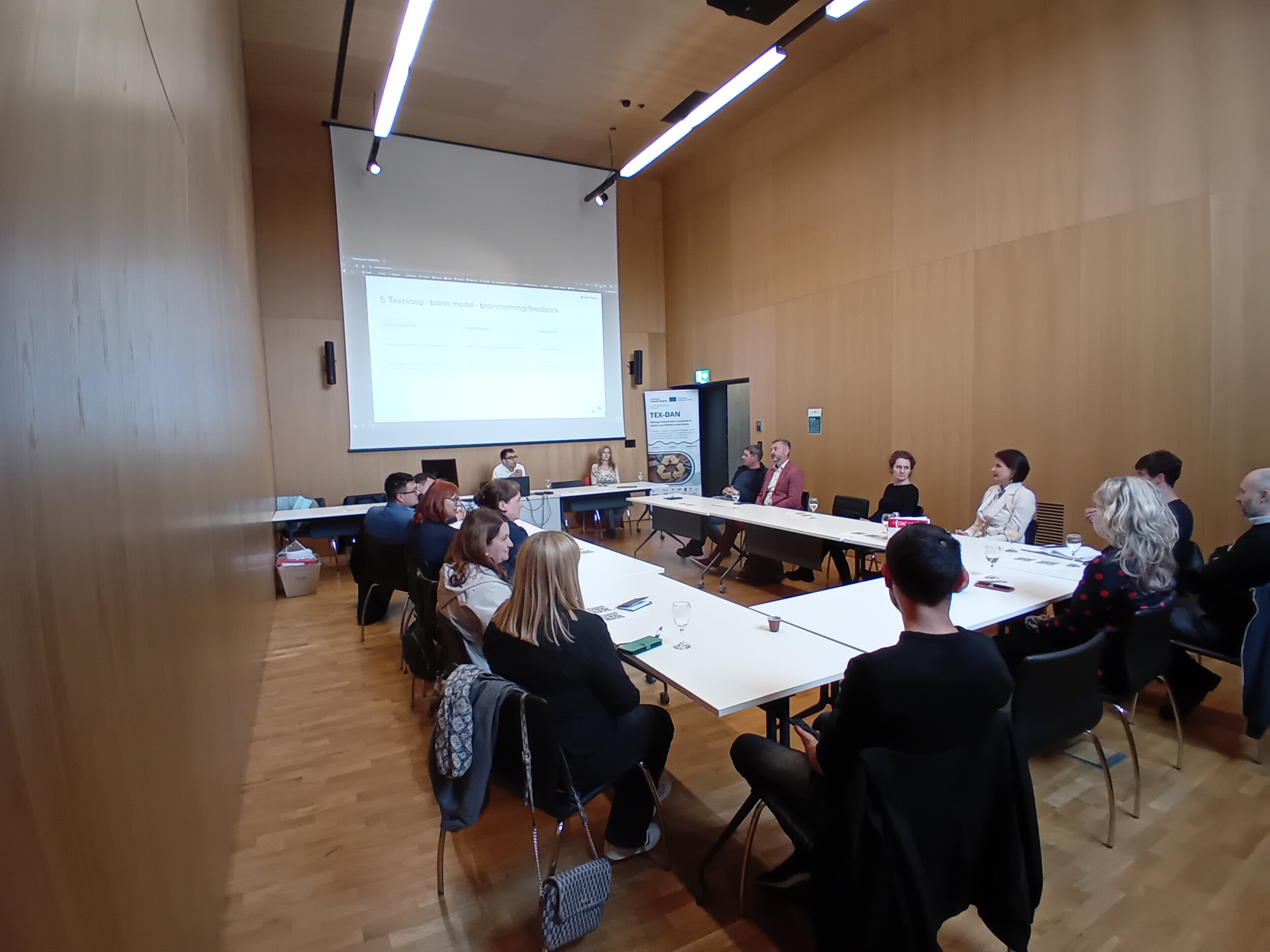
The upcoming Extended Producer Responsibility (EPR) scheme for textiles, that has been in the process of implementation across the EU (Hungary, the Netherlands, and France, have already implemented their EPR schemes, but most of the countries are still in the process) to promote a circular economy for textiles was the main topic of the second Slovenian regional campaign held on 12 November 2025 at the Chamber of Commerce and Industry of Slovenia, organised by ISD and BSC Kranj in cooperation with Zavod KNOF, as a part of the TEX-DAN project activity.
The Slovenian leading experts Ms. Mojca Zganec Metelko, Ms. Saška Šušman and Ms. Jaka Kranjc presented the evolving European legal framework, current quantities of collected textiles in Slovenia and the limited domestic processing capacities.
Their insights sparked discussion on how an EPR scheme could become a strategic lever to shift the textile industry away from “take-make-dispose” toward repair, reuse, upcycling, and quality recycling support climate goals and encourage eco-modulation mechanisms that reward companies designing more durable and repairable products.
EPR can encourage companies to design longer-lasting, repairable textiles through eco-modulated fees that reward low-impact and circular products. According to the European Environment Agency, a portion of the contributions paid by producers should be explicitly allocated to waste-prevention efforts and reuse infrastructure. Eco-modulation (differentiated fees based on environmental performance) can also drive more sustainable design and elevate social enterprises — repair shops and reuse organisations — by helping fund them.
Furthermore, EPR can help build vital infrastructure in Slovenia: well-managed collection and sorting systems, and potentially even a national sorting facility, would create capacity for fiber-to-fiber recycling (a core goal of the EU’s new EPR rules)[3].
By strengthening reuse and upcycling, we can reduce waste, cut carbon emissions, and generate social value through job creation in circular business models. The EU’s Textile Strategy even estimates that every 1,000 tons of collected textile for reuse could generate 20–35 jobs.
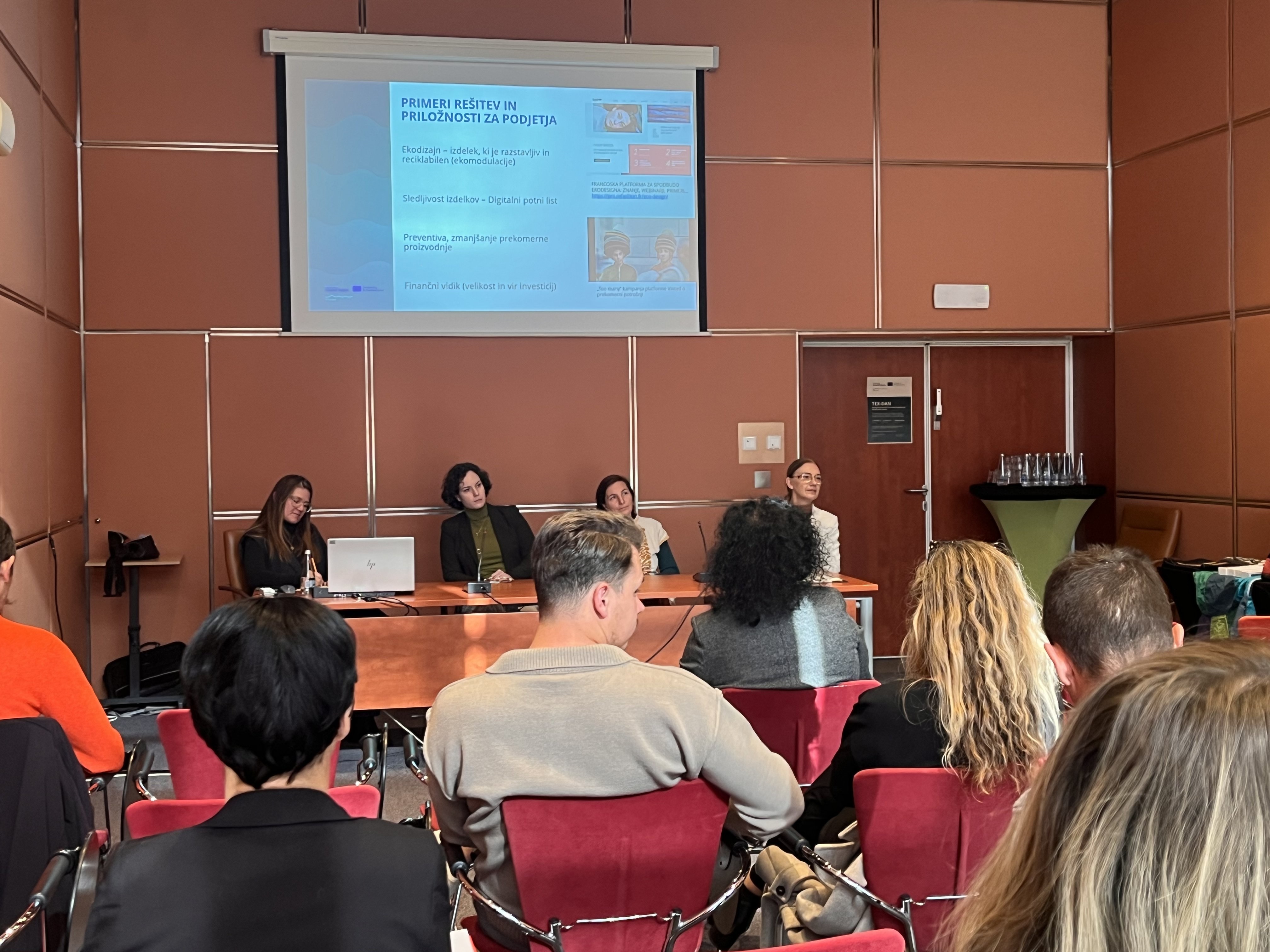
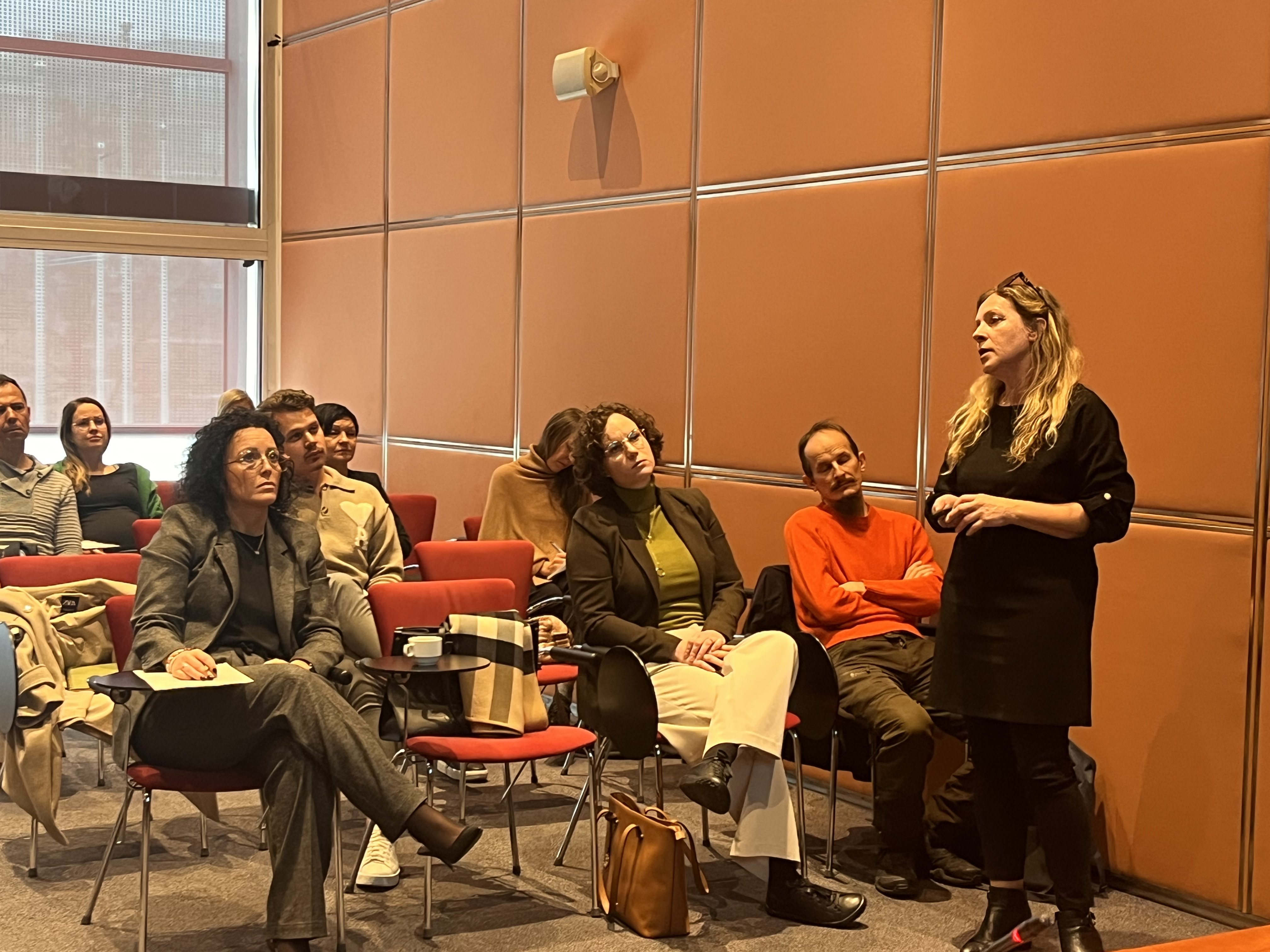
Guest speakers Ms. Katja Kek, Ms. Maja Modrijan and Ms. Mojca Celin, together with contributions from participants representing industry, public institutions and social enterprises, helped outline the initial foundations for recommendations to the Ministry of Natural Resources and Spatial Planning, which is currently drafting the national EPR legislation. A shared vision emerged:
Design a clear vision for Slovenia’s EPR that goes beyond just recycling — one that supports reuse, repair, and upcycling, and rewards eco innovation.
Promote eco-modulation in producer fees so that more sustainable and circular textiles pay less, and less sustainable ones pay more — this aligns financial incentives with environmental goals.
Invest in infrastructure, especially in sorting and reuse: exploring a national textile-sorting center, and collaboration with social enterprises for collection and repair.
Build inclusive governance: bring together producers, designers, waste collectors, social enterprises, and public authorities to decide how EPR funds are used, especially for reuse and innovation.
Support small producers and social enterprises to participate: ensure that the system doesn’t burden micro businesses, but rather enables their active role in circular solutions.
Raise awareness and grow networks: support and expand initiatives like the Reuse & Recycle Network so that all stakeholders—from designers to recyclers—are part of shaping the EPR scheme.
The event also supported the development of the Reuse&Recycle Network, which aims to connect actors across the textile ecosystem and foster long-term collaboration. As Slovenia approaches the implementation of EPR for textiles, continued dialogue and joint effort will be essential to ensure the scheme is not just meeting regulatory requirements, but a driver of innovation, job creation and a more resilient circular economy.

20/11/2025
Share on social media:



News & Events
Read the most recent updates and explore the upcoming events.






Would you like to receive project updates?
You're already part of our community!
Welcome to our newsletter community!
Subscribe to our newsletter