

Agrometeorological monitoring in the TRANSFER Danube Pilot Areas
Meteorological and climatic conditions are one of the main factors influencing the growth and development of agricultural crops and the stability of production. The variability from one year to another of the thermal and pluviometric regime, associated with the intensification of extreme meteorological phenomena, can determine the occurrence of periods of water or thermal stress, with effects on crops. In this context, the continuous monitoring and evaluation of agrometeorological conditions constitutes an important component for characterizing the state of crops and for substantiating adaptation measures to climate variability and change.
Agroclimatic risks, including thermal, atmospheric, and water stress parameters such as soil moisture, extreme heat, winter severity, and precipitation, are monitored in the TRANSFER Danube project’s Pilot Areas across the Danube Region through cooperation among consortium partners and data sharing. LP1-NMA (National Meteorological Administration) is responsible for collecting and processing meteorological data and phenological observations and for generating the relevant agrometeorological parameters for the TRANSFER Danube Pilot Areas.
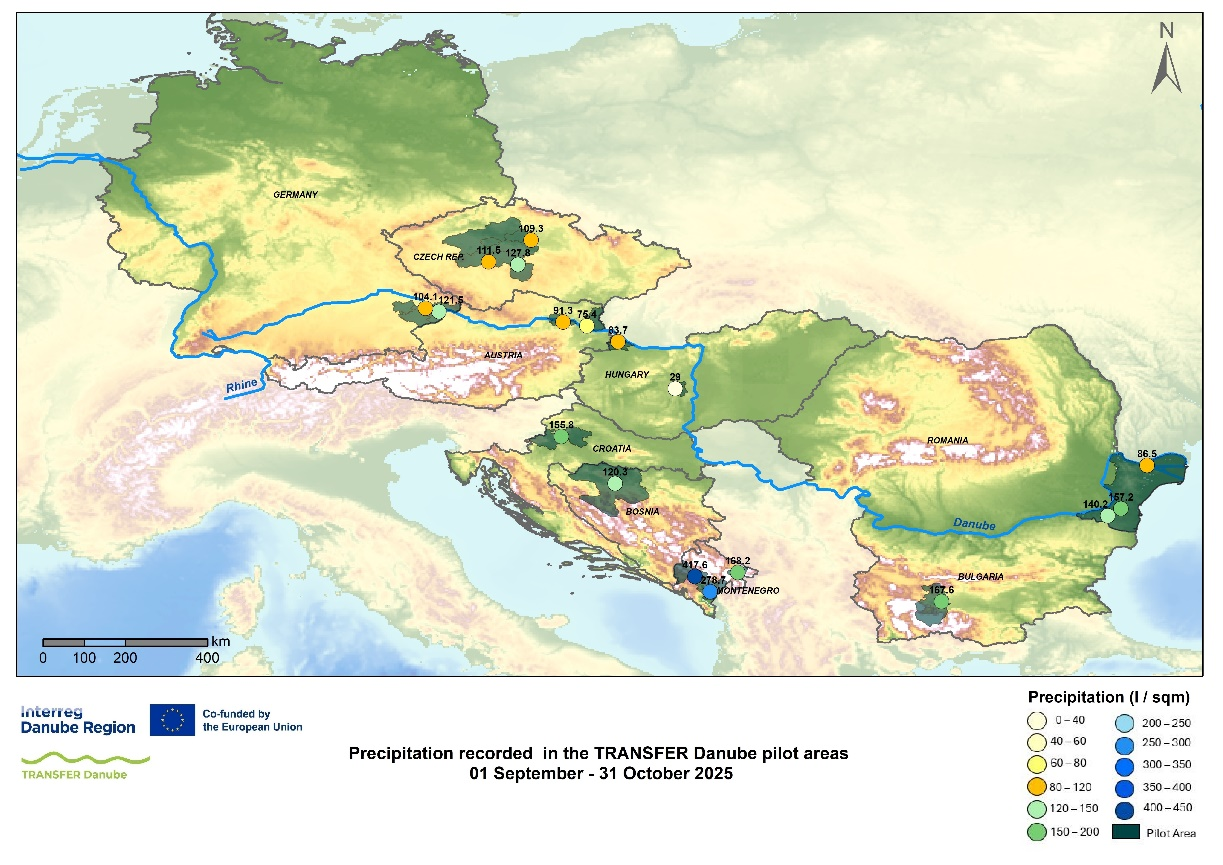
An important element of the analysis is the precipitation regime, both in terms of cumulative quantities and their distribution in periods with specific water requirements. The amount of precipitation during the autumn crop sowing period 01 September - 31 October 2025 is exemplified in Figure 1.
Figure 1.
Precipitation recorded during the period 01 June – 31 August 2025, representing the period of maximum water consumption of the non-irrigated corn crop is depicted in Figure 2.
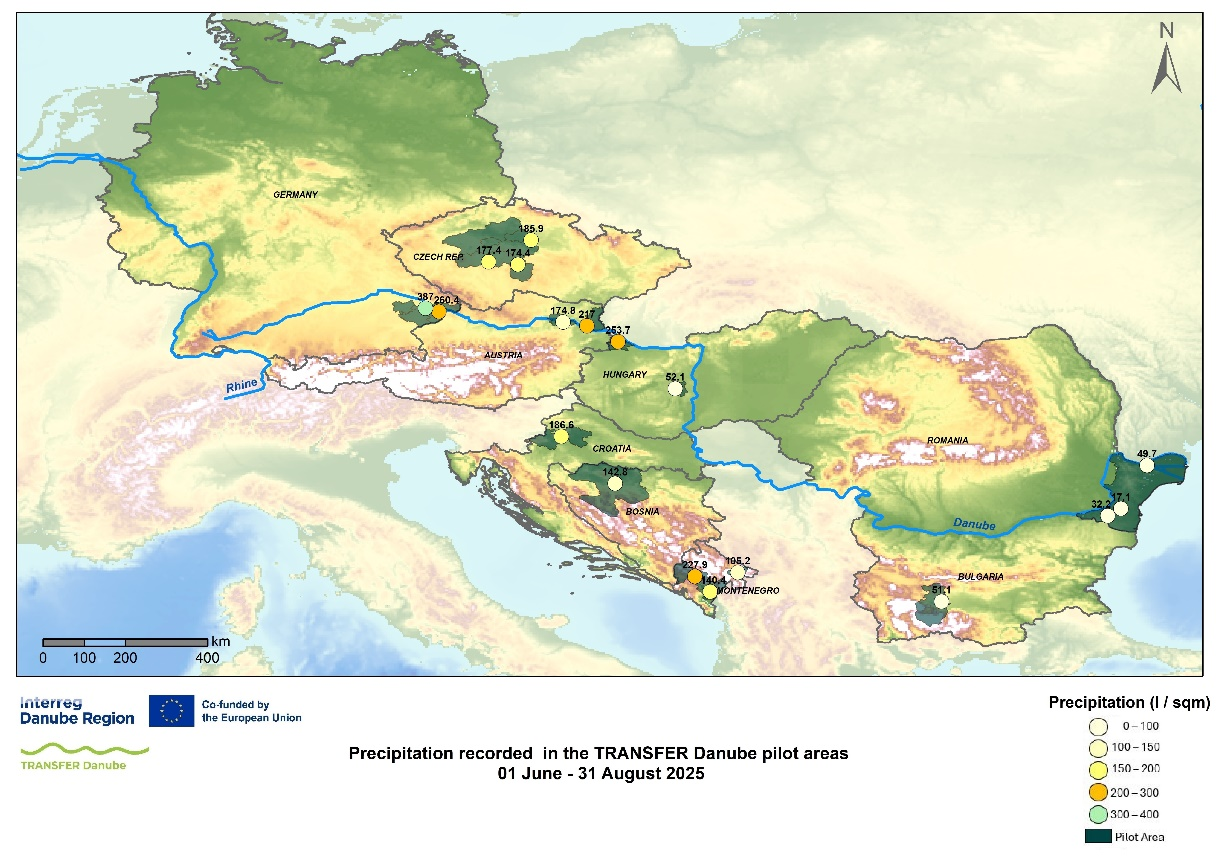
Figure 2.
Thermal resources are also an essential factor for the succession of plant growth and development phases. Temperature requirements differ depending on the species and phenological stage, and reaching certain thermal thresholds conditions vegetative processes. In this sense, the analysis of the winter severity index (ΣTmin.≤-10°C/"frost units") for the period December-February enables the evaluation of wintering conditions for the wheat crop (Figure 3), while the evaluation of the "scorching" phenomenon (Figure 4), based on maximum air temperatures of at least 32°C during the period June-August, allows the assessment of an important risk factor for winter wheat and corn crops.
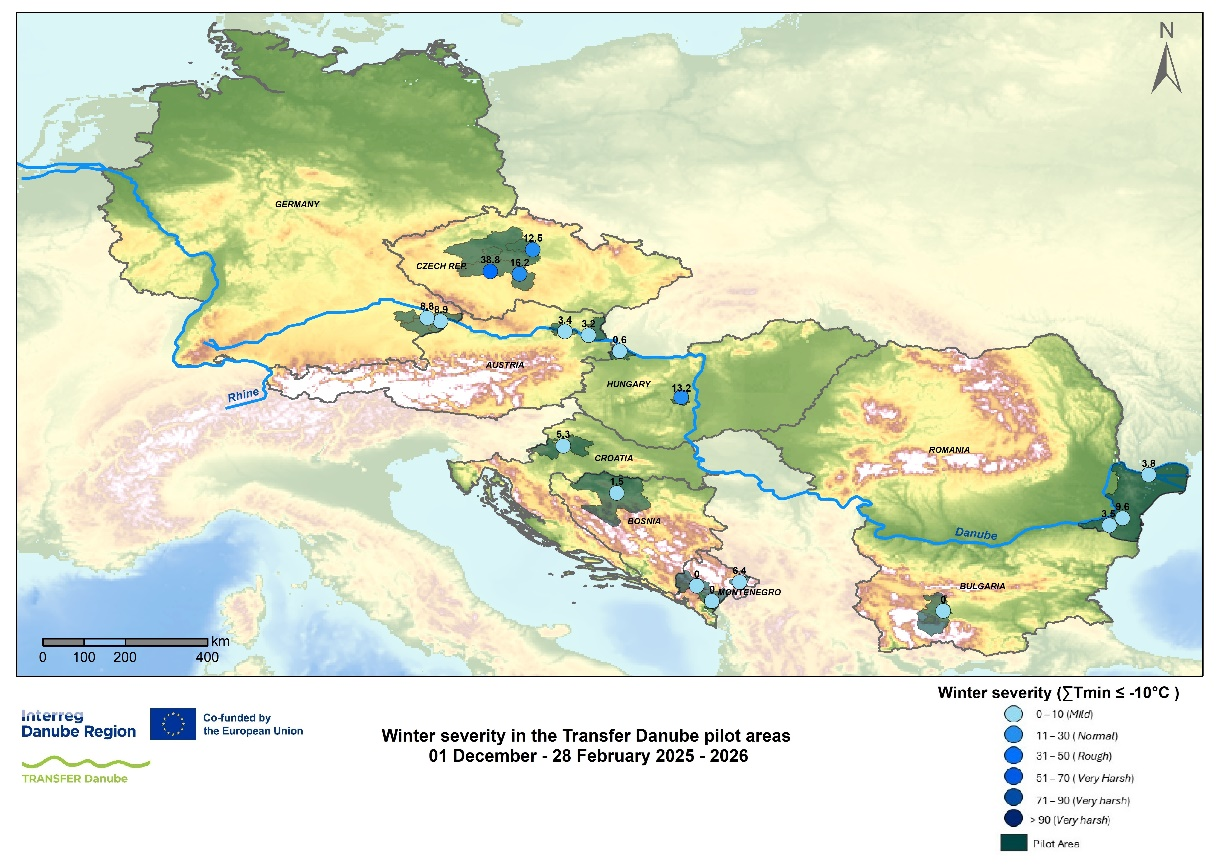
Figure 3.
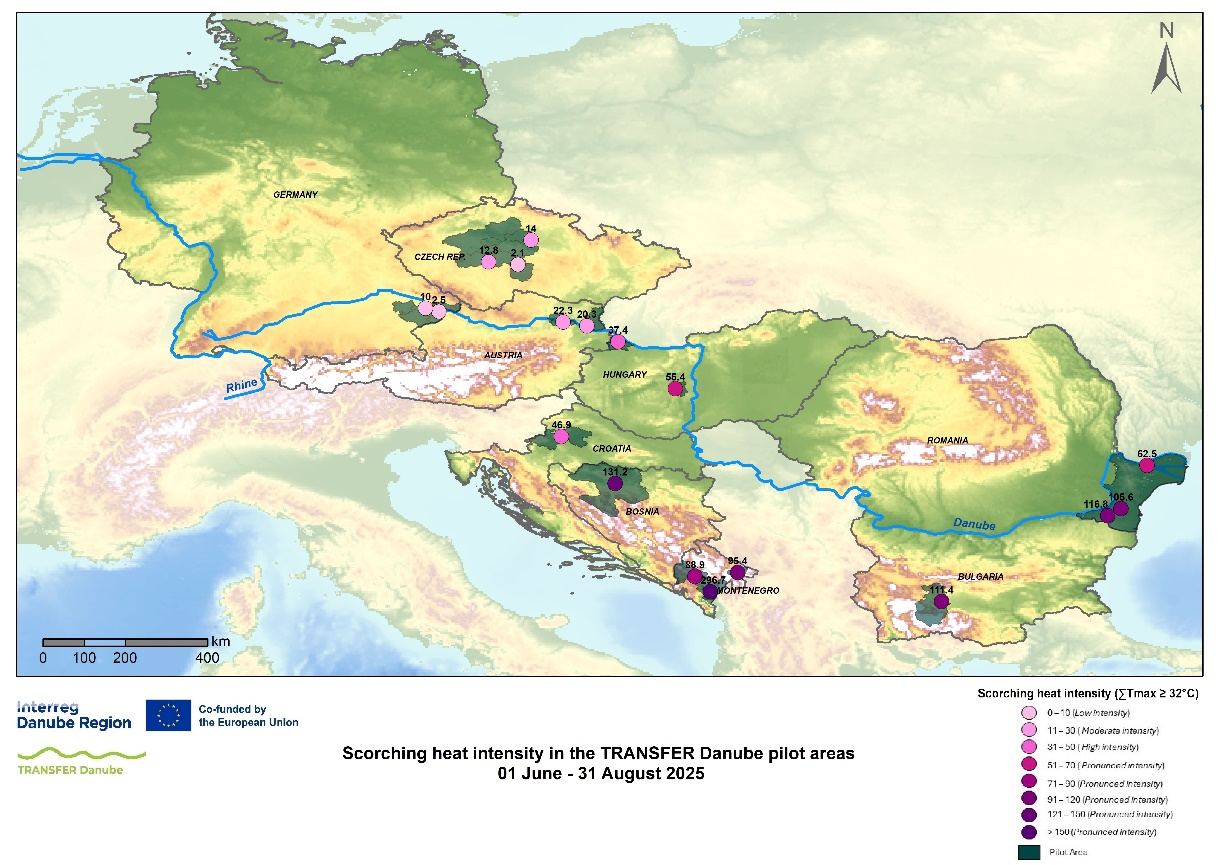
Figure 4.
The phenological observations within the TRANSFER Danube Pilot Areas are carried out using the extended BBCH (Biologische Bundesanstalt Bundessortenamt and CHemical industry) scale which is a standardized system designed to uniformly describe the phenological growth stages in the life cycle of crop development, from germination to tillering, stem elongation, flowering, grain filling, and senescence. The consortium makes phenological observations in the pilot areas at an interval of 10 days, registering the phenological phases of winter wheat (Figures 5-8) and maize (Figures 9-11) crops.
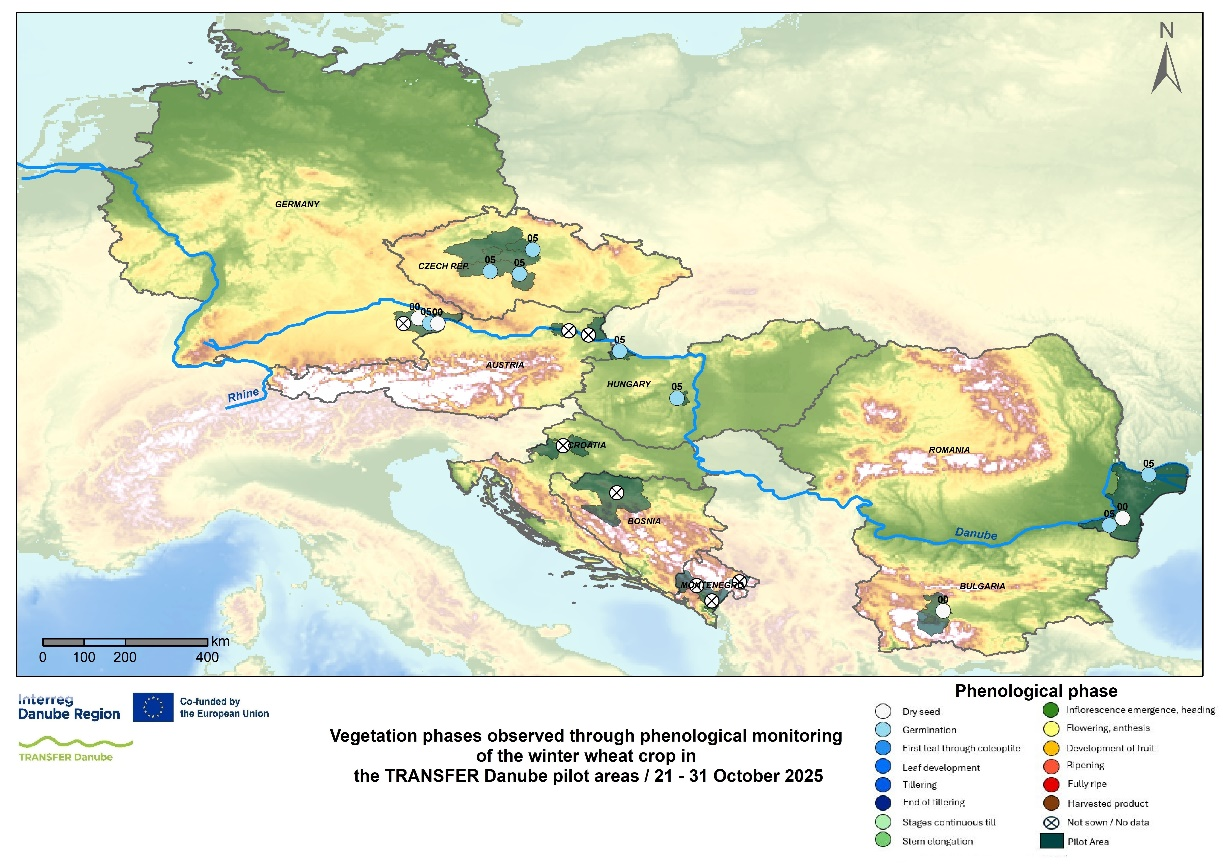
Figure 5.
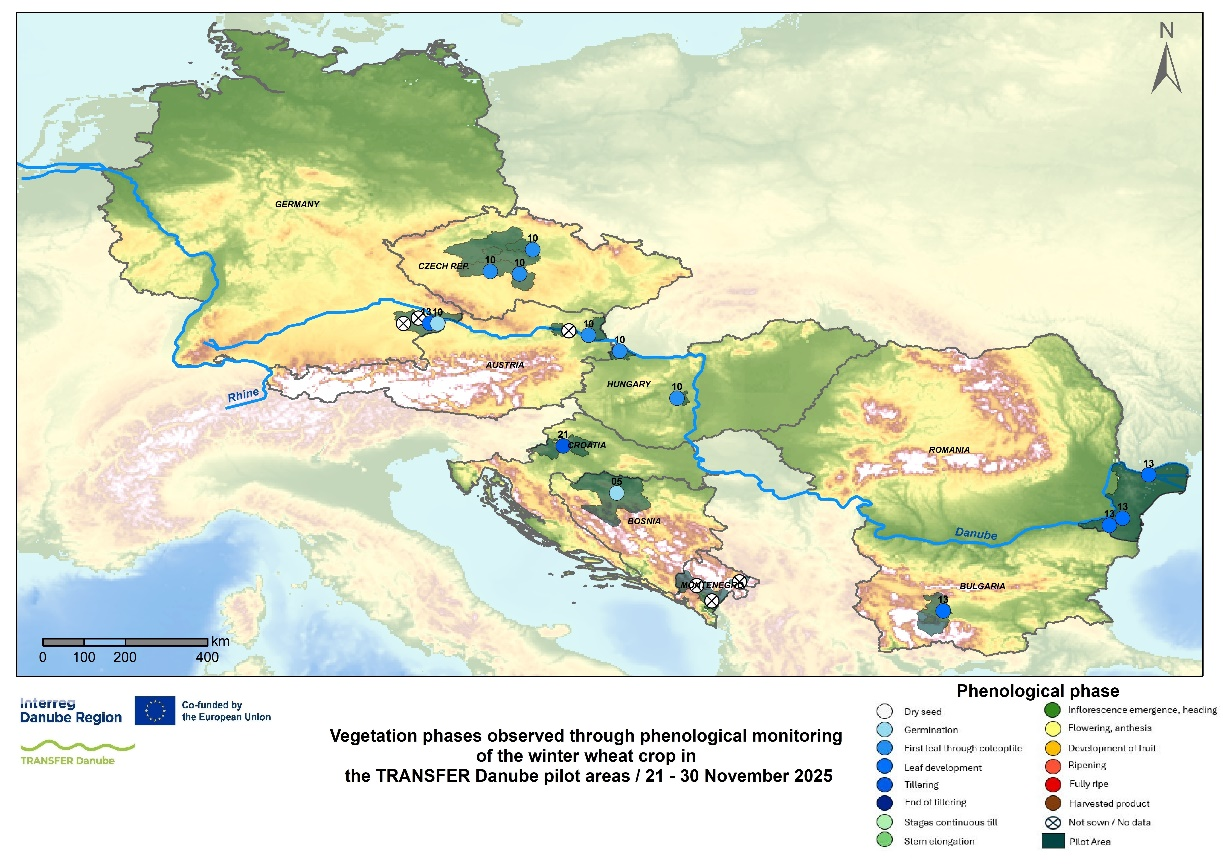
Figure 6.
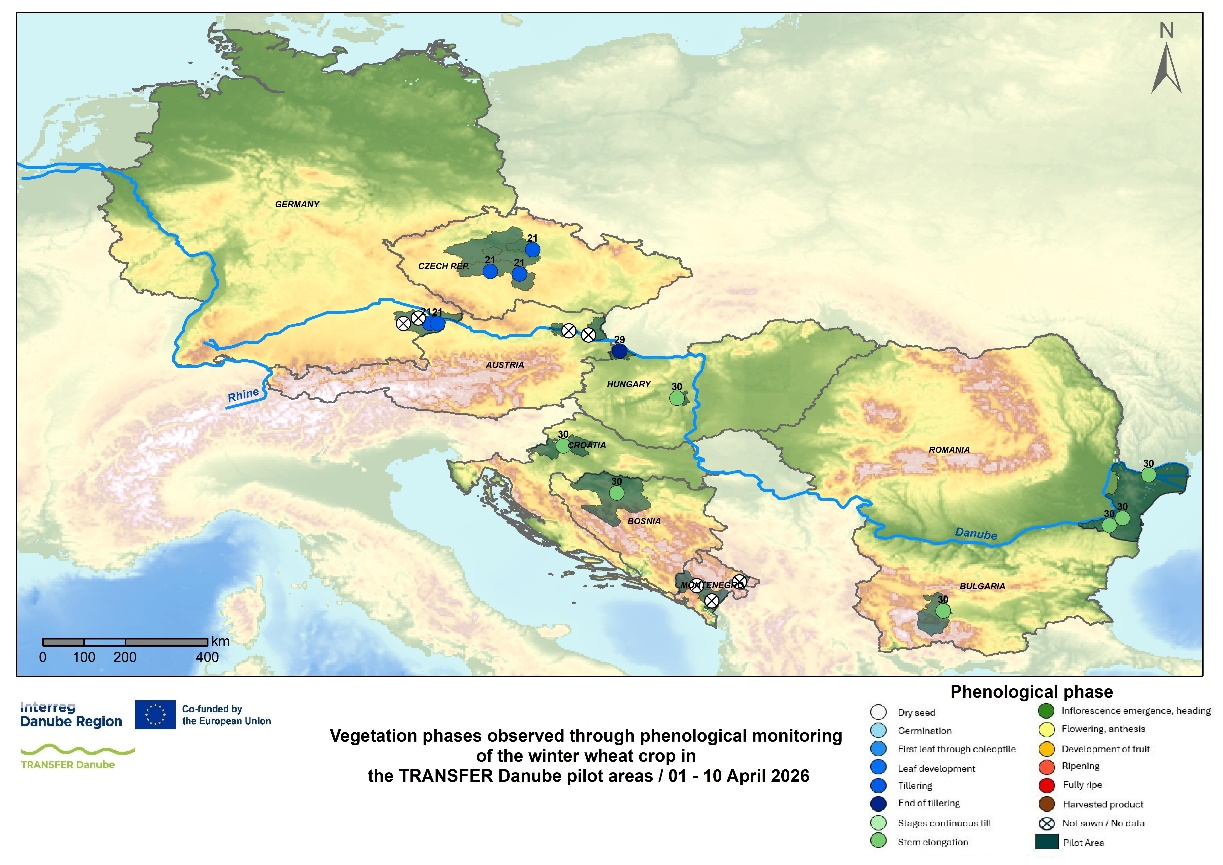
Figure 7.
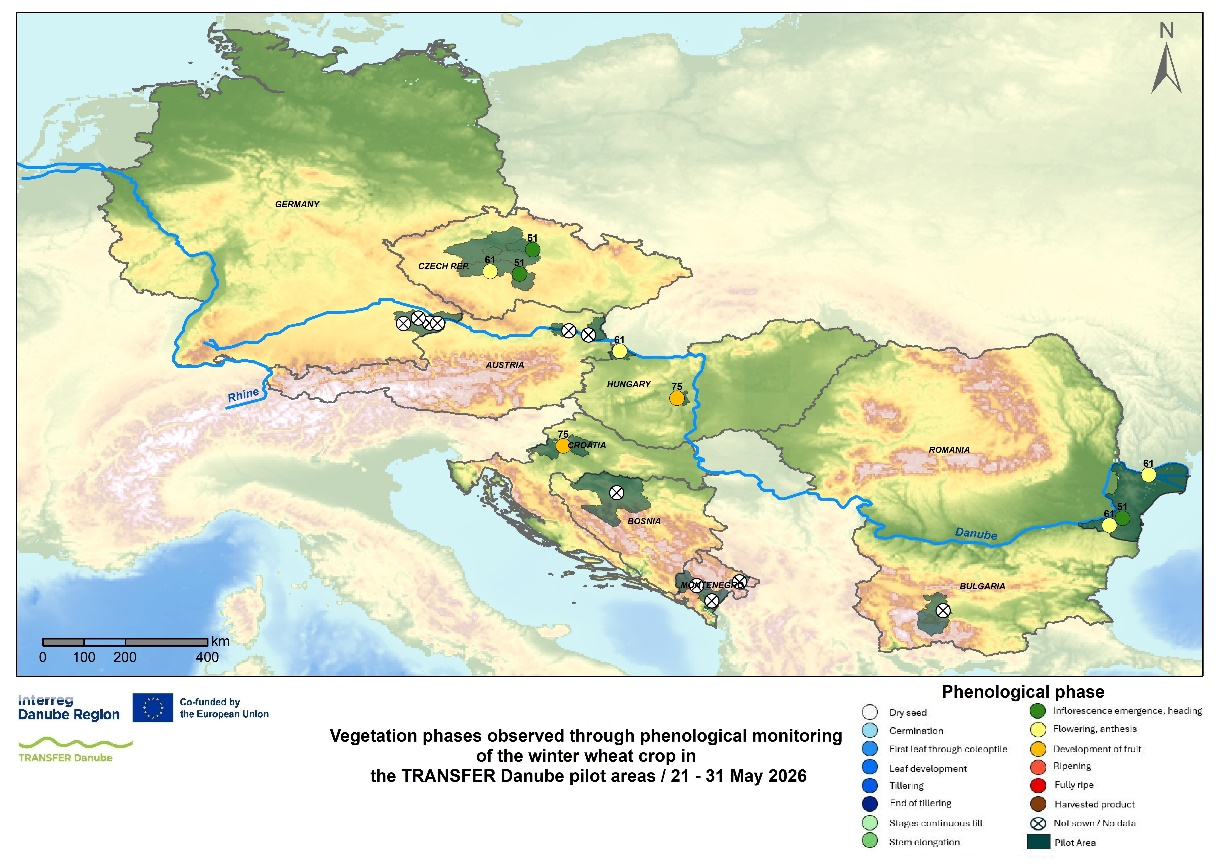
Figure 8.
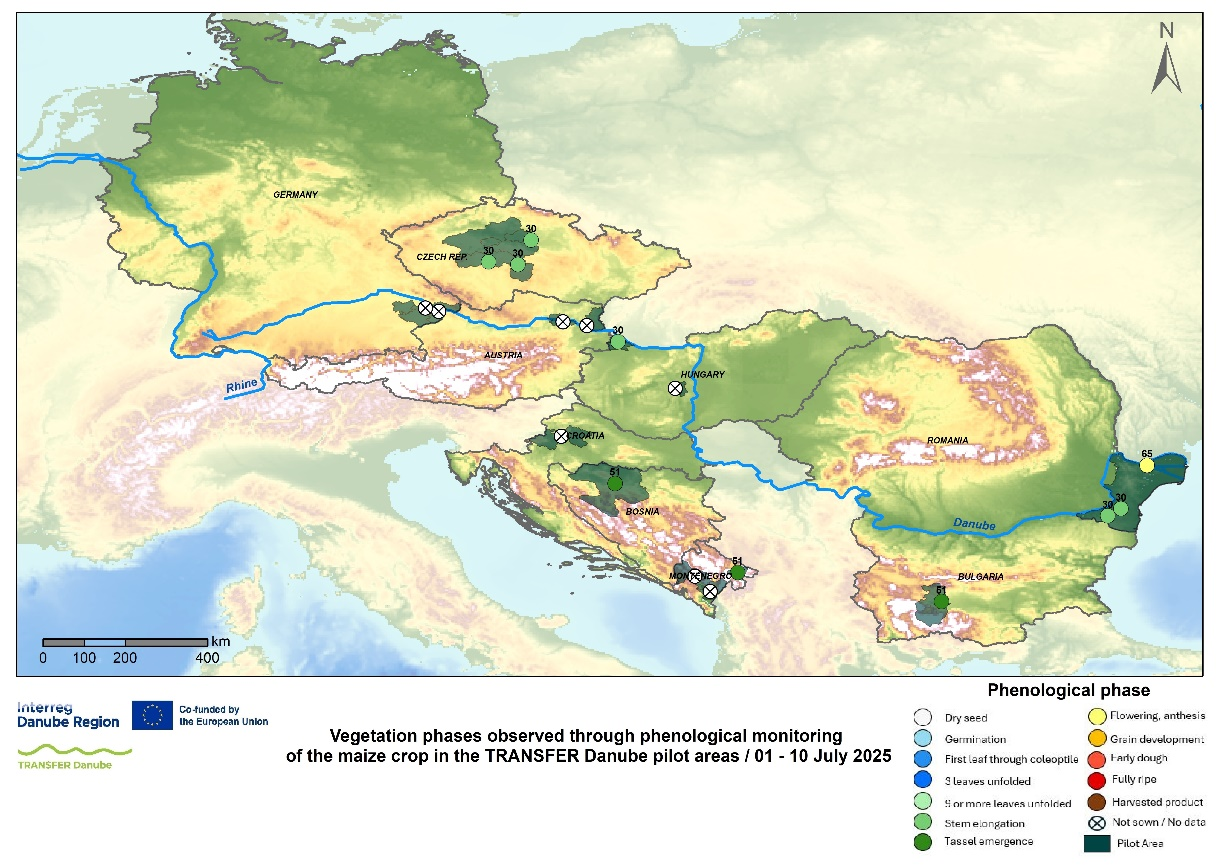
Figure 9.
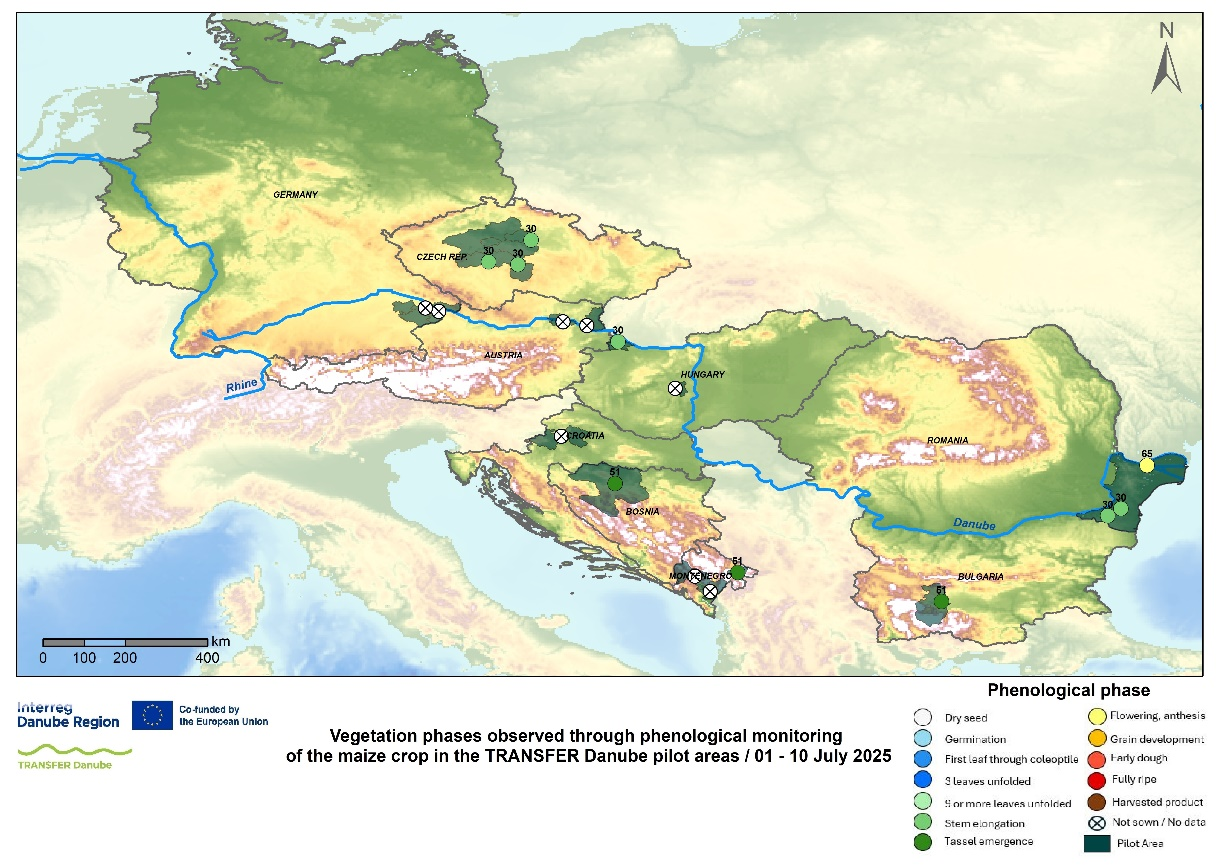
Figure 10.
Low precipitation, severe winter conditions, and scorching heat can adversely affect winter wheat and maize by causing water and temperature stress, reducing crop development and resilience, and ultimately leading to yield losses. These parameters are monitored within the TRANSFER Danube project to assess the impact of key agroclimatic risks on winter wheat and maize, support the identification of areas vulnerable to water and temperature stress, and provide a basis for timely, climate-informed adaptation measures in the Danube Region.
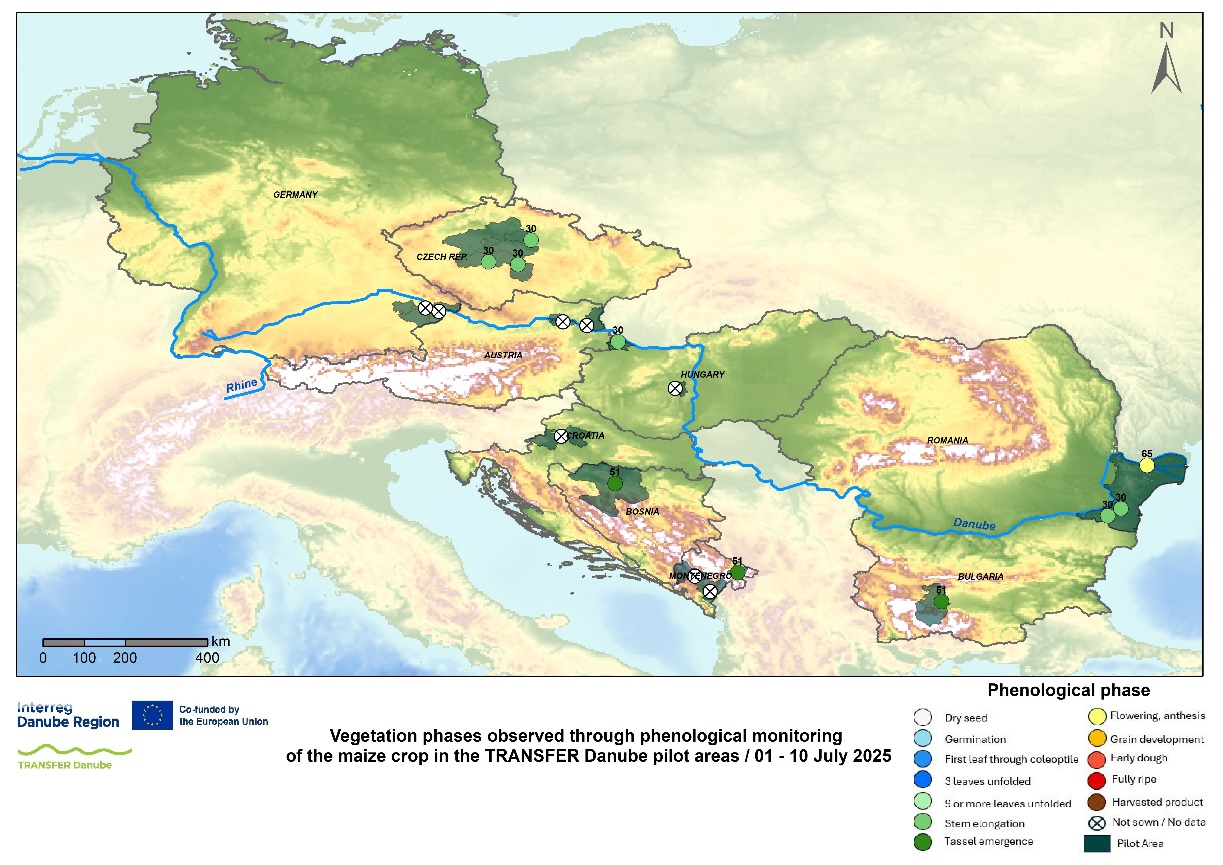
Figure 11.

18/08/2026
By Martin Ivanov
Share on social media:



News & Events
Read the most recent updates and explore the upcoming events.





Would you like to receive project updates?
You're already part of our community!
Welcome to our newsletter community!
Subscribe to our newsletter