
Technical Outline of the Strategic Measure Bundles
Project Partner 11 (BOKU University, Austria) is responsible for Activity 1.7 in the TRANSFER Danube project, which deals with the “Identification of Response Strategy Potential” with regard to the main thematic focus of the project, which is drought in relation to agriculture. Part of this Activity is “Deliverable 1.7.1 - Technical Outline of the Strategic Measure Bundles (SMB) (D1.7.1)”. This was published in March 2026, and is also publicly available via ResearchGate as a technical report.
Under current climate change conditions, drought periods exert a fundamental threat to agriculture. Additionally, for all further project activities, the identification of potential response strategies to this threat is fundamental. Based on the analysis of scientific publications and historic and current strategic activities in agriculture dealing with this thematic field, it was possible to elaborate D1.7.1.
The application of strategic measure bundles (SMB) in agriculture can provide various benefits. The described SMB yield main ecosystem services for which they are established. Additionally, all SMB create benefits at the level of further ecosystem services.
Main Ecosystem Services of SMB:
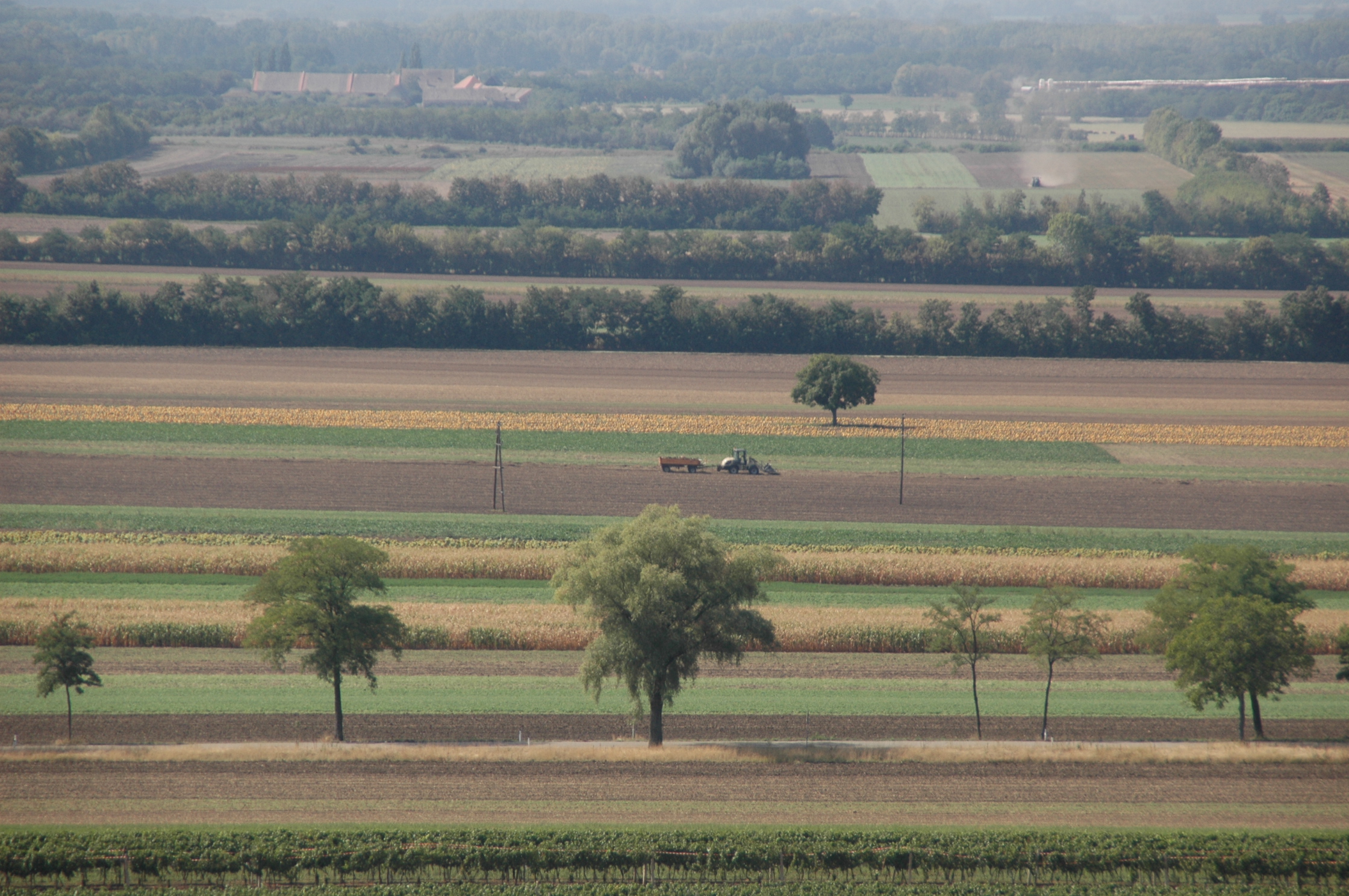
SMB-I wind-breaker forest belts (WBF) are established as soil protection installations. They can mitigate soil erosion processes, above all aeolian (= wind-driven) erosion, but also water-driven soil erosion during strong precipitation events.
SMB-II buffer-strip forest vegetation along streams (BSF) can hold back soil substances which are eroded during strong precipitation events hence, they act as a trap for sediments and agrochemicals. The transpiration of BSF growing on the relatively wetter Fluvisols (= alluvial soils) provide higher relative humidity of the local air mass and hence increases dewfall.
SMB-III forest plantations (FP) have the most important benefit through their economic dimension. Only if trees can create a substantial increase in income for the farmers (timber, fruits or timber & fruits), they will be planted in FP on agricultural land.
Further Ecosystem Services of SMB:
All three SMB additionally provide forest effects, like cooling of the top-soils through their provision of shade on the agricultural soils, evaporative cooling through transpiration, positive effects on biodiversity at both flora and fauna levels, and also carbon sequestration for climate change mitigation.
Despite the positive effects of the SMB on the hydrological regime within an agricultural area, it was identified that irrigation is, in many cases, a necessary adaptation strategy under extreme drought conditions. Irrigation in agriculture helps to ensure the yield of agricultural products in sufficient quantity and quality. The application of SMB increases the intended effect of irrigation, as it provides, e.g. reduction of wind speed and insolation on the agricultural fields. This results in a more efficient irrigation process.
Regardless of the multitude of benefits of SMB, farmers will have to overcome hindrances for their implementation. This challenge can be tackled through knowledge-transfer activities for being aware about the benefits created through SMB. If specific management measures are carried out, like e.g. keeping wind-breaker forest belts or buffer-strip forest vegetation within their allocated spatial extension, the acceptance of SMB application among farmers will potentially increase.
Under the current extreme drought conditions in Europe (summer 2026), awareness regarding the urgent need for the application of SMB and efficient irrigation concepts in agriculture should be communicated to the broad public.

13/08/2026
By Keti Muhovska
Share on social media:



News & Events
Read the most recent updates and explore the upcoming events.



Would you like to receive project updates?
You're already part of our community!
Welcome to our newsletter community!
Subscribe to our newsletter