


Balance, adaptation and working for the community: The story of Noémi Farkas
Noémi is a 50-year-old lawyer who lives and works in Tatabánya, although she was born in Esztergom. Her career choice was greatly influenced by her family background: both of her parents were lawyers, so this path seemed almost natural to her, even though as a child she would rather have become a florist. In the end, she grew to love law, graduated in Szeged, and then began her professional career in Budapest.
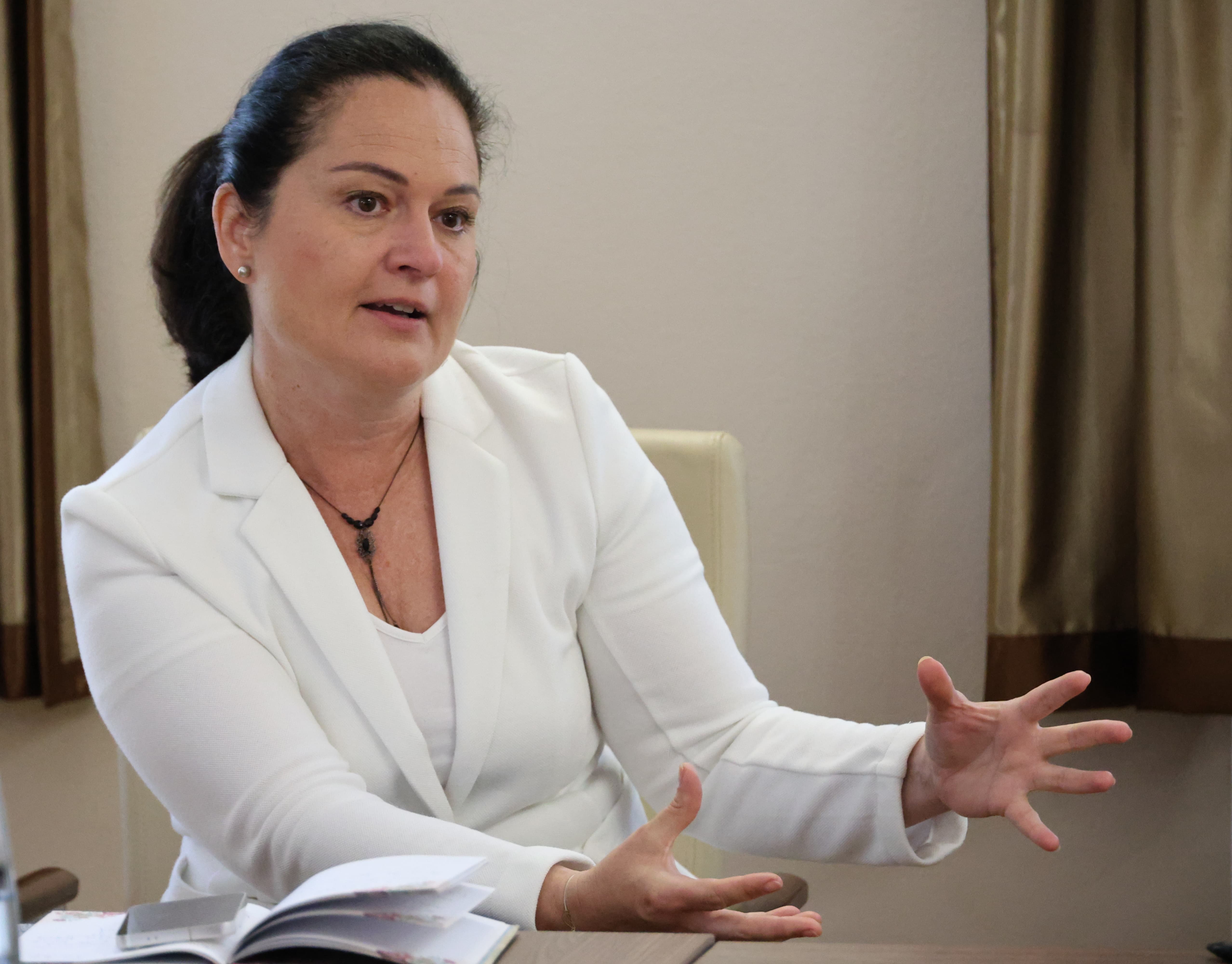
At the beginning of her career, she worked in a multinational environment at Telekom as a telecommunications lawyer. This period was particularly important for her: she became familiar with international corporate culture, teamwork and complex thinking, all of which later shaped her professional outlook. However, when she started a family, she made a conscious decision to return to Tatabánya in order to better balance work and private life.
In Tatabánya, she worked as a lawyer, primarily for local governments and transport companies. Later, she became the legal director of a regional public road passenger transport company, and after organisational restructuring she looked for a new direction. At that point, she decided to continue her education and studied tourism development at Corvinus University with the aim of taking an active role in the city’s development. Today, she works in the field of economic development, where she is able to utilise both her legal expertise and her new perspective.
During her career, Noémi never felt disadvantaged as a woman. She believes this is partly a matter of personality and partly a matter of environment. She has always considered herself a team player and never aspired to top executive positions. At the same time, she sees the systemic differences: there are still fewer women in strategic and senior management roles, while their presence is already more balanced at middle-management level.
She considers balancing work and private life to be a challenge, but not exclusively a women’s issue. In her view, it is equally difficult for men, just in different ways. She believes that today’s world – thanks to flexible working arrangements, home office opportunities and technological development – offers far more possibilities for achieving balance. This is also reflected in her own leadership approach: what matters is not when or where someone works, but whether the task is completed properly and on time.
She presents a nuanced view of women’s opportunities in the labour market. According to her, women are more strongly represented in certain fields – such as public administration, education or healthcare – while they are still underrepresented in strategic decision-making and senior leadership positions. She also considers corporate culture and international background to be important factors: companies from certain countries are more open to diverse leadership, while others are less flexible in this regard.
One of the most defining experiences of her life was returning to university as an adult. The new knowledge she gained at Corvinus represented not only professional development, but also personal confirmation: she experienced the true meaning of lifelong learning and realised that she was capable of applying the knowledge she had acquired in practice.
In her private life, her greatest joy and achievement at present are the successes of her son, who is already gaining professional experience alongside his university studies and approaches work with enthusiasm. For her, this is not only a source of pride but also confirmation that, as a parent, she has succeeded in passing on values that help her child build an independent future.
Noémi’s motivation comes from working for the community. She believes that Tatabánya can develop if professional considerations take precedence over political interests and if the city’s stakeholders are able to cooperate. She is not thinking in terms of competing with larger cities, but rather in making Tatabánya a more liveable place for its residents.
In difficult times, she believes adaptation and replanning are what help most. She consciously looks for solutions, develops several alternatives, and believes that consistent and fair work brings results in the long term.
Noémi’s story shows that success cannot necessarily be measured in positions. Rather, it lies in whether someone is able to create balance, adapt to change, and create value in the process – not only for themselves, but also for their community.
Explore this story online: [LINK]

28/05/2026
By
Share on social media:



News & Events
Read the most recent updates and explore the upcoming events.










Would you like to receive project updates?
You're already part of our community!
Welcome to our newsletter community!
Subscribe to our newsletter