
Synergy Panel Discussion at the DIGI4Care Final Event
Beyond Individual Projects: How European Digital Health Initiatives Can Multiply Their Impact Through Collaboration
Digital transformation in healthcare is no longer driven by isolated technologies or standalone pilot projects. Across Europe, research and innovation initiatives are tackling remarkably similar challenges: how to introduce digital solutions into everyday care practice, how to support healthcare professionals through knowledge-sharing, sensitization, and capacity building, and how to ensure that successful innovations continue long after project funding ends.
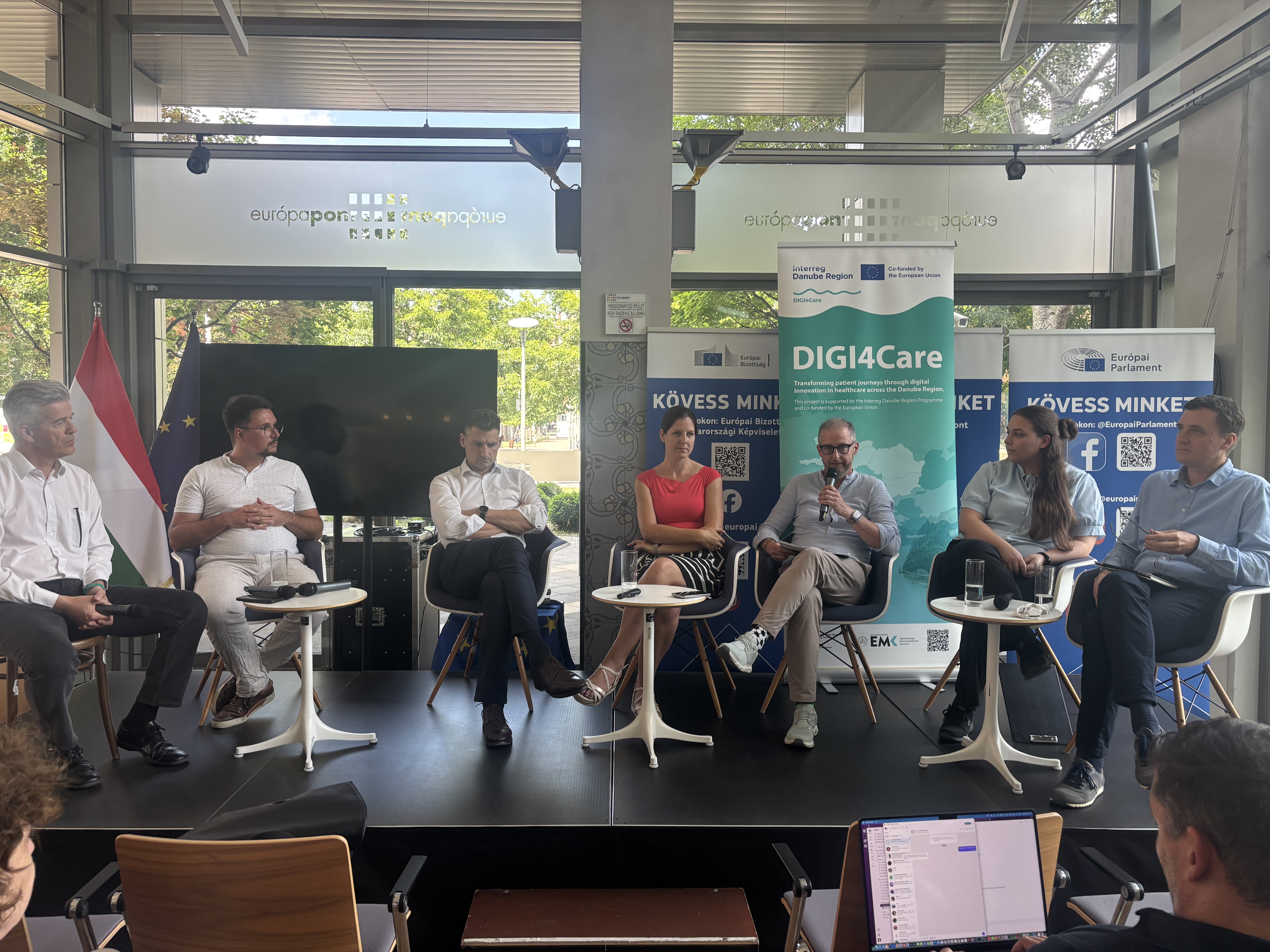
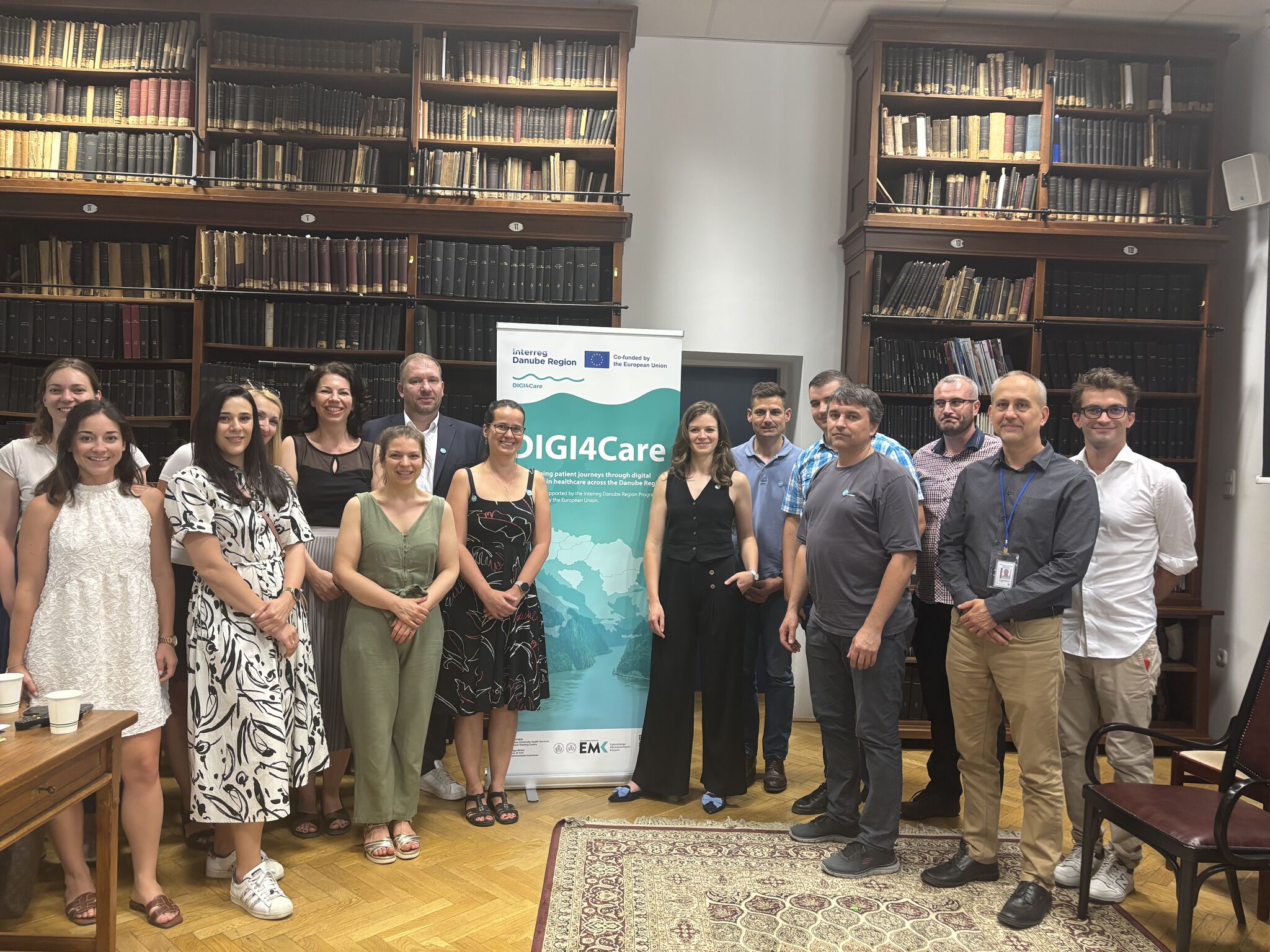
Recognising these shared ambitions, the DIGI4Care Final Event in Budapest hosted a synergy panel bringing together representatives of several European digital health projects. Although each initiative addresses different healthcare needs and target groups, the discussion revealed a strong consensus: meaningful innovation depends just as much on implementation, collaboration and trust as it does on technology itself.
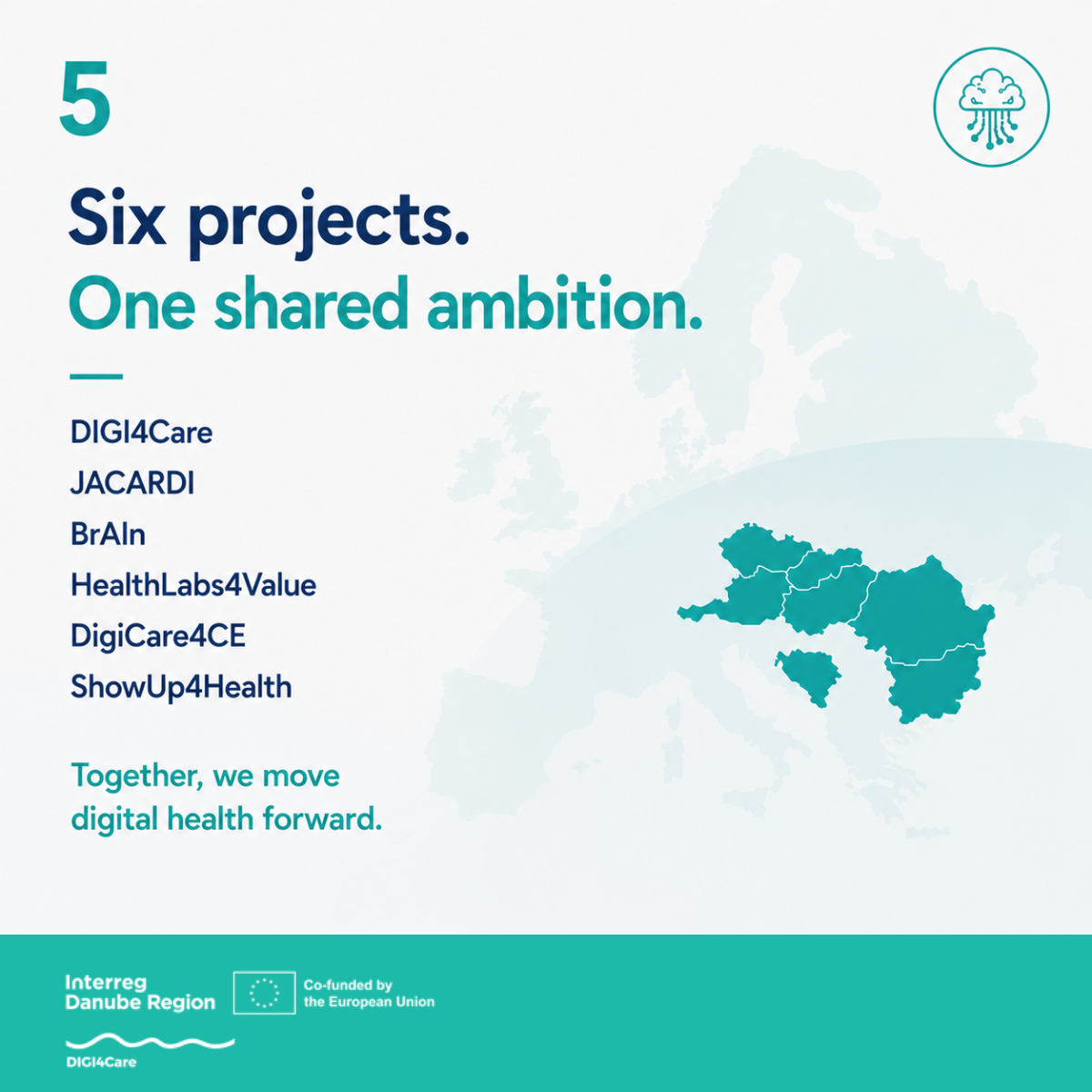
The panel featured representatives from BrAIn, HealthLabs4Value, ShowUp4Health, JACARDI, DigiCare4CE and DIGI4Care, each sharing lessons from their own implementation journey. Together, the projects covered an impressive spectrum—from AI-supported elderly care and integrated cardiovascular pathways to telemedicine for underserved communities, value-based healthcare, and digital rehabilitation.
Technology alone is never enough
Perhaps the strongest message emerging from the discussion was that successful digital transformation is rarely limited by technology itself.
Whether introducing wearable devices for cardiovascular rehabilitation, AI-powered social robots, telemedicine services, digital patient management systems or cognitive support technologies, every project encountered similar barriers: integrating new tools into existing clinical workflows, overcoming resistance to change, ensuring interoperability, navigating regulatory requirements, and demonstrating tangible value for both healthcare professionals and patients.
Several speakers emphasised that healthcare professionals adopt innovation not because it is technologically advanced, but because it makes their work easier and ultimately improves patient care. When digital solutions reduce administrative burden, support clinical decision-making or create more time for patients, acceptance follows naturally.
People, not technology, drive implementation
The discussion repeatedly returned to one key ingredient of successful implementation: people.
Many projects highlighted the importance of identifying local champions—clinicians, nurses or caregivers willing to become early adopters and demonstrate the benefits of new approaches to their colleagues. Others stressed the value of co-creation, involving healthcare professionals, patients and technology developers throughout the entire design and implementation process.
HealthLabs4Value illustrated how Living Labs and the quadruple-helix approach create environments where hospitals, researchers, industry and citizens jointly develop solutions tailored to real clinical needs. Rather than transferring technologies alone, the project demonstrates how structured collaboration itself becomes a transferable methodology.
Similarly, JACARDI shared how one of its major outputs is not a single digital solution, but a common implementation framework designed to help countries adapt, evaluate and scale innovations despite the diversity of European healthcare systems. As one speaker summarised: “We should not only transfer technologies—we should transfer methodologies.”
One size does not fit all
Another common lesson was that digital maturity varies enormously—not only between countries, but also between healthcare institutions and individual patients.
DIGI4Care partners reflected on experiences ranging from patients using outdated mobile phones that could not support new applications to hospitals lacking the infrastructure needed to integrate digital data into routine care. Similar experiences were echoed by ShowUp4Health, where telemedicine services in remote communities first required reliable internet connectivity and trusted local health mediators before technology itself could deliver value.
Similar experiences were echoed by DigiCare4CE, where partners worked with care homes to support their transition from analogue routines to digitally enabled care environments. Their experience highlighted the importance of assessing digital maturity, providing practical implementation roadmaps, and helping staff build confidence in using unfamiliar tools such as interactive mirror technologies. ShowUp4Health brought another important angle, showing that telemedicine services in remote communities first require reliable internet connectivity and trusted local health mediators before technology itself can deliver value.
These experiences reinforce an important principle: successful implementation begins with understanding the local context rather than expecting technology alone to solve systemic challenges.
Artificial intelligence enters everyday healthcare
Artificial intelligence featured prominently throughout the discussion—not as a futuristic concept, but as an increasingly practical tool.
BrAIn demonstrated how AI-supported humanoid robots can provide companionship for older adults while carefully respecting ethical boundaries and supporting, rather than replacing, human care. The project’s implementation pathway highlights the importance of user acceptance, safety validation and continuous co-creation alongside technological development.
Participants also reflected on the growing role of generative AI in everyday healthcare communication. Large language models are already helping patients interpret complex discharge summaries, understand medical terminology and engage more confidently in conversations with healthcare professionals. These emerging applications illustrate how AI can improve health literacy when implemented responsibly.
Collaboration as a project outcome
Perhaps the most valuable takeaway from the panel was that collaboration itself can be considered a project result.
Although each initiative operates under different funding programmes, targets different populations and tests different technologies, the challenges they face—and the solutions they develop—are remarkably similar. Sharing implementation methodologies, evaluation approaches, stakeholder engagement strategies and policy recommendations allows projects to build upon one another instead of reinventing solutions independently.
For DIGI4Care, the discussion reinforced that cross-project synergies extend well beyond dissemination activities. They create opportunities to accelerate innovation, avoid duplication of effort and strengthen the evidence needed to bring successful digital solutions into routine healthcare.
As European healthcare systems continue their digital transformation, projects may come to an end, but the networks, partnerships and shared knowledge they create should continue to grow. After all, digital innovation achieves its greatest impact not when projects work in parallel, but when they learn from one another.
Synergy Panel Participants
The discussion brought together representatives of several European projects working to advance digital transformation in healthcare through complementary approaches and shared implementation experience:
· BrAIn – Bringing Artificial Intelligence Towards SMEs –Danube Interreg; represented by Renáta Csabai (Pannon Business Network)
· HealthLabs4Value – Digitalising patient-oriented health care – Interreg Central Europe, represented by Ákos Szépvölgyi (Central Transdanubian Regional Innovation Agency)
· DigiCare4CE – Digital transformation of long-term care facilities for older people – Interreg Central Europe; represented by Domenic Sommer (Deggendorf Institute of Technology, Germany)
· ShowUp4Health – Building Trust in Roma Communities and Internally Displaced People for NCD Prevention - EU4Health; represented by Dr Endre Pásztor (Hungarian Charity Service of the Order of Malta)
· JACARDI – Joint Action on Cardiovascular Diseases and Diabetes – EU4Healh; represented by Fruzsina Sinka (Semmelweis University & GOKVI Hungary)
· DIGI4Care – Danube Interreg; represented by Dr Ákos Tiboldi (Ludwig Boltzmann Institute, Austria)
The panel discussion was moderated by Albert Aszalós (Semmelweis University, Hungary).
Written by Agnes Makai

30/06/2026
By
Share on social media:



News & Events
Read the most recent updates and explore the upcoming events.


Would you like to receive project updates?
You're already part of our community!
Welcome to our newsletter community!
Subscribe to our newsletter