

Aleksandar The Bear in ForestConnect focus again!
The Centre for Protection and Research of Birds of Montenegro (CZIP) has successfully carried out another brown bear capture and GPS telemetry collaring operation in Durmitor National Park as part of the ForestConnect project.
This operation came with a particularly unexpected twist. For almost a year, the team believed that Aleksandar, the bear originally collared within the ForestConnect project, had fallen victim to poaching after his GPS collar stopped transmitting. To everyone's surprise, however, he recently reappeared on camera traps at newly established feeding sites - alive, healthy, and seemingly unaware of the concern he had caused.
Since we firmly believe that the names we give these animals often reflect their personalities, Aleksandar certainly lived up to his name. Much like our friend and colleague Alek Perović (whom many of you have met) he displayed remarkable charisma and confidence. For days, he proudly paraded in front of our camera traps, showing off his glossy coat and impressive physique while repeatedly frustrating every attempt to recapture him and replace his clearly malfunctioning collar.
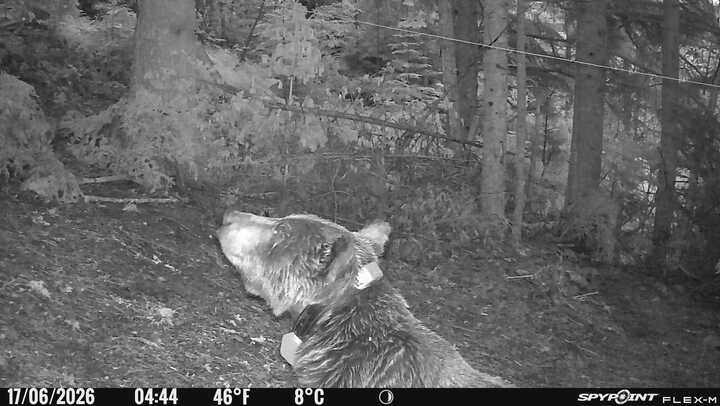
On the evening of 18 June 2026, however, curiosity and perhaps a healthy appetite, finally tipped the scales in our favour. Aleksandar was safely captured in Durmitor National Park and fitted with a new GPS/GSM tracking collar. The bear, estimated to be over six years old and weighing 161 kilograms, was found to be in excellent health during the veterinary examination.
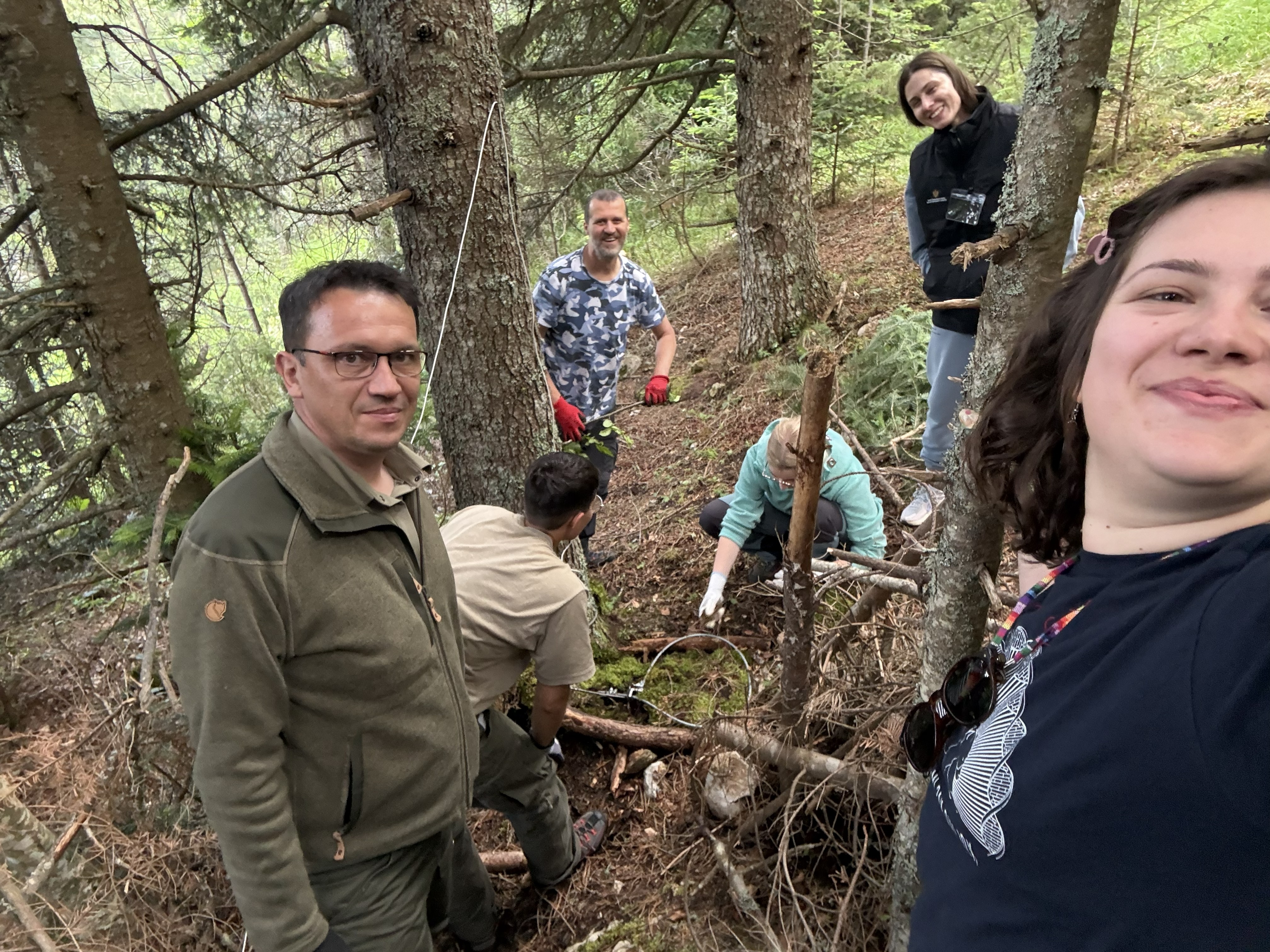
The trap alarm was triggered shortly before midnight, on the seventh evening after the traps had been deployed. CZIP’s expert team immediately responded, joined by veterinarian Dr. Slaven Reljić, colleagues from Durmitor National Park, and local residents Ivan and Bojan Vuković, whose support contributed significantly to the success of the operation.
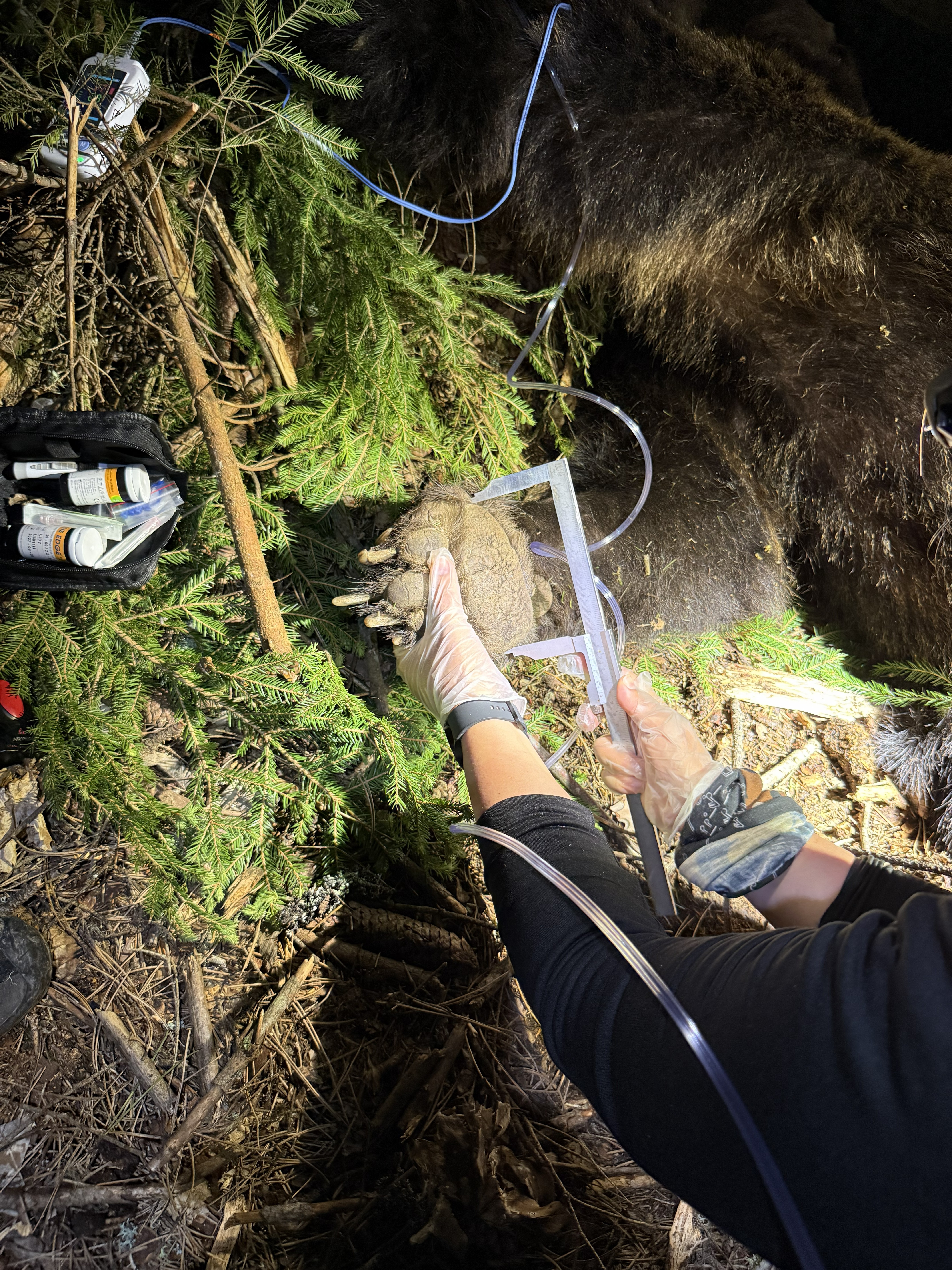
Following the safe immobilisation of the bear, the team conducted a comprehensive health assessment, collected biological samples, performed morphometric measurements, and fitted a new GPS/GSM collar. Throughout the entire procedure, the animal remained under continuous veterinary supervision, with all vital signs carefully monitored.
The operation lasted approximately two hours and was completed without complications. After recovering from anaesthesia, Aleksandar calmly left the capture site. By the following morning, the collar had already transmitted its first location data, marking the beginning of continuous monitoring of his movements and behaviour. According to the initial data, Aleksandar crossed the Tara Canyon after his release and continued moving towards the northeastern part of Montenegro.
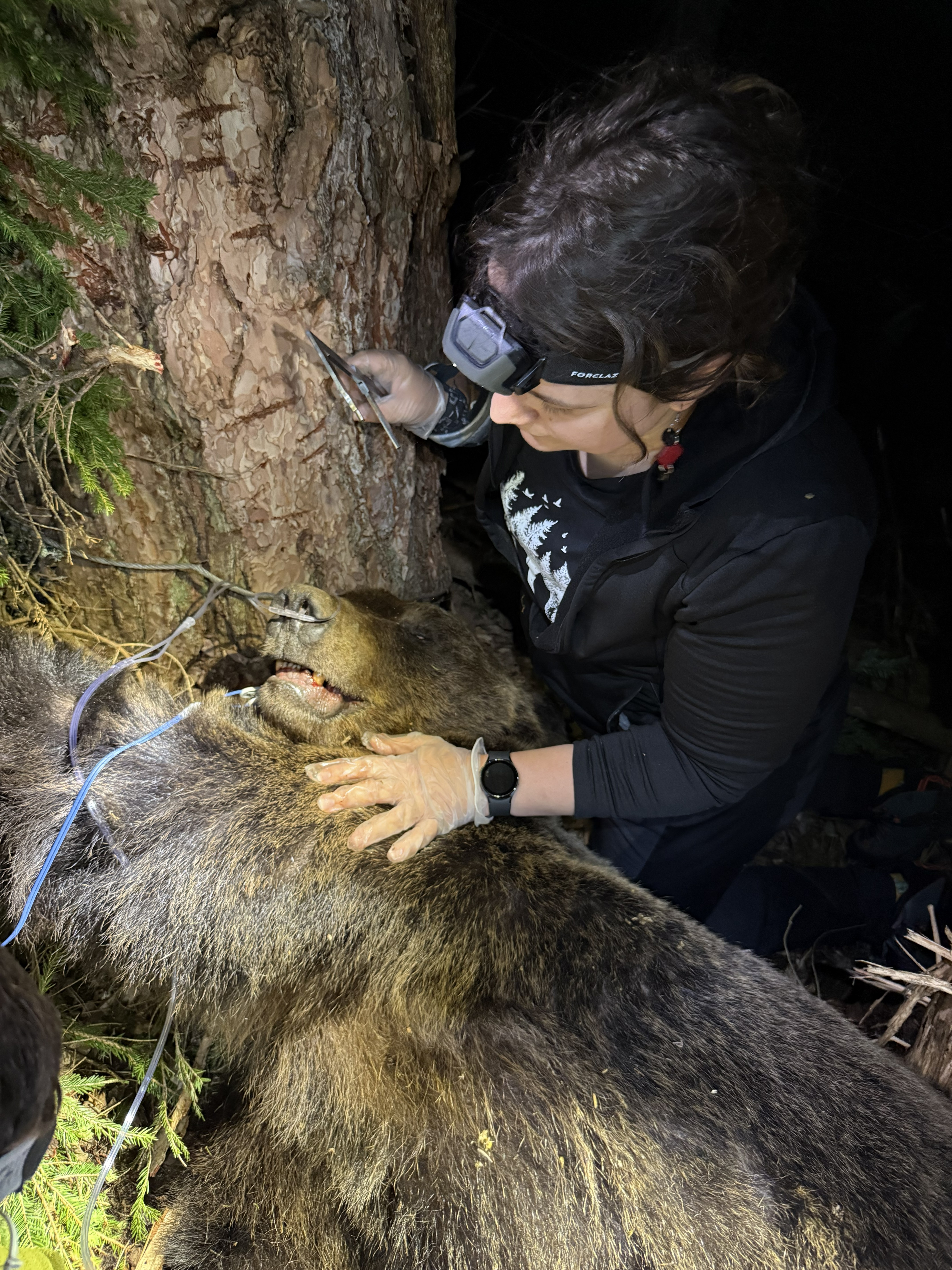
Dr. Slaven Reljić highlighted that the operation was made possible through careful planning and excellent teamwork.
"The bear remained in good condition throughout the anaesthesia, allowing us to safely perform all necessary measurements, collect samples, and fit the GPS collar. Monitoring bears in this way provides invaluable insights into their biology, ecology, and behaviour, while also supporting more effective conservation efforts and promoting coexistence between people and bears."
Marija Iković of CZIP noted that this was a particularly significant achievement, as it is rare to successfully capture and collar the same individual for a second time.
"The data we collect from monitoring Aleksandar will greatly improve our understanding of his movements, habitat use, and the ecological needs of the species. These insights will contribute directly to the conservation of brown bears and the protection of the habitats that are essential for their long-term survival," said Iković.
As for Aleksandar, he is once again roaming the forests of Montenegro - alive, healthy, and now sporting a brand-new piece of "jewellery" around his neck. We hope this latest accessory serves him much better than the last one.
The ForestConnect project focuses on protecting biodiversity and preserving ecological corridors, with the monitoring of large carnivores representing a key component of its long-term conservation efforts. By tracking species such as the brown bear, the project generates valuable scientific data that supports evidence-based conservation and helps ensure a sustainable future for wildlife and people alike.

01/07/2026
By Aleksandra Ugarkovic
Share on social media:



News & Events
Read the most recent updates and explore the upcoming events.


Would you like to receive project updates?
You're already part of our community!
Welcome to our newsletter community!
Subscribe to our newsletter