
The Chisinau Partner Meeting: Seven Countries, One Question - What Actually Works for Women Entrepreneurs?
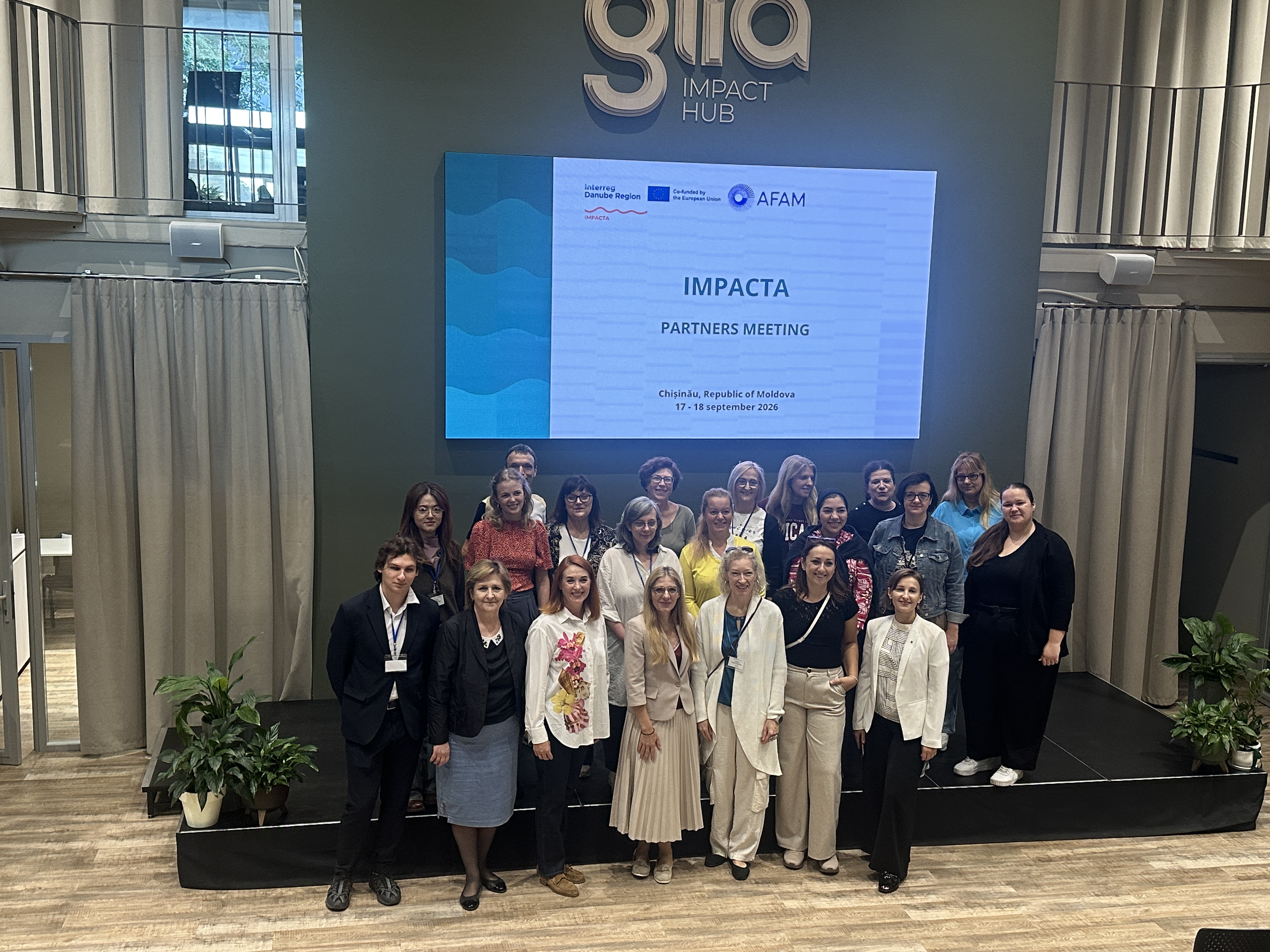
Last week, the IMPACTA network held its in person gathering in Chisinau, Moldova, hosted by the Association of Women Entrepreneurs of Moldova (AFAM) — bringing together project partners and stakeholders from across the Danube Region to compare notes on a question at the heart of the project: what genuinely helps women start and grow a business, and could it work somewhere else too?
Opening the meeting, AFAM President Carolina Bugaian welcomed the chance to host an international gathering in Moldova, while WBA's Renáta Anna Jaksa set out IMPACTA's ambition: a participatory, scalable model for supporting women entrepreneurs and women business angels that can travel across the Danube Region and beyond — so that women can live up to their full potential.
Over two days, more than 20 organisations from Hungary, Moldova, Bulgaria, Croatia, Germany, Serbia and Ukraine took part — a mix of women's business associations, universities, hubs, mentoring networks and public authorities. Rather than a series of formal presentations, the meeting was built around a simple, practical logic: first find out who's in the room and what they can offer, then look at what has actually worked on the ground, and finally figure out what's worth trying elsewhere.
Seven programmes, one shared logic
The centrepiece of the first day was a round of concrete examples — one per country — of initiatives already supporting women entrepreneurs. They range widely in shape and scale:
Hungary — Academy for Women Entrepreneurs (presented by Viktória Sőregi, ImpactHUB Budapest)
Moldova — GLIA Impact Hub (presented by Dorina Ciobanu, CEO)
Bulgaria — EWA: Empowering Women in Agrifood (presented by Mariya Zlateva)
Croatia — Little School for Women Entrepreneurs (presented by Emilija Stručić)
Germany — mentorING (presented by Dian Zhuang, Technical University of Munich)
Serbia — Women's Ethno Hub, Loznica (presented by Dragana Panajotović)
Ukraine — U&We Hub, Ivano-Frankivsk (presented by Karyna Kovalevska)
Different countries, different contexts — but a clear common thread emerged: none of these worked as a single training course. Each combines training with mentoring, peer contact, and a route to finance or further support, sustained over time rather than delivered in one sitting.
From examples to action
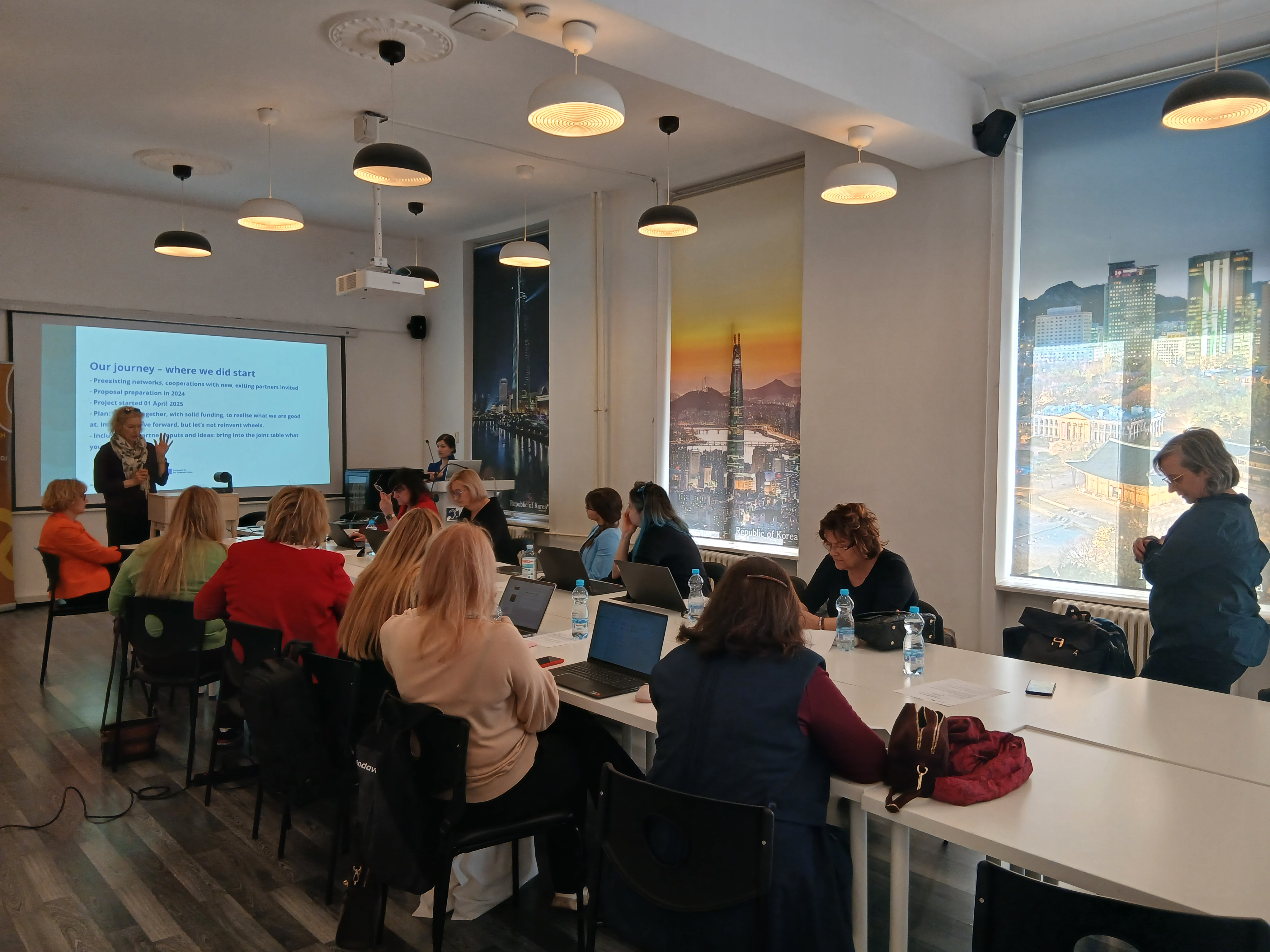
The second half of the meeting put that evidence to work. In small groups, participants examined which elements of these seven practices could realistically strengthen IMPACTA's own pilot activities — new digital tools for young women, training and mentoring programmes, and local women's entrepreneurship hubs — and what would need to change to fit each country's specific barriers, from limited internet access to the realities of reaching displaced or rural women.
A few conclusions stood out. Programmes work better when they're modular, so people can join at their own stage of development. Reaching harder-to-reach groups depends less on the programme itself than on partnering with organisations people already trust. And mentoring only works well when it also considers what motivates the mentors, not just the mentees.
Behind the scenes, and underground
The second morning ran on two tracks. Consortium partners stepped into an internal coordination session, reviewing progress on each of IMPACTA's five pilots and planning the months ahead. External guests, meanwhile, had the morning to themselves, with AFAM organising an optional visit to the Cricova wine cellars just outside Chisinau — one of the world's largest underground wine networks — before everyone reunited for lunch back at GLIA Impact Hub.
Grounded in a real business
The meeting closed with a study visit to Madaline Wood Bag, a family business in Băcioi founded by AFAM member Maria Bumbu and her husband. Maria shared how the idea grew out of an earlier career in advertising and décor — and how a pandemic-era experiment with a wine-box design, born from a determination to keep their team, became the first "Woodbag." The product line has since expanded to reusable baskets, cosmetic organisers and picnic baskets, all handmade from certified wood and jute. She also spoke about pitching on Moldova's "Imperiul Leilor" (the local Dragons' Den), securing investor backing, and expanding into the Romanian market. Partners closed the visit with a hands-on workshop, painting their own wooden bags and notebooks to take home — a hand-made reminder of the journey from idea to income that sits behind every good practice discussed over the two days.
What's next
The recommendations from Chisinau now feed directly into IMPACTA's five pilot activities as they move from design into local implementation, and into a toolkit for decision-makers being developed to help other regions apply what worked. This wasn't a one-off meeting but a milestone in an ongoing collaboration: future gatherings — including one planned in Munich in 2027 — will report back on what was tried, and what actually made a difference.

29/09/2026
By Renáta Anna Jaksa
Share on social media:



News & Events
Read the most recent updates and explore the upcoming events.



Would you like to receive project updates?
You're already part of our community!
Welcome to our newsletter community!
Subscribe to our newsletter