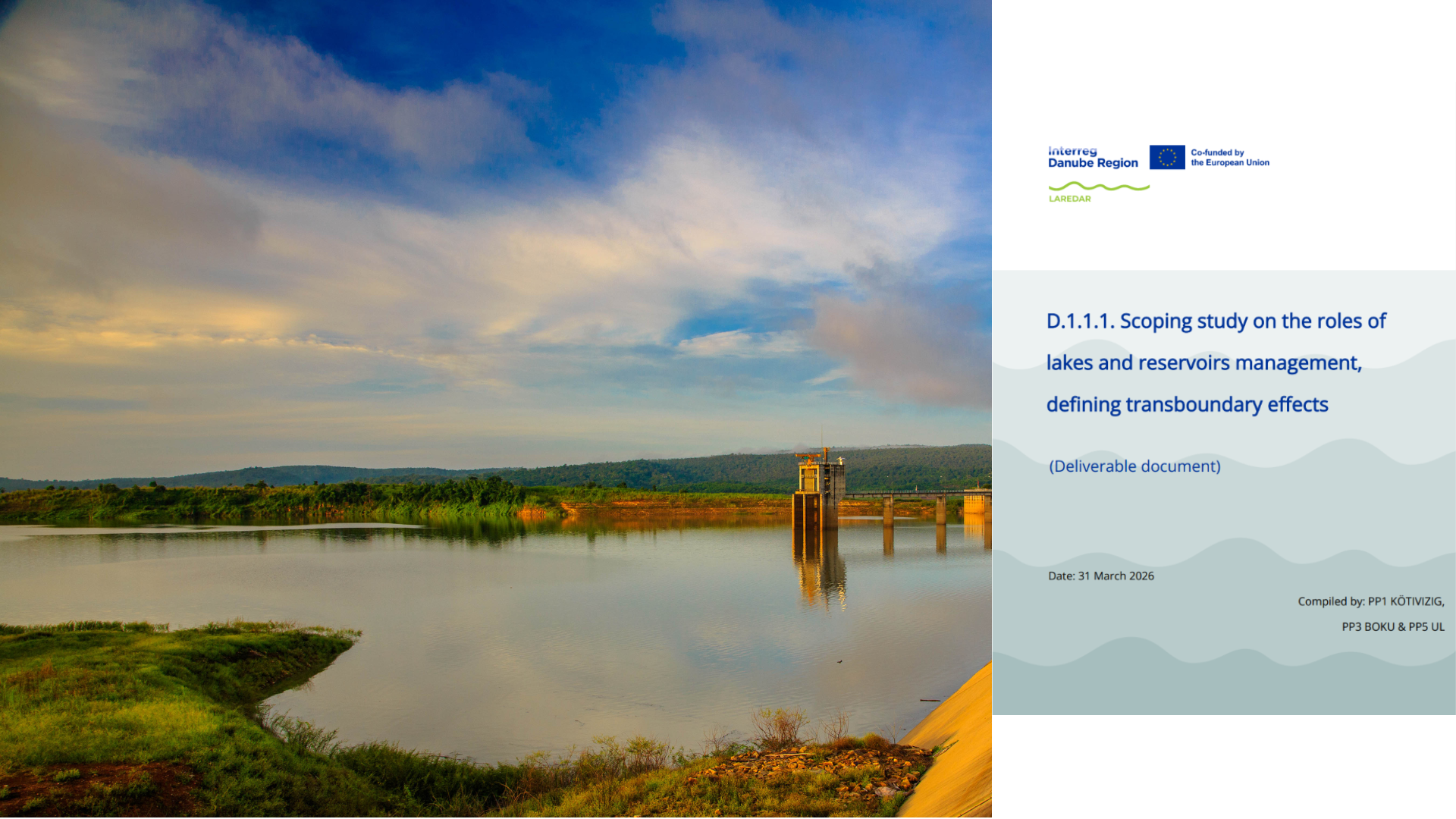

D.1.1.1. Scoping study on the roles of lakes and reservoirs management, defining transboundary effects
Download publicationBuilding a common framework for lakes and reservoirs across the Danube River Basin
Floods do not recognise national borders. However, differences in datasets, methodologies and management approaches continue to create barriers to coordinated flood risk management across the Danube River Basin.
The Scoping Study on the Roles of Lakes and Reservoirs Management, Defining Transboundary Effects (D1.1.1), developed within the LAREDAR project, establishes a common conceptual and methodological framework for assessing the role of lakes and reservoirs in flood risk management across the basin.
Rather than developing a new methodology from scratch, the study builds on existing European legislation, scientific literature and the knowledge generated through previous projects, including LAND4FLOOD, DAREFORT and DANUBE FLOODPLAIN. It identifies common principles that support harmonised approaches while respecting national practices.
Why is harmonisation important?
The study demonstrates that harmonisation creates the conditions for:
Comparable assessments across countries
Interoperable datasets for basin-wide analyses
Coordinated reservoir operation
Improved understanding of transboundary effects
More effective flood risk management under changing climatic conditions
As Europe's most international river basin, the Danube requires coordinated solutions that extend beyond national boundaries. This study provides the scientific and methodological basis for the next stages of the LAREDAR project, including the development of the LAREDAR Harmonization Platform and a shared GIS-based decision-support system that will strengthen coordinated flood risk management across the basin.
Download
Download the full publication below. 📄 👇

08/07/2026
By Stanislav Hronček
Share on social media:


Green

News & Events
Read the most recent updates and explore the upcoming events.


Would you like to receive project updates?
You're already part of our community!
Welcome to our newsletter community!
Subscribe to our newsletter