

WHO SHAPES THE FUTURE OF PERIPHERAL REGIONS? Geographical Talk Opens Discussion on Gender Inequalities in Industrial Environments
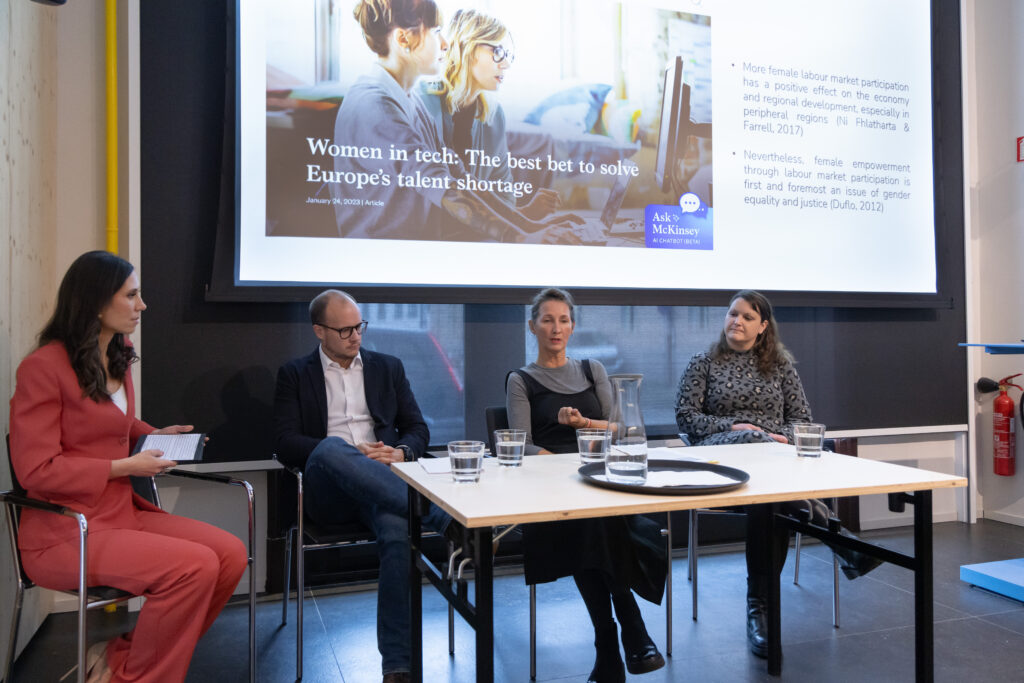
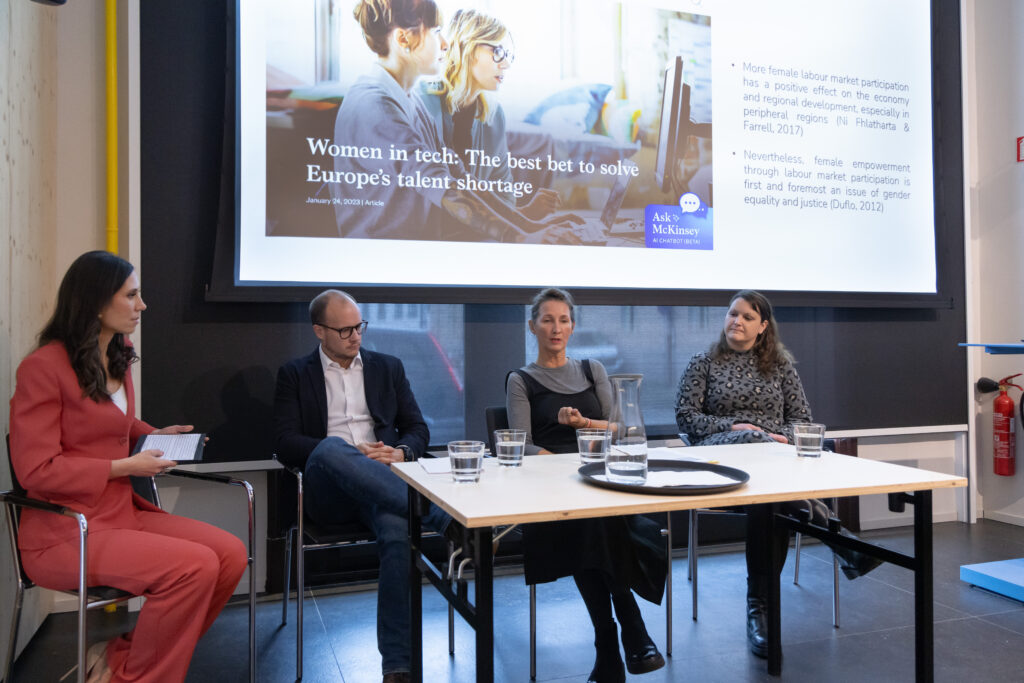
On 26 November 2025, the Geographical Talk was held at the ZRC SAZU premises in Ljubljana (Slovenia), dedicated to the role of gender in peripheral industrial regions. The event, co-organised by the Anton Melik Geographical Institute ZRC SAZU, the Postgraduate School ZRC SAZU and PiNA, opened a discussion on how the industrial legacy, local labour markets and gender inequality intersect and shape development trajectories in Slovenia and across the Danube region.
The Talk was organised within the WIN project, which examines the employment challenges faced by women in seven Danube countries, regions historically built on mining, manufacturing and engineering, where women continue to occupy less stable, lower-paid or lower-qualified positions.
In the opening address, the project leader Doc. Dr. Jani Kozina (Anton Melik Geographical Institute ZRC SAZU) highlighted the importance of WIN and its contribution to understanding the development challenges of peripheral industrial regions. He emphasised that the project is the result of several years of research into industrial landscapes and structural changes in the Danube area and that it involves close cooperation between Slovenian partners PiNA, ZRC SAZU and the Municipality of Trbovlje as the pilot region.
Gender inequalities are not an economic question, but a matter of justice
In his keynote lecture Shaping Peripheries: Gender, Policy and Industrial Development in the Danube Region, Dr. Jörn Harfst (University of Graz) explained that in many industrial regions “development problems reproduce over time,” as economic structures from the past have shaped contemporary labour markets, decision-making processes and gender roles. Harfst pointed out that despite decades of women’s participation in production, their contribution has often remained “invisible, whether as workers in undervalued sectors or as those carrying the burden of unpaid care work, frequently overlooked in development policies.
He stressed that “women’s participation in the labour market is not primarily an economic issue, but a matter of equality,” and only subsequently a matter of economic impact. Policies that follow a solely economic logic therefore often miss the core of the challenge.
Key issues include the historical division of labour in industry, the lack of place-sensitive policies, the gap between European strategic frameworks and local implementation, and the fact that gender dimensions are “mentioned, but rarely operationalised” in development strategies.
He concluded that “there are no one-size-fits-all solutions,” as peripheral conditions, industrial heritage and social relations differ greatly between regions.
In closing, Harfst emphasised that “closing the gap” is a long-term process requiring coordinated action by European, national, regional and local stakeholders, as well as continuous dialogue between academia, policymakers, the economy and civil society.
From policy to practice: where does implementation get stuck?
The keynote was followed by a roundtable discussion featuring:
Helena Valas, Ministry of Labour, Family, Social Affairs and Equal Opportunities
Tjaša Polc, Director of the Zasavje Chamber of Commerce
Rok Primožič, Municipality of Škofja Loka
Helena Valas highlighted that the majority of challenges emerge in implementation rather than legislation. Institutions often rely on the principle of “we are all equal before the law,” which in practice masks structural gender inequalities. She also pointed to the growing retraditionalisation among young people, fuelled by digital radicalisation and online algorithms.
Tjaša Polc noted that the Zasavje region is in some respects an exception, with many women holding leadership positions in public institutions and development agencies; however, women remain underrepresented in the business sector. She also stressed challenges related to integrating foreign workers, as well as the lack of stable financing for support programmes.
Rok Primožič presented the pilot Gender Equality Action Plan of the Municipality of Škofja Loka, developed through inclusive language guidelines, reviews of internal practices and promotion analysis within the municipal administration. He underlined the importance of visibility of women’s achievements in public spaces: in 2020 the municipality renamed the Avenue of Distinguished Citizens” to the “Avenue of Distinguished Women and Men of Škofja Loka”, following the installation of a bust of Dr. Marija Bračko, highlighting the inclusive values of the community. Primožič also noted challenges in the integration of migrant women and the role of the municipal intercultural mediator.
Geographical Talk as a space for dialogue
The discussion emphasised that industrial regions today face two major dynamics:
economic transition, demanding new skills and development models, and changing social roles, raising the question of how gender equality can be integrated into development strategies as a fundamental condition for sustainability.
The event concluded with the recognition that the successful future of peripheral industrial regions will depend on the willingness to rethink inherited patterns and to understand gender equality as a foundation - not an add-on - of regional development.
Photo: Marko Zaplatil

09/12/2025
By
Share on social media:



News & Events
Read the most recent updates and explore the upcoming events.











Would you like to receive project updates?
You're already part of our community!
Welcome to our newsletter community!
Subscribe to our newsletter