

From Points for older people to stronger intergenerational connections: the ELEVATE pilot implementation in the Heart of Slovenia
Building on an existing local model, the ELEVATE pilot is strengthening the Points for older people in Litija, Šmartno pri Litiji and Lukovica, connecting them with schools and young people, and creating the foundations for stronger intergenerational cooperation.
In June 2026, the Heart of Slovenia started implementing the ELEVATE pilot activity “Upgrading the Points for Older People” in Litija, Šmartno pri Litiji and Lukovica. The pilot builds on an existing local model and focuses on strengthening the points, developing volunteer networks and creating stronger links between older people, young people, schools and other local organisations.
Rather than creating a completely new system, the pilot builds on what is already working in the local communities. The Points for older people were established through an earlier LAG project, based on the experience and good practice of Zavod Oreli from Kamnik. ELEVATE provides an opportunity to strengthen this model, adapt it to the needs of each community and connect it more closely with younger generations.
Strengthening the points and their volunteer networks
The first activities focused on the people who are already involved in running the points. DCHS coordinates the implementation of the pilot and brings together the municipalities, Points for older people that are coordinated by Pensioneers associations, schools and other local partners, while Zavod Oreli provides practical training and workshops for coordinators and volunteers, young people and mentros in schools.
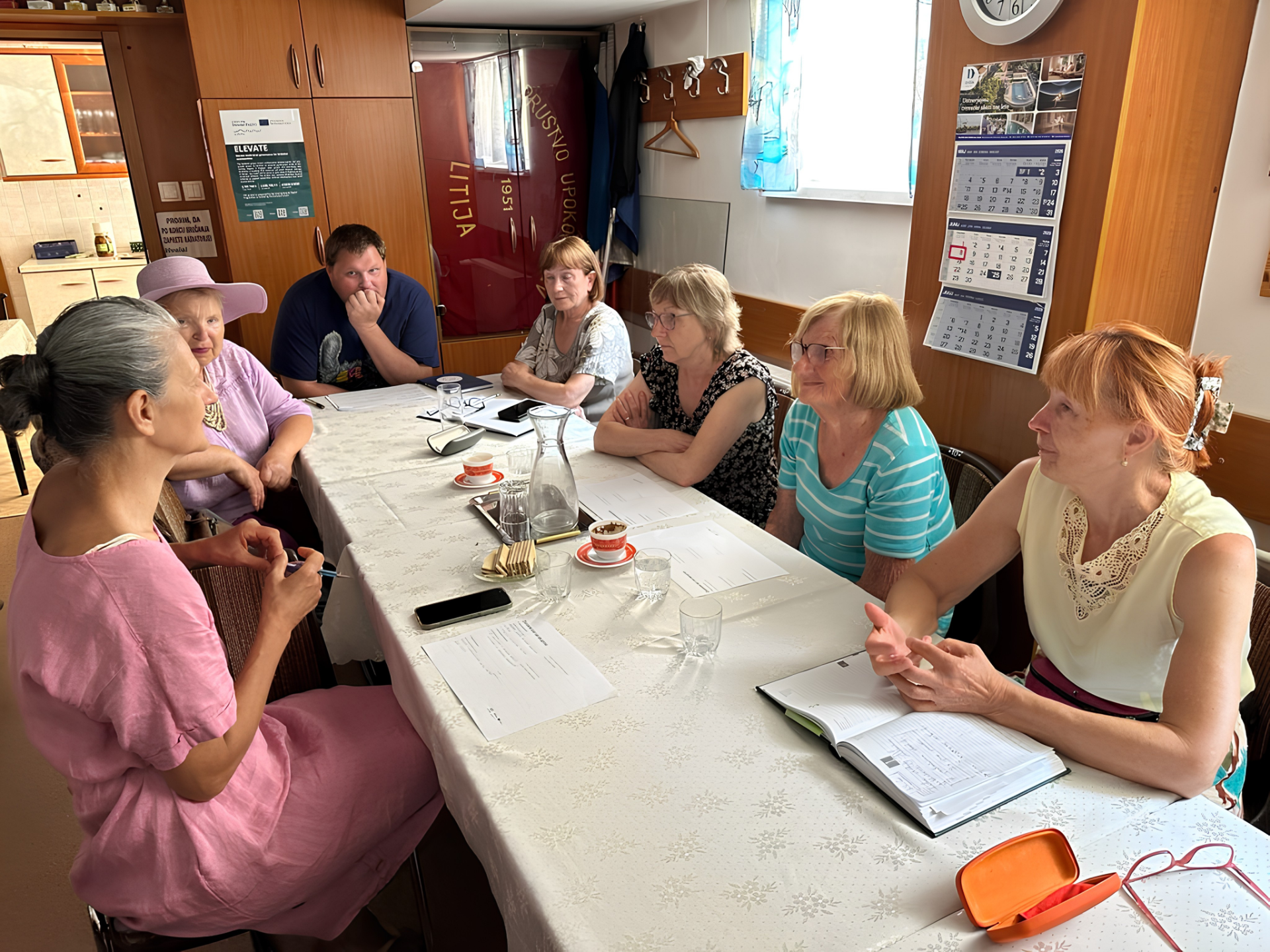
On 1 June, Institute Oreli met with the Association of pensioners Litija, which took over the coordination of the point for older people in Litija. The meeting focused on the role of the coordinator, the organisation of the point and practical aspects of working with volunteers. Insitute Oreli also provided training on the use of the »Volunteer« application, which supports the coordination of requests and volunteers.
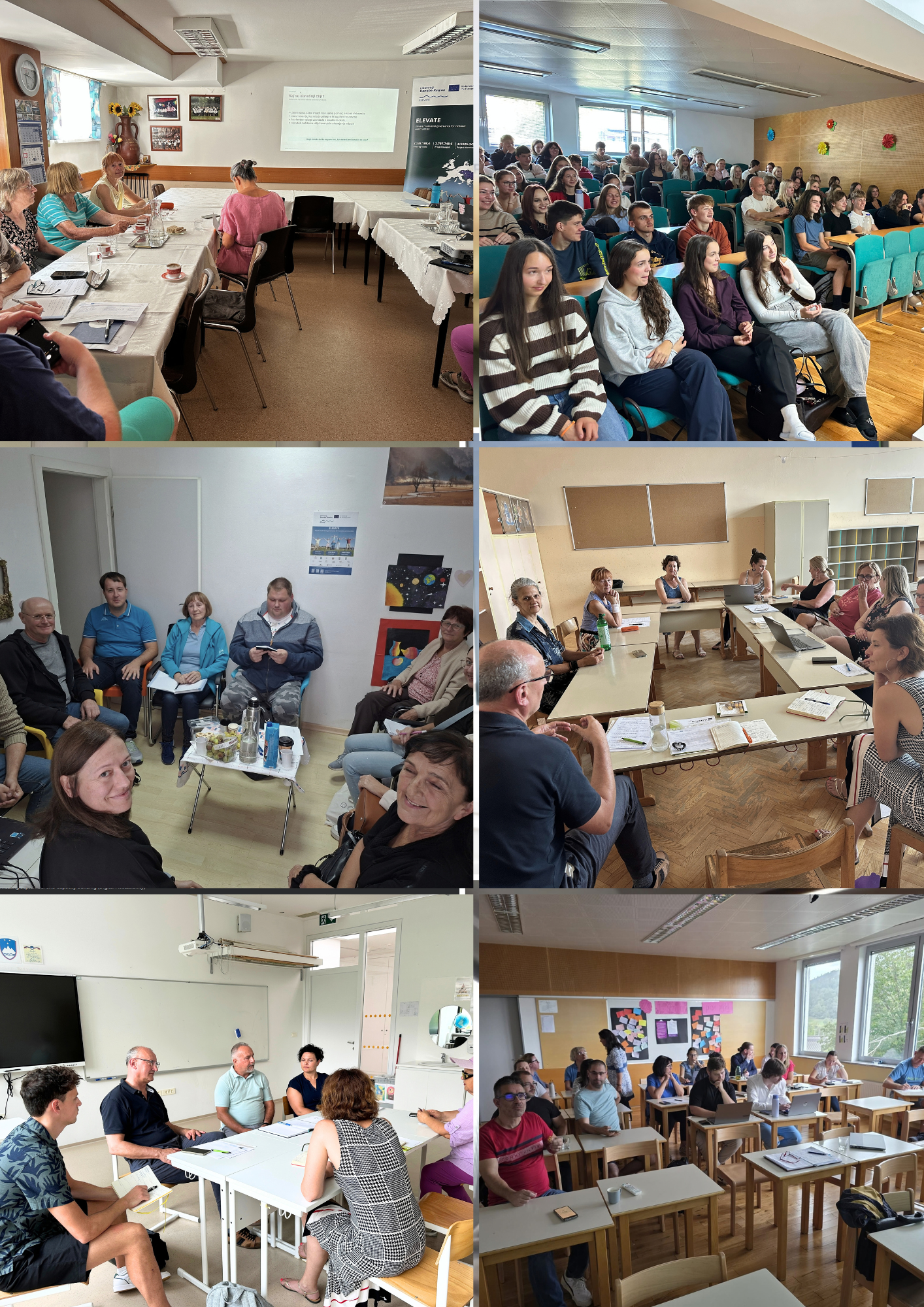
On 30 June, Institute Oreli delivered a workshop for coordinators and volunteers From Litija and Šmartno pri Litiji, focused on how to involve young people in volunteering and local community activities. Participants explored different approaches to working with young people, discussed local opportunities and developed initial ideas and action steps for their own communities.
Further practical support was provided to the coordinators of Point for older people in Lukovica on 22 September, with separate workshops on attracting young volunteers and on the practical management of the Point and the »Volunteer« application. A joint workshop for all three Points then focused on visibility and reaching potential users. The participants discussed how to make the Points better known and more accessible to people who may need support.
Connecting Points for older people with schools and young people
Another important part of the pilot is connecting the Points for older people with local schools and young people. In July, DCHS and Institute Oreli held meetings with representatives of Primary Schools Litija, Gradec and Šmartno pri Litiji and High School Litija to introduce the pilot, discuss possible forms of cooperation and prepare activities for students and mentors.
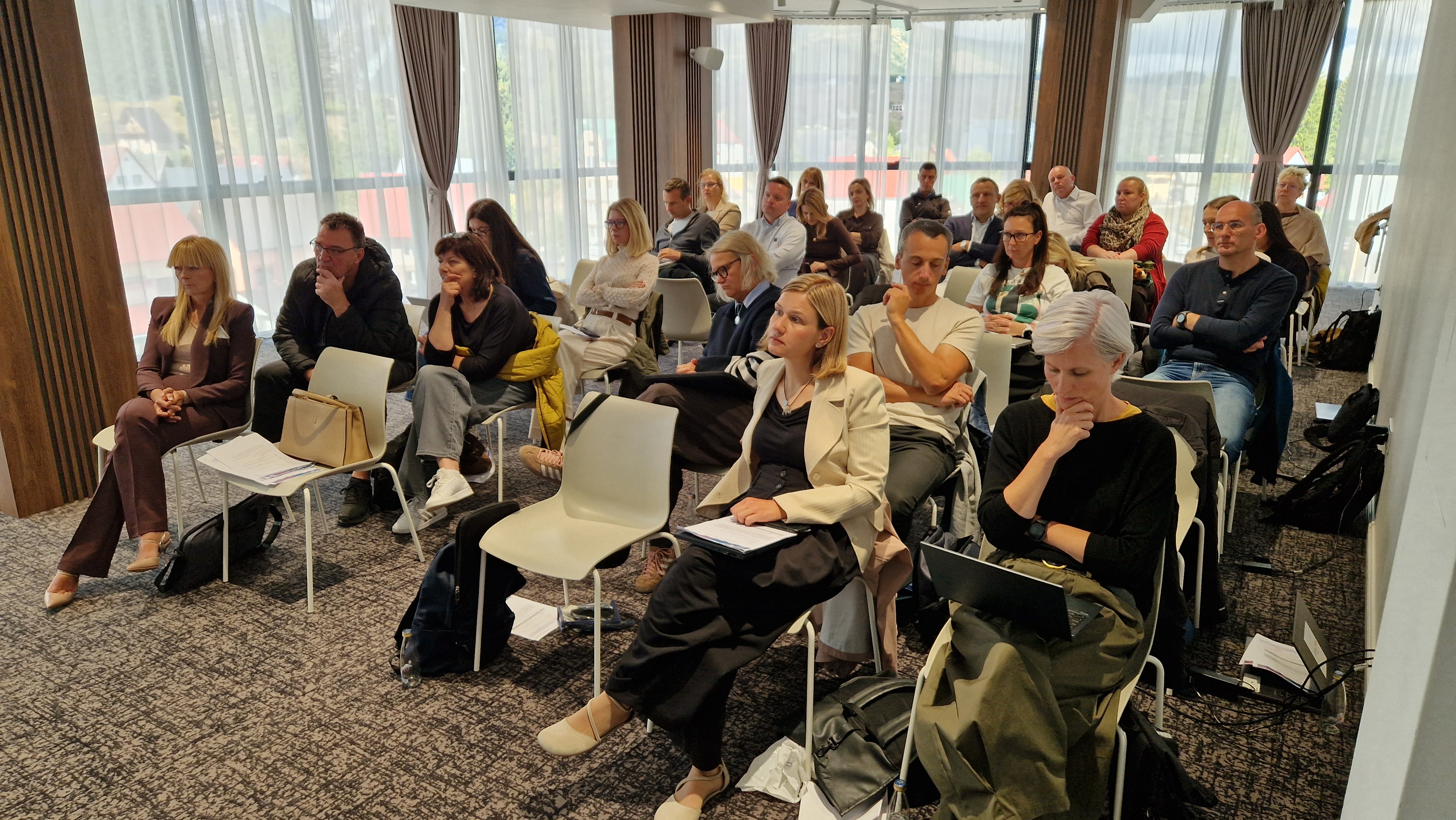
On 14 September, Zavod Oreli delivered a workshop for 55 high school students on volunteering and intergenerational cooperation. They learned about different opportunities for volunteering, heard a personal experience from a volunteer and worked in groups to identify their strengths and develop their own ideas for getting involved.
On the same day, a separate session was held for 26 teachers and mentors, focusing on the role of schools in encouraging and supporting student volunteering.
A second workshop for students was held on 28 September, bringing together another 60 students. The workshop again combined information about volunteering and intergenerational cooperation with practical group work. Students reflected on their own strengths and explored how they could become involved in volunteering. The session also included a personal volunteering experience from Anita Molka and a presentation of the Kind life project, presented by Damjana Pangerčič from ISG Amabilis.
These activities are helping to create a more direct connection between young people, existing volunteer opportunities and the Points for older people.
Building intergenerational community spaces
Alongside the work with coordinators, volunteers and schools, DCHS is working with the three municipalities and local partners on the development of three intergenerational community spaces in Litija, Šmartno pri Litiji and Lukovica.
Each local environment has its own organisations, networks, needs and possibilities, and the pilot is therefore being adapted accordingly.
In Šmartno pri Litiji, for example, the Municipality is developing a space where older people and young people can share activities and meet. In Litija, the Point is also building connections with Residental home for older people Tisje, creating opportunities for volunteering and contact between the local community and older residents.
The Points for older people provide an important foundation for this work. They already connect older people with volunteers and local organisations and can therefore serve as a practical starting point for developing broader intergenerational cooperation.
What have we learned so far?
The first months have confirmed that strengthening an existing local model is not simply about adding new activities. It also means strengthening the people and relationships behind it.
One important lesson is that the three communities are at different stages and have different local networks. Activities therefore need to be adapted rather than implemented in exactly the same way everywhere.
Another important finding is the role of schools and young people. If volunteer networks are to remain active and sustainable in the long term, new generations need to be given opportunities to participate. Direct cooperation with schools has therefore become an important part of the pilot.
Continuing the work
The first implementation period has therefore been about building the foundations: strengthening coordinators and volunteers, connecting the Points with schools, introducing more young people to volunteering, improving practical tools and bringing local organisations closer together.
In the next period, the focus will be on continuing cooperation with schools and municipalities, strengthening local volunteer networks and developing concrete intergenerational activities in the three communities.
The aim is not simply to create more activities, but to build connections that can continue beyond the project – so that older people can remain active and connected in their communities, while young people have meaningful opportunities to contribute and take part.
The ELEVATE pilot in the Heart of Slovenia is therefore developing step by step, building on what already exists and adapting it to the people and communities involved.
Video presenting Points for older people and Intergenerational Activities
Author: Anita Molka, DCHS

29/09/2026
By Jasna Presečki
Share on social media:



News & Events
Explore our upcoming events and read news regarding our programme and project activities.



Would you like to receive programme updates?
You're already part of our community!
Welcome to our newsletter community!
Subscribe to our newsletter