
Turning the Tide on River Pollution: Insights from the AQUATIC PLASTIC Closing Conference
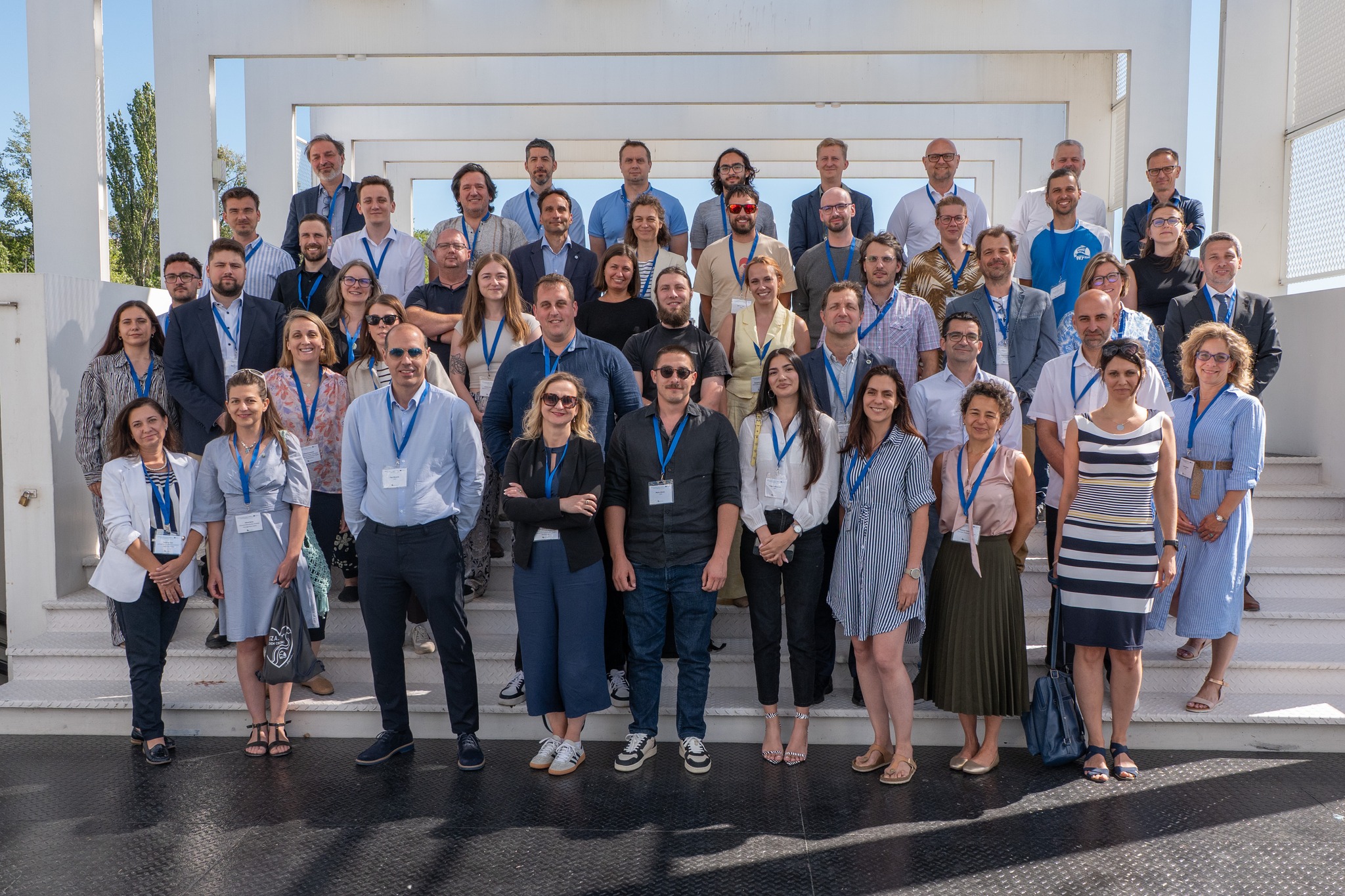
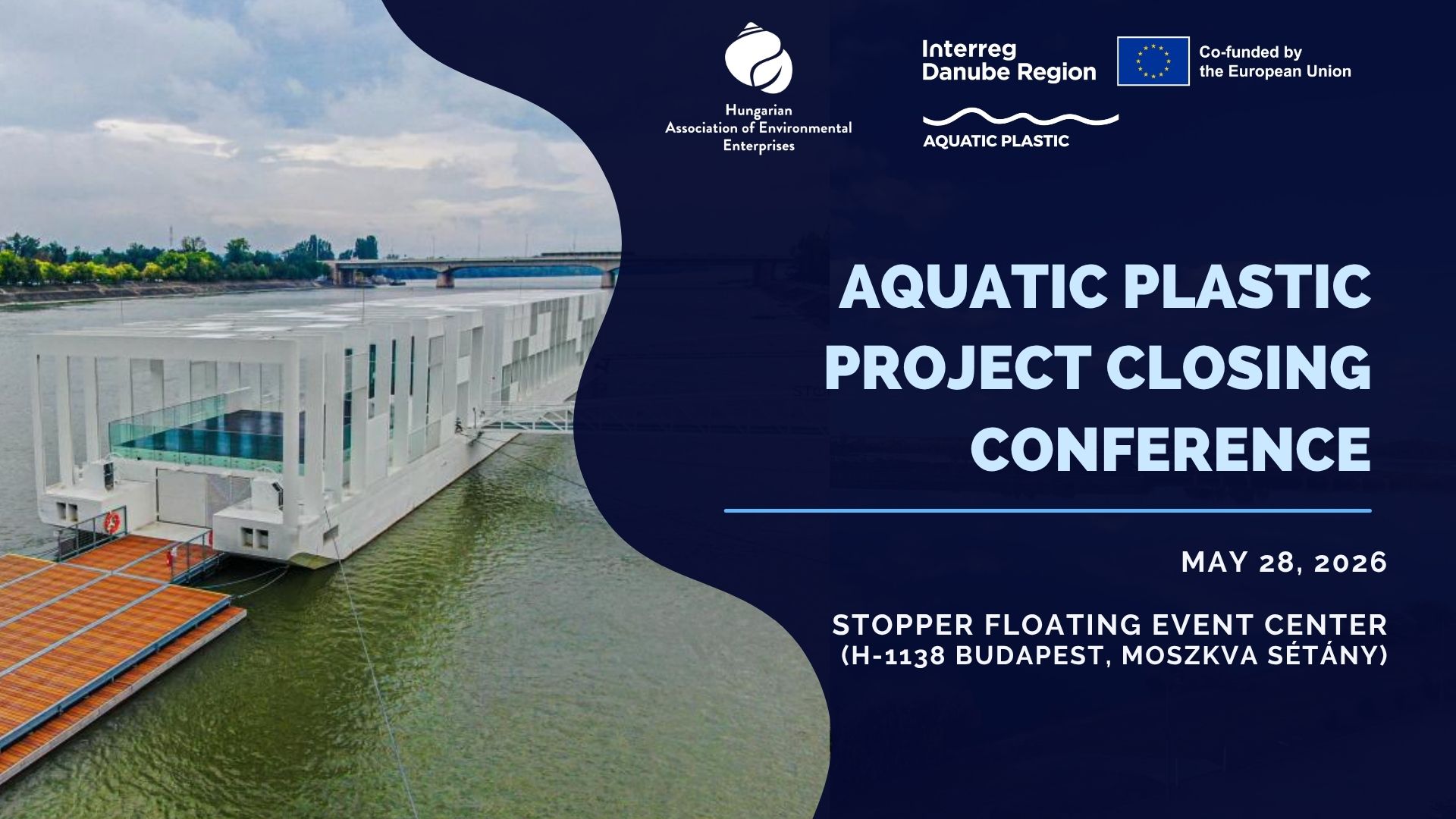
On Thursday, May 28, 2026, stakeholders and riverlovers gathered at Budapest for the official closing conference of the Interreg Danube Aquatic Plastic project. Fittingly spending the day surrounded by the inspiring presence of the Danube itself, attendees reflected on the project's critical mission: to reduce macro- and microplastic pollution while fostering research, data sharing, and joint action across the entire river basin.
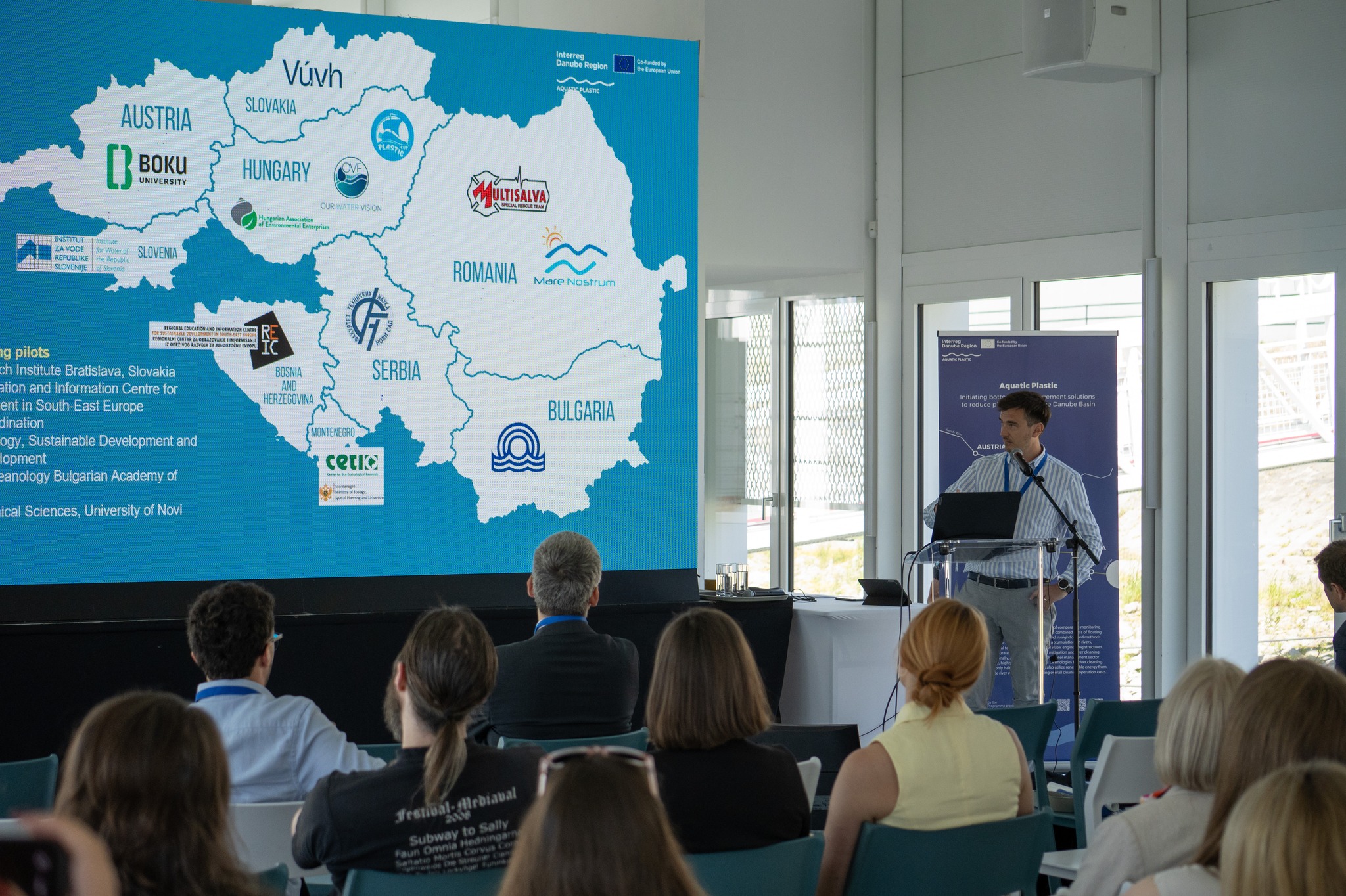
The event celebrated the collaborative efforts of the AQPLA consortium-spanning ministries, companies, NGOs, universities, and water authorities. Throughout the project, this coalition has worked tirelessly to identify high-risk waste-leakage points and pioneer innovative solutions for waste extraction and recycling.
Here are the key findings and future-forming recommendations:
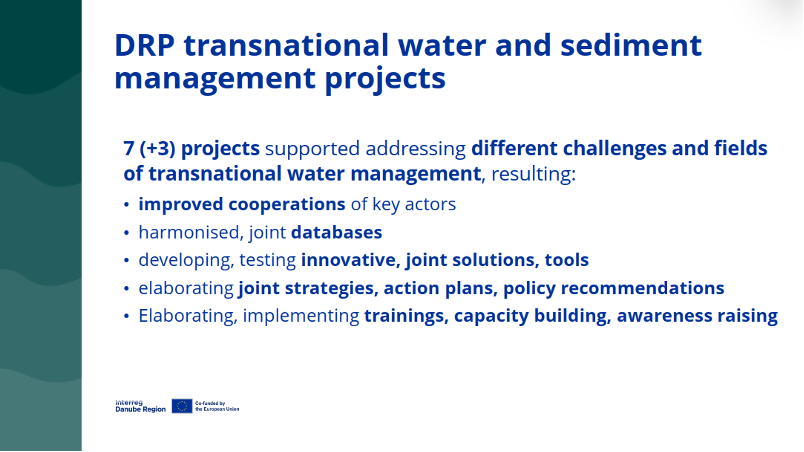
Danube Region Programme Results of Transnational Water Management Projects
Gusztáv Csomor, Senior Priority Officer of the Danube Region Programme Managing Authority, Joint Secretariat pointed out that the Danube Region Programme (DRP) facilitates essential EU funding for transnational water and sediment management projects, successfully advancing joint tools, harmonised databases, and action plans for critical issues like water quality and plastic pollution. Moving forward, he stressed that the completion of these projects is only the first step; continuous knowledge transfer, capacity building, and the active implementation of developed strategies by key actors are required to achieve long-term regional impact.
Quo Vadis, Danubius? Progress and Challenges of Pollution Management
Dr. Ádám Kovács, Pollution Control Technical Expert of the ICPDR emphasized that the International Commission for the Protection of the Danube River (ICPDR) has observed significant decreases in historical nutrient and organic pollution loads; however, the basin now faces urgent, complex threats from emerging chemical pollutants, unmanaged macro- and microplastic accumulations, and severe climate change-induced flooding. He stated that addressing these modern crises demands a systemic shift toward circular wastewater management, the integration of sustainable agricultural practices, and the enforcement of comprehensive regulatory frameworks alongside broad public participation.
EUSDR Challenges and Solutions in the Middle of a Water Crisis
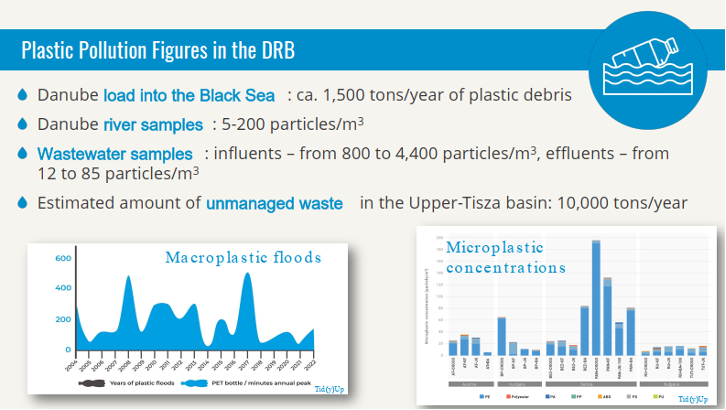
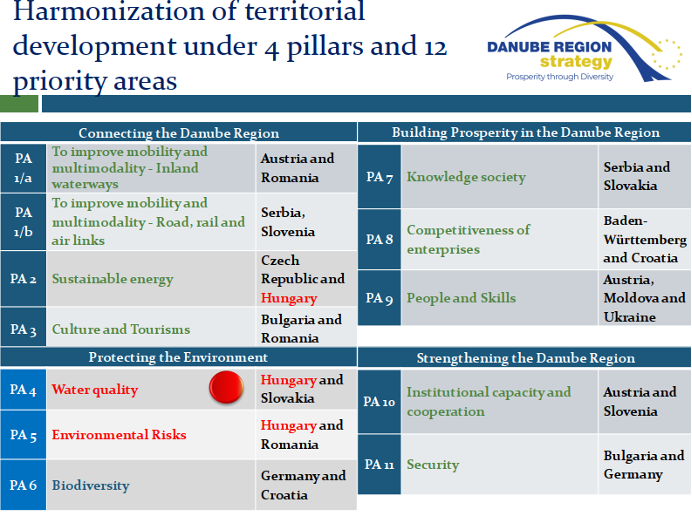
Dr. Viktor Oroszi, Hungarian National Coordinator of the EU Strategy for the Danube Region explained that the EU Strategy for the Danube Region (EUSDR) is actively combating riverine plastic and microplastic pollution through cross-border collaboration, even though waste management was not an initial core priority for the strategy. He highlighted that key ongoing efforts involve integrating these environmental challenges into post-2027 EU funding mechanisms, supporting citizen science, and capitalising on transnational projects like AQPLA to ensure sustainable water resilience across the region.
What the River Taught Us: Insights from the Aquatic Plastic Journey
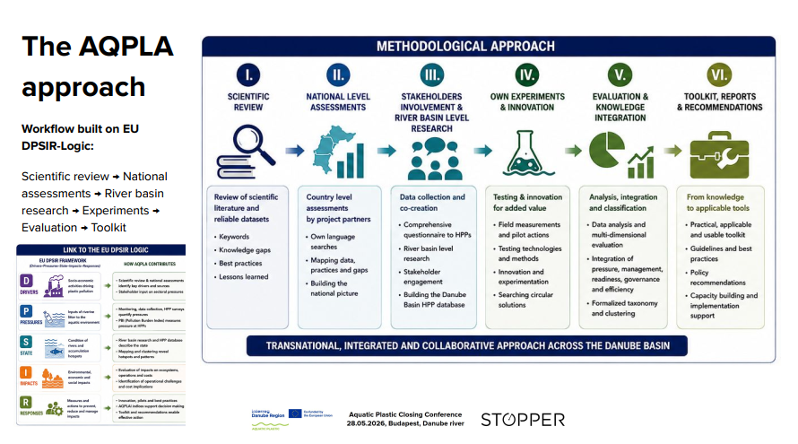
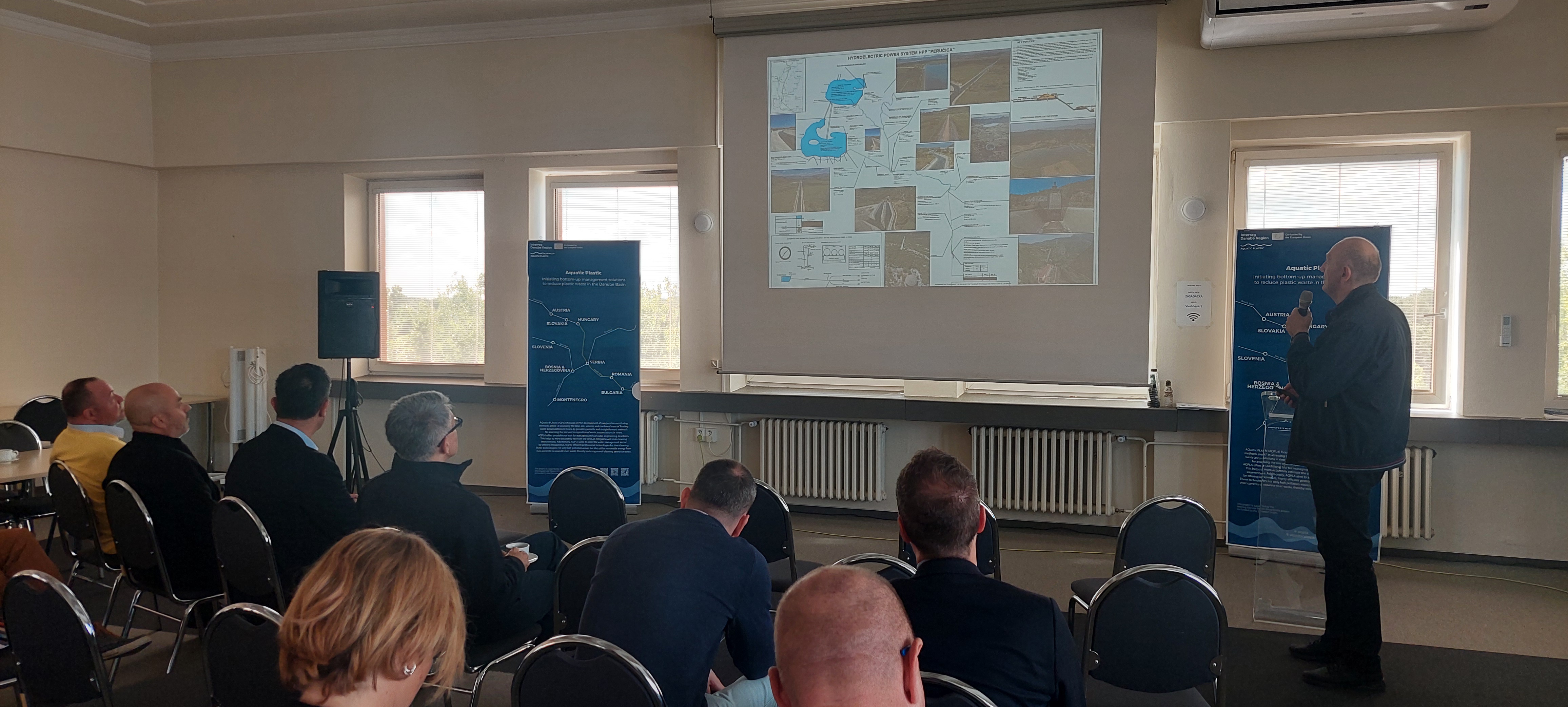
Dr. Attila David Molnar, Founder of the Plastic Cup Society outlined the creation of a comprehensive toolkit and Decision Support System to evaluate riverine litter management solutions across detection, collection, and prevention. He introduced the Aquatic Plastic Assessment Index (AQPLAI) to measure the pollution pressure and interception readiness of Hydropower Plants (HPPs), reframing them as active, essential interception nodes rather than just victims of pollution. Additionally, he strongly emphasised citizen science and the "Danube Riversavers Declaration" to foster sustainable, community-driven conservation across borders.
Understanding Riverine Microplastics: Integrated Findings
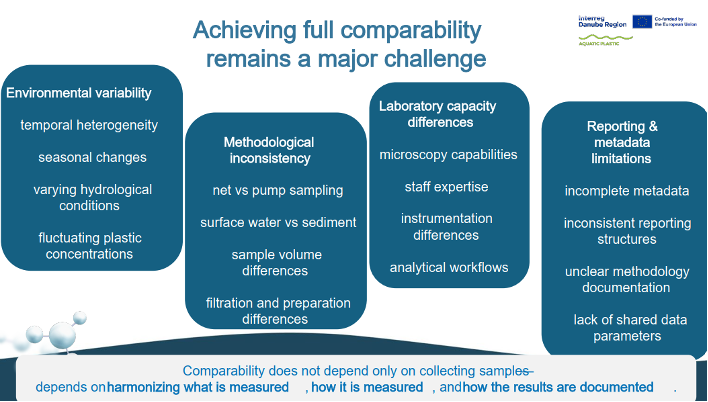
Dr. Gudrun Obersteiner, Senior Scientist of the University of Life Sciences and Natural Resources, Dr. Gábor Bordós, Business Unit and International Project Manager of Eurofins Hungary Ltd. and Dr. Tine Bizjak, Professional Associate of the Institute for Water of the Republic of Slovenia detailed a cross-country microplastic sampling campaign, finding that achieving full methodological standardisation is highly complex due to environmental variability and unequal technical capacities across the Danube Region. Consequently, the researchers concluded that establishing a minimum harmonised monitoring framework is a much more realistic and actionable goal. To support this, they developed an open-access database framework that ensures transparency by standardizing how metadata, sampling methods, and analytical results are reported by participating institutions.
Pilot monitoring of high-risk leakage points and the automated evaluation protocol
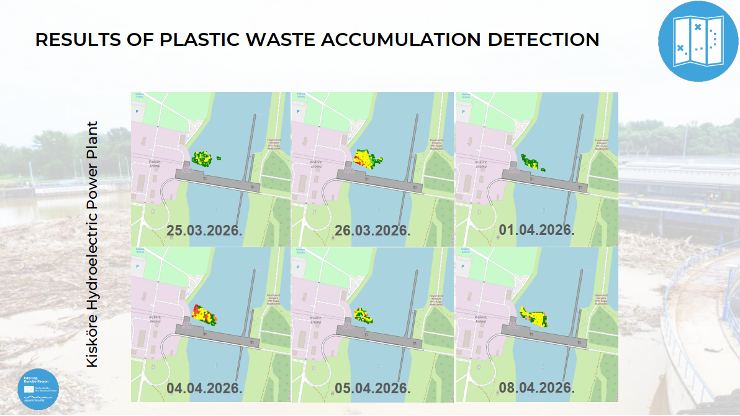
Dr. Dejan Ubavin, Professor of the Faculty of Technical Sciences, University of Novi Sad presented a remote sensing approach for tracking riverine plastic waste using machine learning and satellite imagery. By analyzing data from satellites like Sentinel-2 and PlanetScope, the developed model identifies plastic deposits on rivers and floodplains and tracks floating waste movement in near real-time. This protocol provides critical data for authorities and hydropower plant operators, enabling early intervention to prevent large-scale plastic accumulations before they reach hydrotechnical objects. The presentation emphasized that while challenges like cloud cover exist, this satellite-based detection is highly feasible and fulfills the need for a continuous monitoring tool that is significantly more accurate, frequent, and cost-effective than previous manual methods.
Intervention Methodology for Authorities to Prevent Infiltration
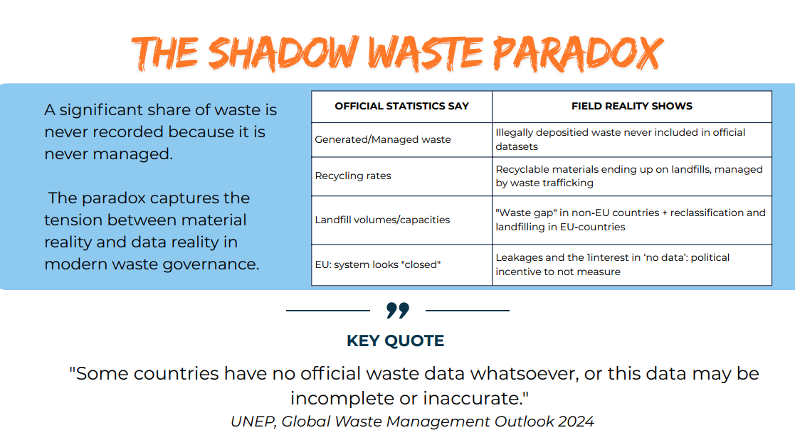
Gary Hankó, Managing Director of the Hungarian Association of Environmental Enterprises addressed the "shadow waste paradox" - where massive amounts of unmanaged waste go unrecorded-and argued for a shift from reactive cleanups to proactive, risk-based prioritisation and rapid legal enforcement. He outlined a comprehensive 10-step response that places upstream prevention, such as eco-design, awareness-raising and EPR-systems, at the top of the priority list. Furthermore, Hankó advocated for the review of transnational legacy pollution cases from the last decade and working on future projects with a focus on abandoned industrial sites and mines; the potential hotspots of future pollution.
The introduced methodology fosters discussions on current and innovative strategies, possibilities, policies, and practices that promote waste reduction, recycling, and circular economy principles, aiming to create a cleaner and healthier environment in the Danube countries. We strive to collaborate amongst different actors and sectors to promote and share sound waste management practices amongst the project partners’ countries. This study aims to help municipalities and authorities prevent plastic waste infiltration in rivers and close open dumpsites by implementing a sustainable and data-driven waste management strategy.
Pilot actions to prevent infiltration of river waters - international cleanup experience (Small-scale and Large-scale Clean-ups)
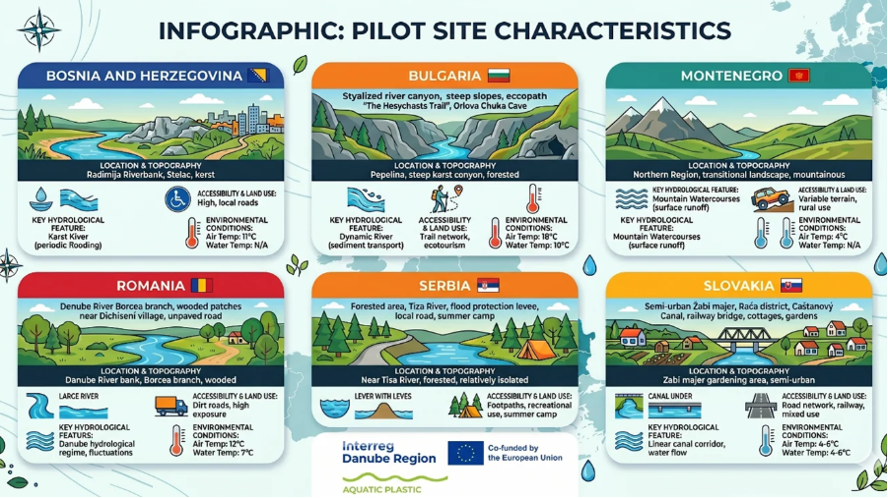
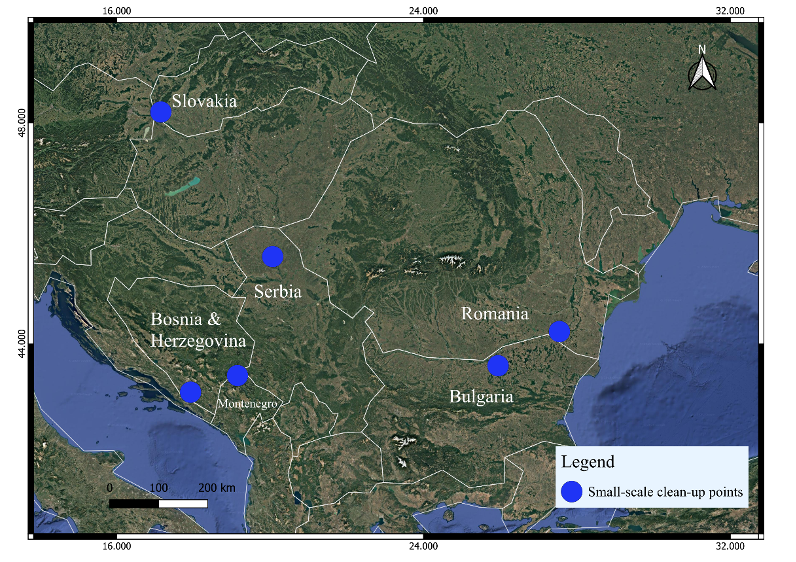
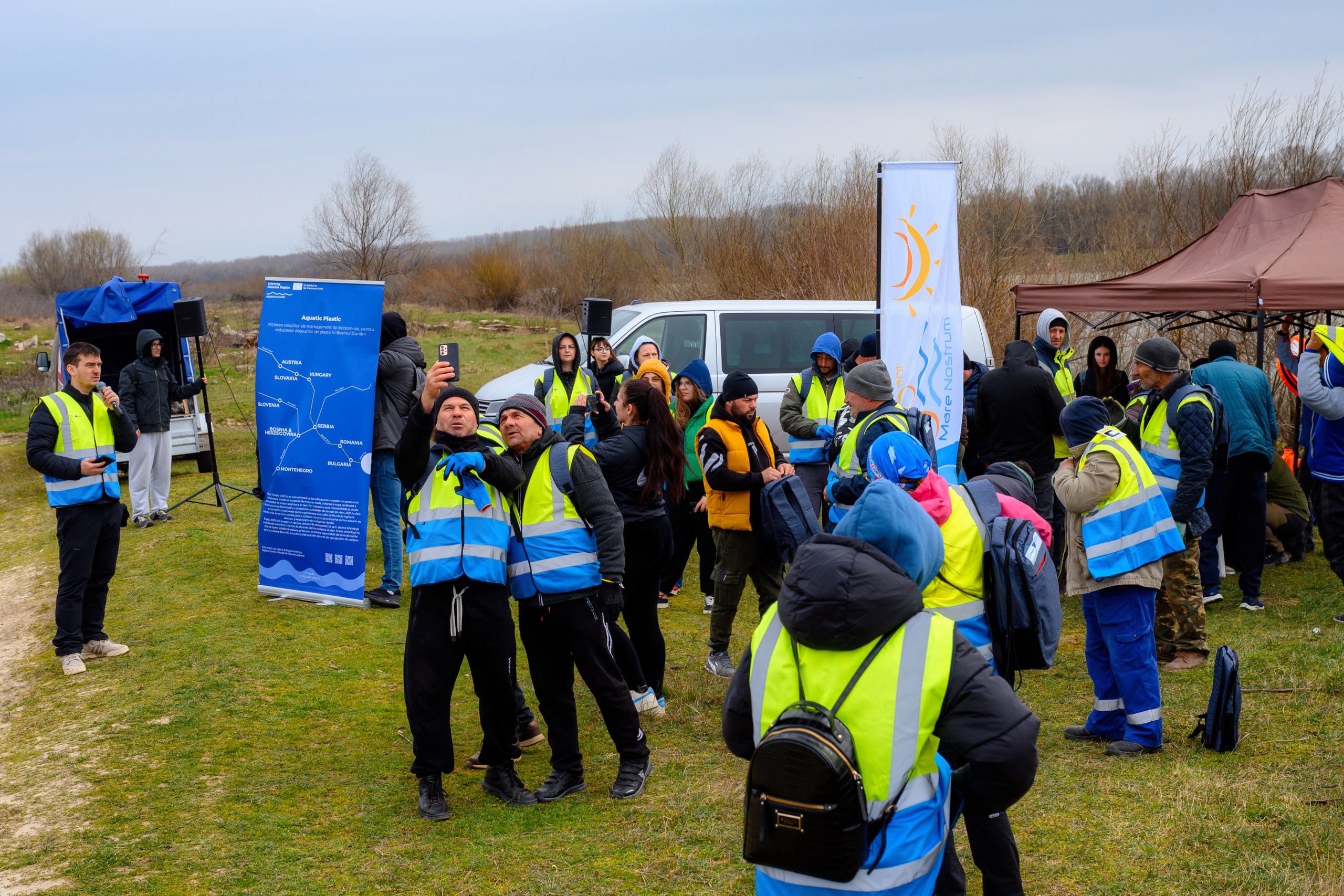
Marian Paiu, Executive director of Mare Nostrum presented the hands-on results of the AQUATIC PLASTIC project's intervention methodology, detailing the successful execution of cleanups across six international pilot sites. Shifting from passive observation to proactive field action, the consortium implemented targeted operations at high-risk waste leakage points in Bosnia and Herzegovina, Slovakia, Bulgaria, Serbia, Montenegro, and Romania. The presentation highlighted the tangible outcomes of these coordinated efforts, noting that the pilot actions successfully removed 8.7 tonnes of riverine waste and actively engaged 246 participants. These results demonstrate that combining structured risk assessment with strong community and institutional cooperation creates a highly effective, scalable model for intercepting aquatic plastic before it causes widespread downstream pollution.
Pilot Testing Audited Certification Schemes and Obtaining Accreditation
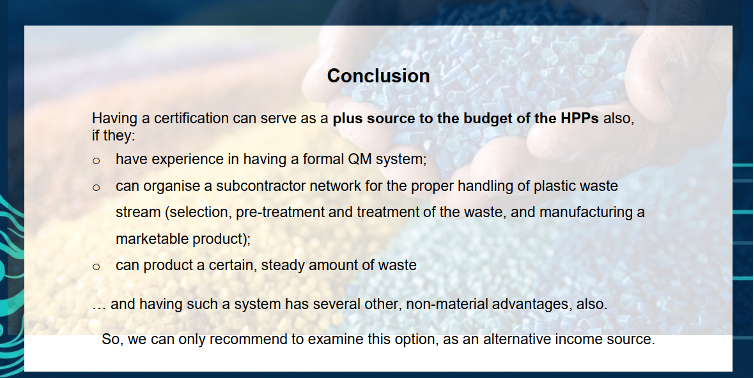
Imre Király, Environmental and Certification Consultant of the Hungarian Association of Environmental Enterprises detailed the value of obtaining audited certification schemes-such as Ocean Bound Plastic (OBP)-for organizations managing riverine plastic waste, framing certification as a critical strategy to secure alternative income, build professional networks, and drive organizational development. He noted that despite current market challenges where virgin plastics remain cheaper, the long-term demand driven by EU legislation and global market shifts makes investing in certified secondary raw materials a viable, forward-looking financial strategy.
AQPLA Common Solutions: Policy Recommendations
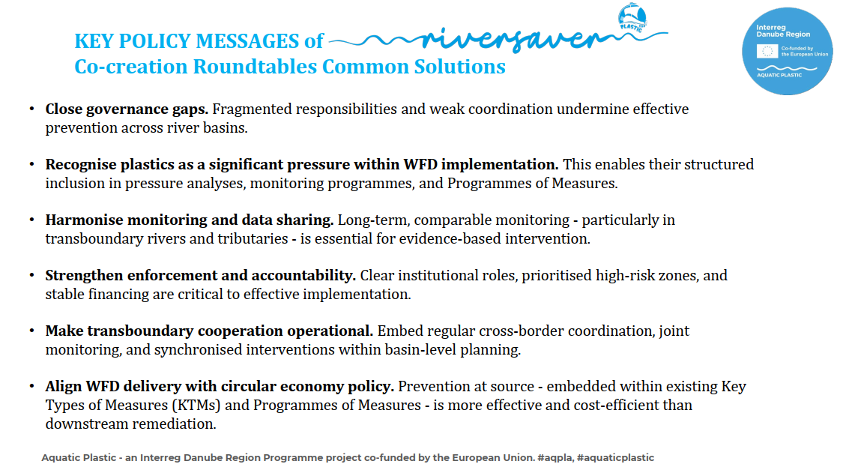
Orsolya Keményffy, Environmental Policy Expert of the European Research Institute outlined how the AQPLA project utilized a multi-stakeholder co-creation process across 10 national roundtables to formulate actionable policy recommendations, identifying riverine plastic pollution as a systemic, transboundary challenge. Her presentation emphasized that effectively addressing this crisis requires a shift from fragmented efforts to coordinated governance, specifically by closing legislative gaps, harmonizing basin-wide monitoring systems, and securing sustainable financing for enforcement and infrastructure.
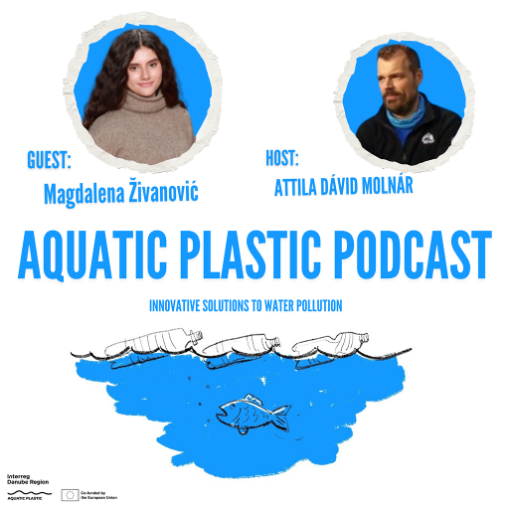
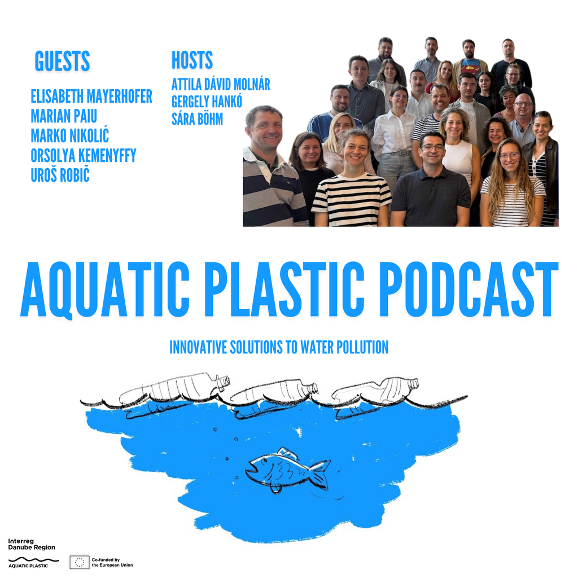
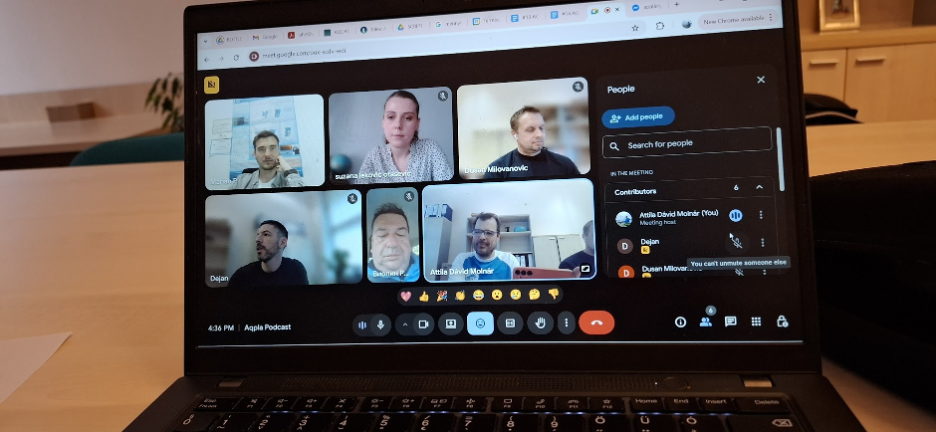
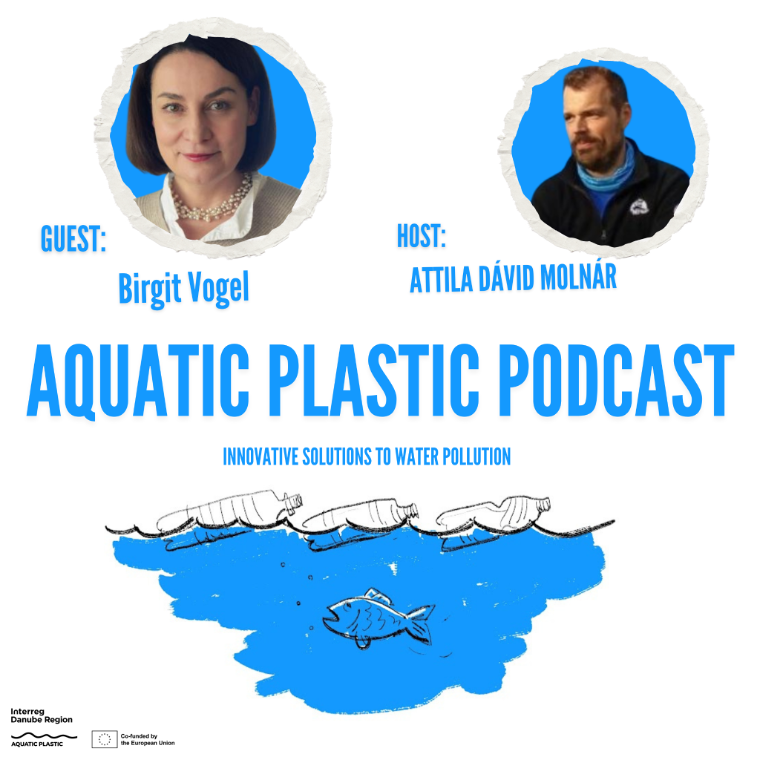
After the presentations concluded, the winners of the Aquatic Plastic Podcast – The Challenge were officially awarded. Participants then had the opportunity to sign the Riversaver Declaration, before wrapping up the event with a visit to the Plastic Cup Society's exhibition and the Plastic Workroom (Mümü - Műanyag Műhely).
Photo Gallery: https://drive.google.com/drive/folders/1wEjaFJuTdBqHzGjdRRjpx8yJhustcxMi?usp=sharing

01/06/2026
By
Share on social media:



News & Events
Read the most recent updates and explore the upcoming events.


Would you like to receive project updates?
You're already part of our community!
Welcome to our newsletter community!
Subscribe to our newsletter