
Small-scale pilot implementation: The case of Stolac, Bosnia and Herzegovina
Restoring the heart of Stolac - 2.5 tons of waste removed from the Radimlja riverbanks
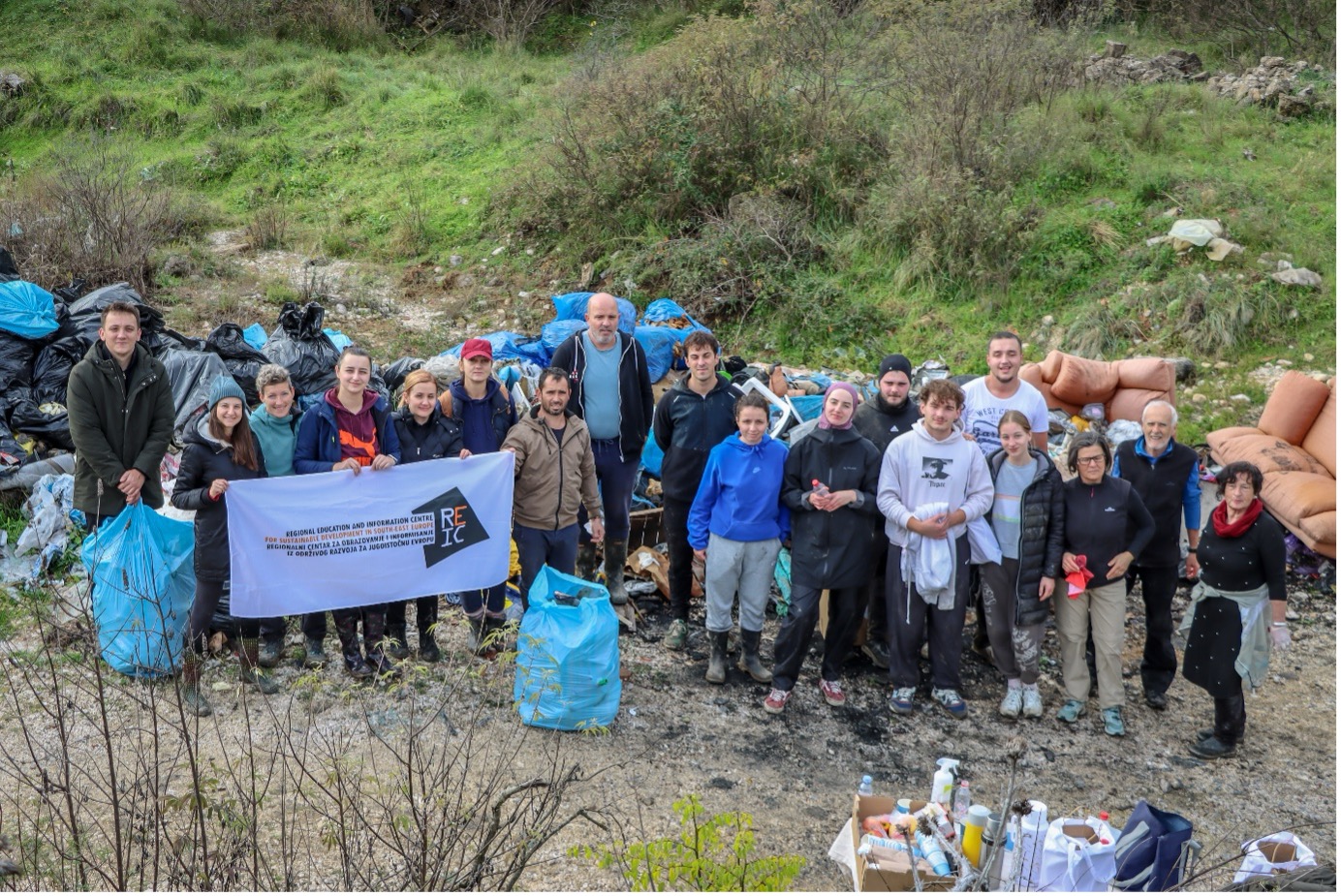
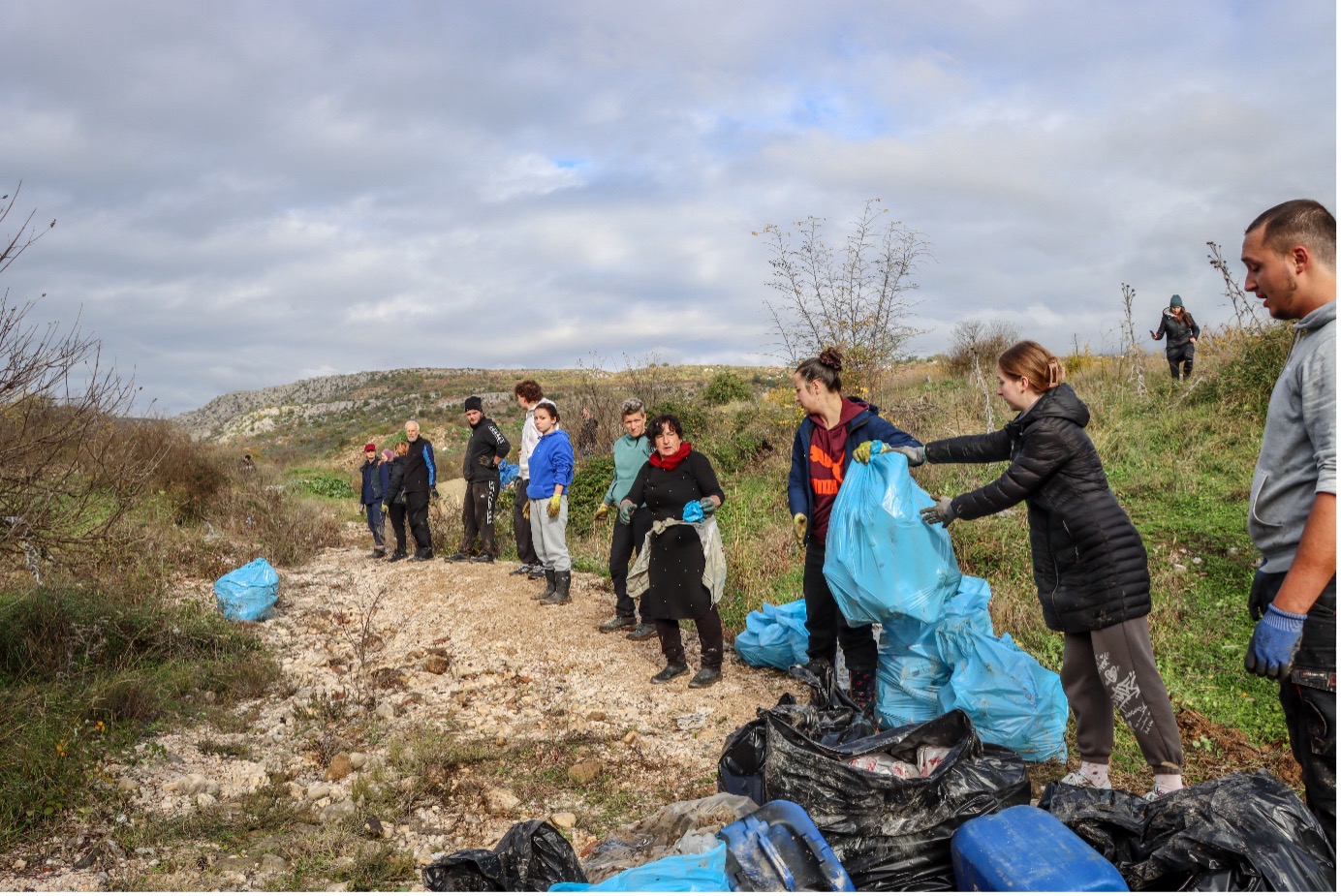
Last year, on November 23, 2025, a critical environmental ‘hotspot’ in Stolac was successfully cleared of over 2.5 tons of illegally dumped waste. The clean-up, organized by the Regional Education and Information Centre for Sustainable Development (REIC) in collaboration with local volunteers and citizens, targeted a 1,200 m² area along the banks of the Radimlja River.
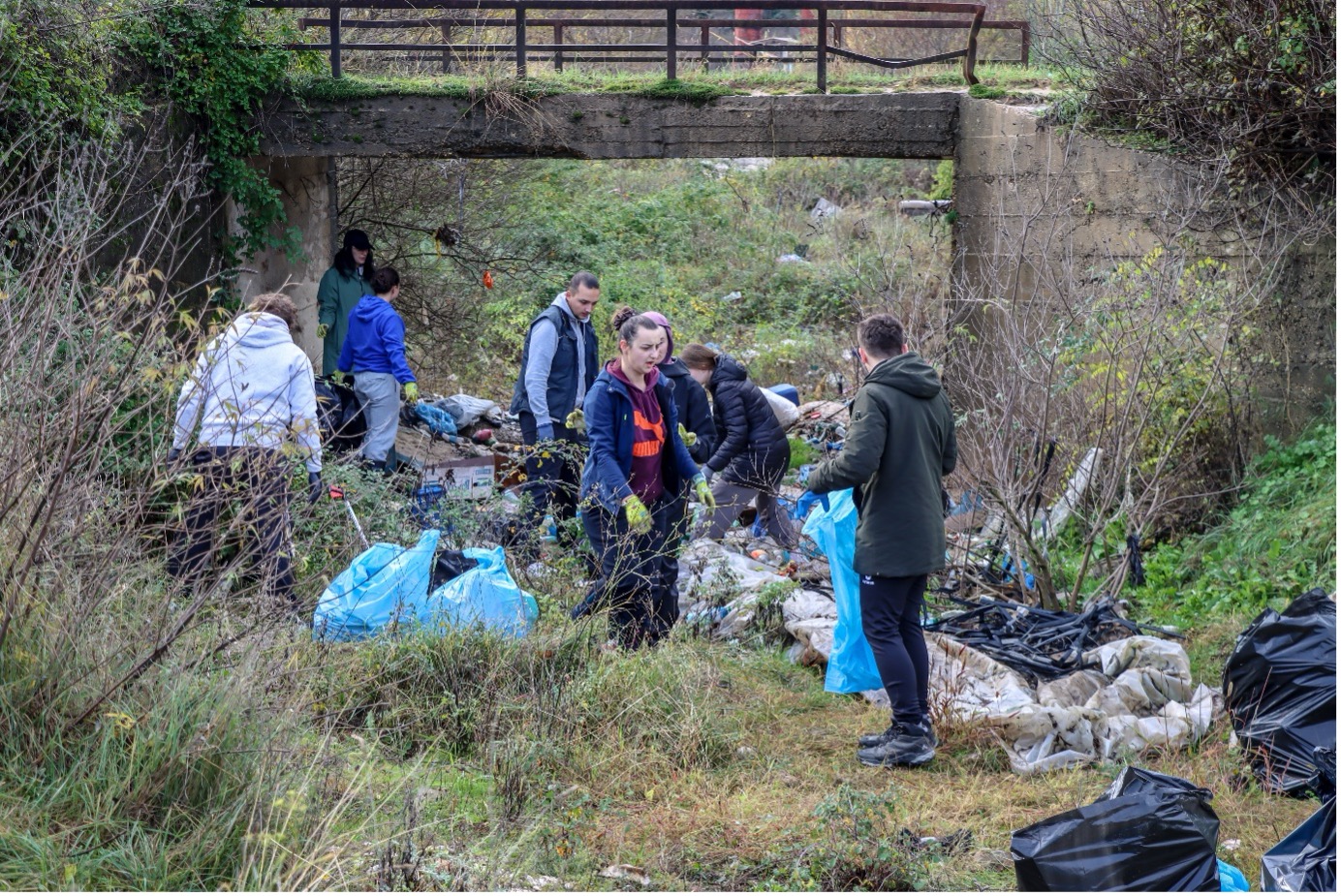
The site, located just 300 meters upstream from the confluence with the Bregava River, had become a significant ‘leakage point’ for plastic pollution. Due to the seasonal nature of the Radimlja as a sinking karst river, waste deposited during dry periods is frequently swept downstream during high-water events, eventually reaching larger water bodies and the Adriatic Sea.
Key results of the implementation:
Total waste removed: 2,580 kg
Plastic recovery: 520 kg of plastic packaging and PET bottles were collected and sorted
Mixed waste: 1,700 kg of communal waste, alongside 360 kg of glass and metal
Site restoration: A 1,200 m² area was cleared of debris, including bulky household items and construction materials
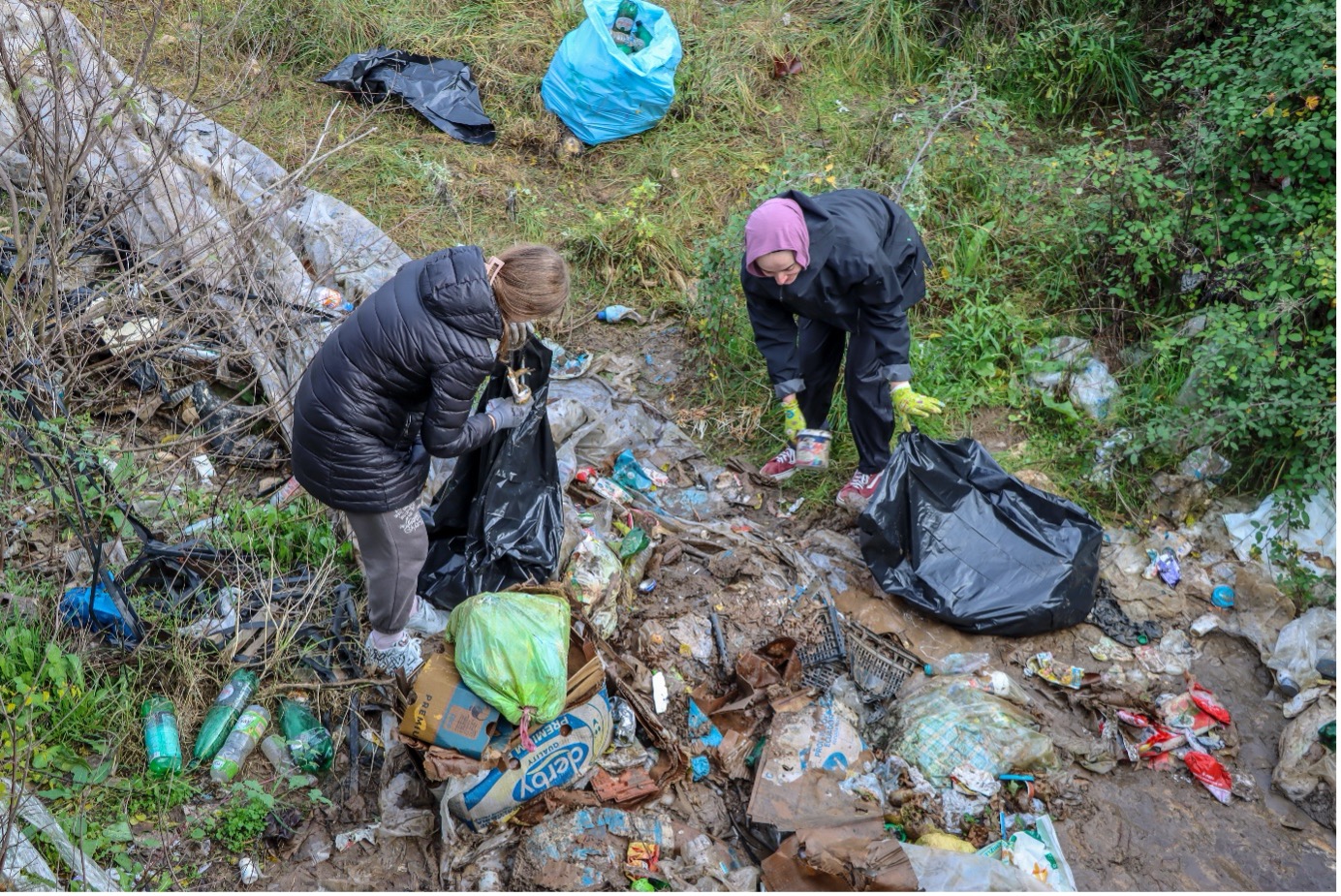
‘This pilot project demonstrates the impact of direct community involvement,’ said a participant of the cleanup action. ‘By removing this waste manually, we were able to sort recyclables on-site and prevent a massive volume of plastic from entering the river system during the next flood cycle.’
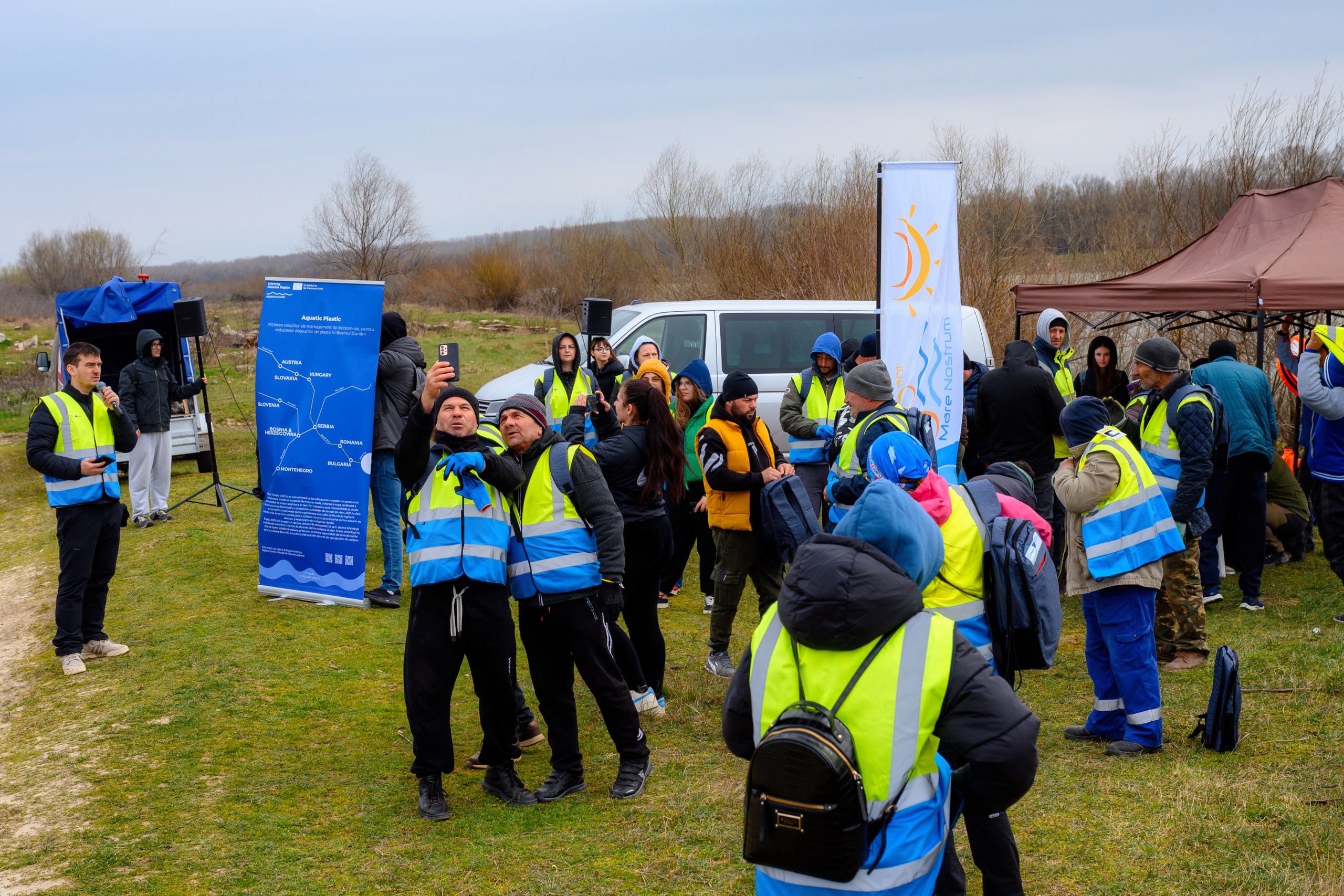
The initiative brought together a diverse group of 20 participants, including members of the local nature protection association ‘Concordia’ and residents from marginalized communities. The goal was not only to physically restore the riverbank but also to raise awareness about the environmental risks of illegal dumping in karst regions.
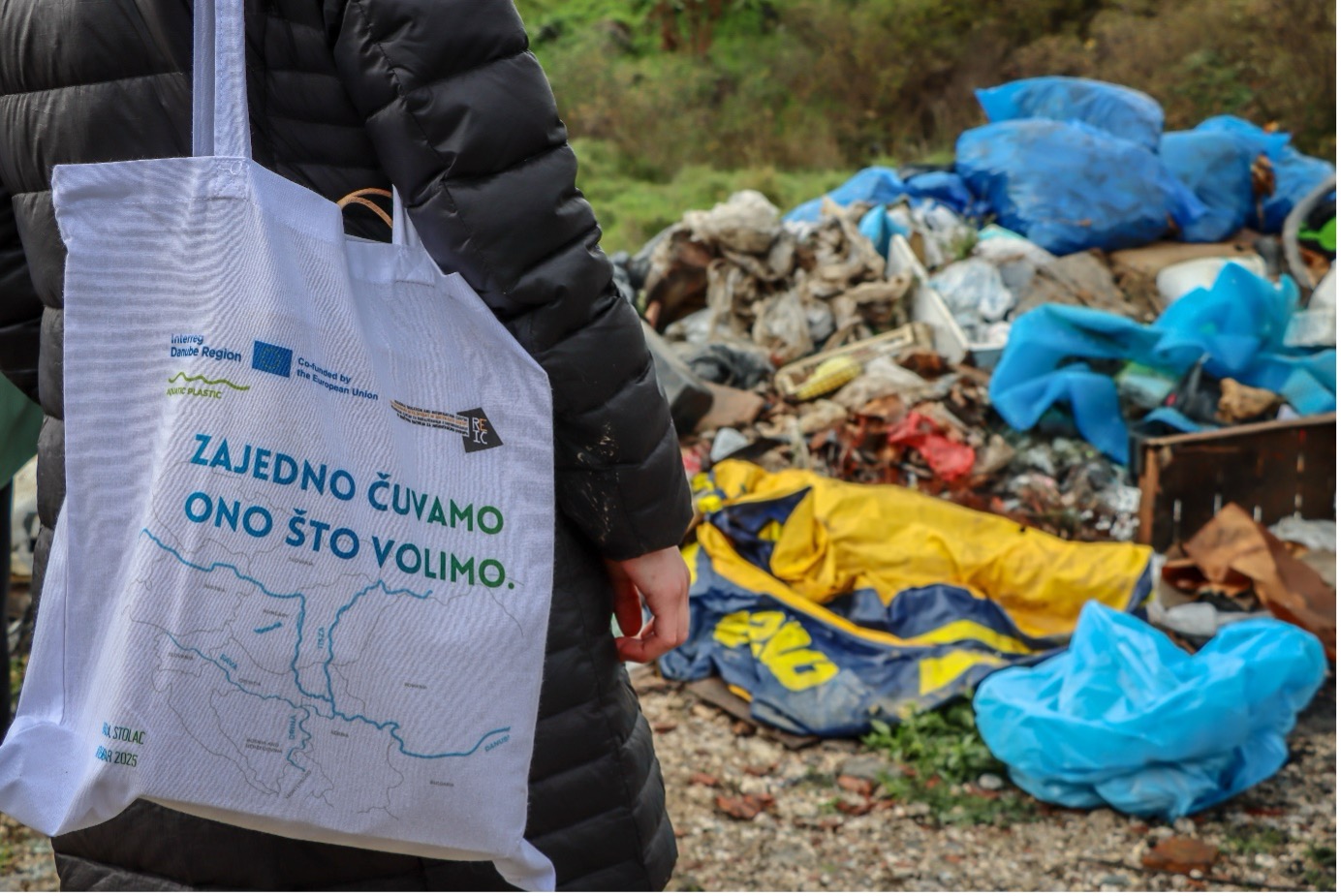
To ensure the long-term sustainability of the site, REIC has recommended several follow-up measures, including the installation of warning signs, the placement of bins near access points, and closer cooperation with municipal services to prevent re-accumulation.
This intervention serves as a model for small-scale, high-impact environmental management in the Herzegovina-Neretva Canton, proving that localized efforts are crucial to solving the broader plastic crisis.

25/03/2026
By
Share on social media:



News & Events
Read the most recent updates and explore the upcoming events.



Would you like to receive project updates?
You're already part of our community!
Welcome to our newsletter community!
Subscribe to our newsletter