
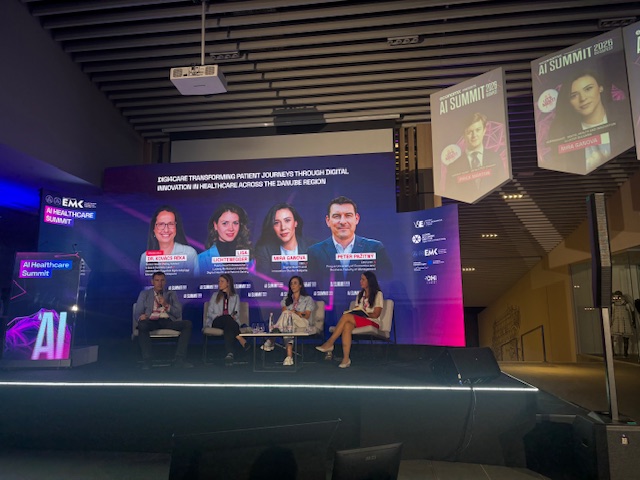

AI Summit - The Digi4Care Case study
Beyond the algorithm: What does it take to make AI work in healthcare?
What happens when a digital health solution leaves the testing environment and enters everyday healthcare? At AI Summit Budapest, DIGI4Care partners shared what they have learned from putting digital and AI-supported solutions into practice across different healthcare systems in the Danube Region.
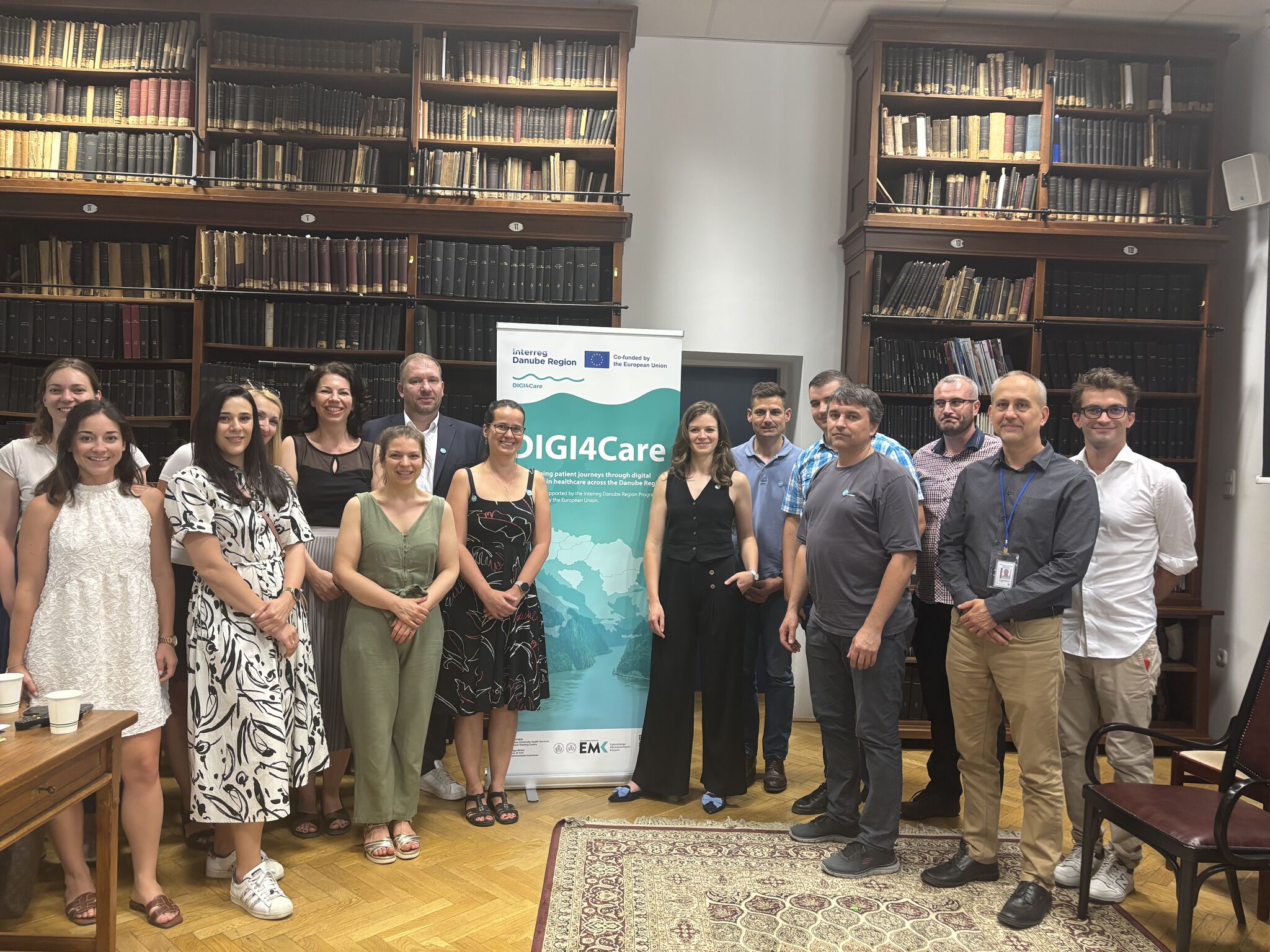
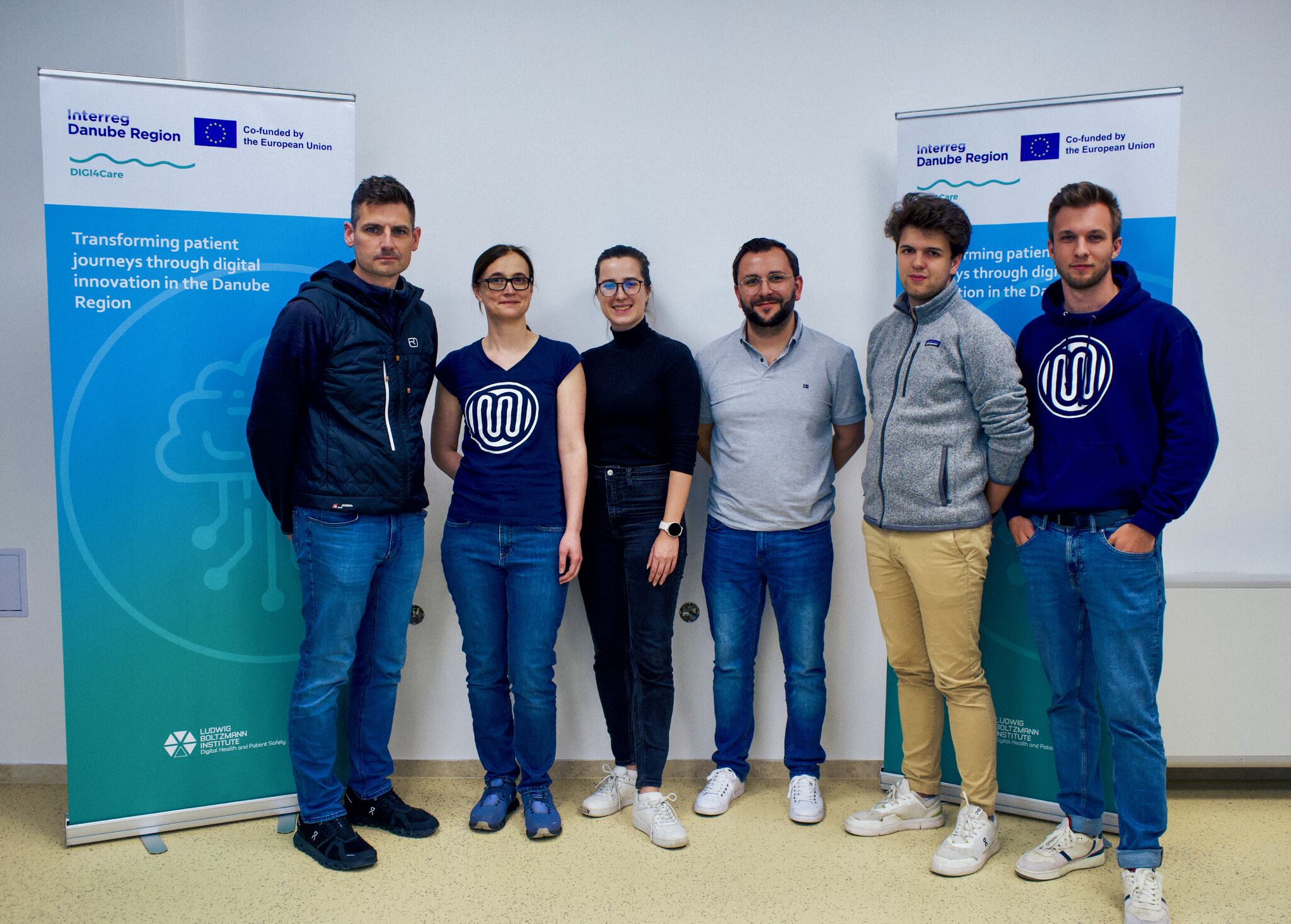
The case study session brought together Mira Ganova, CEO of Digital Health and Innovation Cluster Bulgaria; Peter Pažitný, Lecturer at Prague University of Economics and Business; Lisa Lichtenegger, Public Health Researcher at Ludwig Boltzmann Institute Digital Health and Patient Safety; and Dr. Réka Kovács, Senior Health Policy Advisor & Grant Portfolio Lead at Semmelweis University Health Services Management Training Centre.
The technology is only the beginning
The AI Summit discussion focused particularly on AI-supported diabetic retinopathy screening, tested in four countries. The technology may be the same, but the healthcare pathways around it are not. Who performs the screening, who follows up the patient, who carries responsibility and who pays for the service can differ substantially between countries.
As Peter Pažitný put it, one of the key lessons is that “the success of the technology is not the technology itself” — it is whether it can be successfully integrated into real workflows and accepted by the people expected to use it.
Sometimes even Wi-Fi becomes an implementation lesson
Real-world testing revealed challenges that can easily remain invisible when discussing AI in theory. A hospital saying “we have Wi-Fi”, for example, does not necessarily mean that it has the continuous coverage required by a connected device. Digital literacy varies among professionals and patients, technologies have different levels of readiness, and technical support, regulation and reimbursement can all determine whether implementation succeeds.
For Lisa Lichtenegger, the transnational pilots demonstrated something equally important: “a technology that works in one system actually doesn’t work in another one.” The Austrian experience therefore shifted attention from implementing a particular device towards understanding and co-designing the implementation process itself.
AI can change care pathways – but healthcare remains human
The Bulgarian pilot demonstrated the potential of AI-supported screening in practice. More than 300 people were screened, with over 50 pathologies identified. Experience gained through DIGI4Care has since contributed to a much larger screening initiative in Bulgaria targeting almost 5,000 people.
But Mira Ganova stressed that digital transformation cannot leave healthcare professionals behind. Patients still trust their physicians, and technology needs to become part of a trusted clinical pathway rather than operate separately from it. Her reflection also captured how quickly the field itself is changing:
“It’s not digital healthcare anymore, it’s just healthcare. The technologies are here.”
AI-supported screening can also shift tasks between specialists, primary care professionals and nurses. This creates opportunities for more accessible and cost-effective care, but also raises difficult questions around competencies, education, responsibility and reimbursement.
Different countries, shared learning
These questions are precisely why the transnational character of DIGI4Care matters. Partners worked across different healthcare structures, regulatory environments, working cultures and levels of digital readiness. Those differences created challenges, but they also turned the project into a real-world laboratory for understanding what makes digital health solutions transferable.
Reflecting on the cooperation, Mira Ganova noted that she initially saw European projects as involving considerable administrative burden. Her experience with DIGI4Care changed that perspective: the partnership jointly navigated patient pathways, technology, ethics, data management and implementation processes, producing experience that individual organisations would have struggled to develop alone.
Scale the care model, not only the technology
After two and a half years, DIGI4Care has generated practical experience that can contribute to scientific evidence, national policymaking and future healthcare planning.
And the final message from the AI Summit discussion captured the project's experience particularly well: when introducing AI or digital technology, we should not think only about scaling the technology. We need to scale the care model around it.
Because successful digital transformation ultimately depends not only on algorithms, but also on people, infrastructure, workflows, regulation, financing and trust.

11/09/2026
By
Share on social media:



News & Events
Read the most recent updates and explore the upcoming events.




Would you like to receive project updates?
You're already part of our community!
Welcome to our newsletter community!
Subscribe to our newsletter