
Training: Migration corridors and maintaining landscape connectivity in the territorial system of ecological stability
Nature conservation experts often face challenges when it comes to protecting ecological connectivity and migration corridors. They must assess infrastructure projects, construction works and other plans that could obstruct the movement of animals across the landscape. They often encounter a lack of quality data and information, limited capacity, and legislative challenges.
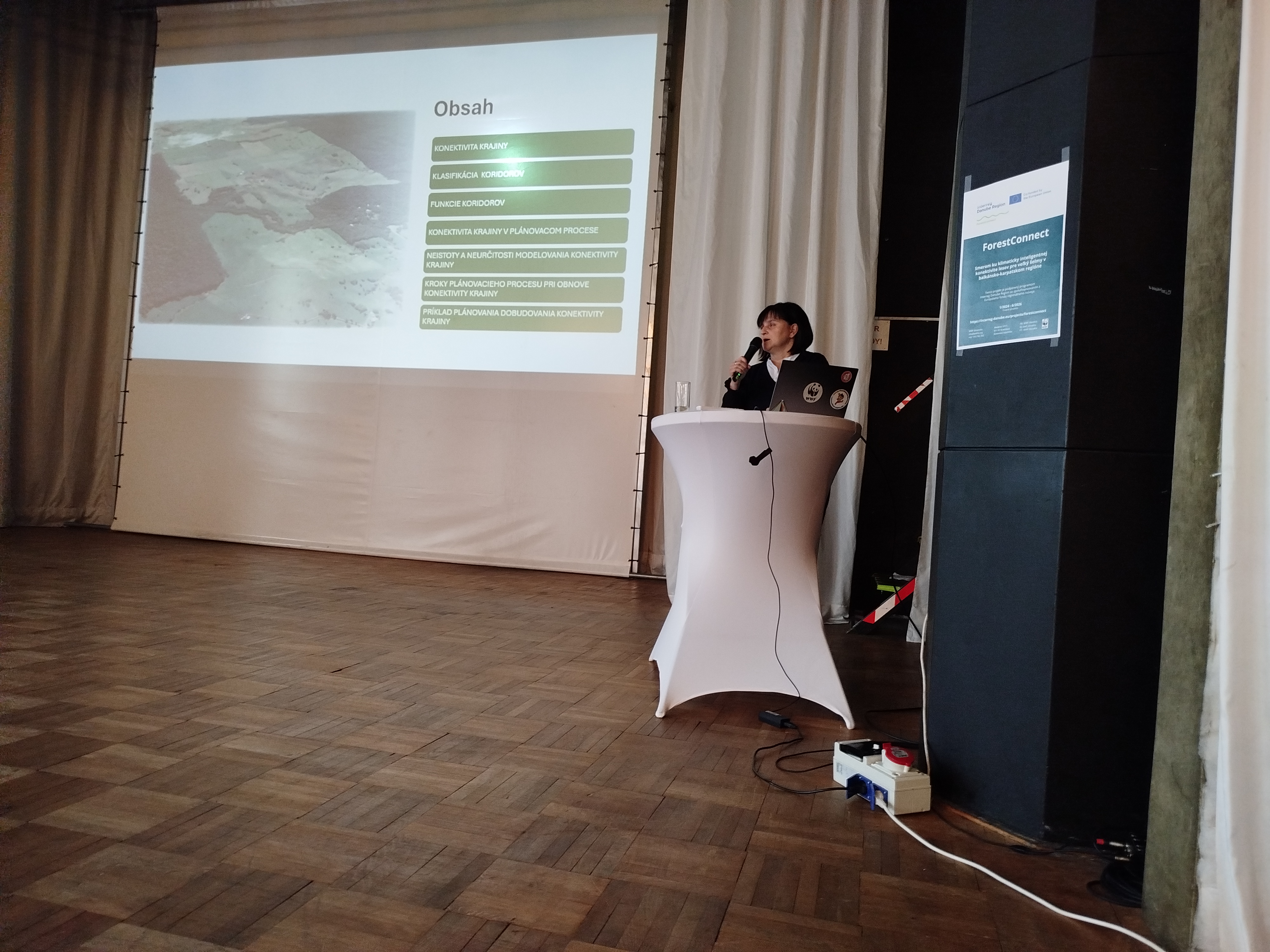
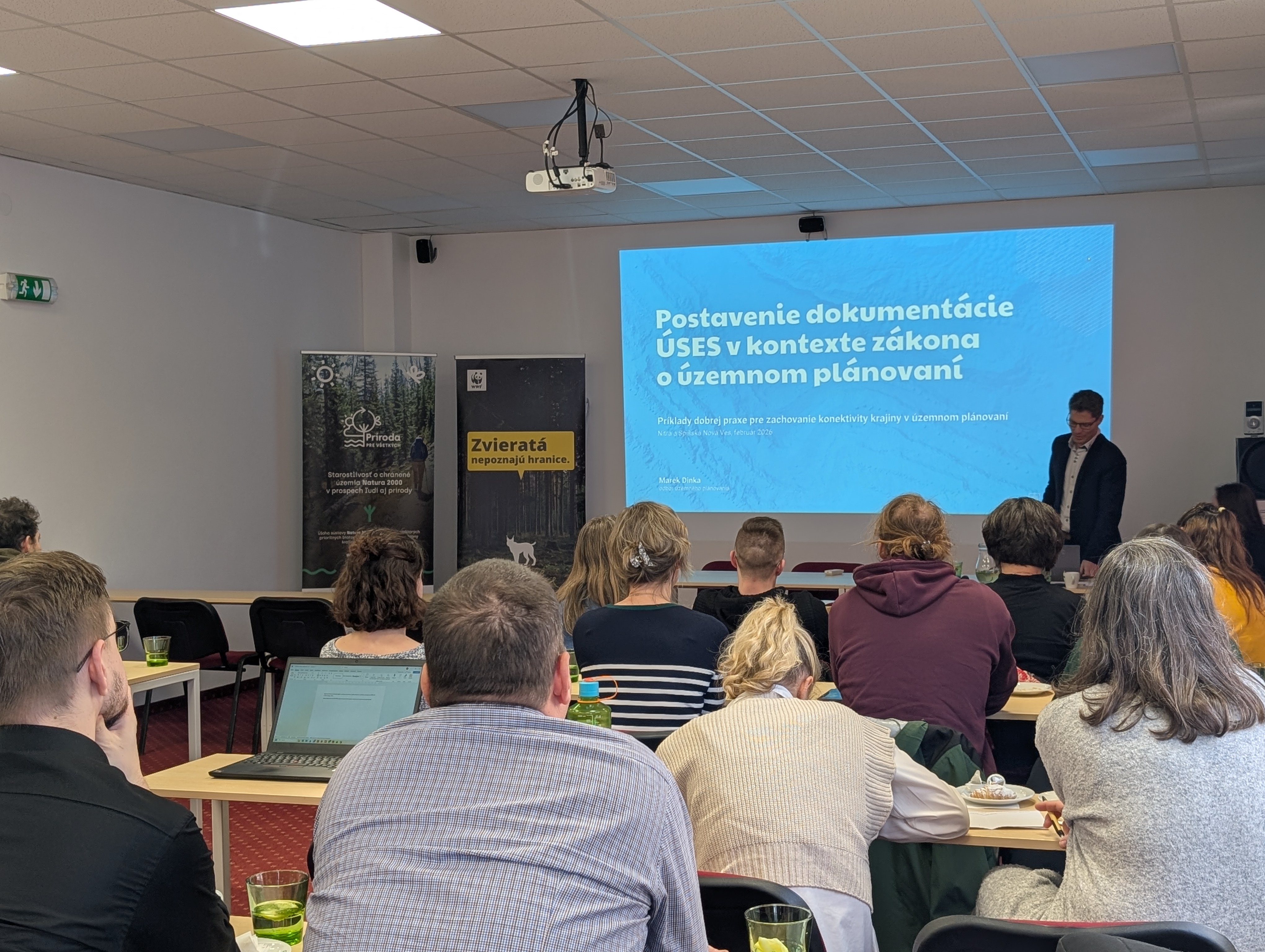
Given the complexity and importance of this topic, WWF Slovakia organised a training course for environmental department representatives from district offices, as well as other qualified individuals involved in preparing nature and landscape protection documentation, as part of the ForestConnect project. The training took place on 20 November 2025 in Žilina. The high number of participants (75) demonstrates the level of interest in this topic.
Speakers included experts from the state administration, academia, the private sector and WWF Slovakia. Each of them brought a unique perspective and practical experience to the topic.
Michal Némethy from WWF Slovakia began the seminar by presenting the ForestConnect project to the participants, as well as the planned outputs and activities being carried out within the project in the Slovak Paradise National Park pilot area.

Marta Mútňanová, a long-time nature conservation expert, from WWF Slovakia, then addressed the topic of ecological corridors. She emphasised the importance of preserving ecological connectivity for different animal species and discussed the causes of landscape fragmentation and its consequences. She provided a detailed overview of the current knowledge on ecological corridors in Slovakia, presented available sources of information and data for participants to consult, and highlighted shortcomings in their accessibility and in legislation. She also presented projects currently underway in Slovakia that will contribute to our knowledge of the ecological connectivity of selected species and habitats. Using the example of the Czech Republic (AOPK), she demonstrated how our knowledge and actions could be utilised to enhance the protection of corridors in Slovakia.
A connectivity expert from HBH Projekt, Michal Králik, who has been working on the specific topic of migration corridors for several years and has extensive practical experience, presented practical experience with identifying migration corridors, preparing migration studies, and using them to assess plans and projects for linear construction. He provided participants with an in-depth look at the process of identifying and evaluating connectivity when constructing linear infrastructure, the challenges encountered and emphasised the importance of monitoring and data availability in these processes.

Representing the academic community, Doc. Eva Pauditšová (PriF UK, BA), discussed landscape connectivity from an ecological perspective in spatial planning. She presented the individual steps of the planning process for restoring connectivity, as well as the associated problems. She illustrated her practical experience using the Svrčinovec ecoduct project in northern Slovakia as an example.
Ing. Renata Žiačiková, an EIA/SEA expert who is working at ŠOP SR for many years, gave a clear explanation of how regional and local territorial system of ecological stability documentation is used by nature conservation organisations. She emphasised the importance of these documents and the need for them to be processed to a high standard, as they form the basis for the creation of spatial planning documentation that guides spatial development. She highlighted several practical examples that illustrate the problems of spatial development faced by nature conservation. She presented the Methodology for Taking into Account and Assessing the Value of Landscape/Ecosystems/Biodiversity to the participants.

The seminar concluded with a focus on legislation. Representatives from the Office for Spatial Planning and Construction of the Slovak Republic - Marek Dinka and Katarína Štefancová - presented the status of territorial system of ecological stability documentation in the context of the Nature Conservation Act, before discussing the reform of spatial planning in Slovakia, as well as the role of territorial system of ecological stability in spatial planning legislation. As the new Spatial Planning Act was only passed in Slovakia last year, this topic prompted the most questions from participants.
The feedback was very positive and we believe that the seminar was beneficial for the participants. Due to the complexity of the topic and the number of practical application problems and legislative changes, it would be helpful to organize several training sessions in the future focusing on different topics to help participants solve problems in practice.


04/12/2025
By Aleksandra Ugarkovic
Share on social media:



News & Events
Read the most recent updates and explore the upcoming events.




Would you like to receive project updates?
You're already part of our community!
Welcome to our newsletter community!
Subscribe to our newsletter