
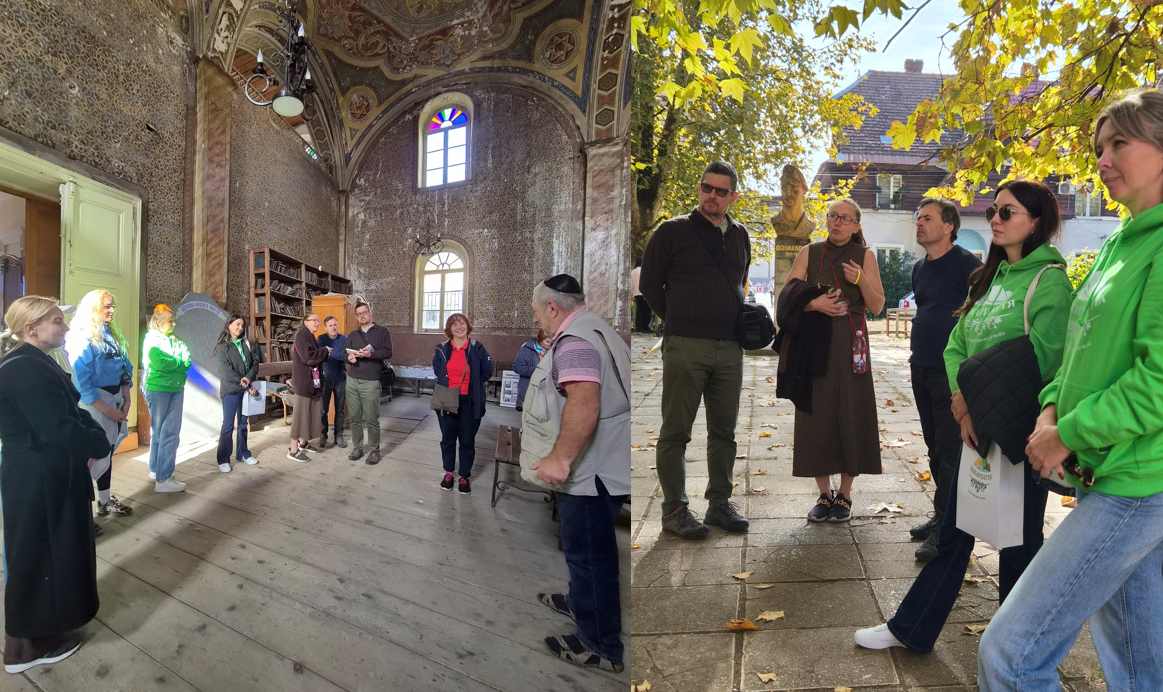

The Khust I Had Never Seen Before
KHUST, UKRAINE • URBAN PILOT
The Khust I Had Never Seen Before
How a day-long walk is bringing the interwar city into the present through local voices, reused glass and regional wine
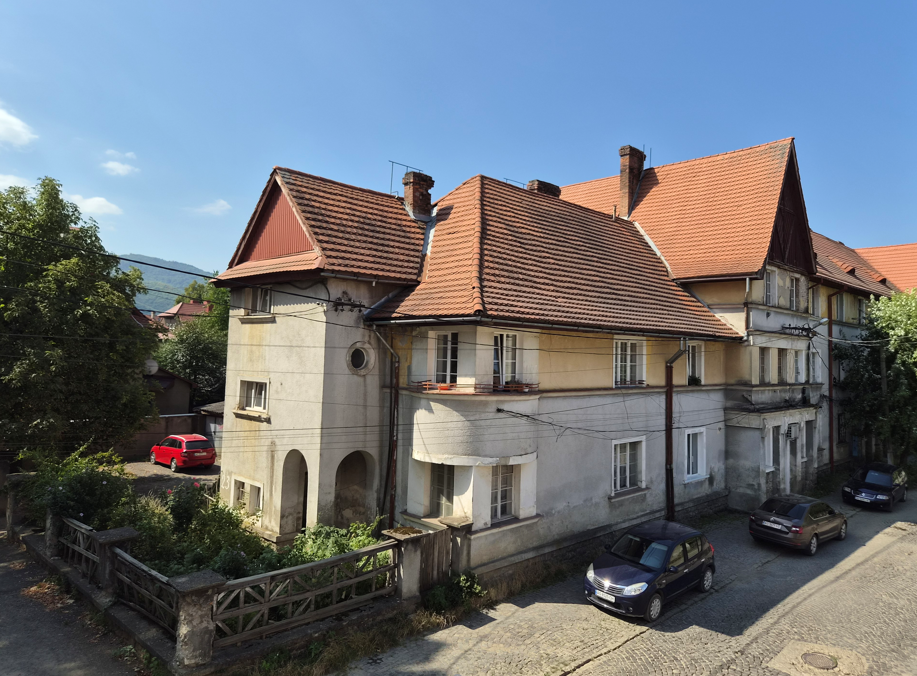
The Czechoslovak-era quarter is one of the places where Khust’s interwar history becomes visible. Photo provided by FORZA.
Khust is the administrative heart of its wider community in southern Zakarpattia, close to the Romanian border. Yet visitors have often been drawn more readily to the surrounding villages and landscapes than to the town itself. Its streets hold the traces of Hungarian, Jewish, German and Ukrainian communities, but those layers had not yet been connected into a visitor experience with a clear voice and rhythm.
The Agency for Sustainable Development of the Carpathian Region FORZA set out to change that balance. Working with local institutions, storytellers, craftspeople and small businesses, it shaped a day-long route that allows Khust to introduce itself through encounters rather than a list of monuments.
As a result:
“Today I saw Khust I had never seen before.” Pilot participant |
A town of many inheritances
The pilot focuses on the period between the First and Second World Wars, when several communities lived alongside one another and left their imprint on the town’s languages, architecture, faith and everyday culture. Their histories are still carried locally — by religious leaders, teachers, residents and family memories — but they are rarely encountered as parts of one shared urban narrative.
That story has particular resonance today. With foreign leisure travel to Ukraine severely constrained, the route is intended first for Khust and Zakarpattia’s own residents. Many Ukrainians have relocated here from the country’s eastern and central regions; for them, discovering local faiths, memories and cultural layers can also be part of getting to know the place that has become their new home. The pilot therefore creates a meeting point for long-established communities, newcomers and people from the surrounding area.
The work began with participatory meetings about Khust’s visitor economy. Local stakeholders mapped the places, knowledge and activities that could form a meaningful offer, then discussed and refined the pilot ideas proposed by the project team. The goal was broader than creating another guided walk: it was to strengthen Khust’s identity as a multicultural centre, give the museum a more active role, connect the town with nearby villages and make room for locally rooted services.
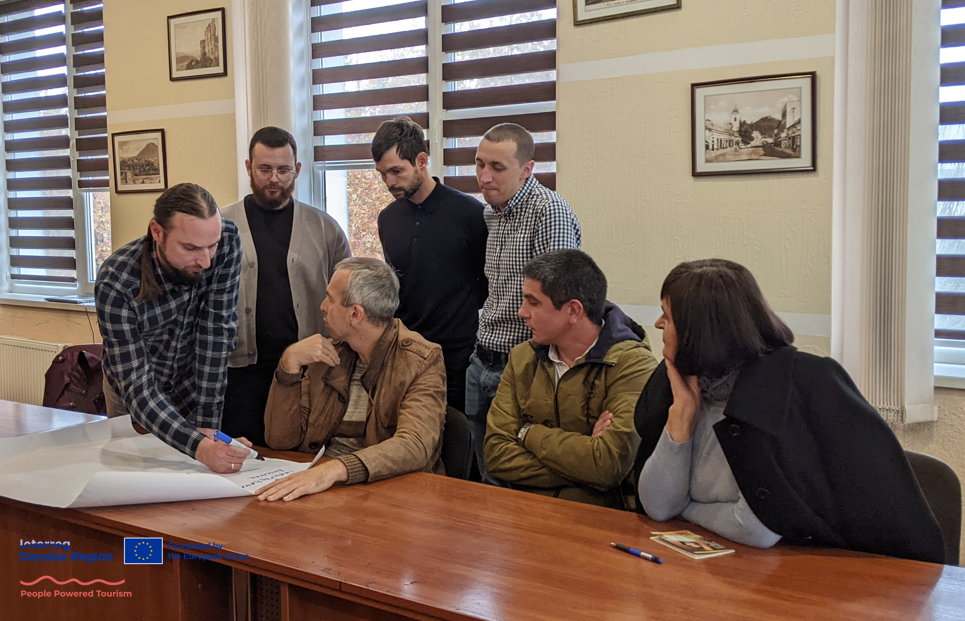
Local stakeholders discuss and shape the elements of the urban visitor experience. Photo provided by FORZA.
A route told in living voices
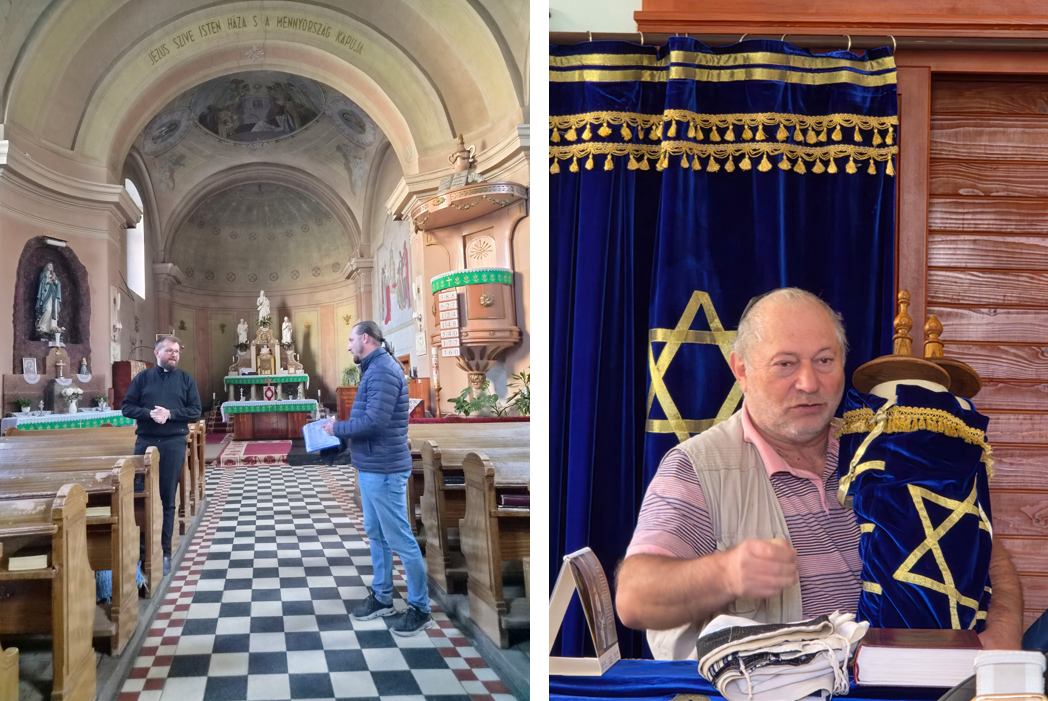
The route, Multicultural Khust in the interwar period City, changes narrator as it moves through the town. Hungarian Reformed pastor Károly Jenei and Catholic priest Oleksandr Soulinchak introduce the histories carried by Khust’s Christian communities. At the synagogue, Rabbi Volodymyr Katz shares the history of Jewish life in Khust and its surroundings. In the Czechoslovak-era quarter and school, teacher Olena Aleksyk connects the built environment with the period of Czechoslovak rule and the proclamation of an independent Carpathian Ukraine.
Walking from church to synagogue and then to the school makes the closeness of these histories tangible. Old photographs, documents and personal recollections help participants imagine the choices, aspirations and struggles of people who once lived here. The buildings provide the setting, but the experience is carried by voices that still belong to the town.
When history moves into the hands
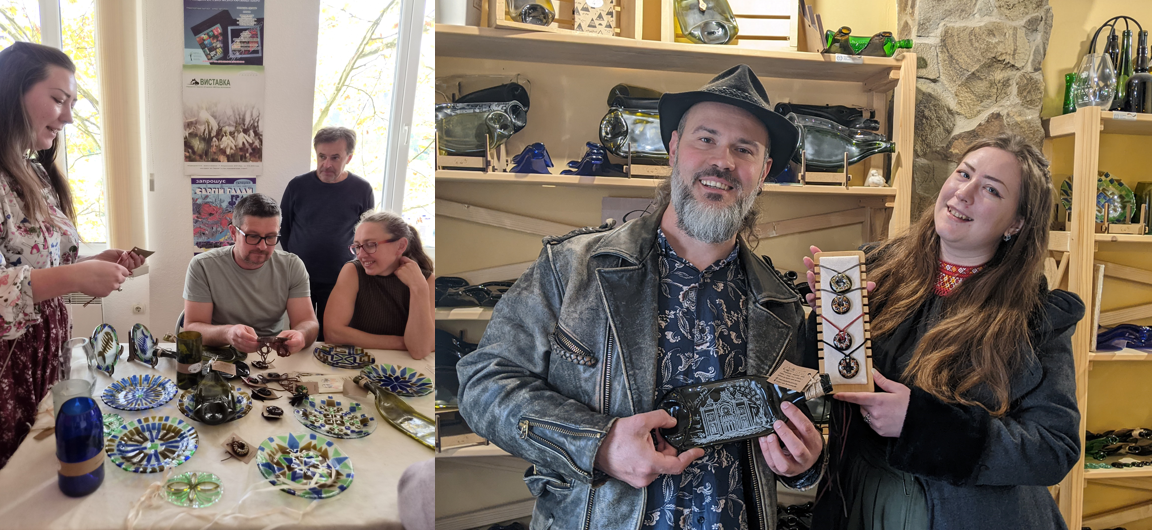
After the walking route, the programme enters the Khust Community Museum of History and Ethnography. Collections of clothing, tools and furniture introduce the ornaments and practical culture of the area. Then observation gives way to making: a local couple working with glass invites visitors to assemble decorative tea coasters from fragments of reused glass and, if they wish, add details with acrylic markers. The artists also present their own work, transforming discarded bottles into plates, cheese boards and other objects while reinterpreting regional motifs. A fragment that might have been thrown away acquires a new purpose; a traditional pattern appears on a contemporary surface. This small workshop links heritage, creativity and sustainable habits in a form visitors can literally take into their own hands. The day concludes in a local wine cellar, where regional production and grape varieties add another living chapter to Khust’s story. History, craft and taste are not treated as separate attractions: together they create reasons to spend more time in the town and direct visitor attention towards the people and small enterprises behind the experience.
Visitors explore how reused glass and regional motifs can be transformed into contemporary objects during the hands-on workshop. Photo provided by FORZA. |
What the first test revealed
On 7 October 2026, nine people tested the route during a peer review visit. At least ten local people contributed to the programme, supported by four project staff members. Participants responded most strongly to the direct encounters with storytellers and to the moment when the experience became hands-on.
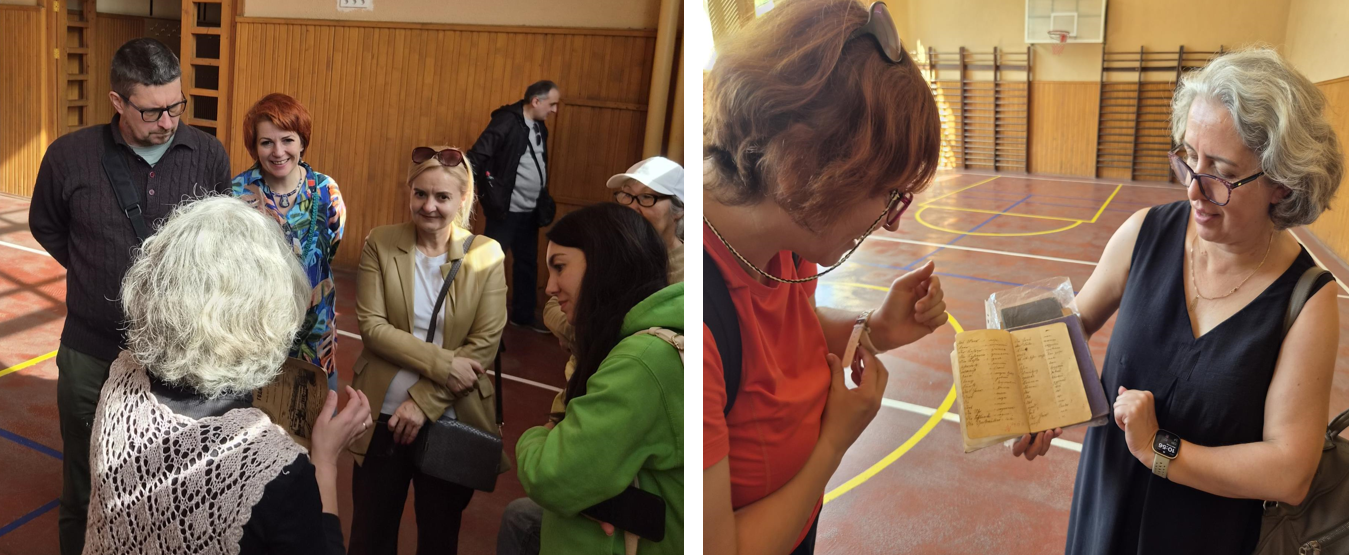 The peer review confirmed that direct encounters with local storytellers are the route’s strongest asset. Photo provided by FORZA
The sentence “Today I saw Khust I had never seen before” captured the emotional result. An equally important practical signal followed: after the test, the team received a request for a paid excursion using a simplified version of the same structure. The pilot had moved beyond an interesting idea and shown the first sign of genuine demand.
From pilot route to local value
The next task is to turn this early interest into recurring local benefit. FORZA plans to hand over the route structure, content and contacts to Khust guides willing to offer the experience. The museum’s capacity to host workshops will be developed further, and a craft shelf is planned so that visitors can discover and purchase products made by local creators.
The process has already opened conversations about cooperation between the museum and craftspeople, the wine producer and artists, and NGOs and storytellers. Familiarisation visits for local media and domestic tourism professionals are also planned to make the offer better known among regional audiences. Designed for groups of around 12–15 people and possible throughout the year, the route has the potential to become a regular service rather than a one-off event.
Khust is also intended to become the starting point for a wider journey. Offers from neighbouring villages and natural areas will be linked through a community web portal under development by the municipality. Visitors who first encounter the region through the town’s many histories can then continue towards the landscapes, producers and traditions of the surrounding communities.
By the end of the day, Khust is no longer simply a starting point for the rest of Zakarpattia. It is a meeting place where the region’s histories speak to one another — and to everyone willing to listen. |

13/11/2026
By Anna Szentgyörgyi
Share on social media:


News & Events
Read the most recent updates and explore the upcoming events.

Would you like to receive project updates?
You're already part of our community!
Welcome to our newsletter community!
Subscribe to our newsletter