

Danube Gains New Life: Restoration of the Foki side arm
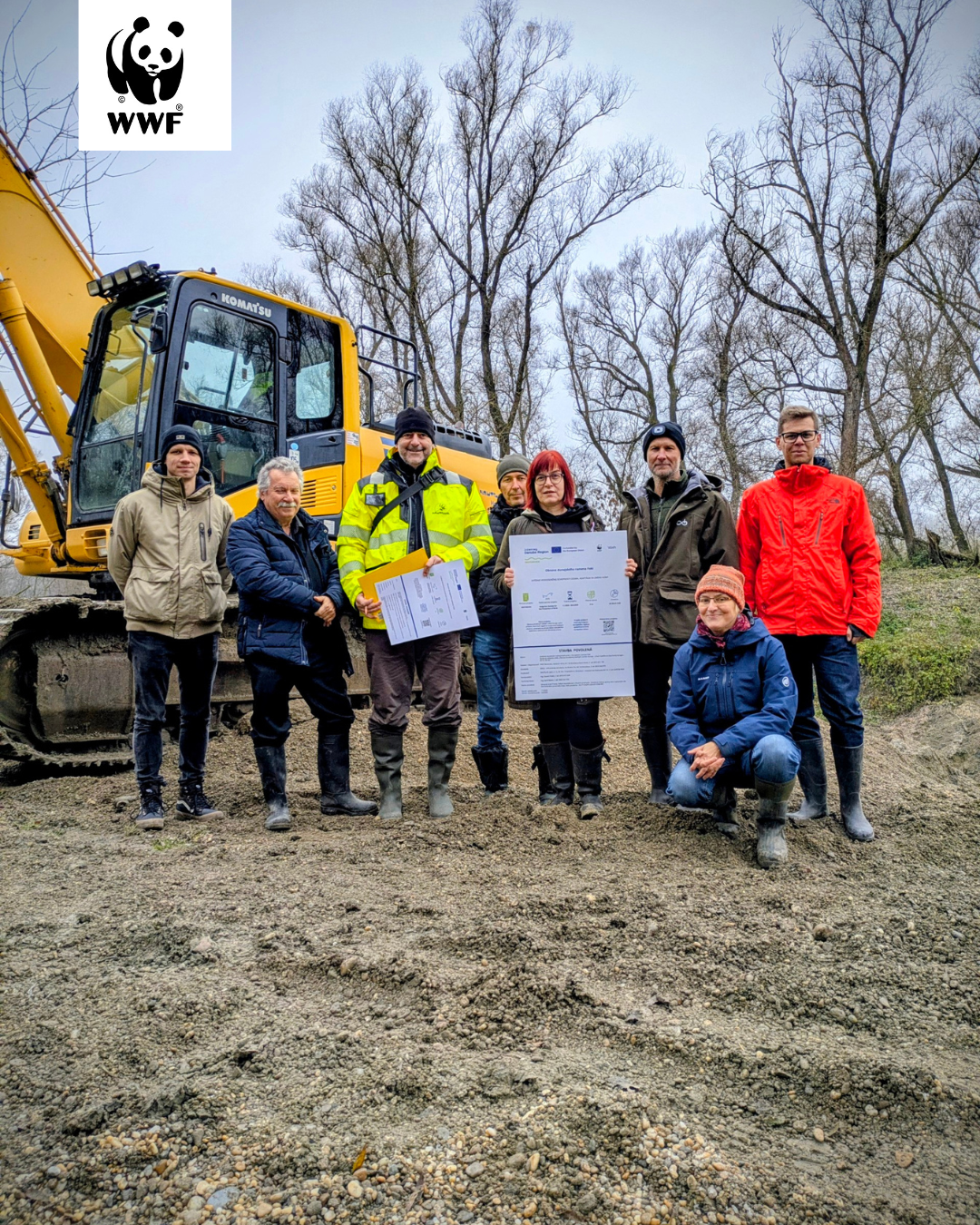
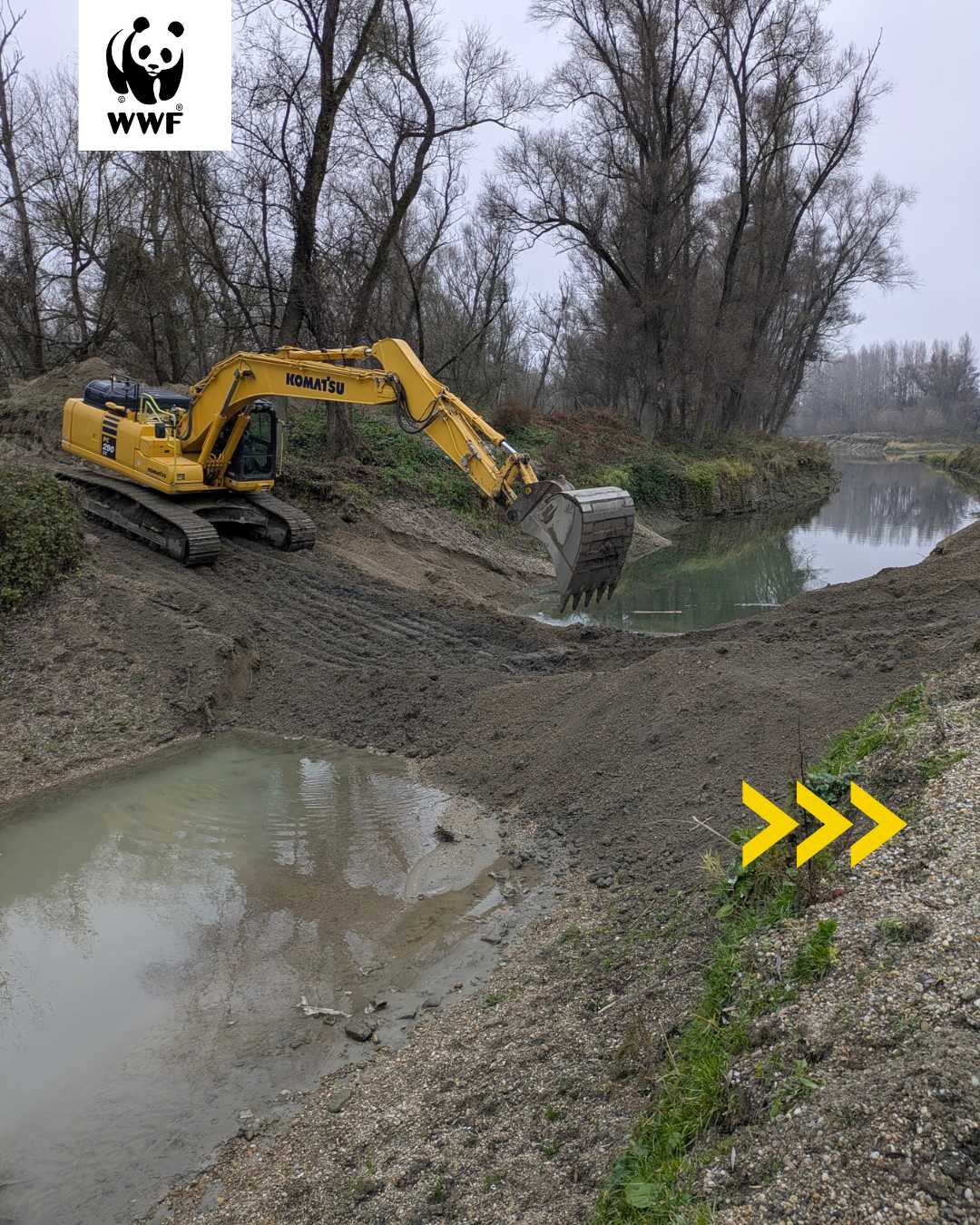
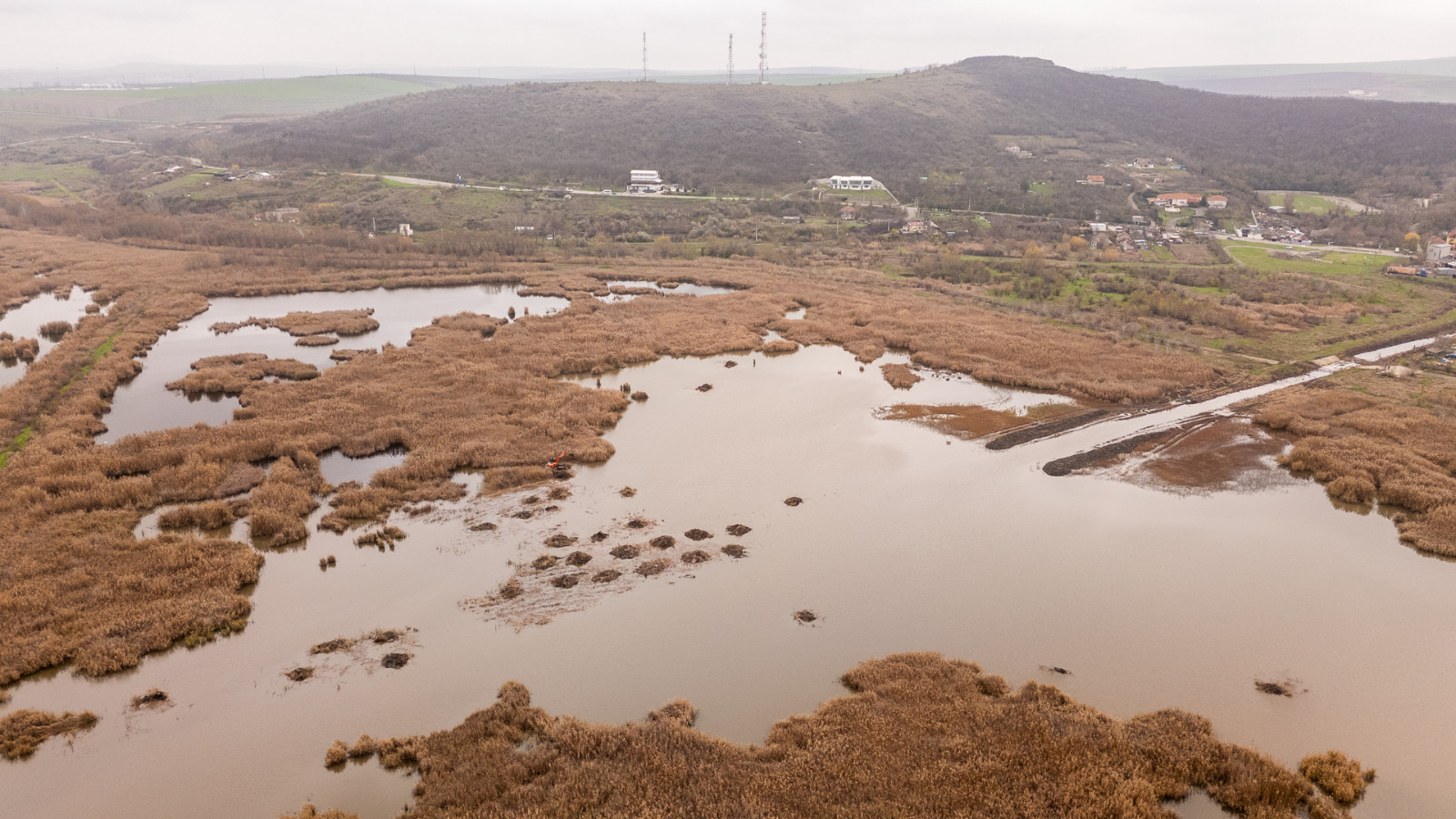
WWF Slovakia, in partnership with the conservation organisation BROZ, is continuing the restoration of the Foki side arm located in the old riverbed of the Danube. Building on restoration works carried out by BROZ during the summer, WWF Slovakia is now deepening an approximately 300‑metre connecting channel known as Small Foki. This intervention will allow more water to enter the area even during drier periods of the year, significantly increasing the landscape’s resilience to climate change.
As part of the RestoRiver project, WWF Slovakia will deepen the Small Foki channel so that water can once again reach areas that had remained dry during certain parts of the year. This nature‑based water retention measure will support biodiversity, strengthen climate resilience, and at the same time contribute positively to flood protection.
“By restoring space for water, we are bringing life back to areas that have long been deprived of it. We are revitalising landscapes affected by human intervention in order to restore natural water dynamics and support the species that depend on them. Deepening the Small Foki channel is a simple but highly effective step. It helps retain water in the landscape for longer, which is crucial for the Danube and its wetlands in the context of a changing climate,” explains Miroslava Plassmann, Director of WWF Slovakia.
More than 8,000 cubic metres of sediment will gradually be removed from the connecting channel. Excavation works are planned to continue until March next year, with their progress depending on weather conditions and, in particular, the water level of the Danube. The restoration of Small Foki is co‑financed by WWF Slovakia with support from the Living Danube Partnership as well as Coca‑Cola CZ/SK and Coca‑Cola HBC Czech Republic and Slovakia. Experts from the Water Research Institute and the Slovak Water Management Enterprise were also involved in preparing the project.
The current works carried out by WWF Slovakia directly follow earlier restoration measures implemented by BROZ, which were completed in the summer of 2025 within the LIFE project Dynamic Danube – Lines of Life and the Foki for Fish project supported by the Open Rivers Programme. At that time, more than two kilometres of the Foki side arm near Gabčíkovo were reconnected and revitalised, enabling the return of natural river dynamics and the restoration of suitable spawning habitats for native Danube fish species. Positive ecological changes were confirmed by an ichthyological survey conducted shortly after the restoration.
“The Foki side arm is the first successfully restored side arm in the old riverbed of the Danube. It is an area that has long been affected by the operation of the Gabčíkovo hydropower scheme, and every return of water to these poorly inundated areas is a major success. We are pleased that WWF is now building on our work and that together we are strengthening the natural processes the Danube needs,” adds Tomáš Kušík, Chairman of BROZ.
Background information
· The Foki (or Fok) side arm is the colloquial name for part of the lower Istragov side arm, which forms part of the old riverbed of the Danube. Historically, this area consisted of an extensive system of side arms, islands, wetlands and floodplain forests. These habitats represent the last remnants of the Danube’s original inland delta, once among the richest river ecosystems in Slovakia.
· Following the construction of the Gabčíkovo hydropower scheme, the old riverbed lost its natural inflow of water. Most of the river’s discharge was diverted into the navigation canal, leading to the disconnection of side arms, a decline in both surface and groundwater levels, and the gradual silting up and drying out of wetlands.
· Restoring the connection between the side arm and the Danube is essential for bringing back natural hydrological dynamics. Increased water flow transforms the side arm into a functioning habitat once again: water levels, flow patterns and temperatures vary naturally, supporting higher species diversity and fish reproduction. More water in the side arms also means higher soil moisture, healthier floodplain forests, a more stable groundwater regime, and an improved capacity of the landscape to retain water during droughts.
· The restoration of Foki is the first project of its kind in the old riverbed of the Danube, where a side arm has been reconnected to the river in a way that ensures functionality even at low water levels. It serves as a model example of nature‑based river restoration with immediate ecological benefits.

30/12/2025
By Petra Boić Petrač
Share on social media:



News & Events
Read the most recent updates and explore the upcoming events.

Would you like to receive project updates?
You're already part of our community!
Welcome to our newsletter community!
Subscribe to our newsletter