

A new toolbox for better first- and last-mile mobility
Public transport does not begin at the stop. It begins with the walk to the station, the bike ride to a mobility hub, and the ease of moving from one part of the journey to the next.
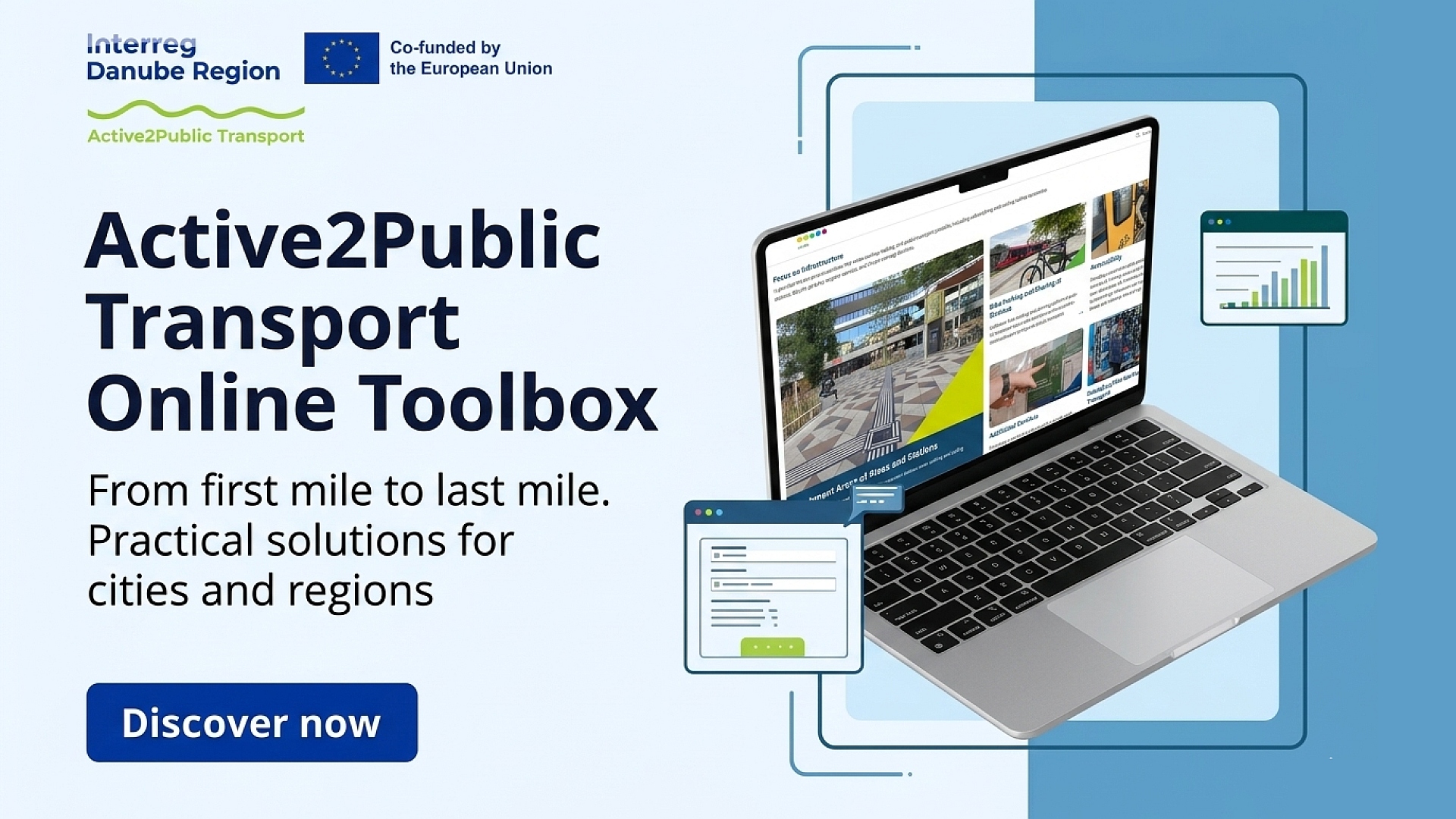
This is the idea behind the new A2PT Online Toolbox, now available via www.active2publictransport.eu. Developed within the Active2Public Transport project, it supports cities, regions, operators and mobility professionals in improving how walking and cycling connect with public transport across the Danube Region.
From project results to everyday practice
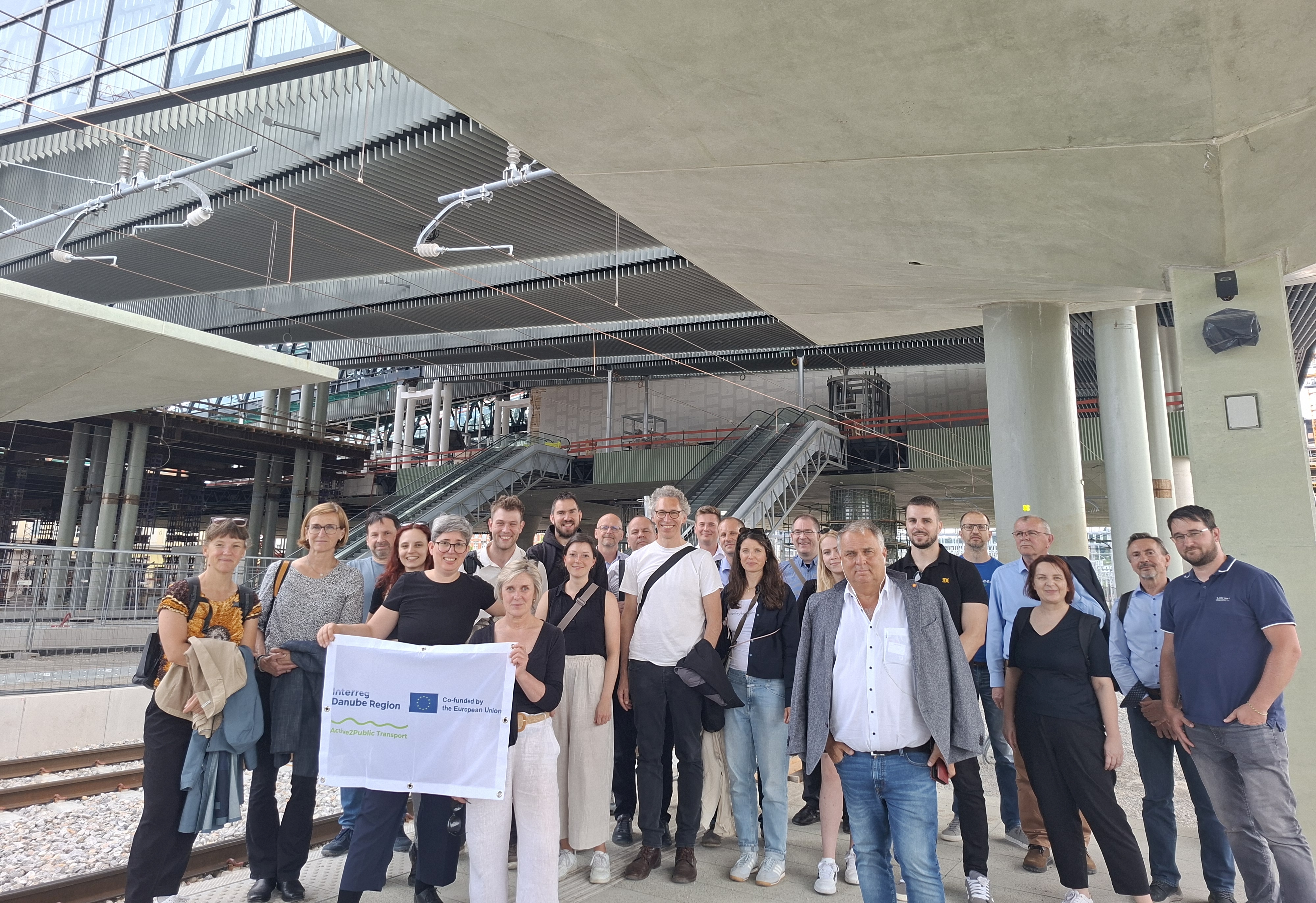
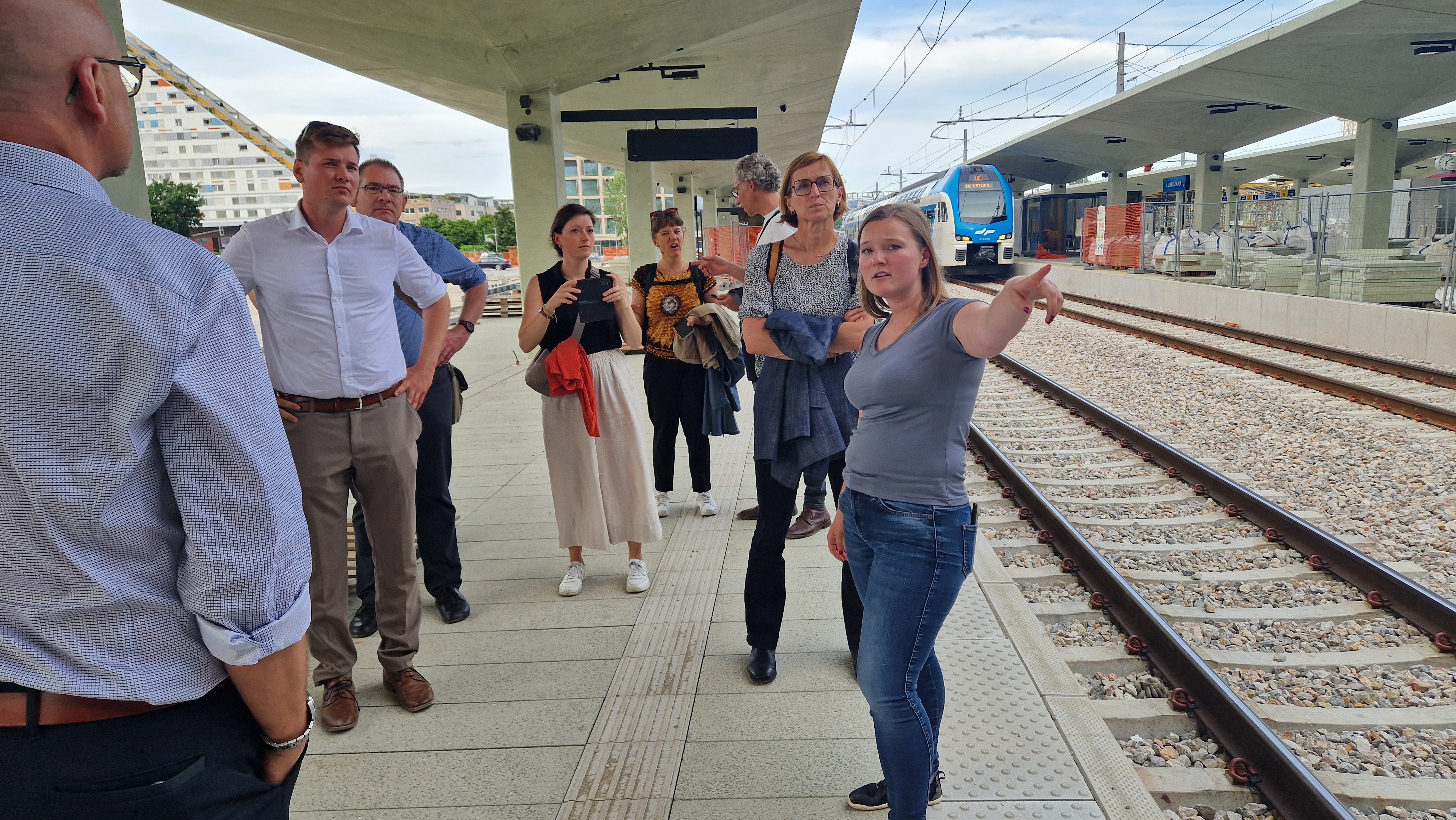
Officially launched on 3 June 2026 in Ljubljana during the project’s final public event, the online guide turns project experience into a usable resource for everyday planning and implementation.
Rather than presenting the topic in abstract terms, it helps professionals identify relevant measures, learn from tested approaches and adapt suitable solutions to their own local or regional context.
Its focus is one of the most practical challenges in sustainable mobility: making it easier, safer and more convenient for people to reach public transport on foot or by bike, and improving transfers around stations, transport nodes and mobility hubs.
What professionals will find inside
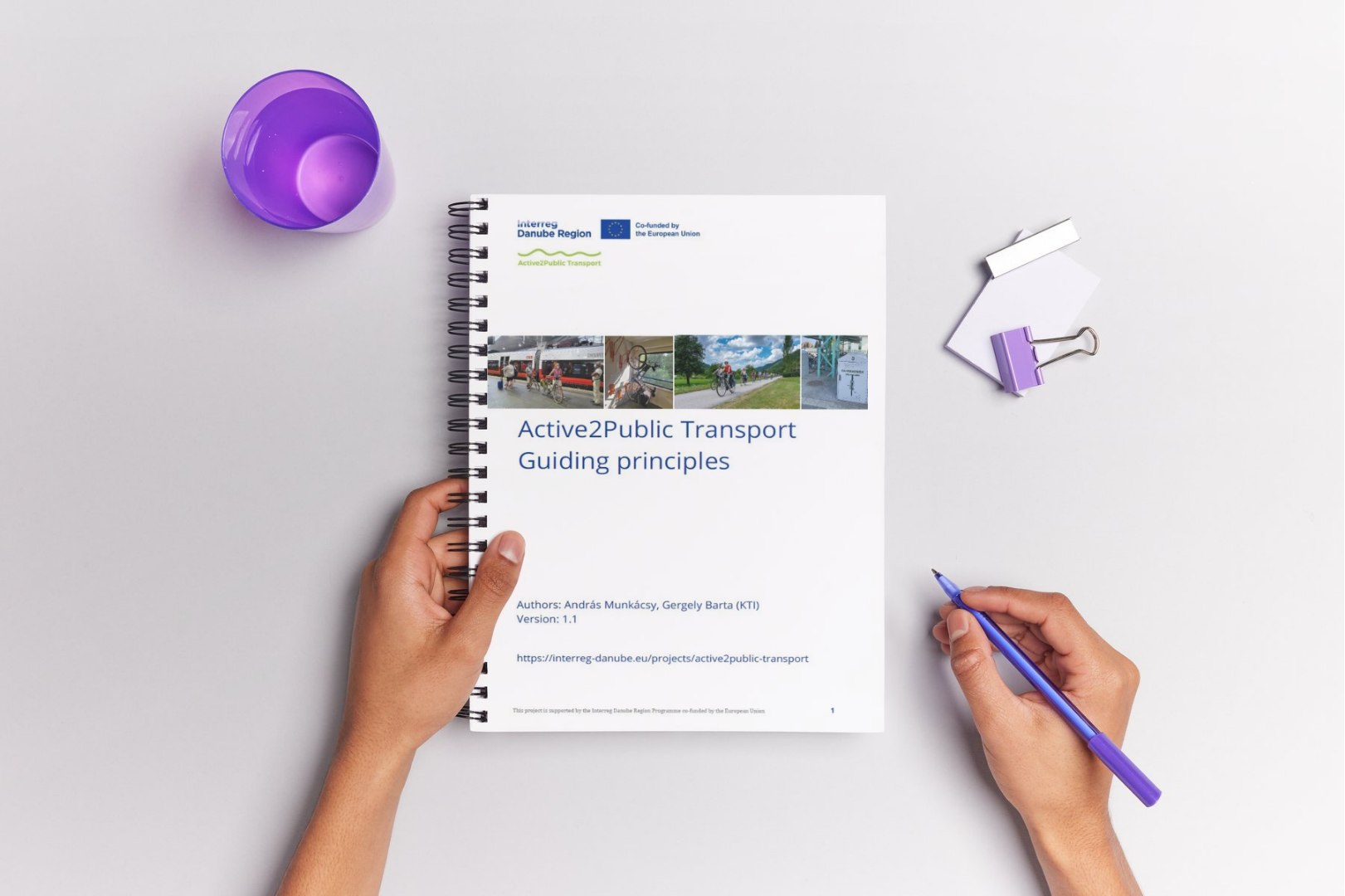
The platform brings together guidance and examples on key topics such as access to public transport stops and stations, bike parking and bike boxes, bike carriage on buses and trains, first- and last-mile connections, information and ticketing systems, and the design of effective mobility hubs.
Built on tested solutions
A particular strength of the online guide is its practical foundation. Its content builds on project knowledge, pilot activities and curated examples of good practice gathered throughout the A2PT process.
This means it does not only describe what should be done. It also shows what has already been tested and how different measures can work in different settings.
Shaped with stakeholder feedback
Before going live, the platform was tested and refined with stakeholders during 2026 through focus groups and an online survey.
Their feedback helped improve the structure, clarity and professional relevance of the final version, ensuring that it responds to the needs of those expected to use it in planning and implementation.
Made for the people who shape mobility systems
The guide is intended primarily for professional target groups: local, regional and national public authorities, planners, mobility experts, infrastructure and service providers, sectoral agencies, international organisations and NGOs.
Its structure helps users move from broad themes to more specific areas of action, making it relevant for different institutional and territorial contexts.
A Danube Region tool with wider relevance
Although developed within the Danube Region, the resource is designed to support wider learning and transfer.
It offers a shared reference point for project partners, while also providing inspiration for other European cities and regions working on better integration of active mobility and public transport.

Online now, and designed to last
To support long-term availability, the toolbox is hosted on the Austrian governmental mobility platform klimaaktivmobil.at, while www.active2publictransport.eu serves as the communication address redirecting users to the landing page. This was approved by the Austrian Federal Ministry for Innovation, Mobility and Infrastructure (BMIMI), associated strategic partner (ASP) of the project.
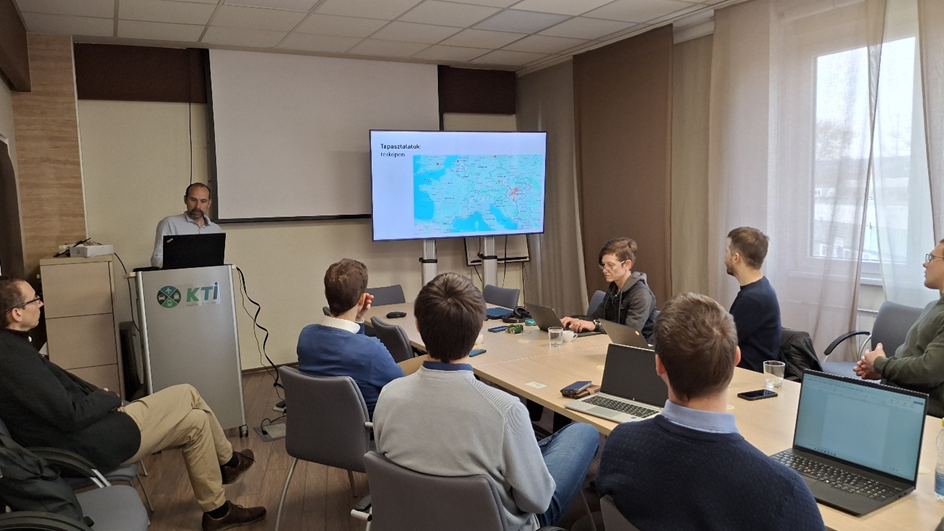
The content development was led by KTI – Institute for Transport Sciences, in close cooperation with the Austrian Energy Agency and klimaaktiv mobil, the BMIMI's initiative for active mobility and mobility management.
Turning seamless mobility into concrete action
The launch of the A2PT Online Toolbox marks an important project result: a practical online guide that helps professionals turn the idea of seamless mobility into concrete action.
By improving the connection between active mobility and public transport, it supports more user-friendly and effective travel chains across the Danube Region.
The project was implemented by a consortium led by the Austrian Energy Agency, bringing together partners from nine Danube Region countries. It is supported by the Interreg Danube Region Programme and co-funded by the European Union.


19/06/2026
By Jitka Vrtalova
Share on social media:


Green

News & Events
Read the most recent updates and explore the upcoming events.


Would you like to receive project updates?
You're already part of our community!
Welcome to our newsletter community!
Subscribe to our newsletter