
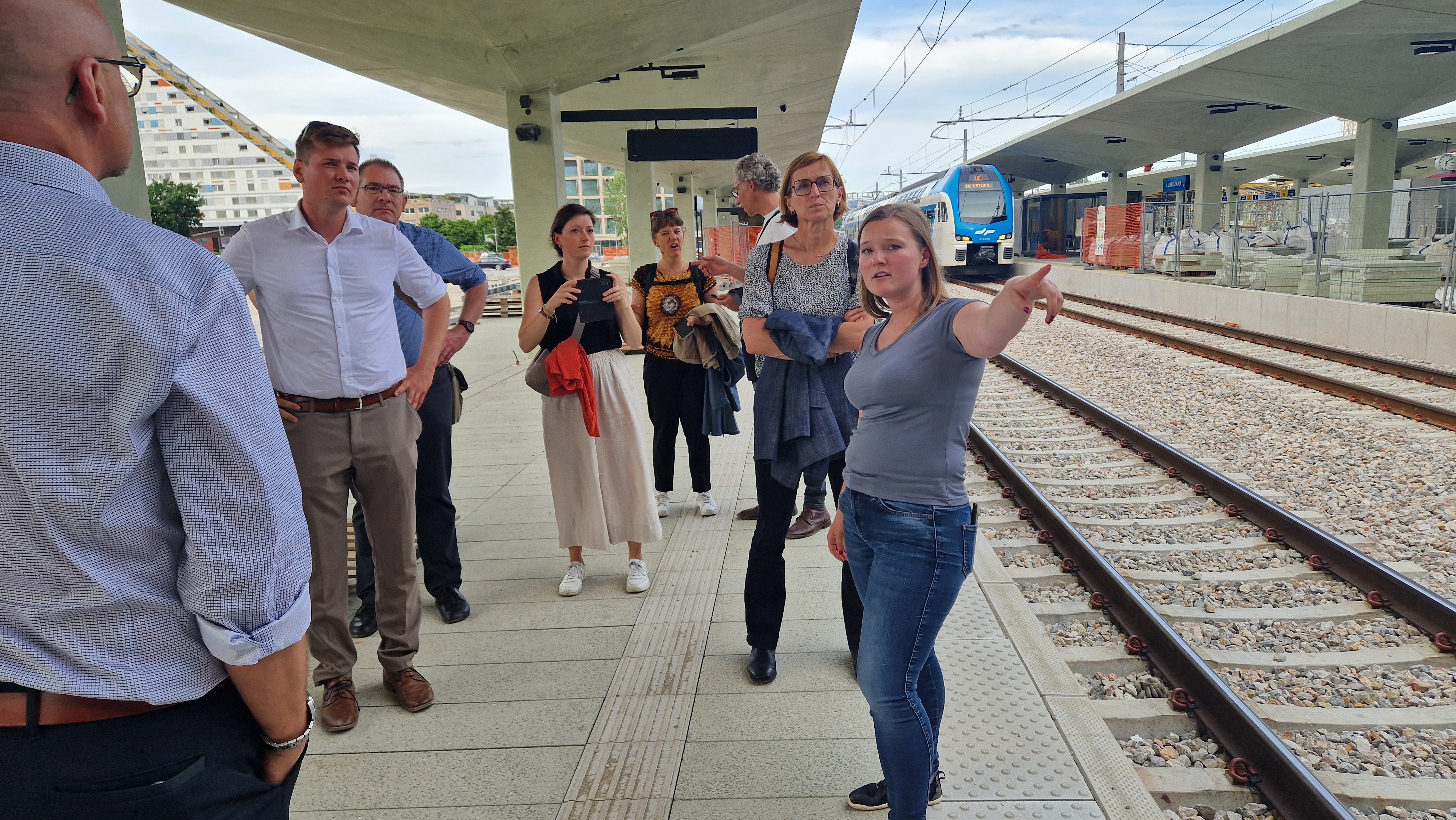

New A2PT Design Principles provide a shared framework for seamless multimodal mobility
The new A2PT Design Principles document provides a shared framework for better integrating walking, cycling and public transport across the Danube Region. Developed within the Active2Public Transport project, it sets out practical guidance for partners and stakeholders and helps translate strategic mobility goals into a clearer basis for planning, testing and implementation.
The document also defines concrete responsibilities for different actors, from planners and legislators to operators and users, with the aim of supporting high-quality infrastructure and services. Among its key priorities are intuitive wayfinding, barrier-free access, reliable capacity and the long-term sustainability of the overall system.
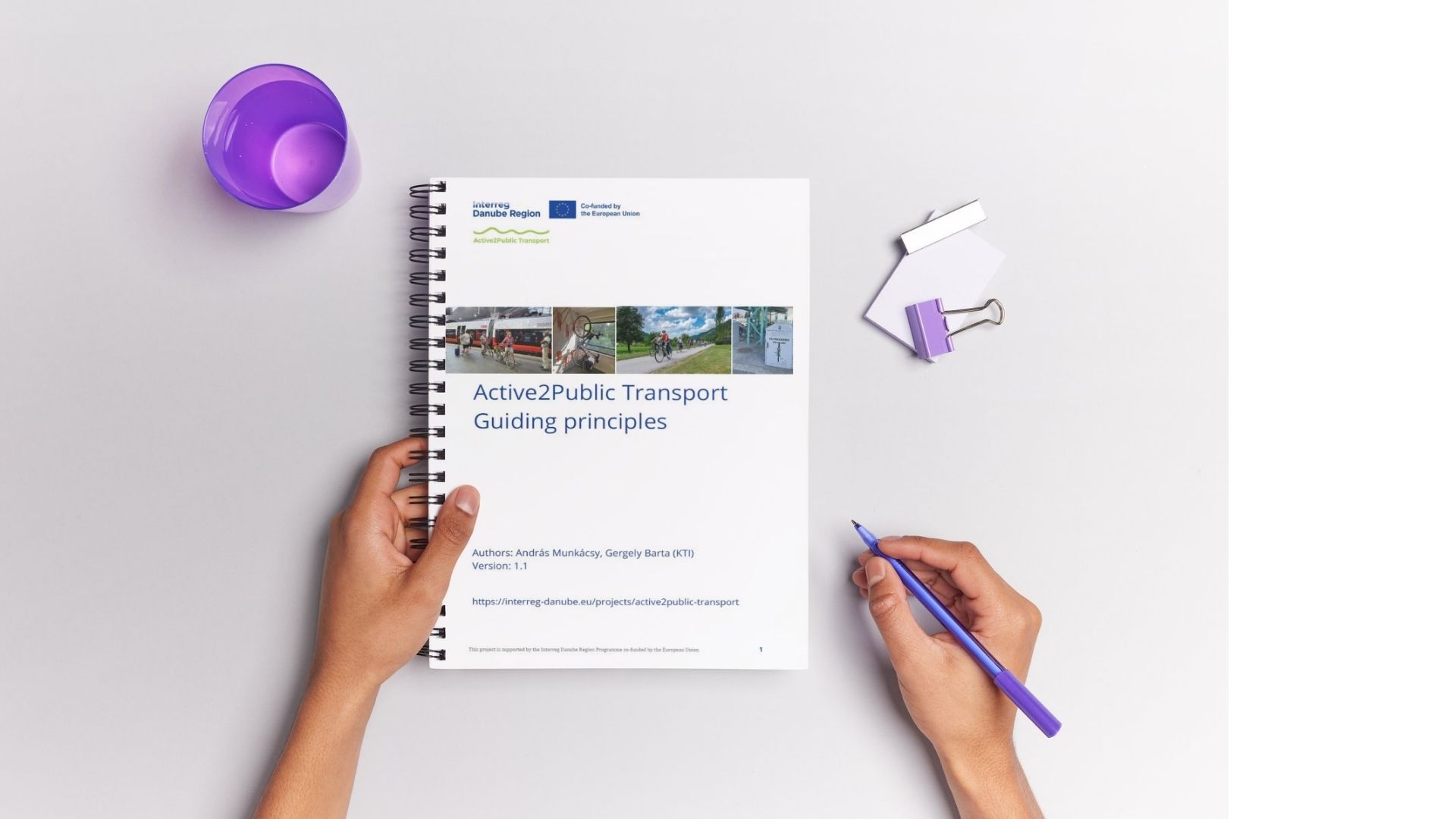
A shared framework for integrated multimodal mobility
How can walking, cycling and public transport work together as one coherent system rather than as separate parts of the journey? This is the central question addressed by the new A2PT Design Principles, developed within the Active2Public Transport project.
The document establishes a common foundation for designing mobility systems in which active mobility and public transport are easier to combine, more attractive to use and better aligned with the needs of different user groups across the Danube Region. It supports the project’s broader aim of improving the connectedness of active mobility and public transport through transnational cooperation, stakeholder exchange, testing and implementation activities.
Putting people first
At the heart of the document is a clear message: high-quality multimodal mobility must be designed around people. This means that journeys should be safe, accessible, understandable and comfortable from beginning to end, including the first and last mile. In practical terms, this includes direct walking and cycling access to stops and stations, barrier-free transfers, clear wayfinding, secure bicycle parking, reliable services, accessible information and solutions that remain functional over time.
The principles also stress that good integration is not only a matter of infrastructure. It depends on how services are organised, how information is provided, how public space is designed and how different stakeholders work together. For this reason, the document combines universal design principles with stakeholder-specific guidance.
From universal principles to stakeholder responsibilities
The universal principles define the core qualities that an integrated active–public transport system should deliver. They include:
putting people first
enriching places
connecting seamlessly
guaranteeing equity and inclusion
providing capacity and reliability
maintaining quality over time
building sustainably and resiliently
Together, they describe what good multimodal mobility should look like across different territorial contexts, from larger cities to smaller towns, rural areas and cross-border connections.
Building on this common foundation, the document then sets out more specific responsibilities for key stakeholder groups. These include infrastructure owners and managers, operators and service providers, legislators and regulators, planners and designers, researchers and innovators, employers and institutions, as well as users and communities.
Main points at a glance
The document makes clear that better integration of active mobility and public transport depends on coordinated action by a wide range of actors, from planners and legislators to operators and users. It also highlights several practical priorities that are essential for high-quality multimodal mobility:
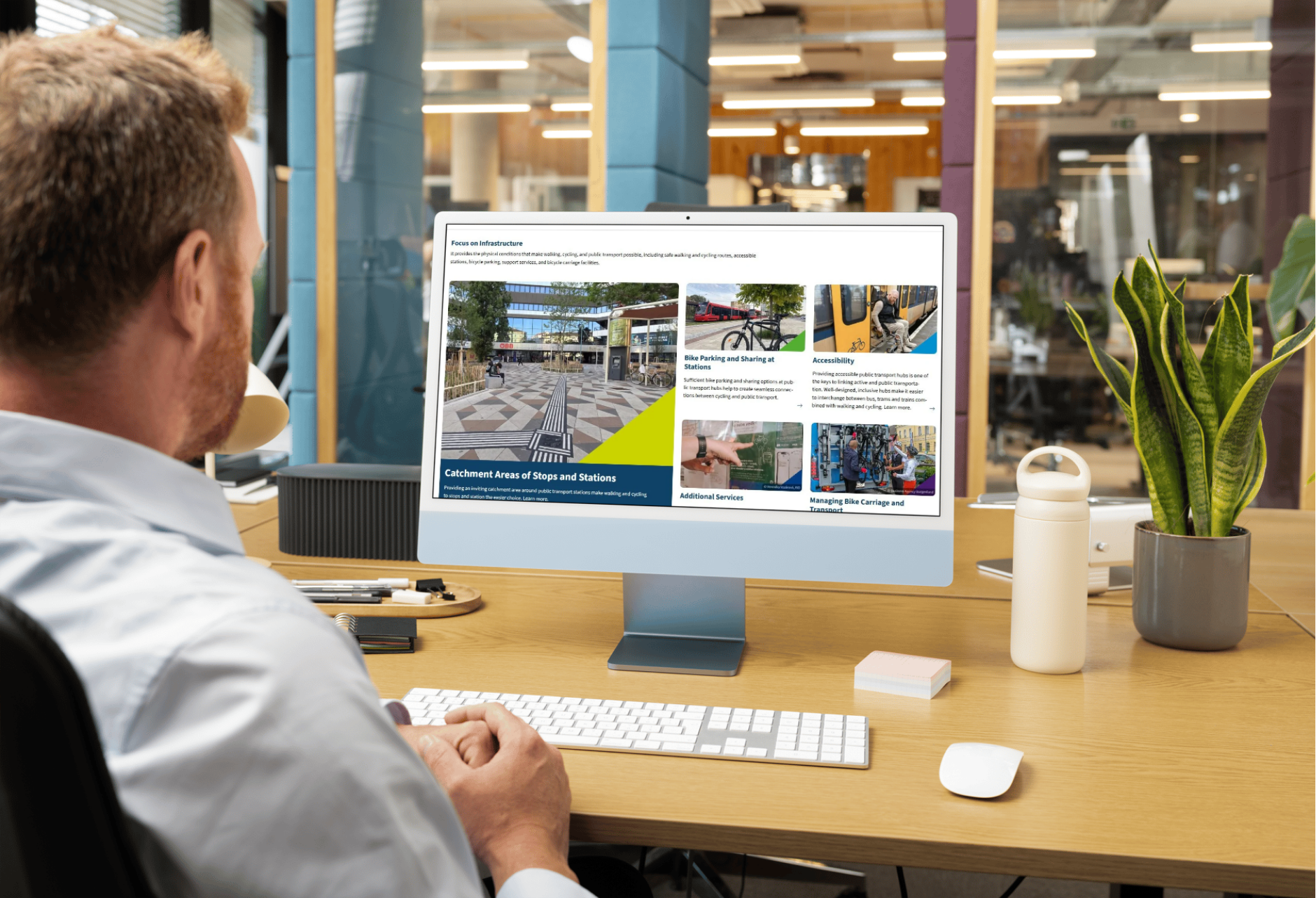
intuitive and consistent wayfinding
barrier-free access and inclusive design
reliable capacity and well-functioning services
long-term quality, maintenance and sustainability
This structure makes it clear that successful integration depends on coordinated action across sectors and governance levels.
Turning principles into implementation
The report furthermore outlines a set of implementation pathways for putting the principles into practice. These include embedding them into planning and policy frameworks, applying and refining them through pilot actions, strengthening institutional cooperation, building stakeholder capacity, monitoring results, supporting transferability across the Danube Region and linking them with funding and investment cycles. This gives the document a practical orientation and connects it directly to long-term uptake beyond the project itself.
A basis for the next phase of A2PT
Overall, the A2PT Design Principles help create a shared understanding of what it takes to make multimodal travel more intuitive, inclusive and reliable. By bringing together strategic direction and practical guidance, they support the project’s efforts to turn better integration of walking, cycling and public transport into a concrete and transferable reality across the Danube Region.
Download the full report


27/05/2026
By Jitka Vrtalova
Share on social media:


Green

News & Events
Read the most recent updates and explore the upcoming events.


Would you like to receive project updates?
You're already part of our community!
Welcome to our newsletter community!
Subscribe to our newsletter