
National seminar in Ukraine highlights NONA's work with Odesa Oblast communities
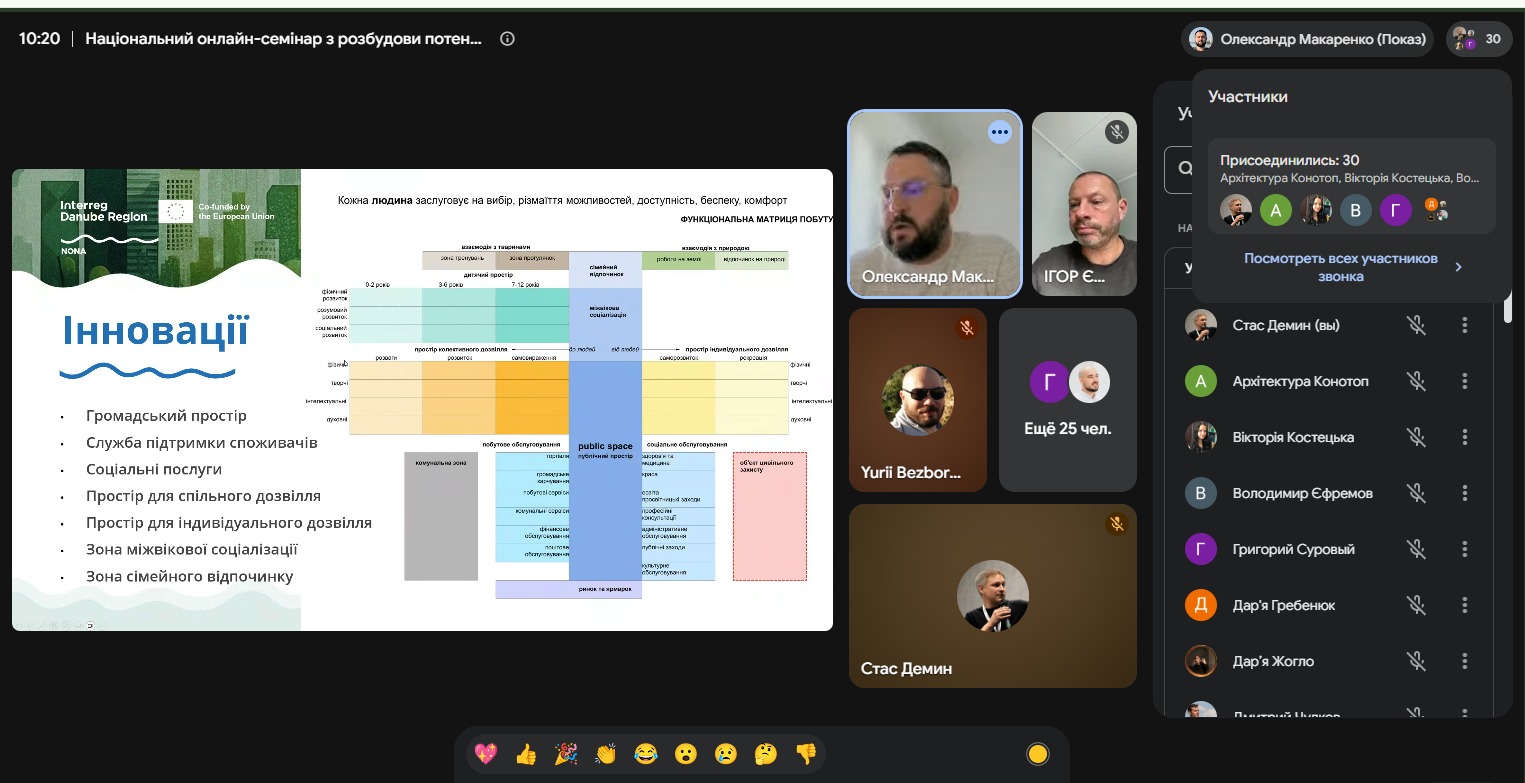
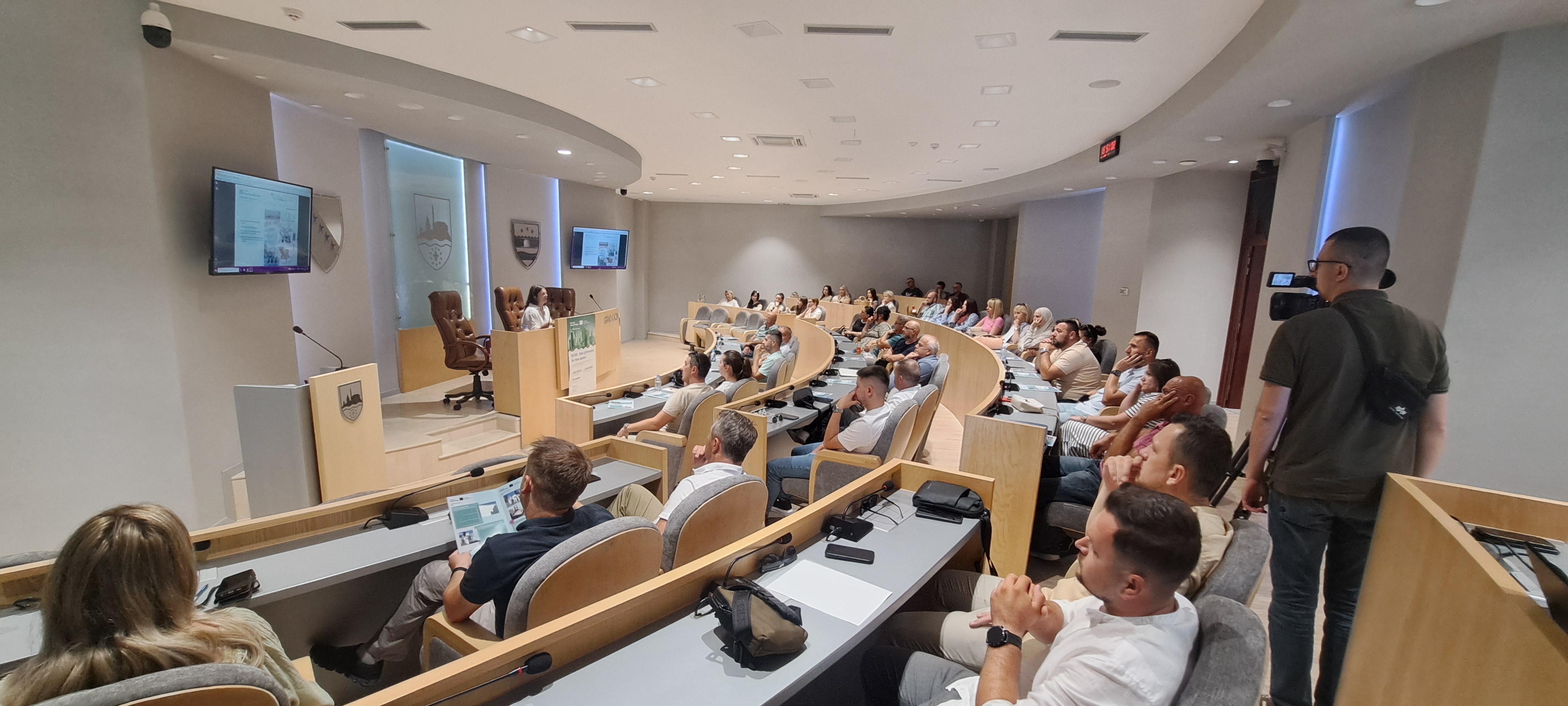
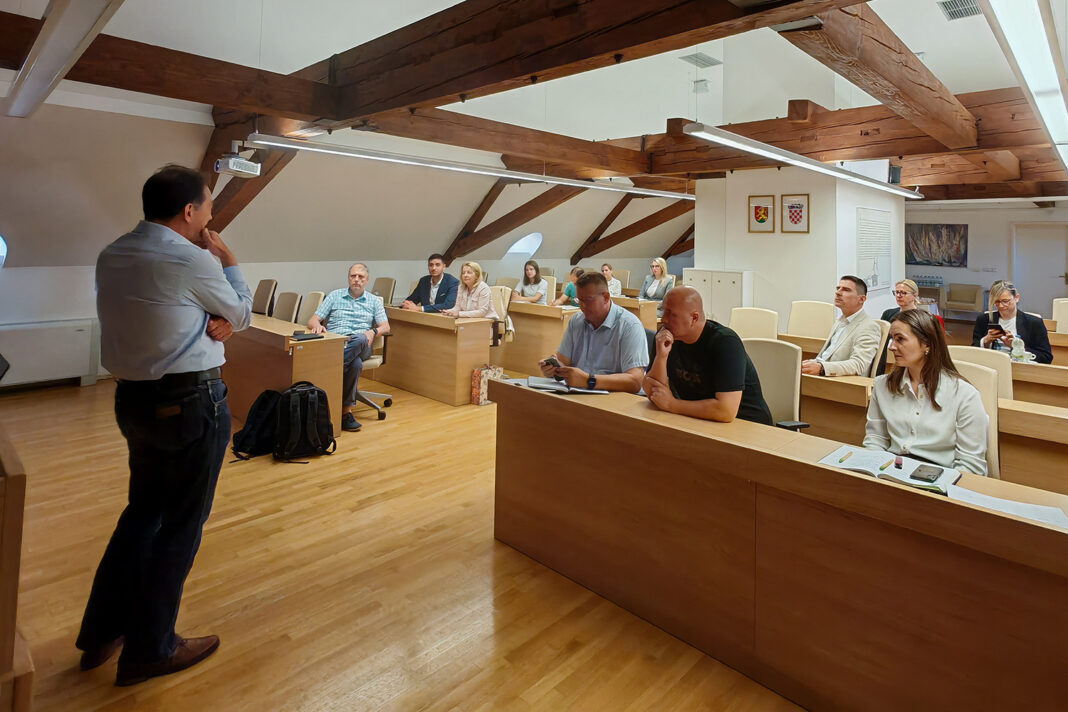
On 30 June 2026, project partner State Enterprise "Research Institute of Geodesy and Cartography" (SERRIG) held a national online capacity building seminar within the Interreg NONA project. The event brought together representatives of communities, local self-government bodies, urban planners, architects, spatial development experts, civil society organisations and businesses to present the approach, logic and results of NONA to Ukrainian stakeholders. The seminar was led by Oleksandr Makarenko, head of the working group for supervising the implementation of the international technical assistance project.
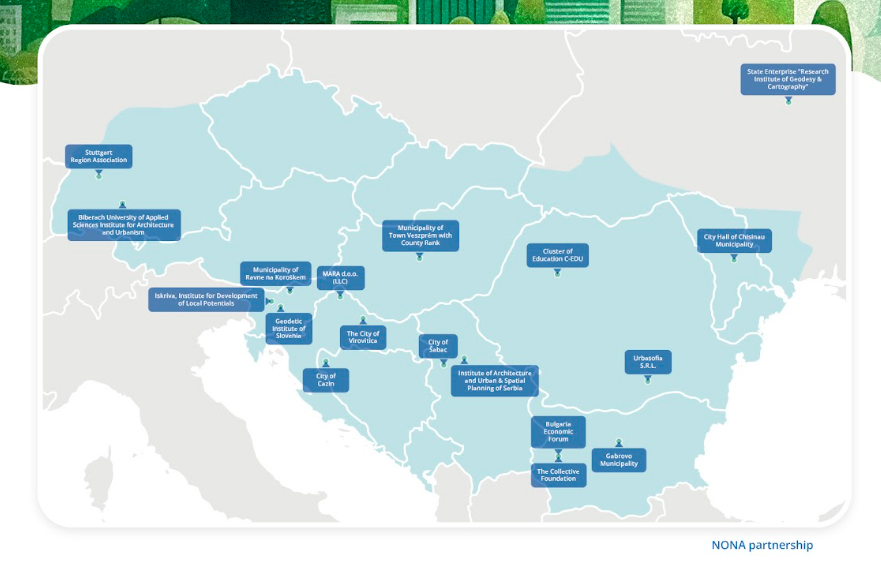
The seminar opened by situating NONA within the Interreg Danube Region Programme bringing together 18 project partners from 10 countries to develop and test a new governance model for degraded areas across urban-rural functional areas, mid-sized cities and border micro-municipalities. In Ukraine, the pilot area is Odesa Oblast, represented as an urban-rural functional area. Following outreach to nine communities, three agreed to cooperate: Mayaky rural territorial community, Safiany rural territorial community and Reni urban territorial community.
Participants were introduced to the NONA methodological framework, including the concept of degraded areas, defined for the purposes of the project as areas of reduced economic, social, environmental, visual or cultural value requiring restoration, reconstruction, revitalisation or renewal. The seminar also explained green investments and social impact investments, and outlined the NONA green investment cycle, from identification of needs through planning, spatial and environmental preparation, implementation, use, evaluation and monitoring, with stakeholder engagement running throughout.
A central part of the presentation was the "Centre of Life 2.0" concept, developed by SERIGG as a demonstration model for translating degraded areas into practical revitalisation projects combining public, social, cultural, administrative, commercial, educational, recreational and safety functions. The concept was adapted differently across the three pilot communities. In Mayaky, work shifted towards an environmental, educational and tourism-oriented approach linked to the Dniester Estuary and Lower Dniester National Nature Park. In Safiany, interest in the Centre of Life 2.0 model led to proposals for an agro-exhibition and local producer space, though progress was limited by land availability. In Reni, the most advanced Ukrainian pilot, focus shifted to the wider Balanești ravine, with the Centre of Life 2.0 concept considered as a potential catalyst for revitalisation of the surrounding area, supported by a detailed spatial plan.
The seminar also introduced the idea of a register of degraded areas as a digital tool to help communities, experts and investors describe territories, their status, ownership, restrictions and project potential, with future integration potential alongside cadastre systems, public investment systems and DREAM.
Drawing on conclusions from the Odesa investment forum and the NONA final conference in Šabac, participants discussed systemic challenges in the Ukrainian context, including the absence of a legal definition for degraded areas, limited procedures for revitalisation, weak links between community strategies and investment portfolios, and insufficient funding for feasibility studies and financial models. Next steps identified for the Reni pilot include completion of spatial planning, hydrological studies of the Balanești ravine, a feasibility study and financial model, and further consultation with the community and potential investors.
The seminar concluded that degraded areas should not be regarded solely as a burden, but, with appropriate planning, stakeholder engagement and financial and governance structures, can become a resource for green and social impact investment and improved quality of life for residents, forming a basis for the further scaling of NONA outputs in Ukraine.

01/07/2026
By
Share on social media:


News & Events
Read the most recent updates and explore the upcoming events.

Would you like to receive project updates?
You're already part of our community!
Welcome to our newsletter community!
Subscribe to our newsletter