
NONA Investment Forum in Odesa: moving the Reni pilot towards investment readiness
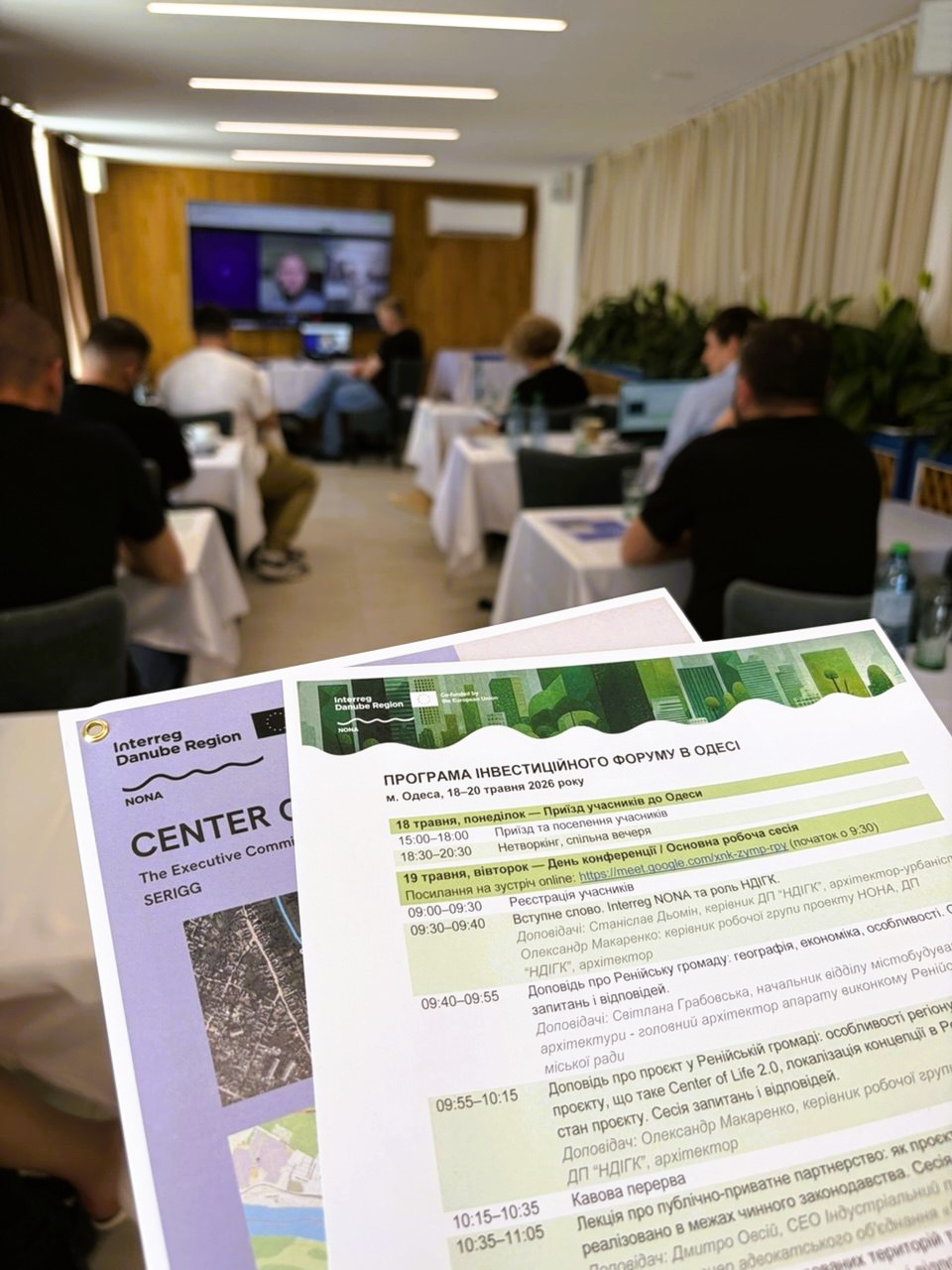
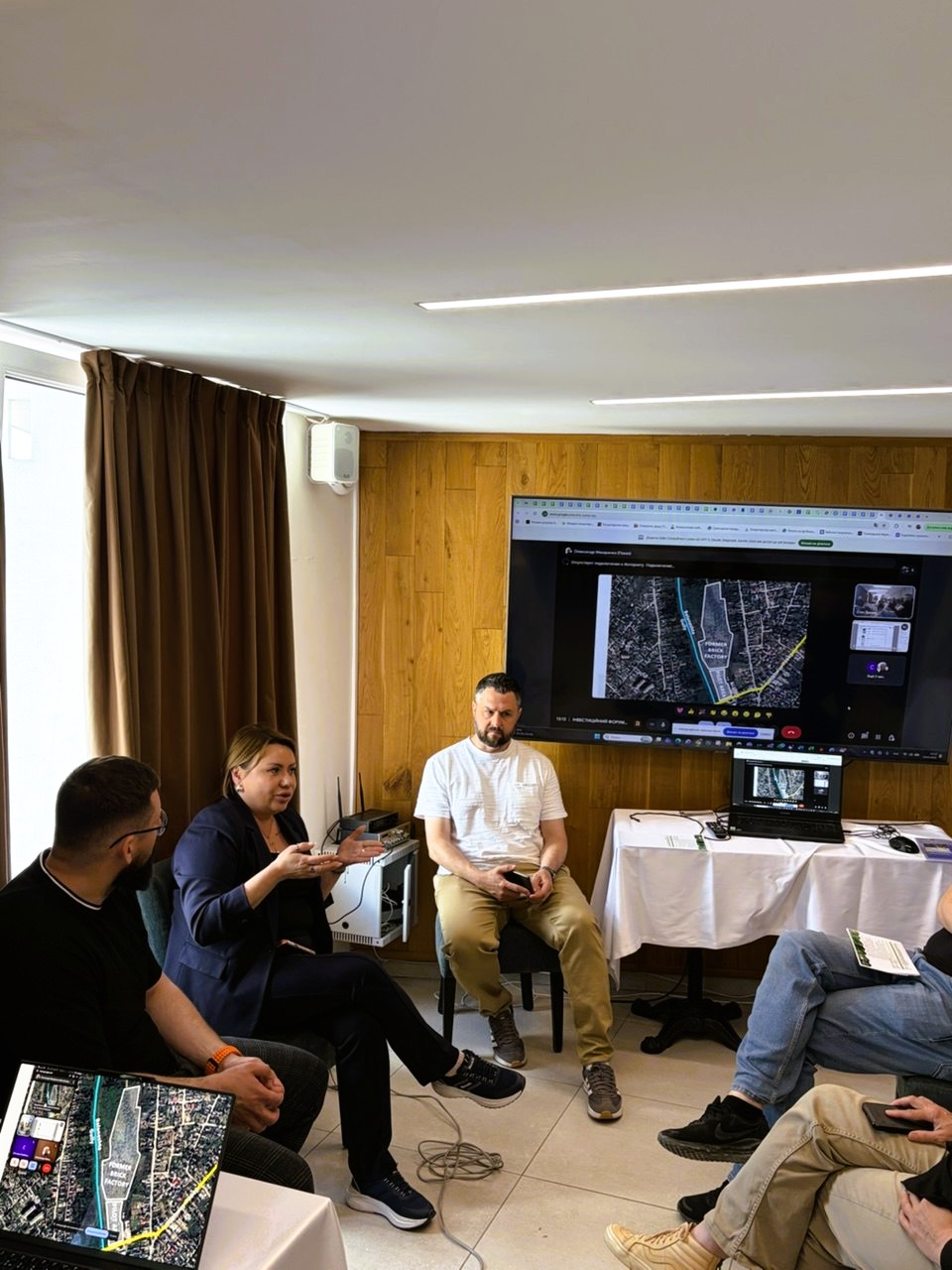
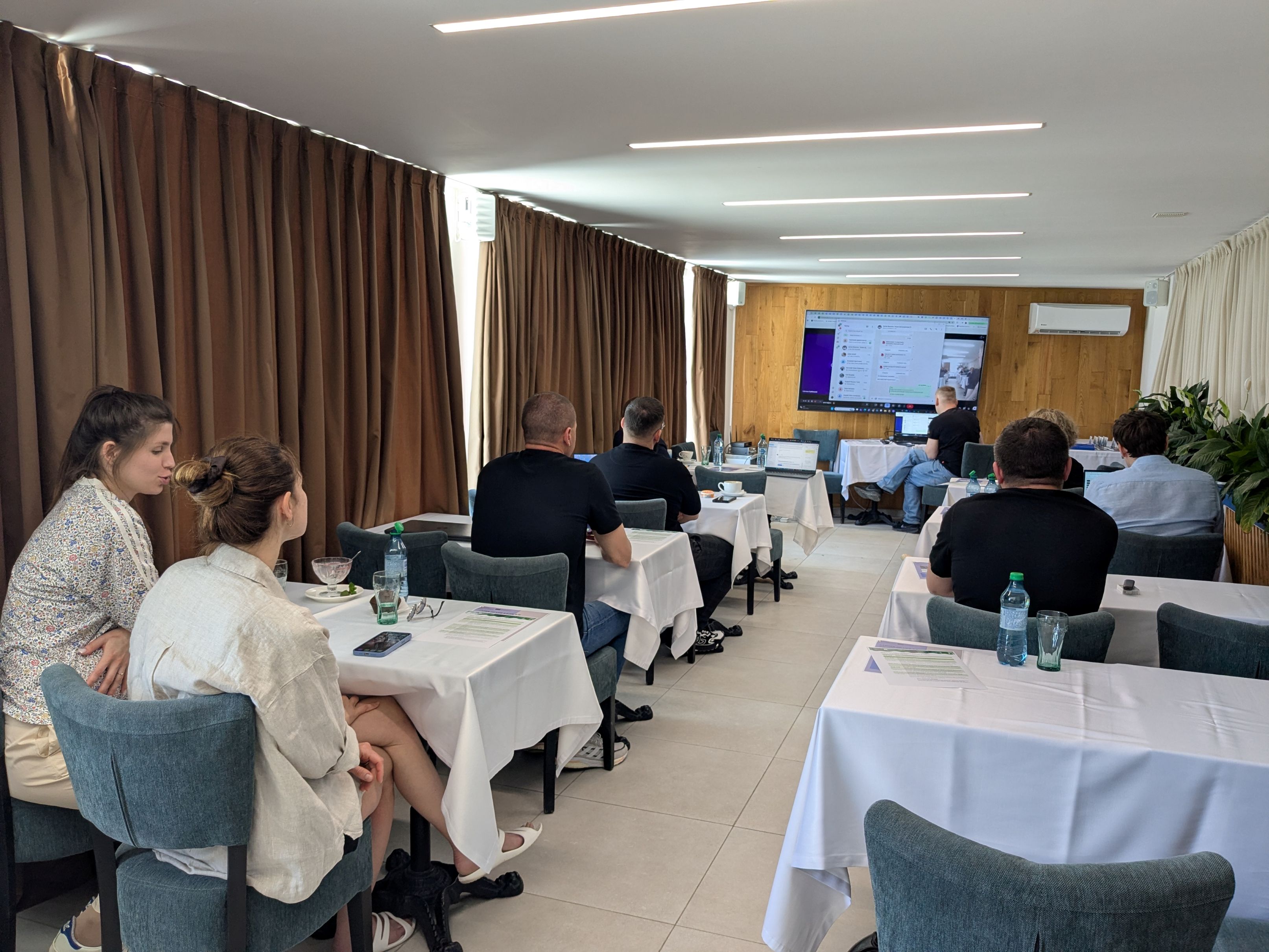
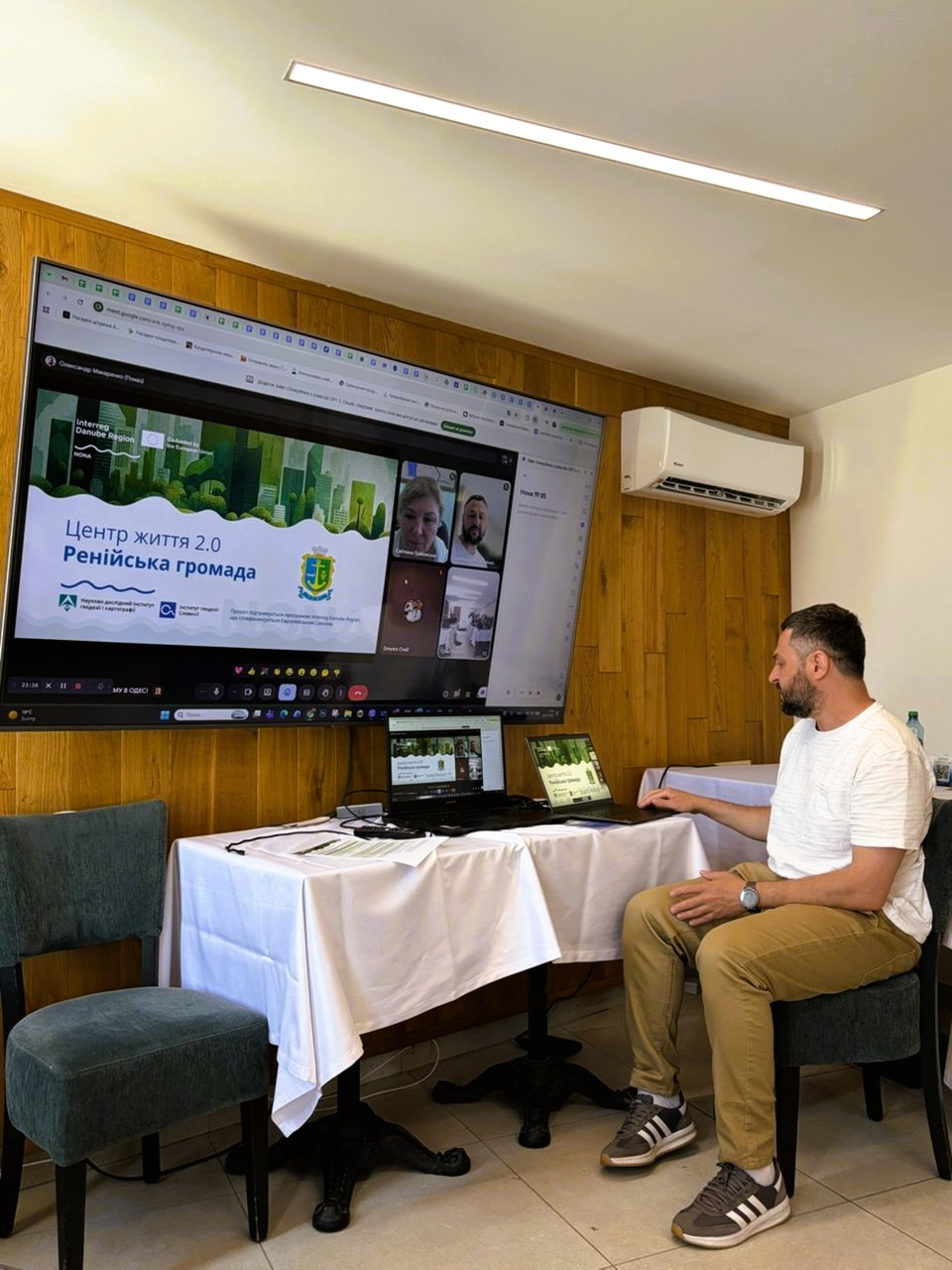
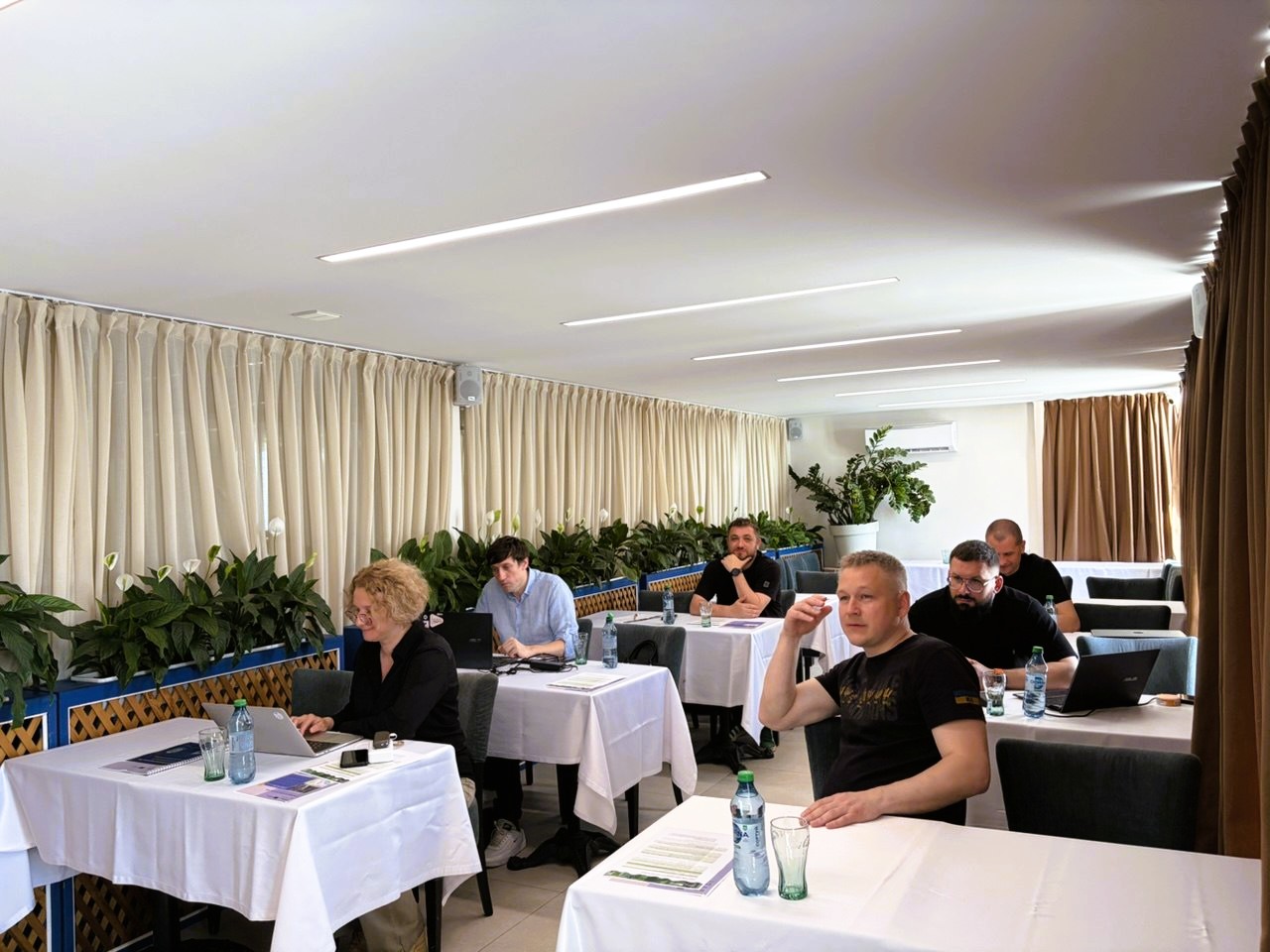
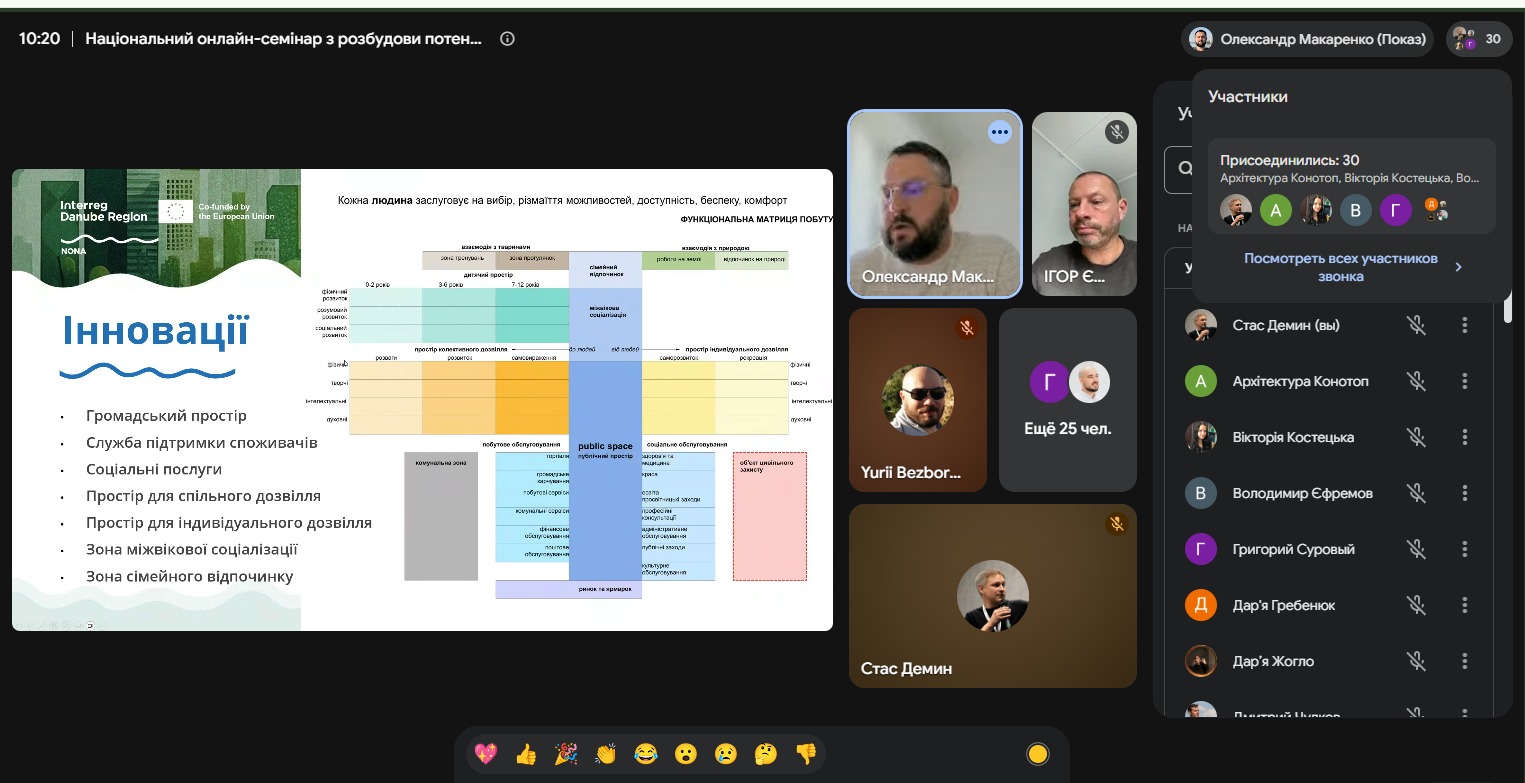
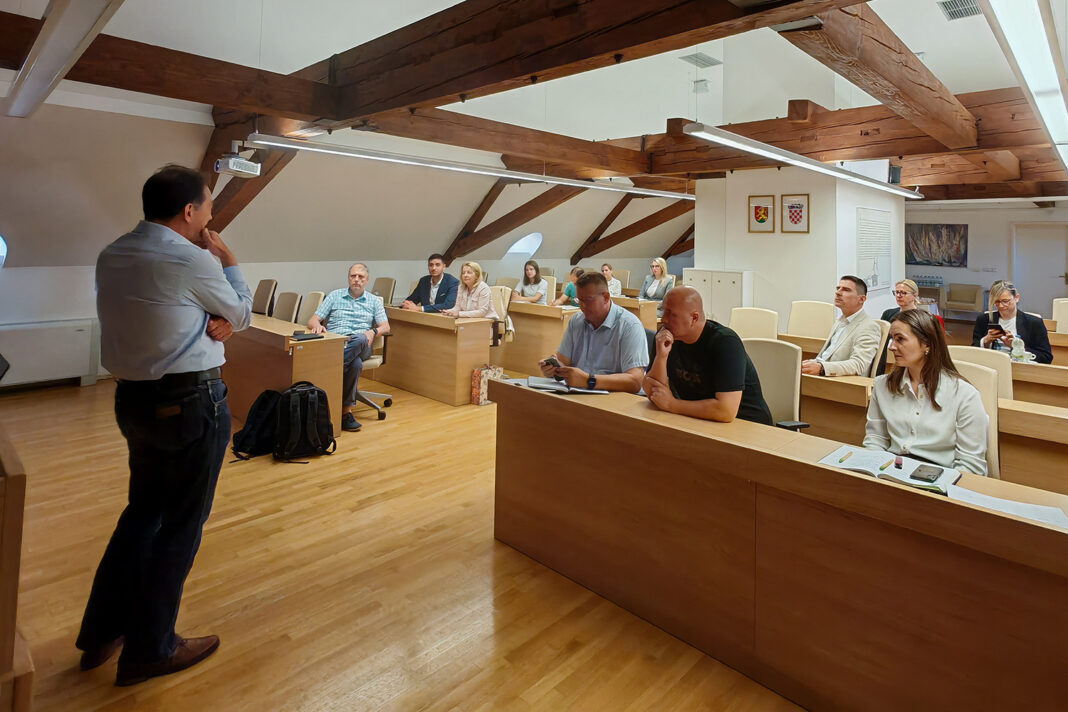
The pilot project in Reni City Territorial Community is moving from a conceptual vision towards the practical steps required for implementation. From 18 to 20 May 2026, an Investment Forum took place in Odesa, organised by SE “Research Institute of Geodesy and Cartography” SERIGG, a partner of the NONA project. The event focused on how degraded spaces in Ukraine can be prepared for revitalisation, investment and public-private partnership, using a concrete case in Reni: the transformation of a site near the former brick factory in the green area of the Balaneshty gully into the multifunctional space Center of Life 2.0.
The event was moderated by Stanislav Domin, Head of SERIGG and architect-urbanist.
The logic of the pilot project, the rationale behind the selection of the site and the concept of Center of Life 2.0 were presented by Oleksandr Makarenko, Head of the NONA project working group at SERIGG and architect. The selected site is currently an unused and overgrown green area adjacent to the territory of a demolished brick factory. Although neglected, it occupies a strategic position at the intersection of the Balaneshty gully, which divides the town in two, and an international road corridor passing through Reni. A well-designed intervention in this location could serve three purposes at once: reconnecting the two parts of the town for residents, creating a point of attraction for transit visitors and establishing a replicable model for the future revitalisation of the entire gully.
Svitlana Hrabovska, Head of the Department of Urban Planning and Architecture and Chief Architect of the Executive Committee of Reni City Council, presented the wider context of Reni community. She outlined its geographical, historical, economic and infrastructural features, as well as the challenges linked to its border location, port infrastructure, transport connections and the need to renew neglected urban areas.
A separate part of the forum was devoted to public-private partnership mechanisms. Dmytro Ovsii, CEO of Myronivka Industrial Park and partner at GORO LEGAL Attorneys at Law, spoke about the updated legal framework for PPP, potential models of public and private sector participation, and the risks that need to be considered when preparing complex infrastructure and revitalisation projects.
Andrii Cherin, Leading Research Fellow at SERIGG, presented the Register of Degraded Territories – a digital product created within NONA for systematic work with territories requiring recovery. The register is intended as a tool for scaling this approach to other communities, analysing territories, developing project ideas and preparing investment proposals.
Artem Velychko, CEO of Universum Development, provided a practical developer’s perspective on how real estate investment projects are structured, assessed and brought to implementation. He explained the roles of the landowner, developer and investor, as well as the importance of financial modelling, demand analysis, cash flow planning, risk assessment and payback scenarios. His contribution helped frame the Reni pilot not only as an urban concept, but as a future investment project that will require a clear land and urban planning basis, defined functions, realistic commercial components and a transparent implementation model.
The panel discussion expanded the focus from the Reni pilot to the wider institutional conditions required for similar projects to be implemented across Ukraine. Participants discussed how the revitalisation of degraded territories should be linked to national legislation, regional development policy, community strategies, public investment portfolios and public-private partnership mechanisms. Hanna Bondar, Member of Parliament of Ukraine, highlighted the need for precise legal terminology, including the relationship between “degraded territories” and existing categories such as “recovery territories”, and for revitalisation to be defined in legislation as a practical procedure. The discussion underlined that projects such as Center of Life 2.0 require not only local initiative, but also a clearer policy framework, better-prepared investment tools and stronger coordination between communities, regional institutions, the state and potential private partners.
The panel included Hanna Bondar, Member of Parliament of Ukraine; Olena Ivanova, Head of the Office for Work with Territorial Communities at the Odesa Regional Development Agency; Artem Velychko, CEO of Universum Development; and Stanislav Domin, Head of SERIGG and architect-urbanist.
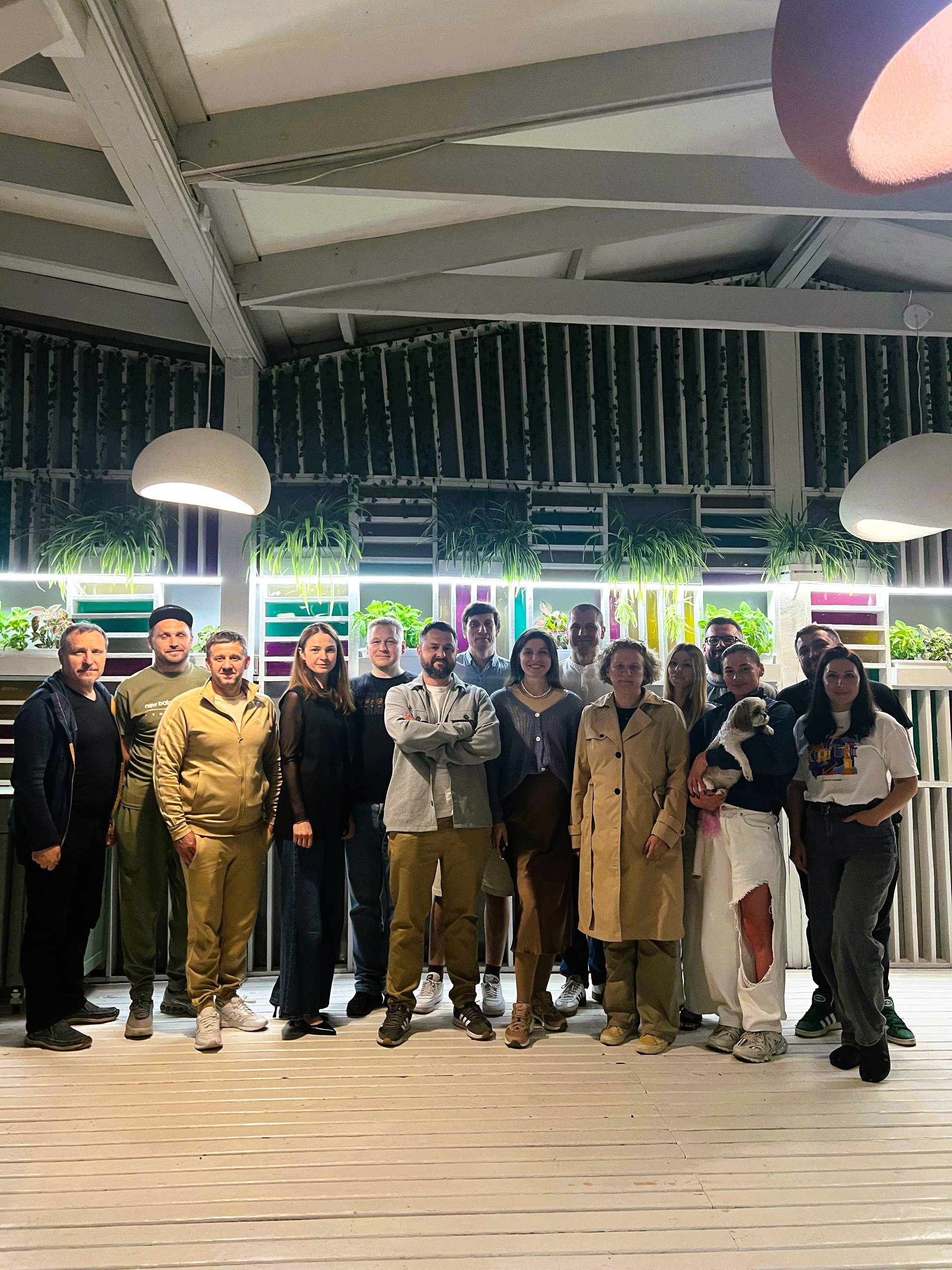
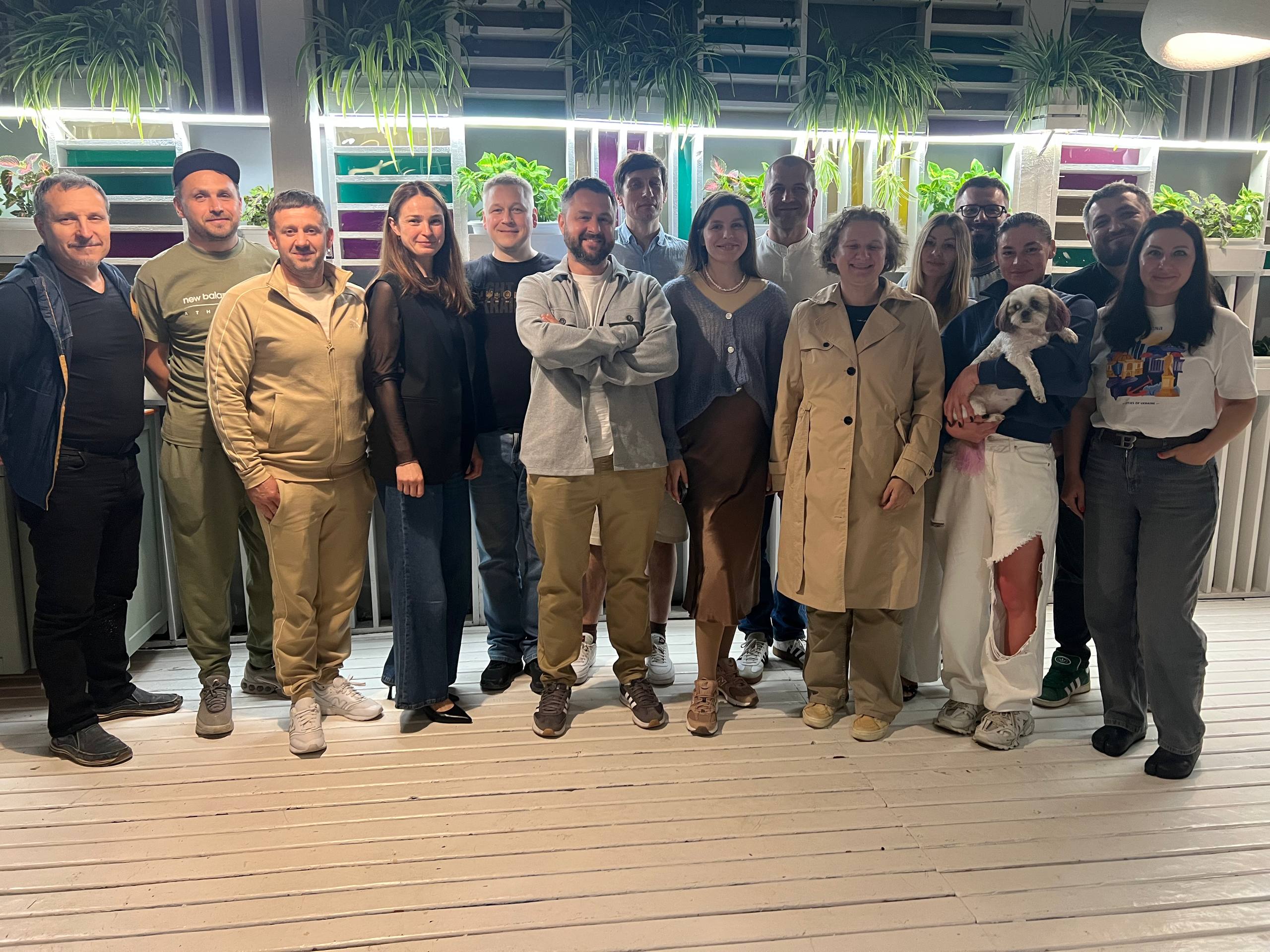
More broadly, the forum brought together representatives of SERIGG, Reni City Council and the Odesa Regional Development Agency, as well as potential developers and investors, PPP experts, architects, surveyors, land management specialists and the team responsible for the Detailed Plan of the Territory for the pilot site.
By the end of the current stage of NONA project activities in June 2026, three key preconditions for the investment stage are expected to be in place: the Center of Life 2.0 concept, the Detailed Plan of the Territory for the pilot site and the formed land parcel. Together, these components will provide the basis for an investment package and allow the project to move from urban planning preparation to the active search for an implementation model and a private partner.

21/05/2026
By
Share on social media:


News & Events
Read the most recent updates and explore the upcoming events.

Would you like to receive project updates?
You're already part of our community!
Welcome to our newsletter community!
Subscribe to our newsletter