
From Barriers to Sharing: NRGCOM Project Sets a Path for Renewable Energy Communities Across the Danube Region
After more than two years of pilot evaluations and national consultations, the Interreg Danube Region project NRGCOM today releases its Joint Dissemination Report on Renewable Energy Communities (RECs). The report, drawing on real operational data and preparatory work from pilot communities in ten partner countries — Austria, Bulgaria, the Czech Republic, Germany, Hungary, Montenegro, Romania, Serbia, Slovakia and Slovenia — documents how local energy sharing is moving from a legislative promise to working practice, identifies five recurring barriers, and puts five concrete policy recommendations on the table of national decision-makers ahead of a dense series of legislative milestones in 2026.
The picture across the region is one of fast but uneven progress. Austria has crossed 3,000 active RECs since the Renewable Expansion Act of 2021. Germany will legalise regulated energy sharing under Section 42c of the Energy Industry Act on 1 June 2026, building on roughly 900 existing energy cooperatives. The Czech Republic has registered close to 100 communities since Lex OZE II and is preparing for the 1 July 2026 launch of its Energy Data Centre, which will lift territorial restrictions on sharing. Slovakia has gone from a handful of pilot organisations in 2024 to nearly 100 energy communities being established, launched or operating in 2026. Slovenia is scaling municipal self-supply schemes through models such as Velenje. Hungary has expanded its legal framework with new provisions for condominium building energy communities (September 2025) and a dedicated regime for energy cooperatives (January 2026). Romania has transposed the relevant EU directives and stood up a national One Stop Shop network, the first Coalition of Energy Communities and a Ministry of Energy working group. Serbia has formally recognised community energy and is preparing the secondary legislation needed to operationalise it. Bulgaria still counts only four operational communities, and Montenegro — having adopted its Law on the Use of Energy from Renewable Sources in August 2024 — is laying the institutional groundwork ahead of its first community founding.
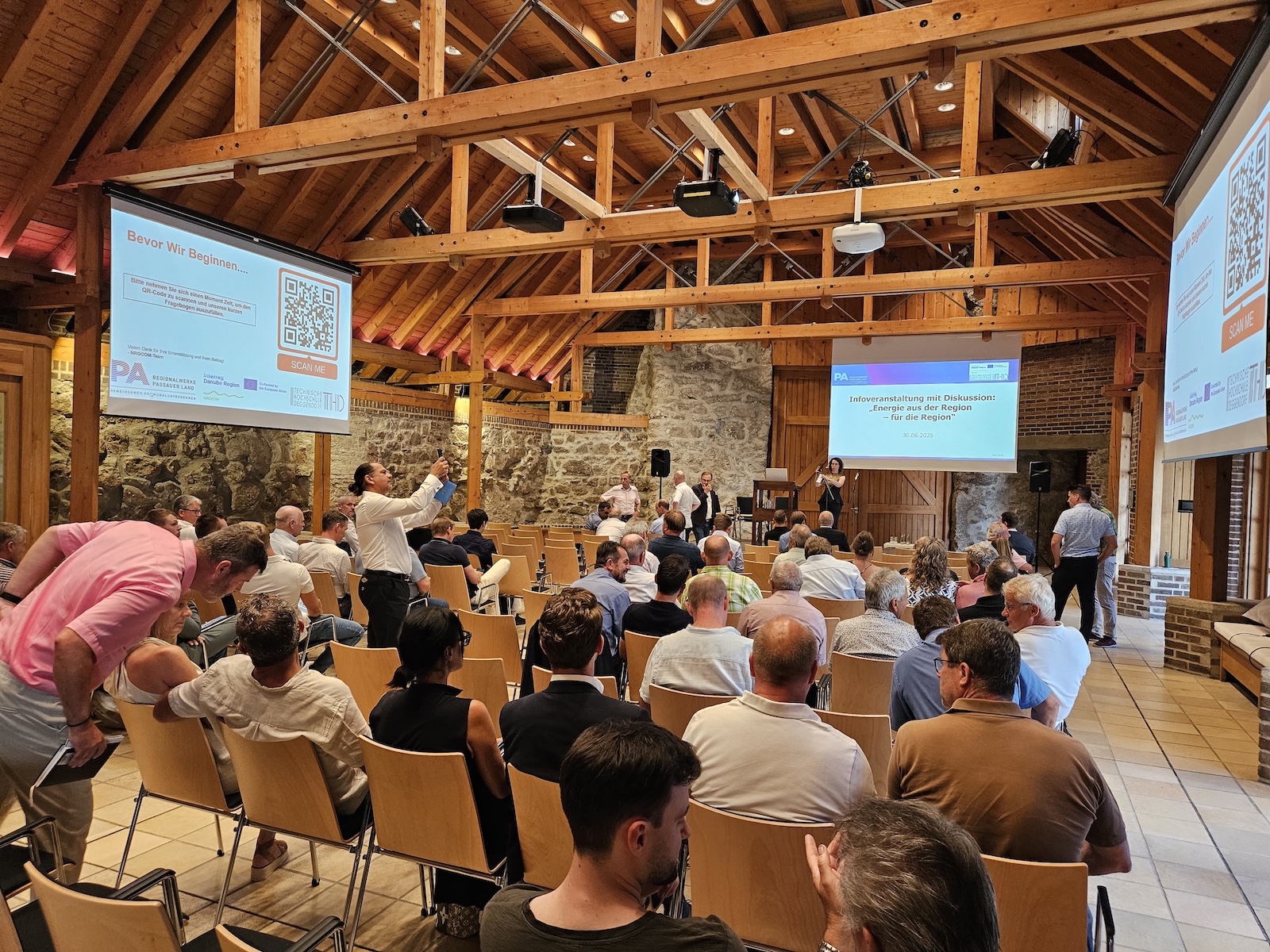
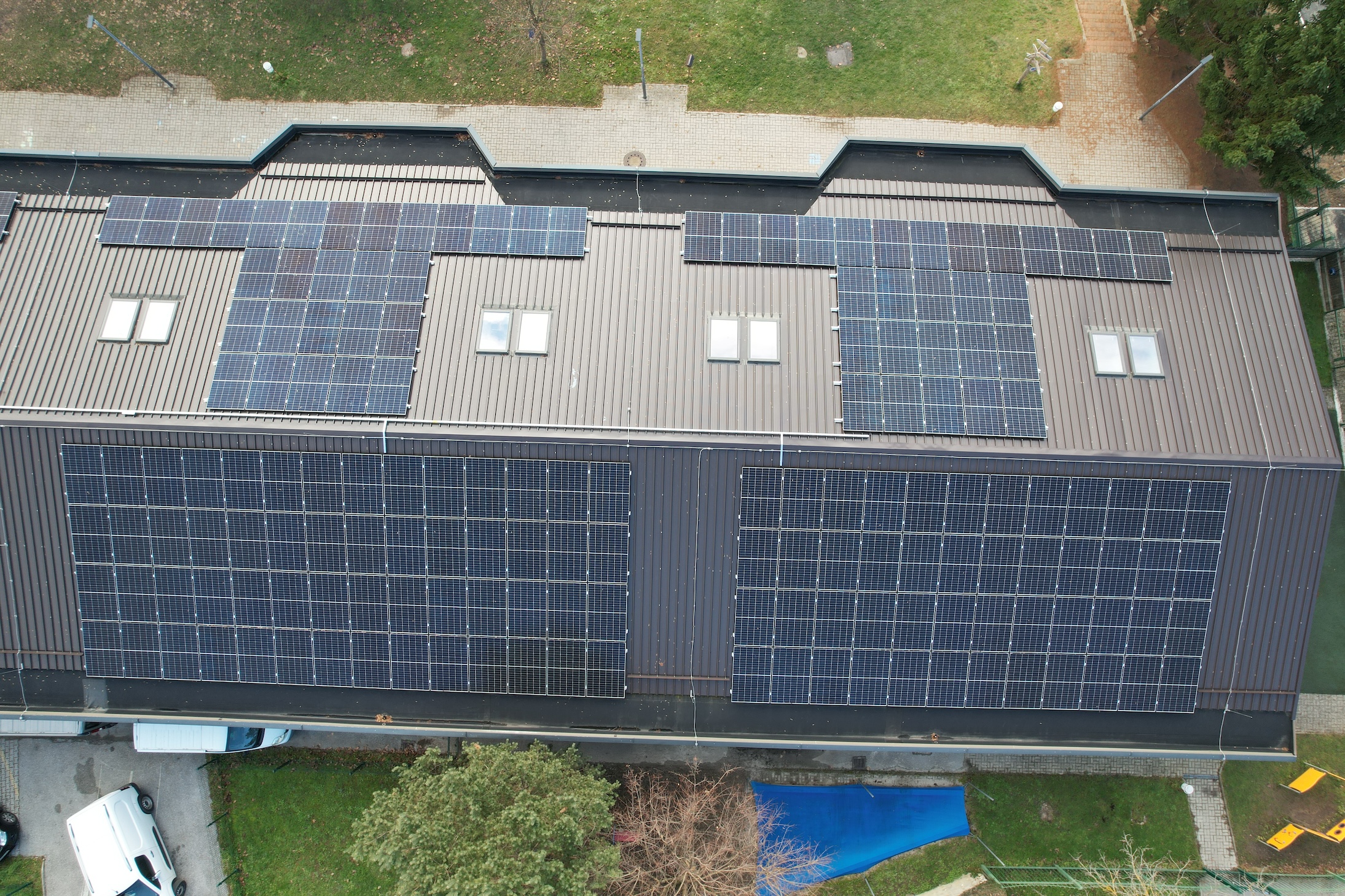
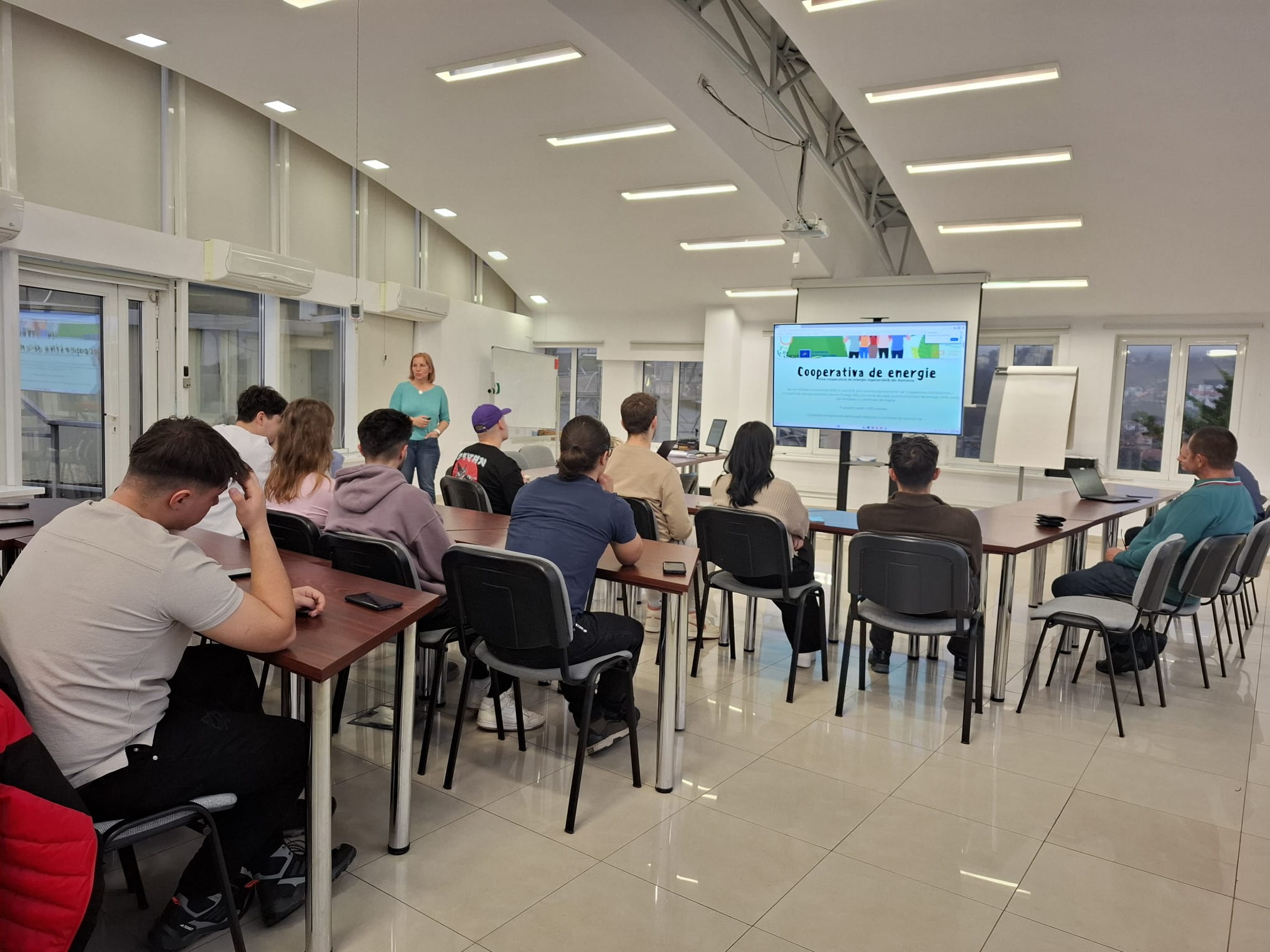
The pilots tell a consistent story. The South Bohemian community ENERKOM Růže, evaluated under NRGCOM, shared more than 73 % of its February production (237.45 of 345.95 kWh) thanks to active management and a diversified energy mix combining PV, biomass, biogas and heat pumps. In Lower Bavaria, the newly founded joint municipal enterprise Regionalwerke Passauer Land gKU — uniting 27 municipalities and the District of Passau — is building a 4.9 MW PV park as its flagship asset. In eastern Slovakia, EC Energetický Holding – Prešov Region (53/60 readiness points, High Readiness) covers around 73 % of local consumption from its own RES and already settles shared electricity through OKTE/EDC, with annual savings estimated up to €180,000. In Slovenia, the municipal self-supply community in Velenje runs around 1.88 MW of PV across public buildings on 40 metering points, packaged as a turnkey model that combines installation with long-term operation and management. In Hungary, the NRGCOM mentoring track has prepared start-ready communities in Kunsziget (planned 50 kW non-profit Ltd.), Nemesvámos (~2,000 kW envisaged) and the industrial Budapest Freeport pilot (1,000 kWp PV + 3,900 kWh battery storage). In Bulgaria, the Gabrovo community of 67 citizens, 4 SMEs and one NGO operates a 100 kW installation producing around 119 MWh per year, with 55 % consumed locally and members guaranteed a 22 % return over a 10-year horizon. The OeStrom community in Austria delivers savings of several hundred euros per year to participating households. In Serbia, REDASP has prepared residential (3.5–4.5 kWp per household) and industrial (30–100 kWp per enterprise) pilot models complete with governance structures, statutes and development roadmaps — ready for activation as soon as secondary legislation is in place — and reached over 50,000 users through a national communication campaign. In Montenegro and Romania, awareness-building — including 13 school workshops in Nikšić and a network of 16 national ambassadors in Romania — is preparing the ground for the first operational communities.
"The barriers to RECs in the Danube Region today are no longer technical or social — they are regulatory. NRGCOM puts five concrete steps on the table to remove them by 2027."
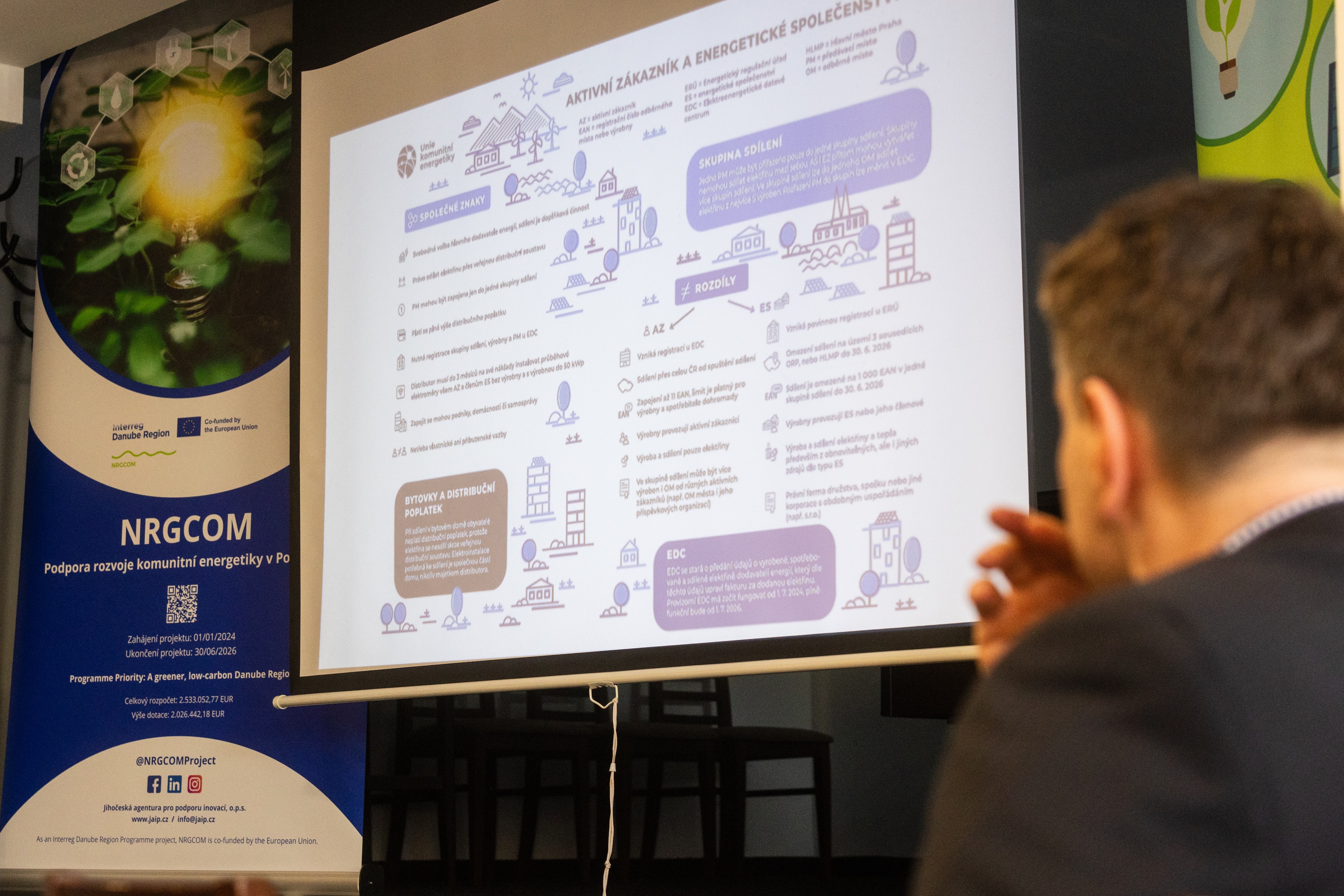
The report nevertheless confirms that enthusiasm alone is not enough. Five recurring barriers limit the full potential of RECs across the Danube Region: inflexible static sharing rules; missing or incomplete secondary legislation; an incomplete smart-meter and settlement-software rollout; grid capacity blocking under first-come-first-served allocation; and disadvantageous tariff structures combined with regulatory complexity that is well out of reach of citizen-led initiatives.
In response, NRGCOM proposes five concrete policy steps for national policymakers and EU institutions: move from static to dynamic energy sharing; adopt or complete the secondary legislation needed to operationalise REC registration, sharing and grid settlement; subsidise smart metering, energy management systems and interoperable settlement software specifically for RECs; reform grid capacity allocation and connection procedures with a reserved minimum quota for community projects; and ship a standardised legal and governance toolkit paired with flexible, locally-aware distribution tariffs — anchoring RECs in national renewable-energy targets.
Learn more in our Joint Dissemination Report on NRGCOM (pdf)
"NRGCOM shows that energy communities across the Danube Region no longer need more pilots to prove the concept — they are working from Passau to Velenje to Prešov. What they need is market infrastructure: smart meters, dynamic sharing and fair grid access. This is our joint message to policymakers for 2026", concludes Zoltán Haász, Director of Regional Agency for Innovation in the South Transdanubian Region (STRIA) and NRGCOM Lead Partner.

15/06/2026
By NRG COM
Share on social media:



News & Events
Read the most recent updates and explore the upcoming events.


Would you like to receive project updates?
You're already part of our community!
Welcome to our newsletter community!
Subscribe to our newsletter