
#RWD at the 11. Danube Salon in Berlin – evaluation of project outcomes included
As our project is slowly coming to an end, the evaluation of the project results and dissemination activities are becoming even more important. This includes taking advantage of dissemination events to present our outcomes to our targeted groups. The 11th Danube Salon on 5 March 2026 was one such occasion, for which the Baden-Württemberg Representation in Berlin provided a high-class setting, sensibly timed to coincide with ITB 2026, the world's largest tourism fair.
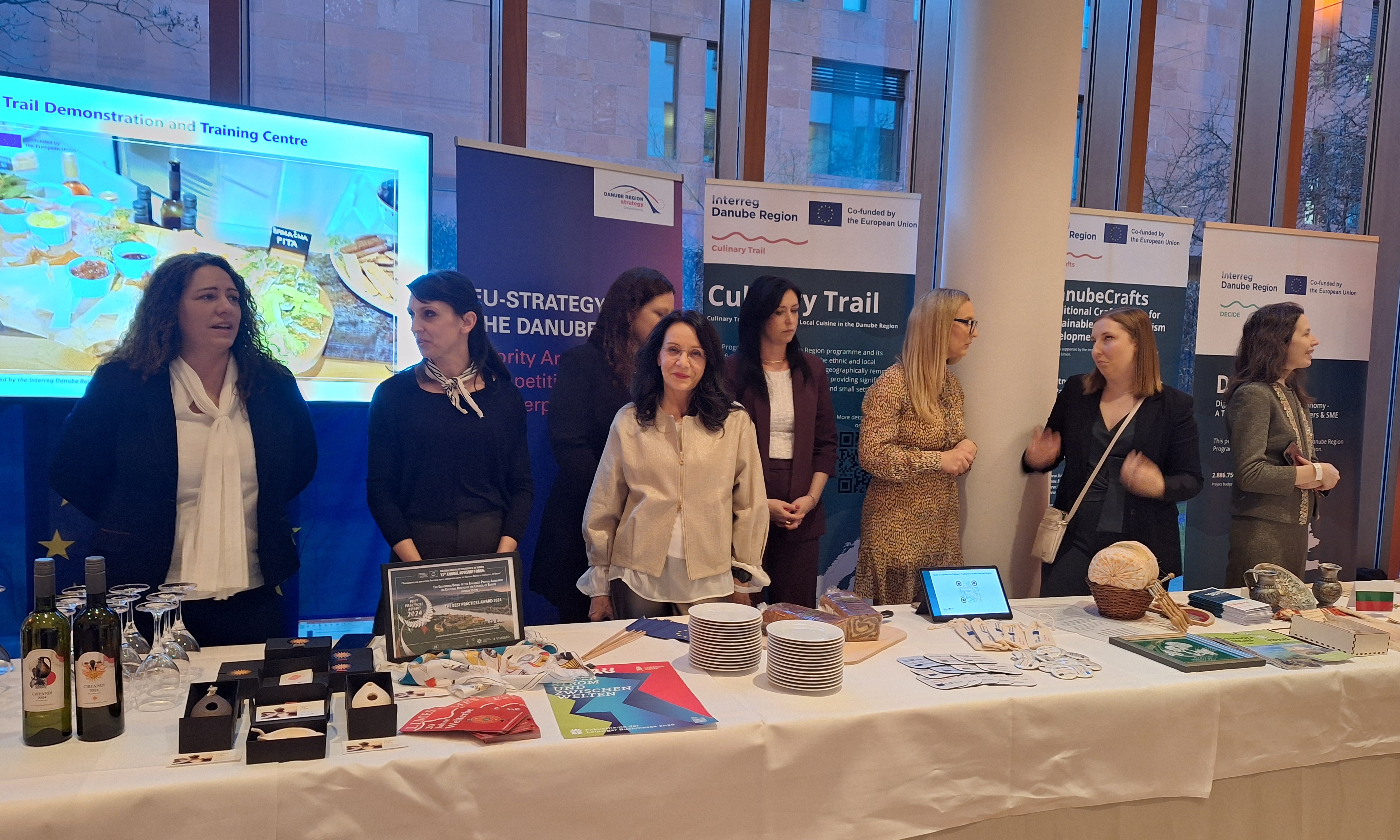
It was an honour for #RWD to be one of four selected projects from the Danube Region Programme with Baden-Württemberg participation to take part in the event, which attracted over 520 guests from the fields of tourism, business and culture. The event was organised by the State Ministry of Baden-Württemberg together with the Bulgarian Embassy in Berlin and the Bulgarian Ministry of Tourism. The Ministry of Economic Affairs, Labour and Tourism Baden-Württemberg / National Contact Point Interreg DRP / PA8 organised the presentation stand. The stand not only provided #RWD partners with an opportunity to network with other projects – which in itself would have been a great added value from the perspective of learning opportunities and future cooperation – but above all the opportunity to test the public acceptance of materials developed in #RWD in practice. Karin Drda-Kühn from Baden-Württemberg based media k GmbH and the only German partner in #RWD happily opened this dissemination opportunity to the #RWD team.
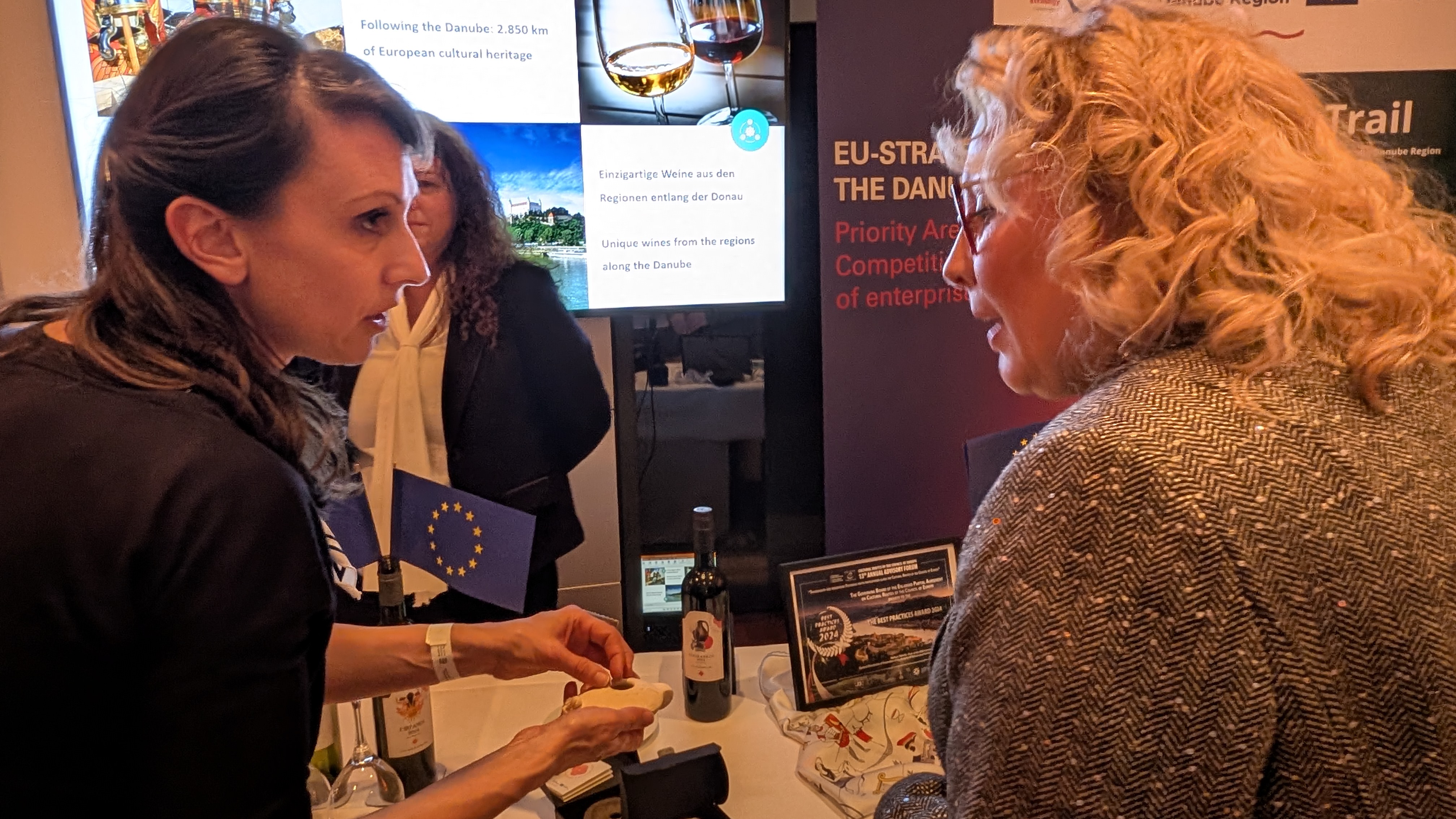
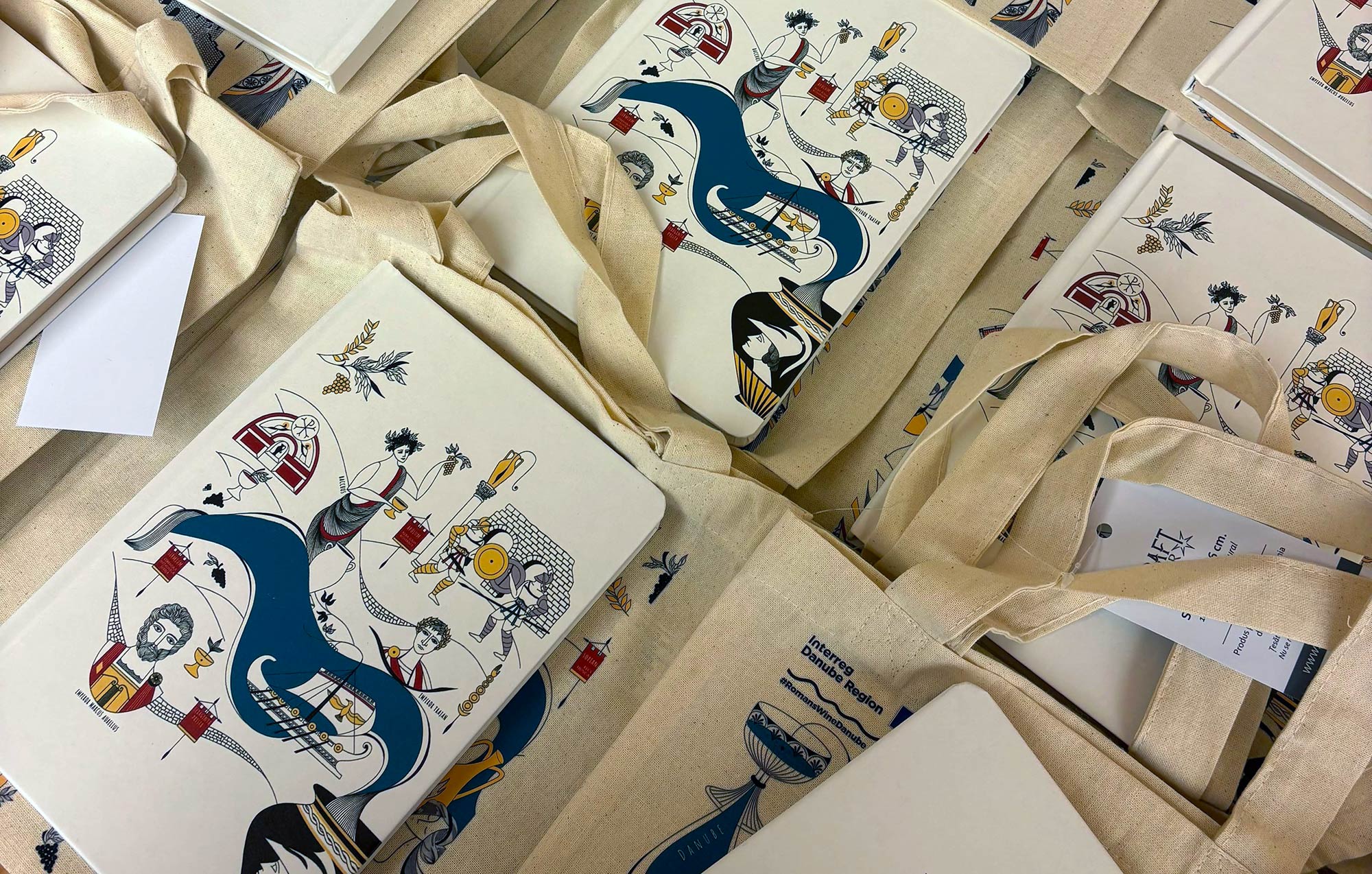
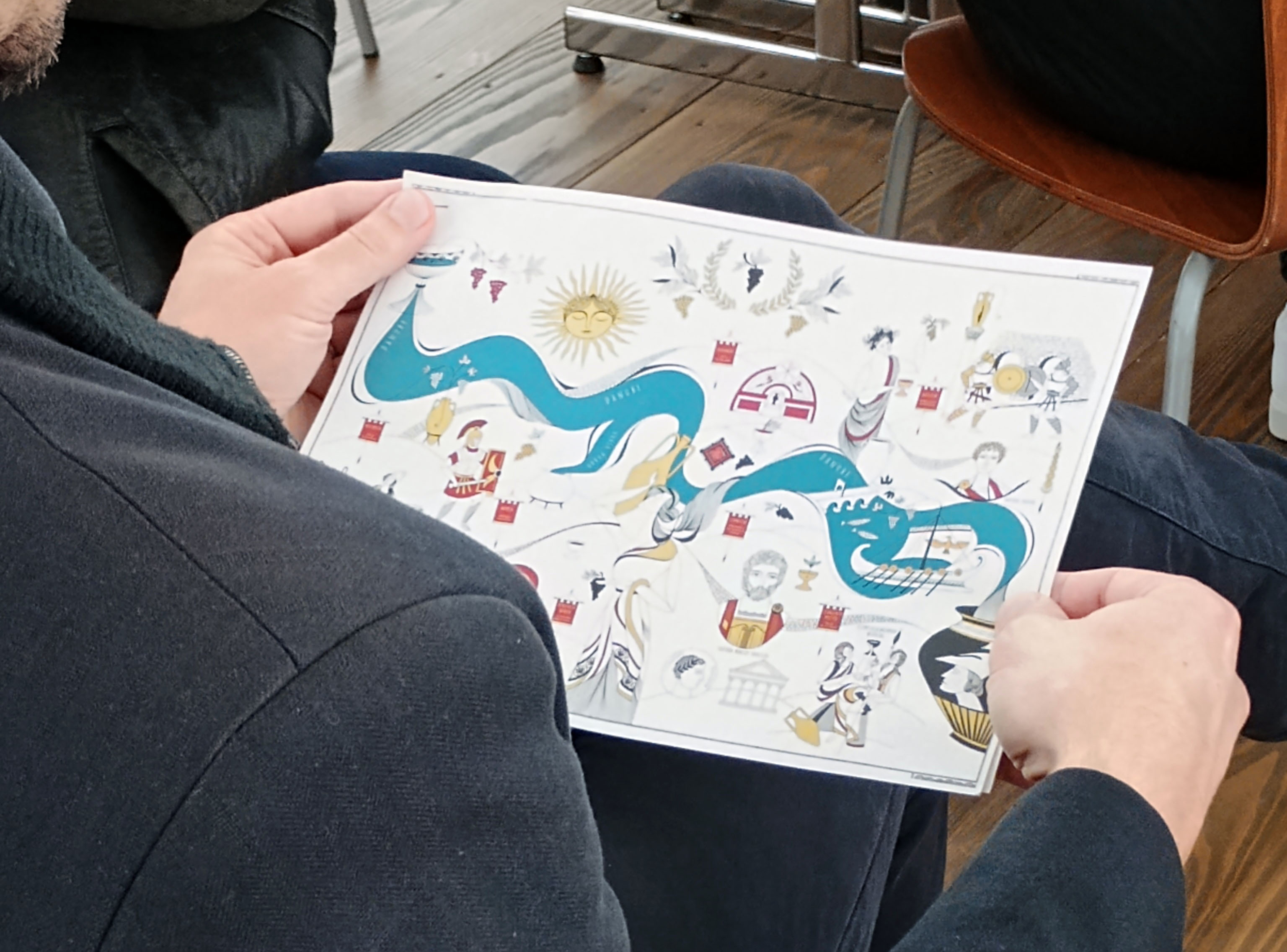
It was indeed a first that the motifs and materials used in transnational souvenirs, developed in #RWD, were presented to the public. Kata Nagy and Eszter Szkotovics from partner Zsolnay Heritage spared no effort in bringing several bottles of wine from the Hungarian Pecs region and ten handmade replicas of Roman clay oil lamps from excavations in Pecs to Berlin. This allowed wine tasting and Roman history to be presented together in a vivid way, much to the delight of visitors and truly in line with the #RWD objectives.
The #RWD oil lamps proved to be eye-catchers and conversation starters for many visitors, attracting particular attention due to their functional design, which has survived for 2000 years. They had an important function in Roman times during the night, comparable to our modern night lights in children's rooms. Fuelled by olive oil, these versatile, everyday items were essential for illuminating private and public buildings and gardens, religious shrines, and tombs, and were sometimes used in theatre and gladiator events. The great interest shown by visitors not only delighted the Hungarian delegation, it was also an encouraging indicator of the marketability of this #RWD souvenir, as numerous visitors expressed their interest to purchase the small items.
Further insights we took home:
We cannot assume that our target groups have knowledge of Roman history along the Danube. This makes exciting narratives all the more important, because history can be vividly brought to life using everyday objects such as Roman oil lamps. Here, the fact that transnational narratives were taken into account horizontally in #RWD has proven its worth.
In addition to the autochthone grape varieties that make the regions of the Danube countries particularly interesting for wine lovers, there are many transnationally cultivated grape varieties whose names are often only familiar to wine experts. One example: whether Lemberger (Germany), Blaufränkisch (Austria) or Kékfrankos (Hungary), this grape variety is a transnational role model for the Danube region. The wine festivals supported by #RWD, where comparative tastings are offered, serve as an excellent platform for communicating grapes with a transnational history.
The partners of the four Danube Programme projects (#RomansWineDanube, DanubeCrafts, Culinary Trail and Decide) present at the Berlin event agreed that communication opportunities that bring several projects together should be given even greater consideration in project designs - not least as a resource-efficient way of implementing dissemination objectives.

10/03/2026
By Nikola Stanisavljević
Share on social media:



News & Events
Read the most recent updates and explore the upcoming events.


Would you like to receive project updates?
You're already part of our community!
Welcome to our newsletter community!
Subscribe to our newsletter