
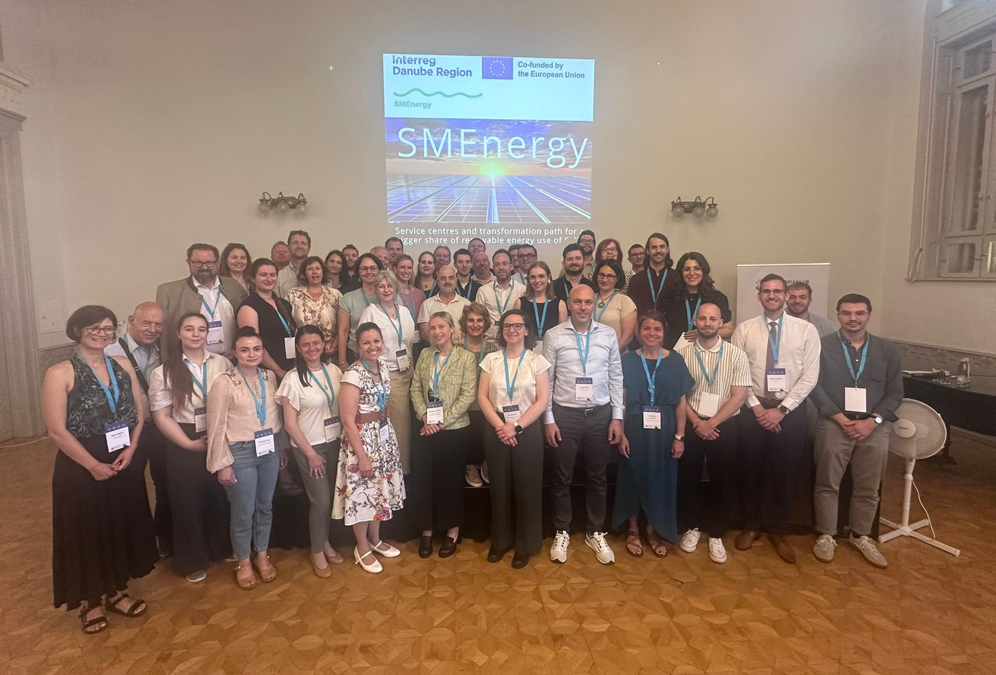

SMEnergy Project Concludes After 30 Months of Strengthening SME Energy Transition Support
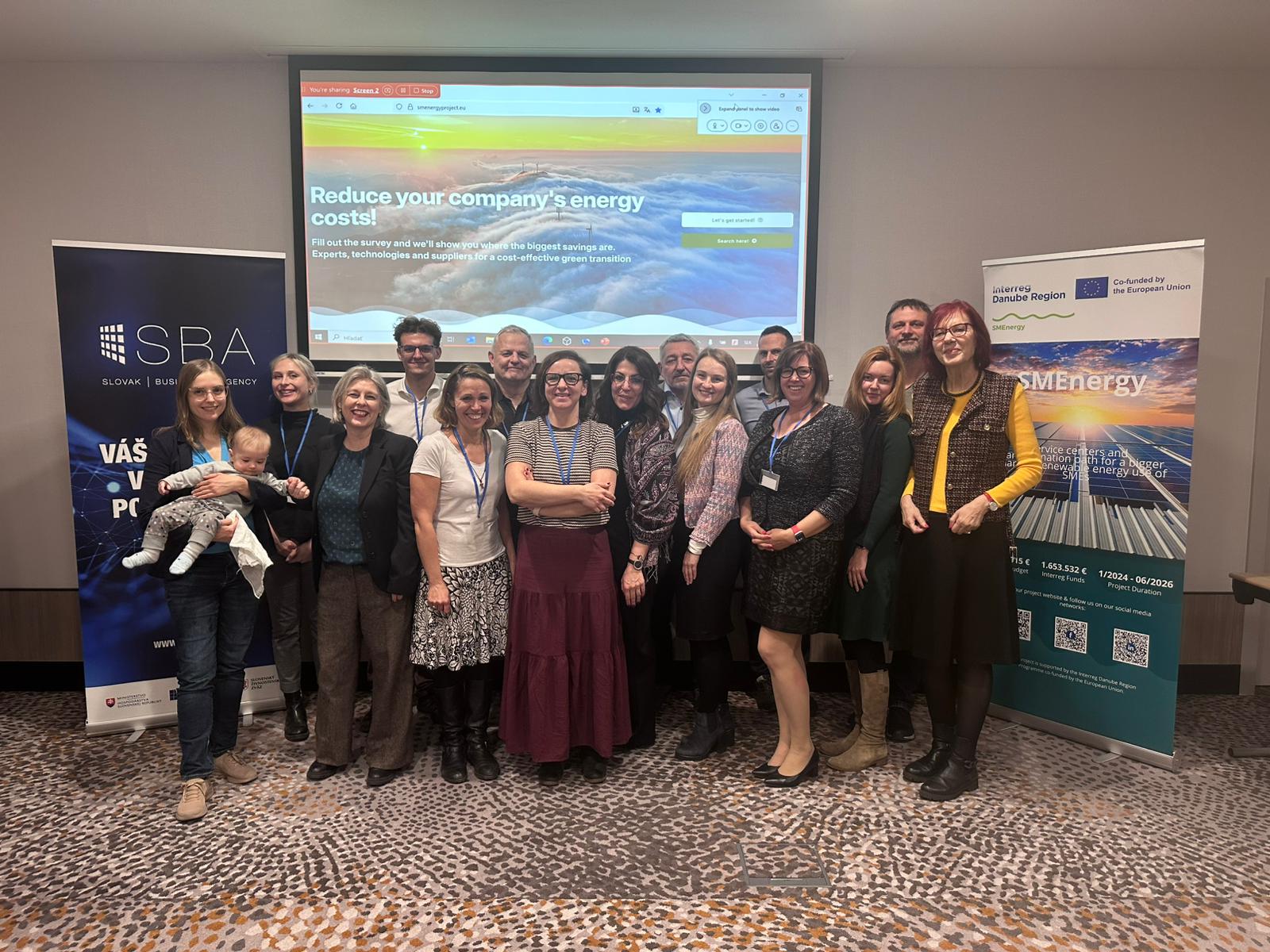
Join the SMEnergy PlatformAfter 30 months of transnational cooperation, the Interreg Danube SMEnergy project (Supporting SMEs’ Energy Transition) has officially come to an end, marking an important milestone in improving how SMEs are supported in their transition towards more sustainable and energy-efficient practices across the Danube Region.
Funded by the Interreg Danube Region Programme, the project brought together partners from multiple countries to design, test, and refine one-stop shop (OSS) models aimed at helping SMEs navigate the complexity of the green transition. Beyond individual tools and pilot activities, SMEnergy placed a strong emphasis on understanding how support systems function in practice and how they can be made more accessible, effective, and user-oriented for SMEs.
A key insight emerging from the project is that SME energy transition is not only a technological or financial challenge, but also a question of system coordination. SMEs may be willing to invest in energy efficiency and renewable solutions, yet often face difficulties translating this willingness into action due to fragmented support structures, complex procedures, and limited access to trusted guidance.
Through transnational analysis and pilot implementation across partner regions, SMEnergy developed a comparative understanding of institutional support systems and SME needs. This allowed partners to identify recurring patterns in how SMEs engage with energy transition support, highlighting the importance of personalised guidance, accessible financing advice, and continuous follow-up as essential elements of effective support.
Pilot activities further demonstrated that digital tools and databases are most effective when embedded within a human-centred service approach. Rather than functioning as standalone solutions, the project confirmed that SMEs benefit most from a coordinated “journey” through the support system, where information, advice, suppliers, and financing are connected through trusted intermediaries.
Building on these findings, the project introduced the GEKOS approach as a continuation framework, designed to support the long-term embedding of SME energy transition services within existing institutions such as energy agencies, chambers, and development organisations. This operational model provides a flexible structure for sustaining support beyond the project lifetime, focusing on continuity, coordination, and institutional ownership.
The SMEnergy approach ultimately highlights that effective SME support systems are not defined by individual tools alone, but by how these tools are connected into a coherent and trusted support logic that reduces complexity and transaction costs for SMEs.
The project has strengthened cooperation between public authorities, SME support organisations, and energy stakeholders across the Danube Region, while also providing practical instruments that can be adapted to different national and regional contexts. These results remain publicly available and can be accessed via our project Library.
While the project has now concluded, its results will continue to be used and further developed through Action Plan implementation, ongoing cooperation, and the uptake of SMEnergy methodologies and tools across participating regions.
The SMEnergy project channels will no longer be actively updated, but the consortium invites all stakeholders to stay connected and follow developments via the SMEnergy platform: https://smenergyproject.eu/
SMEnergy leaves behind a practical framework for improving SME support systems across Europe — one that focuses not only on what is built, but on how SMEs actually use and experience support on their way through the energy transition.

15/06/2026
By
Share on social media:


Green

News & Events
Read the most recent updates and explore the upcoming events.




Would you like to receive project updates?
You're already part of our community!
Welcome to our newsletter community!
Subscribe to our newsletter