

Learning Across Interreg: What SteelCityZen Can Take from TASK4ISI
At its 3rd Transnational Partner Workshop on 2 September 2026, SteelCityZen invited the Interreg Central Europe project TASK4ISI to share its experience with the partnership. The exchange was initiated as part of SteelCityZen’s effort to learn from European projects that are already testing approaches relevant to labour-market diversification, skills development and stronger local cooperation. TASK4ISI was presented by Dr Magdalena Zajączkowska from Krakow University of Economics.
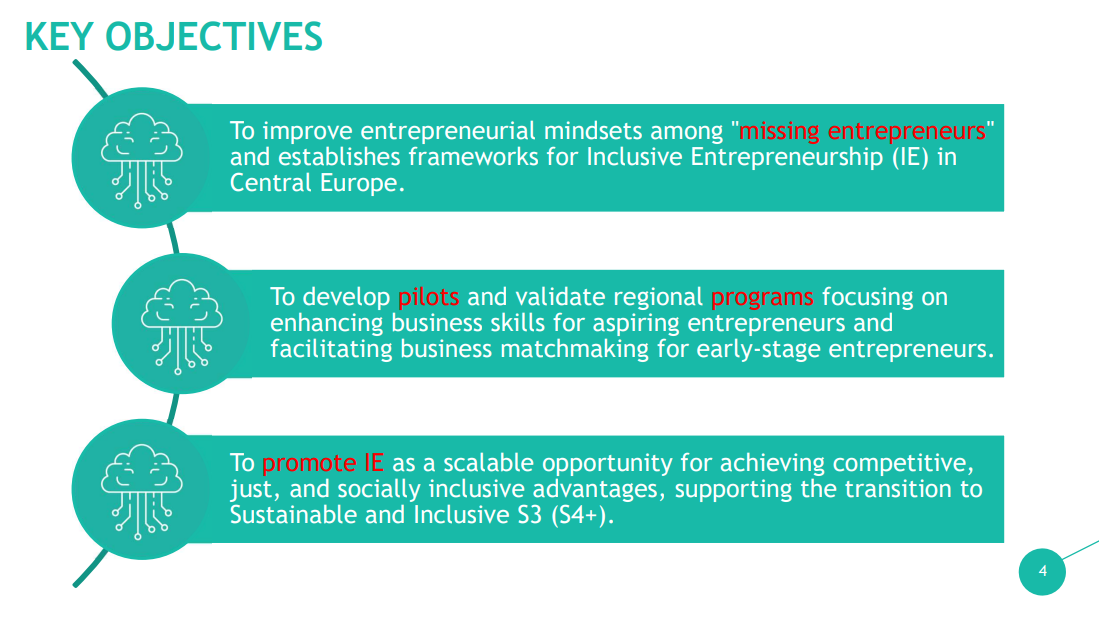
TASK4ISI approaches economic transition from a different angle. While SteelCityZen focuses on industrial and mono-industrial cities that need to diversify their labour markets and reduce dependence on dominant industries, TASK4ISI focuses on inclusive entrepreneurship and on improving access to skills, mentoring, matchmaking and support for people who are underrepresented in entrepreneurship. Its work is built around regional Inclusive Entrepreneurship and Social Innovation Hubs, or ISIHUBs, and small-scale pilots combining training with coaching, mentoring, networking and matchmaking.
Despite these different starting points, the two projects share a central concern: how to make local support systems work better for people, firms and communities undergoing economic change.
One particularly valuable lesson from TASK4ISI is that the problem is often not the absence of support, but the difficulty of navigating it. Training providers, employment services, chambers, universities, business support organisations and public authorities may all offer useful services, but these services can be fragmented and difficult to access. TASK4ISI therefore places strong emphasis on ISIHUBs as intermediaries that help people find the right support and connect existing actors rather than duplicating what is already available.
This is highly relevant for SteelCityZen. Strategic partnerships in industrial cities do not necessarily need to create new structures from scratch. Their value may lie in making the existing ecosystem more accessible: clarifying who provides what, creating referral pathways between organisations and ensuring that workers, SMEs and potential entrepreneurs can move more easily from one form of support to another.
TASK4ISI also shows that partnerships only become effective when the organisations involved have clear roles and trusted relationships with the people they are trying to reach. Training providers bring expertise in skills development, employers and employer organisations provide insight into changing labour demand, employment services connect with jobseekers, SME organisations reach smaller firms, and municipalities can bring these actors together. The lesson for SteelCityZen is that cooperation should go beyond formal stakeholder involvement and become a practical system of outreach, referral and joint problem-solving.
A third important lesson is that diversification requires more than retraining. TASK4ISI combines skills development with mentoring, networking, matchmaking and individualised support because people need more than knowledge alone to create new economic opportunities.
For SteelCityZen, this broader perspective is especially relevant in cities that have long depended on one large industrial employer. Reducing that dependence is not only about preparing workers for another job. It is also about creating conditions in which SMEs can grow, new businesses can emerge, workers can transfer their existing competencies into new fields, and people can build professional networks beyond the dominant factory.
Seen from this perspective, the common ground between TASK4ISI and SteelCityZen is clear. Both projects are ultimately concerned with helping local economies become more resilient by strengthening skills, improving access to opportunities and connecting the institutions that shape the local labour market.
The exchange therefore offered SteelCityZen more than an introduction to another Interreg project. It provided a useful reminder that successful labour-market diversification depends not only on individual measures, but on how well the local ecosystem works together. For SteelCityZen partners, this means thinking about strategic partnerships not simply as cooperation structures, but as practical support systems that help people and firms find new pathways forward.
-From the ÖSB team-
Find more:
task4isi project mapping

16/09/2026
By András Merza
Share on social media:



News & Events
Read the most recent updates and explore the upcoming events.





Would you like to receive project updates?
You're already part of our community!
Welcome to our newsletter community!
Subscribe to our newsletter