

Smart Energy Storage: How Power Grid Simulation Supports Sustainable Decision-Making
Energy plays a fundamental role in our daily lives – without it, modern society would become virtually inoperable. While we tend to take continuous electricity supply for granted, the question of how it can be ensured sustainably in the future is becoming increasingly pressing.? The transition to renewable energy sources is inevitable; however, due to their weather-dependent nature, energy storage becomes a key factor. Although several mainstream technologies already exist – such as lithium-ion and lithium iron phosphate batteries – they also have significant environmental impacts. The StoreMore project aims to address these challenges by enabling the comparison of different energy storage solutions and identifying their advantages and limitations. We discussed these topics with our interviewee, Dr. Attila Fodor, Head of the Department of Electrical Engineering and Information Systems at the University of Pannonia.

Within the StoreMore project, in addition to examining various energy storage technologies, a simulation tool and an optimization tool were also developed. The Power Grid Simulation tool was created by the Faculty of Information Technology at the University of Pannonia. Could you briefly explain what this simulator can be used for?
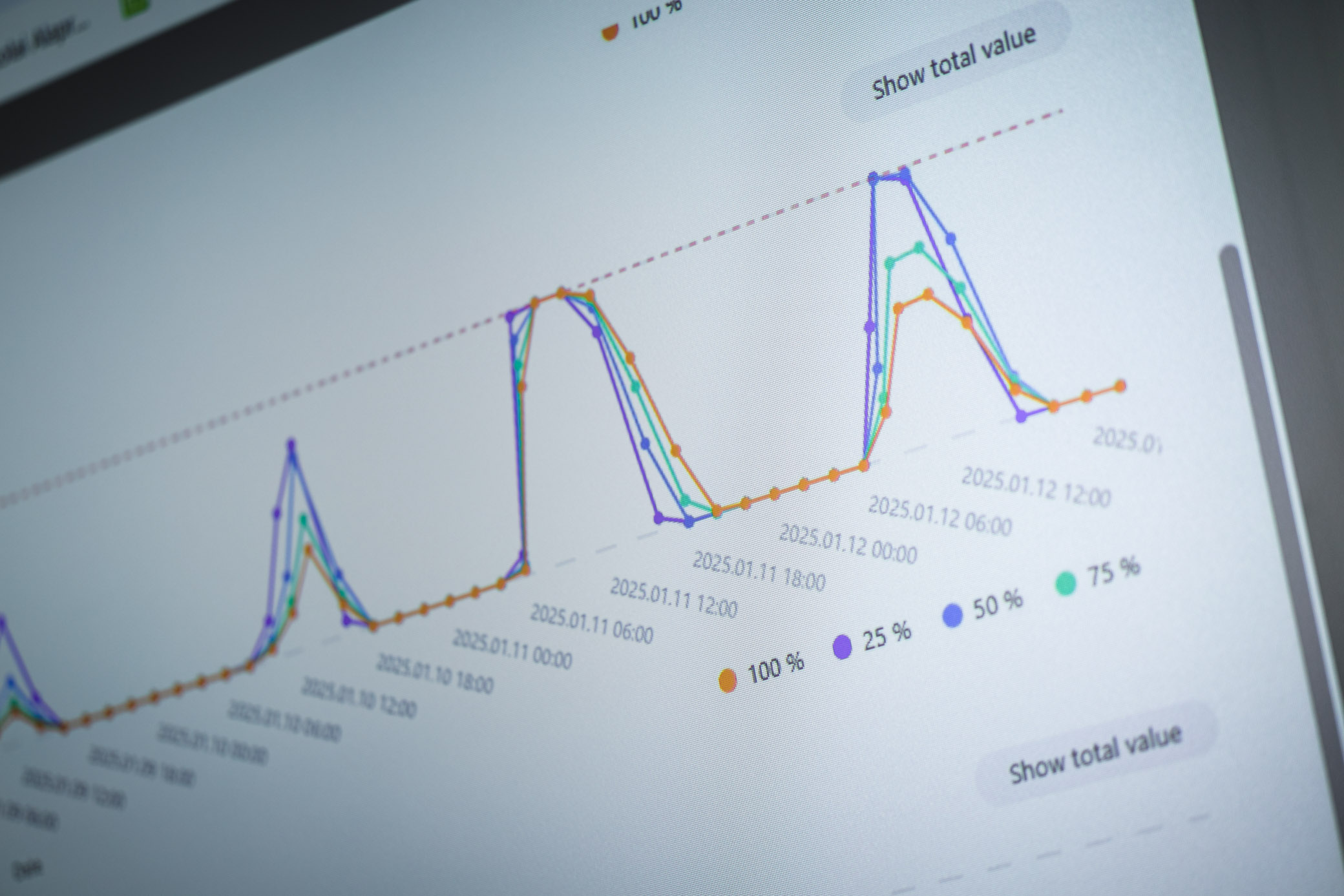
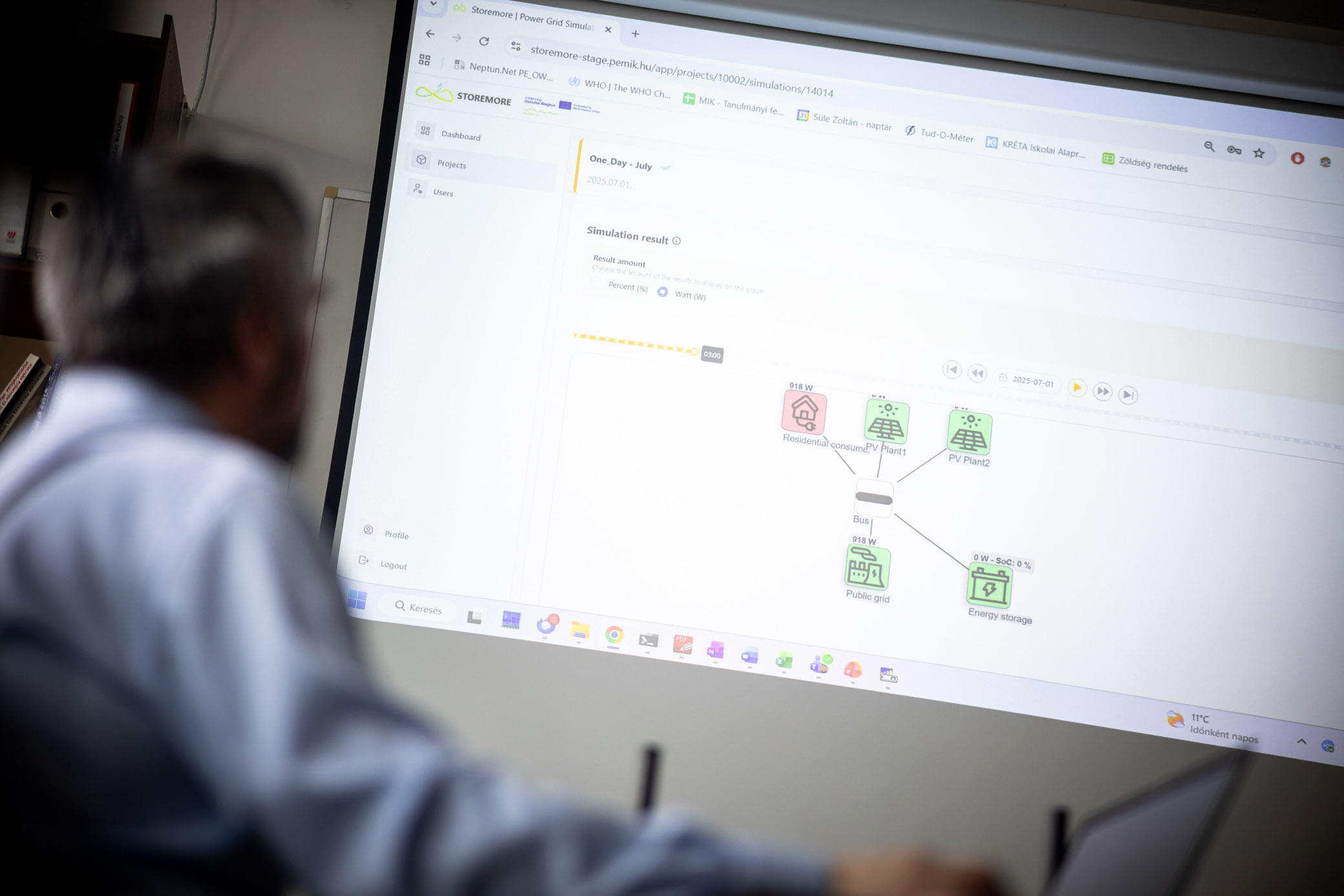
Our task in the StoreMore project was to develop a digital platform capable of reliably analyzing different energy grids and energy storage solutions, especially in the context of integrating renewable energy sources. Using the simulator, it is possible to examine how power and current conditions evolve over time – at 15-minute intervals – under different weather conditions, for arbitrarily configured networks that may include residential or industrial consumers, photovoltaic systems, wind turbines, and energy storage units.
Who is this simulator intended for? Who can use it and how?
For both tools – the simulator and the optimizer – it was an important objective that they be freely accessible online for anyone. Accordingly, the Power Grid Simulation tool is available at https://storemore-stage.pemik.hu/login. After registration, users gain access to the platform, where they can create projects, save different network configurations, define consumers and producers of various sizes, include energy storage systems, and run different scenarios. The simulations can be organized and managed within projects.
Could you give a practical example of how the simulator can be used and why it is useful?
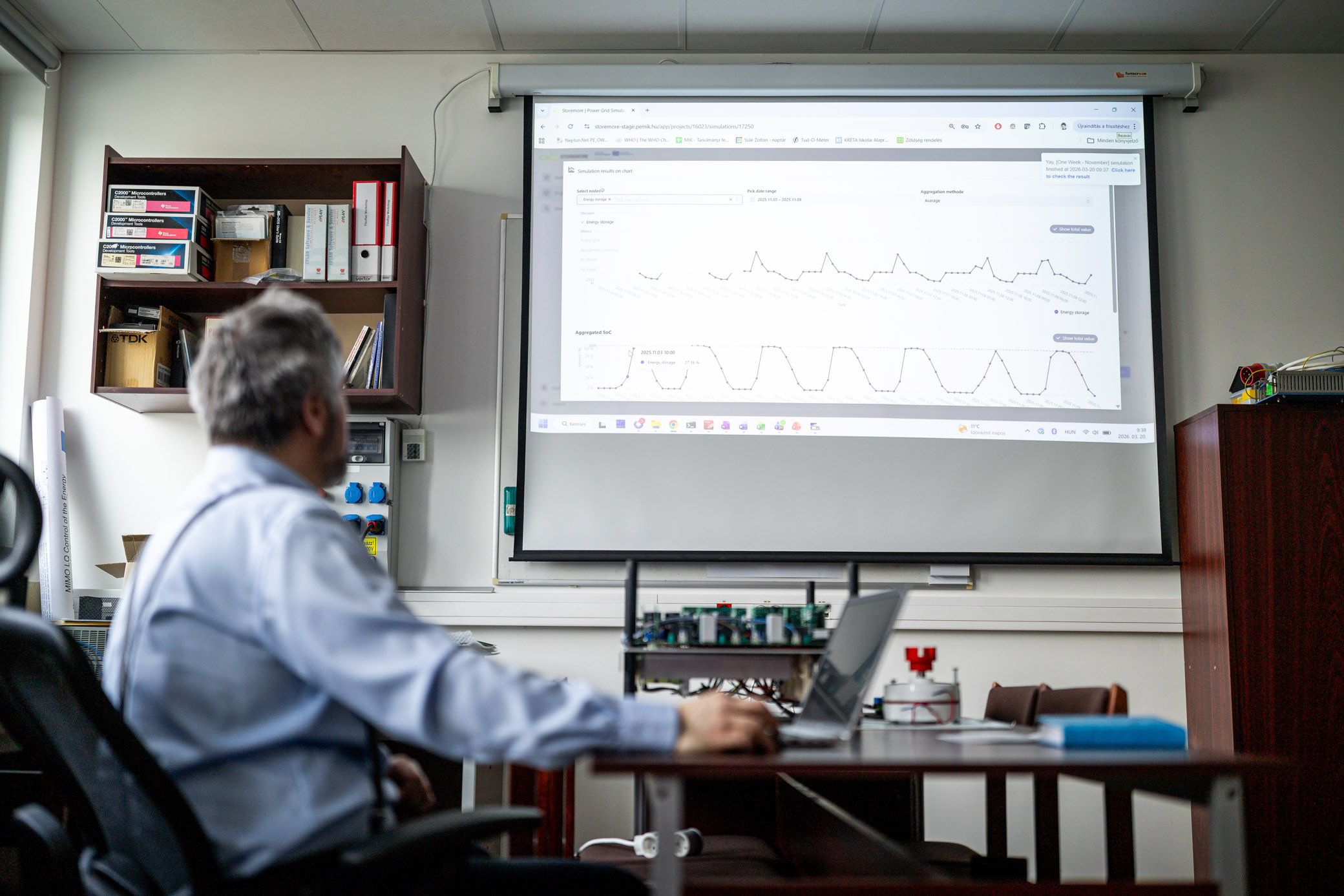
Certainly. In practice, energy storage vendors typically make recommendations based on their own financial interests – that is, what is most profitable for them. However, this does not necessarily align with the consumer’s best interest, since for the consumer, network usage fees and their actual energy consumption profile are also key factors.
It often happens that customers are encouraged to purchase energy storage systems with higher capacity than necessary, which then remain underutilized for most of the year. Using the simulator, consumption and storage behavior can be analyzed in 15-minute intervals, enabling users to make informed decisions about whether a specific storage capacity is truly justified.
The simulator was tested at the end of 2025. What were the results of this process?
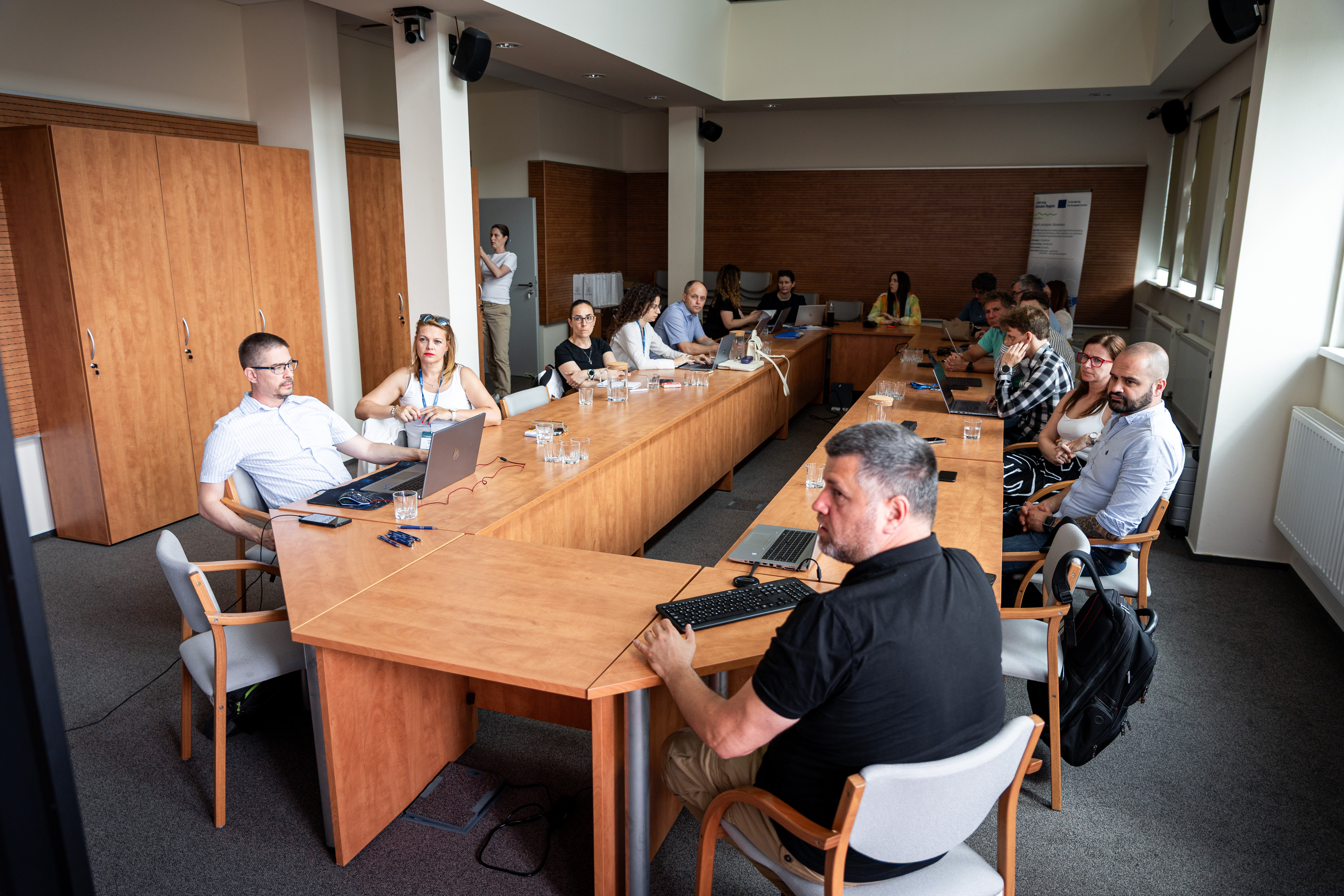
Indeed, at the end of 2025, the joint testing of the modelling and optimization tools was successfully completed.. A total of 20 completed end-user survey were received from five different countries, providing a diverse and representative picture of how the tools perform in real planning and evaluation contexts. This feedback, combined with practical testing activities, provides a solid foundation for further development and long-term application.
The survey results confirmed that the tools are not only suitable for engineers working in the energy sector, but can also be effectively used by stakeholders with economic or non-technical backgrounds. The wide range of user profiles provided valuable insights into the clarity of the interfaces and the intuitiveness of the workflows. Many respondents evaluated the tools positively while also offering constructive suggestions and ideas for improvement. These recommendations are already being incorporated into the next development phases, with the aim of further enhancing robustness, usability, and applicability for different user groups.
What tools and methods do you use to support user onboarding and learning?
To make it easier for users to get started and to support self-directed learning, we have prepared a comprehensive user manual of more than 120 pages. This detailed documentation includes step-by-step explanations, illustrative screenshots, and function descriptions, helping both novice and advanced users navigate the operation of the tool with confidence.
In addition to the written materials, two instructional videos were created: a 23-minute video demonstrating the use of the simulation and optimization tools from the user’s perspective, and a 4-minute video presenting the most important administrative functions. These audiovisual resources have proven to be highly effective in transferring practical knowledge.
User guides and videos are available at the following link:
https://ecloud.virt.uni-pannon.hu/index.php/s/aKSKdoYjpWFDyyo
Although the optimization tool was developed by colleagues at the University of Zagreb, could you briefly explain what it is used for?
With the help of the optimizer, it is possible to determine what size of energy storage system is worth installing, and the tool also evaluates its payback. Our colleagues in Zagreb will provide more detailed insights on this topic.
In summary, we can conclude that the tools developed within the StoreMore project clearly demonstrate that the design of future energy systems can no longer be imagined without data-driven digital solutions. With the help of simulation and optimization, not only more accurate but also more conscious and sustainable decisions can be made – whether by engineers, decision-makers, or even non-expert users. Such innovative developments play a key role in ensuring that renewable energy-based systems operate efficiently and sustainably in the long term.


05/05/2026
By Eszter Németh
Share on social media:


Green

News & Events
Read the most recent updates and explore the upcoming events.



Would you like to receive project updates?
You're already part of our community!
Welcome to our newsletter community!
Subscribe to our newsletter