
From Circular Ideas to Business Action
Circular economy is no longer only a concept for the future. For many women entrepreneurs across the Danube Region, it is already becoming part of everyday business decisions: how to design products, choose materials, reduce waste, use digital tools, reach customers and build stronger partnerships.
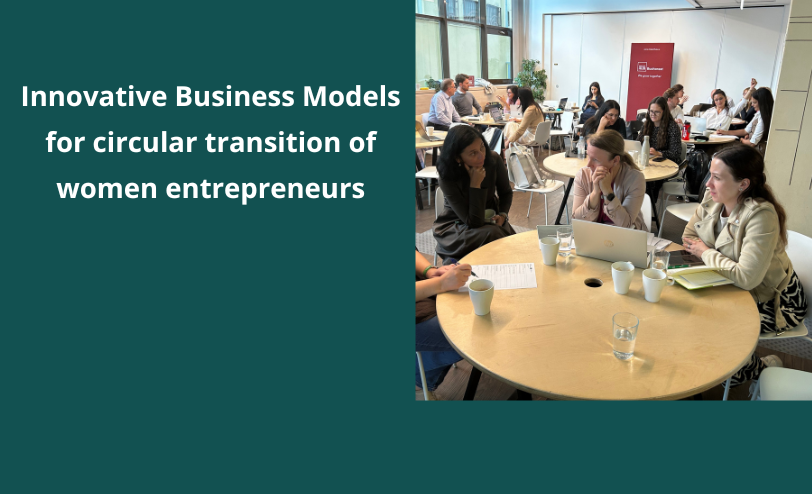
To support this transition, the WE.Circular partnership has developed the publication “Innovative Business Models for Circular Transition of Women Entrepreneurs”, now available in the Library section of the project website.
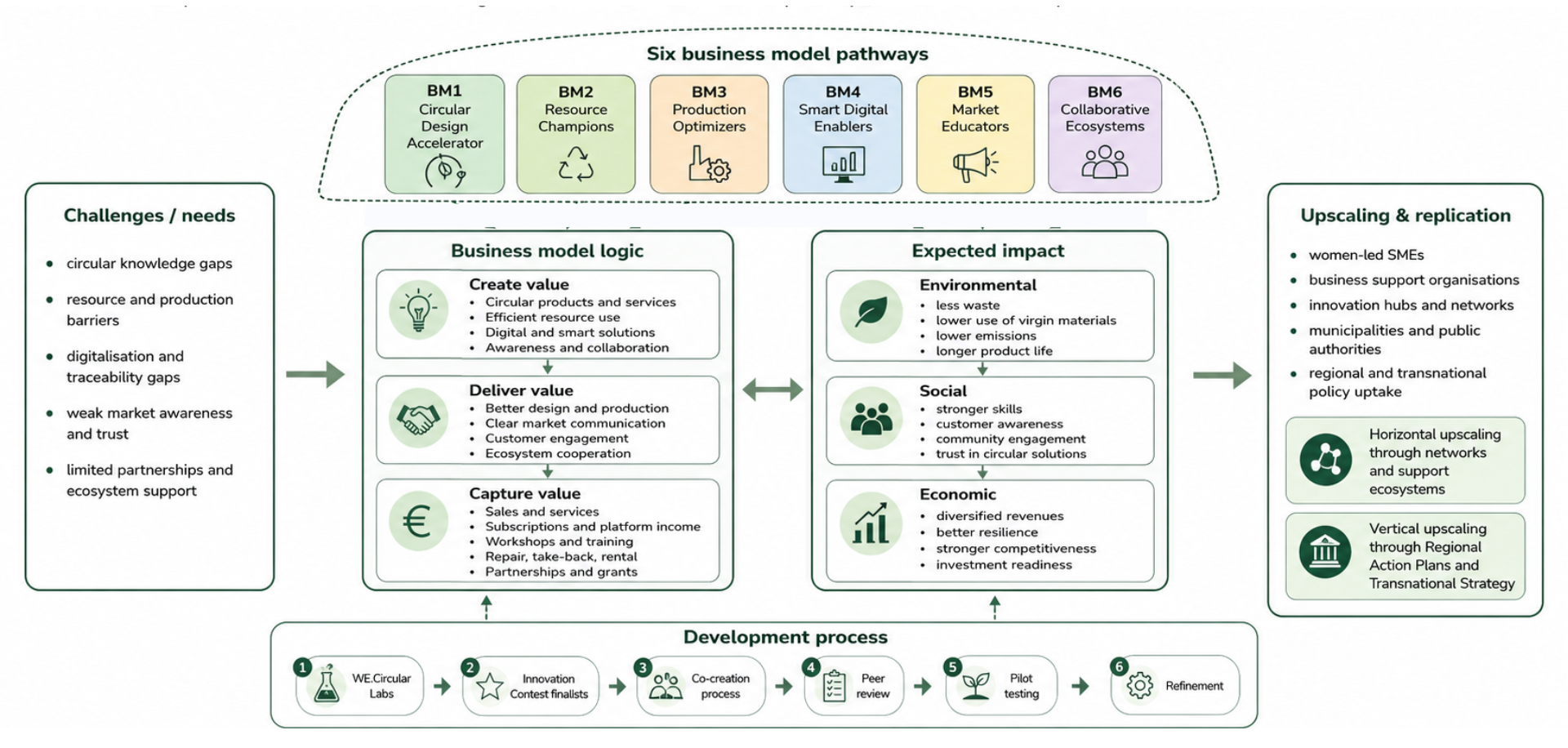
The publication brings together six practical business model pathways that can help women-led SMEs and the organisations supporting them turn circular ambitions into concrete actions. The models are based on real business needs identified through the WE.Circular Labs, the Innovation Contest, co-creation activities, peer review and pilot testing. This means they are not abstract concepts, but practical models inspired by the challenges and opportunities of women entrepreneurs in different sectors and countries.
The six models offer different starting points for circular transformation. Some businesses may need to redesign their products to make them more durable, repairable or reusable. Others may need to improve the use of materials, introduce returnable packaging, apply digital tools, communicate their sustainability value better, or find the right partners to scale circular solutions. The publication helps organisations identify these needs and choose the most suitable pathway.
The models presented are:
Circular Design Accelerator – for companies that want to redesign products and services from the beginning with circularity in mind.
Resource Champions – for businesses seeking better material efficiency and stronger use of recycled, secondary, bio-based or waste-derived resources.
Production Optimizers – for SMEs that need more circular production, packaging, refill, return or logistics systems.
Smart Digital Enablers – for companies ready to use data, traceability, digital tools and smart technologies to make circular operations more transparent and scalable.
Market Educators – for businesses that need to build customer awareness, trust and demand for circular products and services.
Collaborative Ecosystems – for organisations and companies that know circular transition cannot happen alone and want to build stronger partnerships and shared value chains.
The main strength of the publication is its practical use. Business support organisations, innovation hubs, chambers of commerce, municipalities, universities, mentors, trainers and policymakers can use the models as a basis for workshops, advisory services, mentoring, acceleration programmes, innovation contests, circular economy training or regional support measures.
For women entrepreneurs, the models can help answer very practical questions: Where should I start? Which circular action fits my business? How can I create value, deliver it to customers and capture benefits for my company? How can I make my circular idea more visible, credible and sustainable?
The publication also shows that circular transition does not have to happen all at once. A company can start with one realistic step: redesigning one product, improving one material flow, testing a return system, introducing a simple digital tool, launching an awareness campaign or building one new partnership. Over time, these steps can grow into a stronger and more resilient circular business model.
By making these models public and transferable, WE.Circular offers a useful resource for all organisations that want to support women-led businesses in becoming more circular, digital and competitive.
Explore the six models and discover how they can be applied, adapted and transferred to support women entrepreneurs across the Danube Region.

07/06/2026
By Mariya Zlateva
Share on social media:



News & Events
Read the most recent updates and explore the upcoming events.



Would you like to receive project updates?
You're already part of our community!
Welcome to our newsletter community!
Subscribe to our newsletter