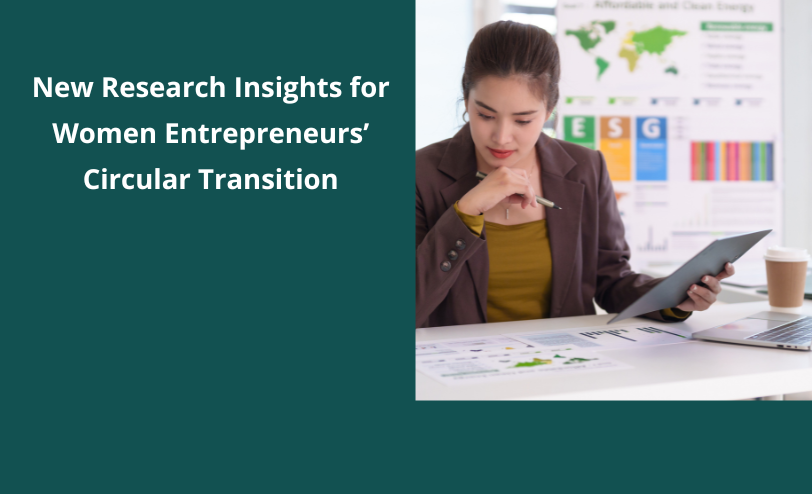

New studies support women-led SMEs’ digital and circular transition
WE.Circular contributes not only through practical tools, pilot activities and support for women-led companies, but also through research that helps better understand the challenges and opportunities of the green and digital transition.
The project marks its conclusion with an additional achievement - two scientific articles connected to the project’s themes have recently been published in international open-access journal - Multidisciplinary Digital Publishing Institute (MDPI). Together, they explore how digital technologies can support circular business practices, sustainability reporting and more inclusive entrepreneurship.
Digitalisation, ESG Reporting and Circular Economy: Challenges for Women-Led SMEs
The first article, “Digitalization, ESG Reporting, and Circular Economy: Accounting Challenges for Women-Led SMEs”, looks at how digital tools can help small and medium-sized enterprises manage and communicate their sustainability performance.
As European businesses face increasing expectations to report environmental, social and governance information, often referred to as ESG reporting, many smaller companies need practical ways to collect data, monitor their use of resources and demonstrate the impact of their sustainability efforts.
The article explains that digital solutions can make this process easier and more manageable. Tools for data collection, resource monitoring, traceability and reporting can help companies better understand their environmental and social performance, reduce administrative burden and make more informed business decisions.
Special attention is given to women-led SMEs in the Danube Region. The publication highlights that women entrepreneurs may face particular barriers related to access to digital tools, skills, finance and tailored business support. It therefore underlines the importance of practical training, accessible digital solutions and support measures that help sustainability become a real business opportunity rather than an additional obligation.
The article is available here.
Digital Technologies as Enablers of the Circular Economy
The second article, “Digital Enablers of the Circular Economy: A Bibliometric Analysis and Future Research Agenda”, examines how research between 2015 and 2025 has explored the role of digital technologies in supporting the circular economy.
In simple terms, the study looks at how technologies such as artificial intelligence, the Internet of Things, blockchain and digital platforms can help businesses use materials more efficiently, reduce waste, track products and resources, and develop new circular business models.
The article maps the growing body of research in this field and identifies the technologies, sectors and regions most frequently addressed by researchers. It also explains the key ideas behind this work, including systems thinking, resource efficiency and the use of digital tools to connect actors across value chains.
A particularly important finding is the limited visibility of women’s entrepreneurship in research on digitalisation and circular economy. Although women entrepreneurs often play an active role in sustainable and socially oriented business, gender perspectives remain largely absent from the scientific literature. The article therefore calls for more inclusive research, policies and support programmes that reflect the needs and potential of women-led businesses.
By translating academic findings into practical implications, the publication provides useful insights for business support organisations, public authorities and policymakers working to make the digital and circular transition more fair, effective and inclusive.
The article is available here.

30/06/2026
By Mariya Zlateva
Share on social media:



News & Events
Read the most recent updates and explore the upcoming events.





Would you like to receive project updates?
You're already part of our community!
Welcome to our newsletter community!
Subscribe to our newsletter