

The Danube Indeet Model is here - start your jorney towards green transition today
Plan smarter energy investments — and know what's actually worth building
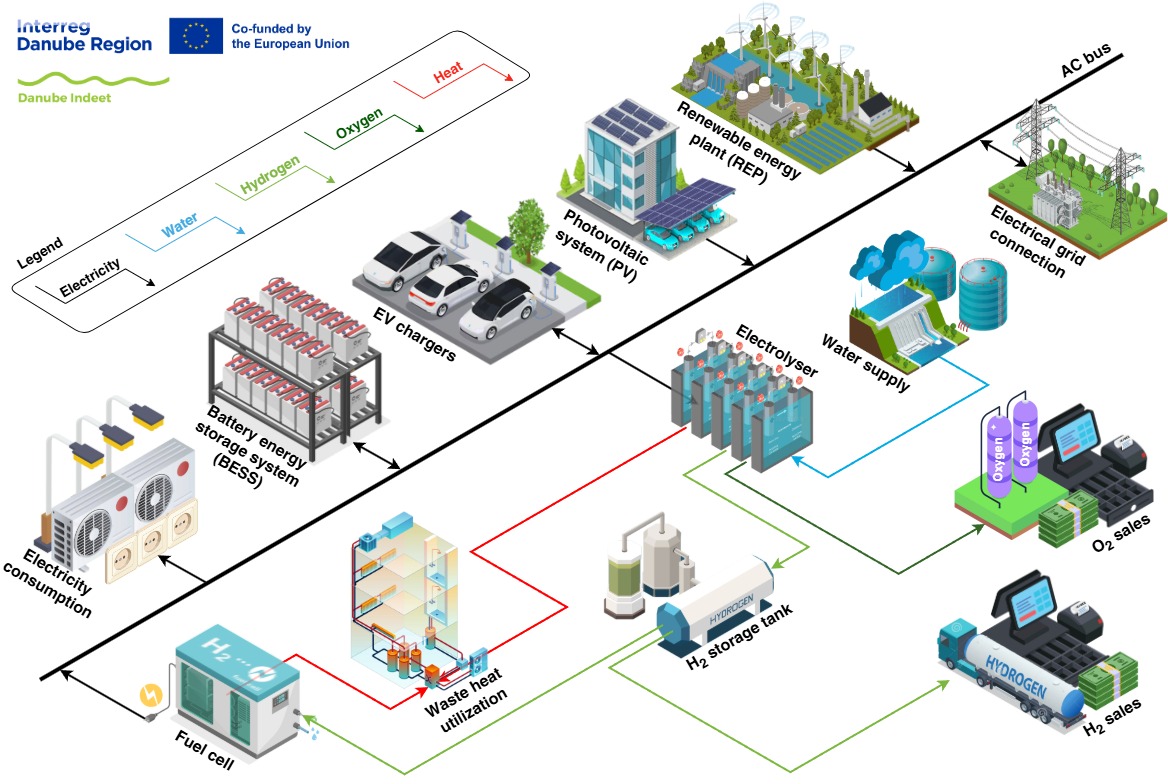
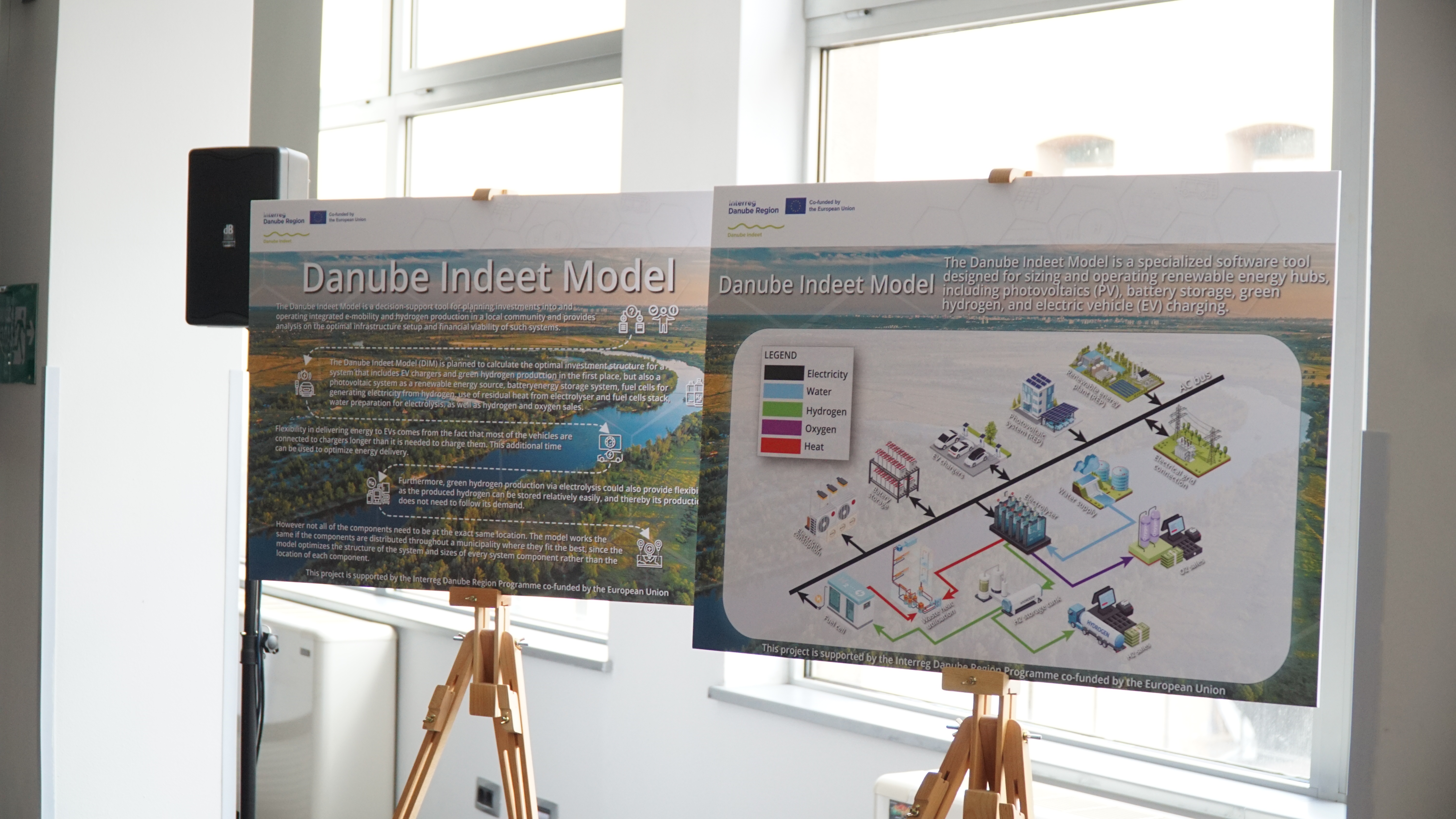
Every municipality, utility, and developer faces the same hard question when planning a renewable energy project: what exactly should we build, how big should it be, and will it pay for itself? Getting it wrong is expensive. Oversize a solar plant or battery and capital sits idle; undersize it and you leave value on the table. The Danube Indeet Model (DIM) is a free desktop tool that answers these questions with confidence — turning a complex energy idea into a clear and profitable plan.
The real benefit: better decisions, lower risk, no guesswork. Rather than relying on rules of thumb or costly consultancy studies, DIM runs a full mathematical optimization that simultaneously determines the most cost-effective system design and its hour-by-hour operation across a whole year. It weighs investment costs, operating costs, maintenance, and revenue all at once, so your sizing and operating decisions are consistent and grounded in real data. For any component, DIM may recommend a size of zero — a clear signal that, at your site, not investing in it is the smarter choice. And if a whole project doesn't add up, DIM tells you so plainly.
Decisions you can defend. Alongside the technical recommendation, DIM delivers a complete techno-economic picture in plain language: investment cost (CAPEX), operating cost (OPEX), revenue, and profit, compared against your current situation. It calculates the financial indicators decision-makers and funding bodies expect — payback period, NPV, IRR, ROI, and levelized costs of electricity and hydrogen (LCOE/LCOH). The result is a credible business case exportable as a PDF report.
One tool, the whole energy hub. DIM considers integrated energy and transport hubs end to end, with two standout strengths: smart EV charging and green hydrogen. On the mobility side, it optimizes EV charging schedule and supports vehicle-to-grid (V2G). Crucially, it has a built-in demand generator that builds a realistic EV charging profile from just a few simple entries. On the hydrogen side, it covers the full value chain: electrolysers, hydrogen storage, and hydrogen sales to customers or into the gas grid, with the option to capture extra value from oxygen, recovered waste heat, and fuel cells. Underpinning both are solar PV generation, renewable electricity purchased through power purchase agreements (PPAs), battery storage, grid connection with custom tariffs, and fixed demand.
Explore options safely. DIM is organized around projects and scenarios, so you can test different technology mixes, cost assumptions, or policy conditions side by side. Want to see how a 50% investment subsidy changes the outcome versus no subsidy at all? Duplicate a scenario, change one input, and re-run. Once a scenario is optimized it locks automatically, so your results stay trustworthy and reproducible.
Designed to be used, not studied. A guided graphical interface walks you through each step, with sensible default data already filled in. Location-aware solar and weather data are pulled in automatically. Most users can build a realistic first study in minutes.
DIM is developed and maintained by the University of Zagreb Faculty of Electrical Engineering and Computing (Laboratory for Renewable Energy Systems), within the EU-funded Danube Indeet project (ERDF, grant DRP0200088).
Download DIM and get started today. Visit the model website for the download link and resources – video tutorial and user manual. Questions, feedback, or feature requests? Contact the team at ivan.grabic@fer.hr, filip.rukavina@fer.hr, mario.vasak@fer.hr.

23/06/2026
By Balázs Kiss
Share on social media:


Green

News & Events
Read the most recent updates and explore the upcoming events.





Would you like to receive project updates?
You're already part of our community!
Welcome to our newsletter community!
Subscribe to our newsletter