
South Bohemia builds on NRGCOM: energy communities meet and a new study maps the region's potential
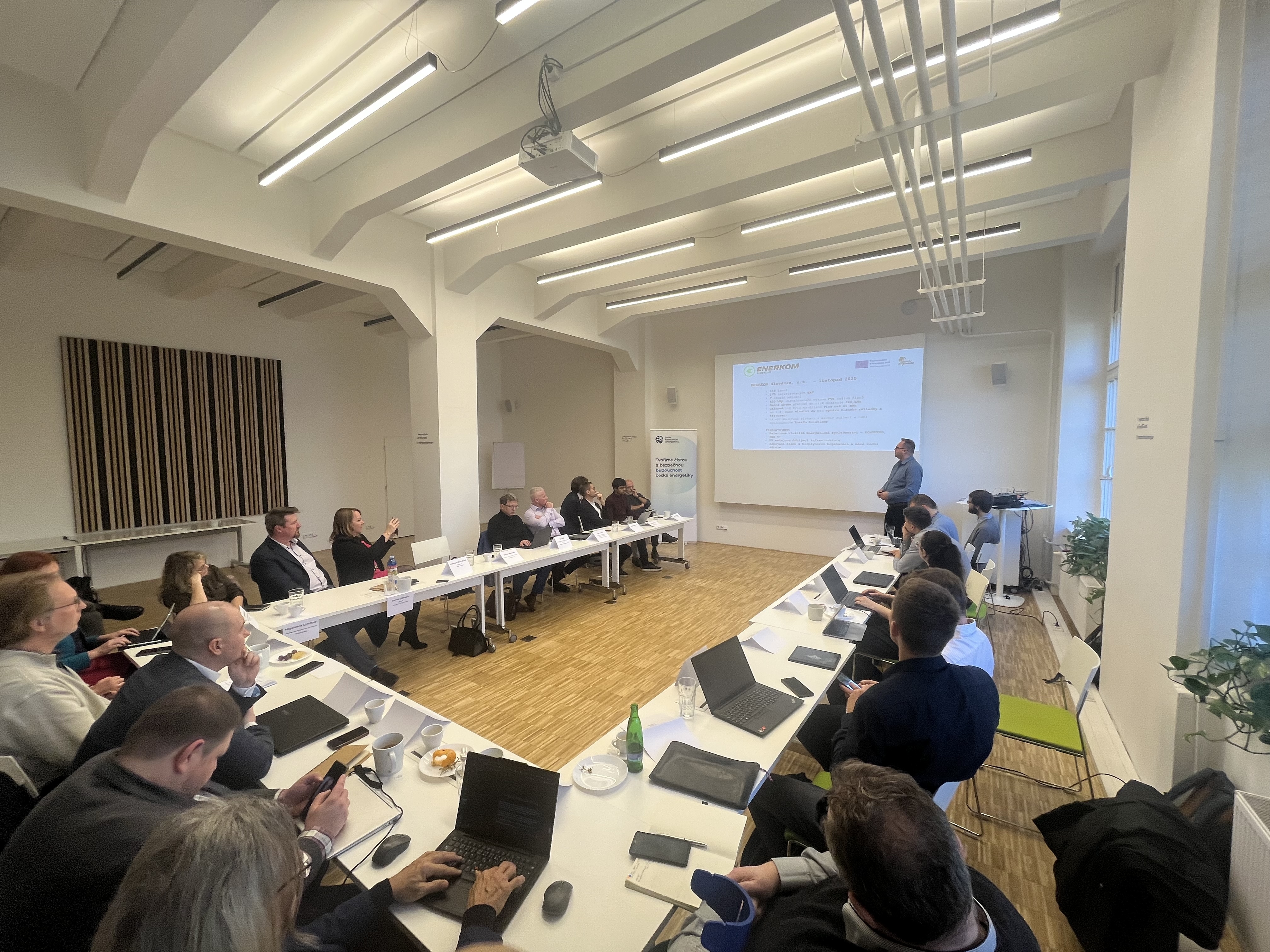
The NRGCOM project has ended, but in South Bohemia the work on energy communities goes on. On 24 September 2026, the South Bohemian Science and Technology Park (JVTP) in České Budějovice brought the region's energy communities together around one table. A month later, JVTP published a comprehensive study on the potential of community energy in the South Bohemian Region. Both continue the topics NRGCOM worked on and show how a pilot region keeps moving once a project closes.
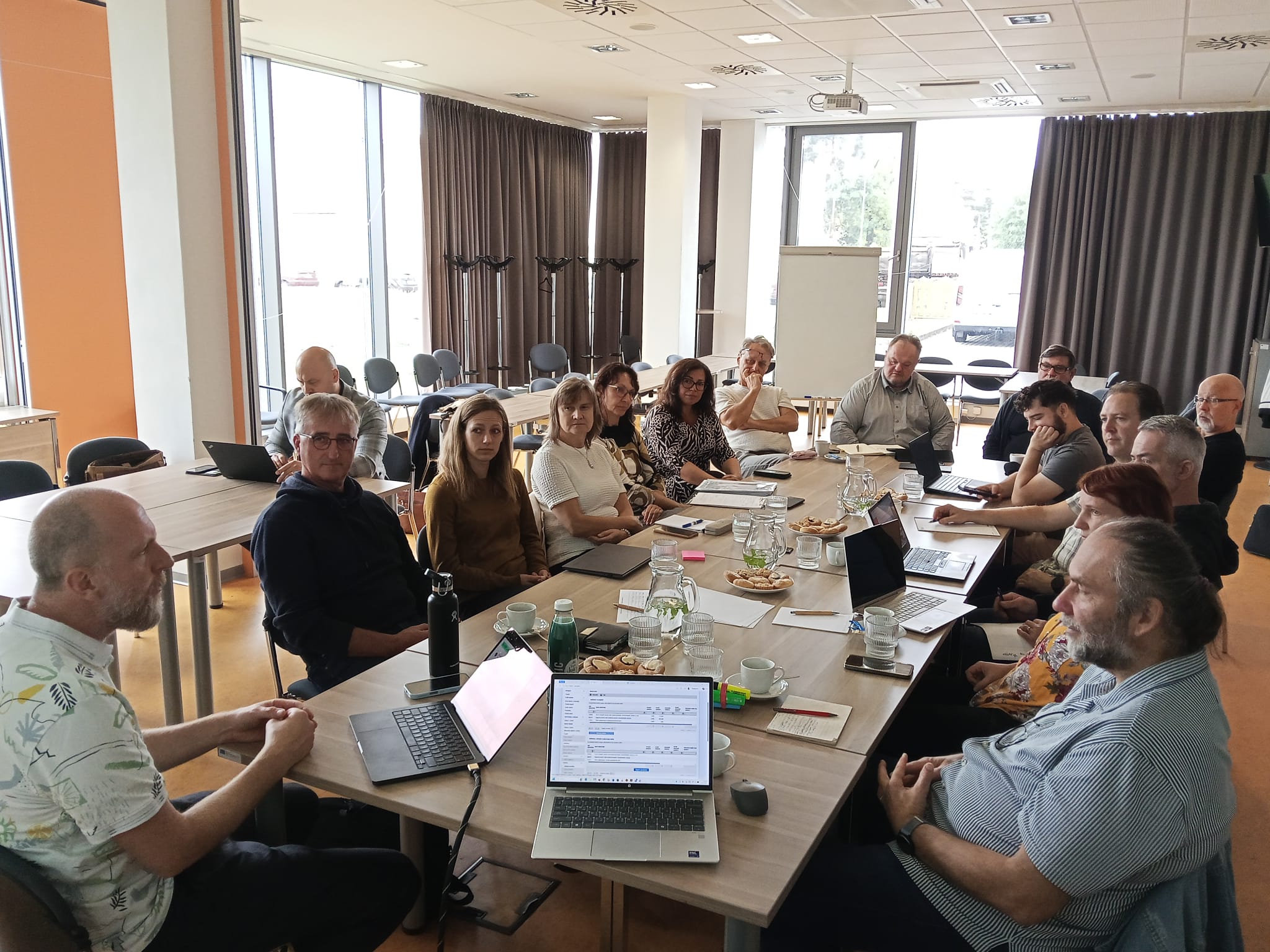
Sixteen people, twelve organisations, one table
The round table, organised by JVTP together with the Czech National Centre for Energy Community Support (NCPEK), gathered 16 representatives from 12 organisations: the regional communities ENERKOM Růže, ENERKOM Táborsko, ENERKOM Písecko and ENERKOM Třeboňsko, the municipal community Společná energie Tábor, the Energy Community of Jindřichův Hradec, the civic initiative Komunitní energie Písek, and three local action groups (LAGs). Some of the communities started sharing electricity only this year; others are still being set up.
Participants voted on what holds them back most:
| Barrier | Votes | What participants said |
|---|---|---|
| Legislation and data-centre rules | 7 | static allocation keys set monthly, dynamic sharing only from 2028, a limit of five generators per consumption point, cumulative network fees |
| Grid capacity | 7 | limited reserved power, rejected capacity increases, new sources cannot be connected |
| People and trust | 6 | recruiting members, explaining how sharing works, competition from commercial offers |
| Money for operation | 4 | operation depends on one staff member (often from a LAG or a town); sharing fees do not yet cover costs |
Source: vote at the round table of South Bohemian energy communities, 24 September 2026.
The clearest message of the day was that a community stands or falls on a dedicated person. Software helps, but it cannot replace someone who recruits members, explains the rules, handles billing and keeps the community running. The communities agreed to keep meeting as a regional platform at JVTP roughly every three months, to share contacts and case studies, and to invite the regional chamber of commerce next time.
A study that puts numbers on the potential
The findings from the round table and from a regional survey fed straight into the Analysis of the potential for community energy development in the South Bohemian Region (October 2026). The 119-page study combines desk research, data from the grid operator and regulator, five feasibility studies and first-hand operating data from the communities themselves. It is written for the regional government, but also as a practical reference for community managers, municipalities and LAGs.
10 / 6 — energy communities registered in the region / of which actually sharing electricity (24 September 2026), above the national average
42.8 % — renewable electricity generation compared to the region's consumption (Czech average: 22.1 %)
0.9–2.3 GWh — the yearly volume of shared electricity a community needs to cover its own costs, according to the feasibility studies
8 of 10 — survey respondents who said operating support, not only investment support, would help them most
CZK 14.4–17.4 million (roughly EUR 0.6–0.7 million) — estimated cost of the study's recommendations for the Region in 2027–2028
The core conclusion is simple: the technical potential is large, but the usable potential is still small. Much of the region's renewable output (large hydropower, plants receiving operating support) cannot enter community sharing. The volumes communities share today are one to two orders of magnitude below the level at which they could pay their own way, and their operation relies on a handful of staff at LAGs and towns.
ENERKOM Růže: from NRGCOM pilot to everyday sharing
ENERKOM Růže, one of the Czech pilot communities in NRGCOM, is now a practical example for the whole region. Linked to the Růže Local Action Group, it has been sharing electricity since February 2026 and is approving its 20th member — among them households, local businesses, a zoo and a school. From February to September 2026 it shared around 12 MWh (about 18 MWh per year) at an internal fee of CZK 0.60 per kWh.
Its story also shows the barrier NRGCOM flagged across the Danube Region. When ENERKOM Růže applied to connect a new source with 35 kW of reserved power, the distribution system operator granted only 14 kW. Grid capacity does not limit sharing itself, but it does limit the new sources communities need in order to grow.
Sezimovo Ústí: a small voucher, a working solution
The study also highlights how modest regional support can lead to real results. The town of Sezimovo Ústí used the Region's Assistance Vouchers – Energy programme to fund a technical and economic study on community energy for its municipal buildings. Based on it, the town chose the active-customer model instead of founding an energy community, and today shares electricity in five sharing groups from around seven larger PV plants, five of which are already in operation. The lesson: support for project preparation turns into concrete action, and the right model is not always an energy community.
Five recommendations for the Region
A contact point for community energy at the Regional Energy Centre of South Bohemia, and a responsible person at the regional authority (from 2027).
A support programme for founding and growing energy communities — a new round of Assistance Vouchers, including a contribution towards a community manager during the first two years (2027–2028).
Advocacy towards the national level and dialogue with the distribution system operator — on opening the national KOMUNERG programme to communities without their own generators, dynamic sharing and the connection of small sources (2027).
Training for mayors and the Region's patronage for proven energy communities, with long-term public awareness (2027–2028).
Community energy in the Regional Energy Concept, with indicators to track progress.
What this means for NRGCOM
The South Bohemian findings mirror what NRGCOM identified across the Danube Region: technology is rarely the main obstacle — grid access, financial predictability and people are. The recommendations on grid allocation, stable framework conditions and support for community management are now being translated into concrete regional measures, with costs and timelines attached. The regional energy community platform at JVTP, the Regional Energy Centre and the voucher programme give the Czech NRGCOM pilots a structure to keep growing in after the project has ended.
The round table and the study were carried out by JVTP within the Smart Accelerator+ I in the South Bohemian Region project (reg. no. CZ.02.01.02/00/22_009/0002822), co-funded by the European Union, and build on the results of NRGCOM.
Read more
Energy communities from South Bohemia met at JVTP and shared practical experience (JVTP news, in Czech)
Analysis of the potential for community energy development in the South Bohemian Region (JVTP, October 2026, in Czech, PDF)
NRGCOM is co-funded by the European Union through the Interreg Danube Region Programme.

03/11/2026
By NRG COM
Share on social media:


News & Events
Read the most recent updates and explore the upcoming events.


Would you like to receive project updates?
You're already part of our community!
Welcome to our newsletter community!
Subscribe to our newsletter