
Beyond the Sale: What LIBERTY Galați's Restructuring Means for Europe's Industrial Workforce
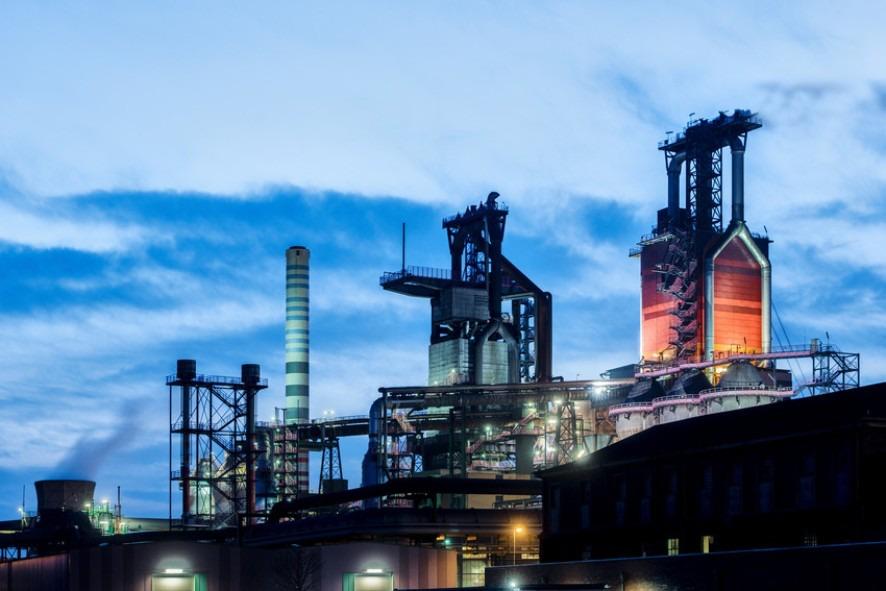
The recent developments at LIBERTY Galați have once again placed one of Europe's largest integrated steel plants at the centre of discussions about the future of heavy industry.
In June 2026, the Galați Court approved a revised restructuring plan for the steelworks, opening the way for an international auction aimed at attracting a strategic investor capable of ensuring the plant's long-term viability. Rather than dismantling the industrial site, the restructuring process is designed to preserve production capacity, protect jobs and create the conditions for future investment in modern steelmaking technologies.
For the thousands of people whose livelihoods depend directly or indirectly on the steel industry, the news inevitably raises important questions.
Who will become the future investor?
How quickly can production return to stable levels?
What new skills will be needed as the sector evolves?
While these questions remain open, one message is already becoming clear across Europe: industrial resilience is no longer measured only by production capacity, but also by the ability of communities to adapt to change.
A European Challenge, Not Just a Local Story
Galați is not the only industrial city facing this reality.
Across Europe, traditional steel regions are balancing three major priorities at the same time:
maintaining industrial competitiveness;
accelerating decarbonisation;
protecting employment through workforce adaptation.
Finding this balance requires more than financial investment. It demands cooperation between industries, local authorities, universities, vocational training providers and employment services.
Why Skills Matter During Industrial Transition
Whenever ownership changes or production technologies evolve, workers are expected to adapt.
The transition towards greener and more digital manufacturing creates demand for new competencies in automation, energy efficiency, digital maintenance, industrial data management and advanced production systems.
For experienced steelworkers, this should not be viewed as replacing traditional expertise, but as building upon it.
Technical know-how remains invaluable. The challenge is ensuring that today's workforce also gains access to the training needed for tomorrow's manufacturing environment.
The Role of SteelCityZen
This is precisely the type of transition that SteelCityZen was created to support.
By bringing together industrial cities across Europe, the project promotes policies that strengthen labour-market resilience, encourage lifelong learning and help local economies prepare for industrial transformation.
The experience of Galați reminds us that successful industrial transition is not defined solely by investment decisions or ownership structures.
It also depends on people.
Communities that invest in skills, education and collaboration are better prepared to respond to uncertainty and seize new opportunities when they emerge.
Looking Ahead
The outcome of the restructuring process will be closely followed, not only in Romania but across Europe's industrial regions.
Whatever the next chapter brings, one lesson is already evident: the future of industrial cities will be shaped not only by steel production, but by the capacity of workers, institutions and communities to adapt together.
For SteelCityZen, this reinforces the importance of building resilient labour markets where industrial heritage and innovation develop side by side.
Sources
Sources
SeeNews. Romania's Liberty Galati to auction steel mill, pipe plant in June 2026.
SeeNews. Reporting on the Galați Court's approval of the revised restructuring plan for LIBERTY Galați in June 2026.

10/07/2026
By András Merza
Share on social media:



News & Events
Read the most recent updates and explore the upcoming events.


Would you like to receive project updates?
You're already part of our community!
Welcome to our newsletter community!
Subscribe to our newsletter