


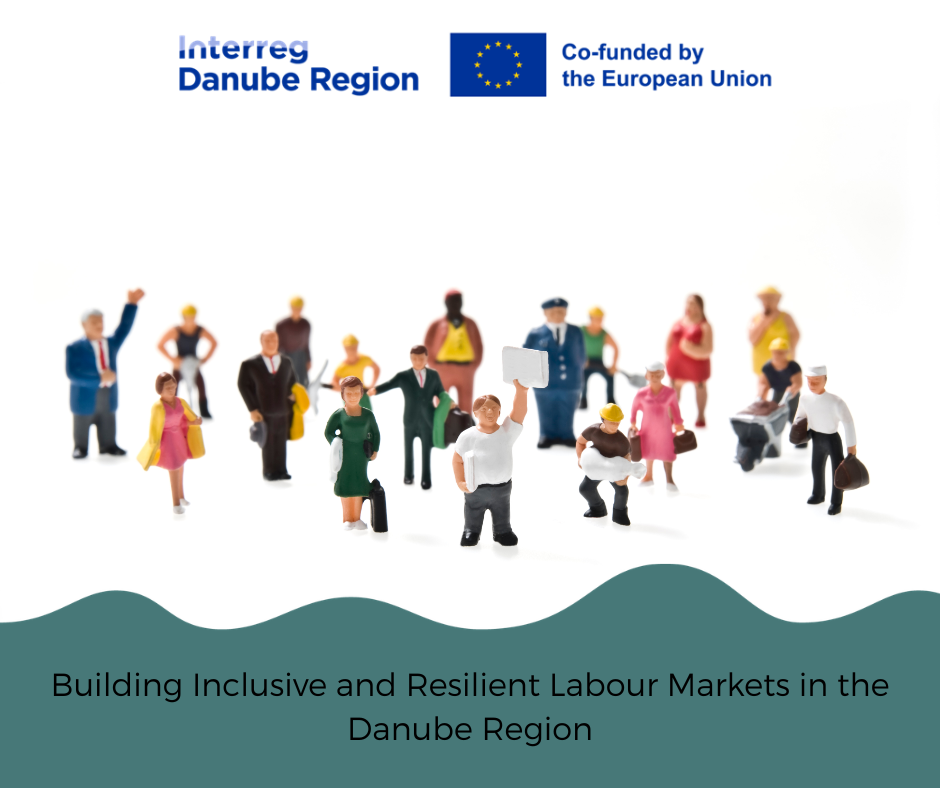
Building Inclusive and Resilient Labour Markets in the Danube Region
In an era marked by rapid technological change, demographic shifts, and economic uncertainty, labour markets across the Danube region are under growing pressure to become more inclusive, resilient, and future-oriented. Retaining a skilled workforce is essential to sustaining productivity and competitiveness, particularly as talent shortages intensify and workforce mobility increases. At the same time, the effective integration of vulnerable groups, such as young people, women, persons with disabilities, migrants, and the long-term unemployed, is critical for strengthening social cohesion and ensuring fair access to employment opportunities. Equally important is the creation of new jobs capable of absorbing a changing and increasingly diverse labour force.
Meeting these challenges requires more than isolated interventions. Innovation, entrepreneurship, and economic diversification must be accompanied by deliberate governance efforts that balance labour market flexibility with social protection. Strong labour market governance provides the institutional frameworks, policies, and mechanisms for social dialogue needed to align economic competitiveness with inclusiveness and long-term sustainability.
Against this backdrop, several projects funded through the Danube Region Programme (DRP) are addressing labour market challenges through transnational cooperation, innovative approaches, and targeted actions tailored to regional needs.
The CultHeRit project aims to improve access to employment in the cultural heritage sector for young professionals. By developing and testing innovative solutions for recruitment, employment, and retention, the project seeks to make the sector more attractive and accessible to youngsters, while also strengthening its capacity to preserve and promote cultural assets across the region. The Danube Strategy Flagship Certificate, awarded by the EUSDR (EU Strategy for the Danube Region), confirms the project’s high importance and relevance for the region.
The IntegrAGE project focuses on workers aged 55 and above, recognising the value of their experience and knowledge in increasingly tight labour markets. Through tutoring and mentoring activities, the project supports older workers in adapting to new ways of working, enhancing their participation in the labour market, preventing early retirement, and extending their productive working lives.
The SReST project addresses employability through the promotion of slow food tourism in the Danube region, with a strong focus on vulnerable groups, including young people with disabilities, migrants, and the unemployed. Its holistic approach combines cultural orientation, quality assurance in the hospitality sector, as well as practical employment tools, implemented through dedicated pilot actions across participating regions.
Similarly, the Danube Crafts project creates new employment opportunities by establishing a transnational Traditional Crafts Route that blends slow thematic tourism with local traditions. The project targets craftsmen and artisans not only as employees but also as entrepreneurs, with a particular emphasis on engaging youth, women, and persons with disabilities.
In its effort to preserve and promote the culinary heritage of 30 different ethnic groups from economically underdeveloped areas, the Culinary Trail project also contributes to job creation. By valorising local food traditions, it opens employment opportunities for marginalized groups facing multiple disadvantages, while fostering cultural diversity and regional identity.
Addressing structural vulnerabilities in industrial regions, SteelCityZen project focuses on (mono-) industrial cities exposed to employment risks linked to economic and technological transitions. The project empowers municipalities to diversify local labour markets and promote inclusive and sustainable development through strengthened stakeholder cooperation, improved coordination between employment actors, and innovative tools for local skills assessment and matchmaking.
At the governance level, the ANCHOR project seeks to strengthen institutional capacities for more effective labour market coordination. In the context of demographic change and related challenges, such as population ageing, skills mismatches, and brain drain, ANCHOR aims to overcome fragmented and often ineffective governance structures and labour market policy interventions by improving policy design, coordination, and implementation frameworks.
By leveraging today’s increasing labour market flexibility, Danube4Rural.com proposes innovative employment approaches closely linked to community development. The project aims to revitalise rural areas by making them more attractive to digital nomads. Ten pilot territories have been selected to test strategies for attracting digital nomads and remote workers, offering new perspectives for sustaining rural economies.
All these DRP-funded initiatives demonstrate how transnational cooperation can deliver practical, inclusive, and forward-looking solutions to labour market challenges in the Danube region. By addressing skills retention, social inclusion, job creation, and governance reform in an integrated manner, they contribute to more resilient labour markets and stronger regional cohesion.

13/02/2026
By admin 2
Share on social media:



News & Events
Explore our upcoming events and read news regarding our programme and project activities.





Would you like to receive programme updates?
You're already part of our community!
Welcome to our newsletter community!
Subscribe to our newsletter