
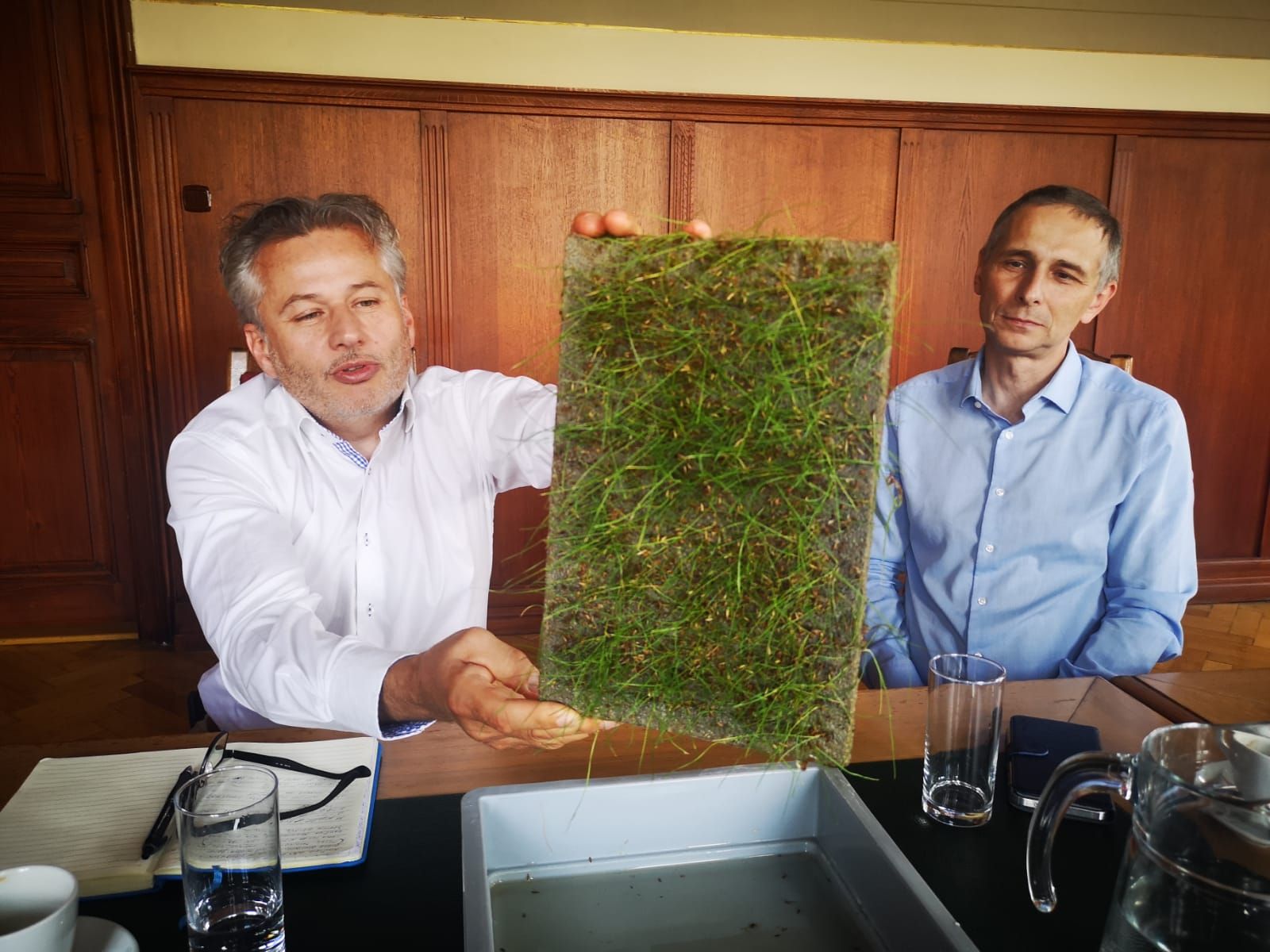

From Waste Glass to Green Urban Innovation: Glassiteca Pilot Demonstrates the Potential of Glassticine in Liberec
What if a material once destined for landfill could help make city streets greener, cooler and more liveable?
This is the idea behind the Glassiteca pilot, implemented in Liberec, Czech Republic, as part of the PilotInnCities project. The pilot brings together university research, regional glassmaking tradition, circular economy principles and real-life urban testing to demonstrate a new material with strong potential for climate-friendly cities.
At the centre of the pilot is Glassticine — an innovative “glass plasticine” made from waste glass that would otherwise end up in landfills. The material is porous, shapeable and capable of absorbing water. Thanks to these properties, it can support plant growth, retain moisture and enable natural evaporation, helping to passively cool its surroundings and increase local humidity.
Testing innovation in real urban conditions
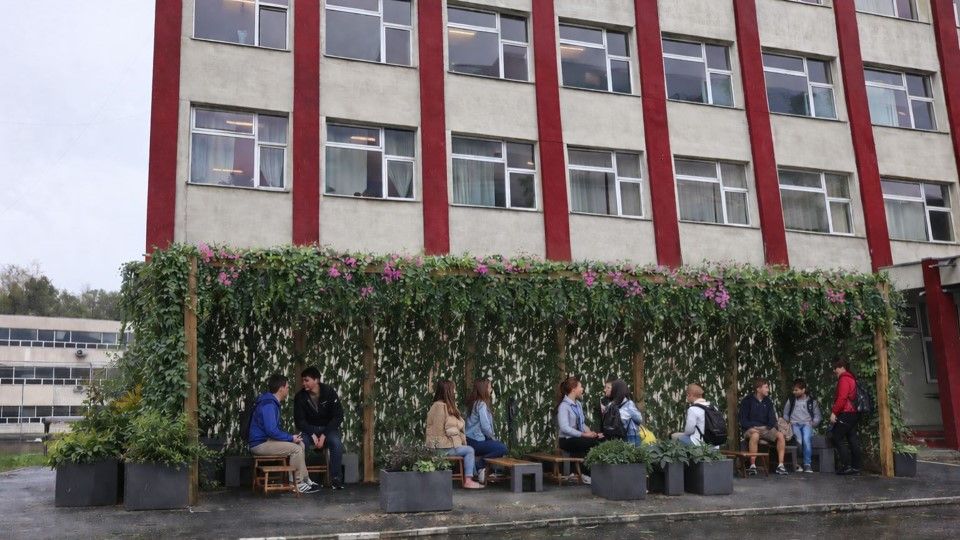
The solution was tested in Liberec through a real-life demonstrator measuring 1.5 × 1 × 2 metres. The pilot confirmed not only the material’s cooling effect and durability, but also its strong acceptance among local residents and visitors.
Public feedback showed a very positive response:
95% of respondents liked the overall concept
98% valued innovative green elements in public spaces
41% were most interested in the solution’s sustainability potential
These results confirm that nature-based and circular solutions resonate strongly with citizens and can play an important role in shaping more attractive and climate-resilient public spaces.
A smart regional specialisation success story
The Glassiteca pilot is particularly significant because it builds on the long-standing glassmaking heritage of the Liberec Region while introducing a forward-looking technological application. In this sense, it represents a strong example of smart regional specialisation: using local knowledge, industrial tradition and research capacity to create new solutions for the future.
Glassiteca is also the first spin-off of the Technical University of Liberec, effectively connecting academia, industry, the public sector and citizens. This makes the pilot a clear example of agile piloting in practice — testing an innovative solution in a real urban environment, collecting feedback and exploring pathways towards wider implementation.
Supporting Liberec’s climate ambitions
Liberec is the only Czech city participating in the NetZeroCities mission, which supports 100 climate-neutral and smart cities by 2030. The Glassticine pilot directly contributes to these long-term ambitions by offering a practical, visible and locally rooted solution for greener urban infrastructure.
By combining recycled material, plant growth support and passive cooling, Glassticine can help cities respond to increasing heat stress while also improving the quality and attractiveness of public spaces.
Future applications
The pilot has opened up several potential business and urban applications for Glassticine, including:
building facades and walls
public transport shelters
urban landscaping elements
acoustic panels
microgreens cultivation systems
These possible uses show that the material has potential far beyond a single demonstrator. It could become part of a new generation of circular and multifunctional urban infrastructure solutions.
From pilot to future potential
The Glassiteca pilot shows how local tradition, scientific research and urban climate action can come together to create practical innovation. By transforming waste glass into a green, functional and publicly accepted material, Glassticine demonstrates how cities can turn environmental challenges into opportunities for more sustainable development.
The pilot was implemented in cooperation with partners from Glassiteca, the City of Liberec, the Ministry of Industry and Trade of the Czech Republic, CzechInvest and Gatum Group within the PilotInnCities project.


08/05/2026
By Viktor Holy
Share on social media:


Smart

News & Events
Read the most recent updates and explore the upcoming events.


Would you like to receive project updates?
You're already part of our community!
Welcome to our newsletter community!
Subscribe to our newsletter