


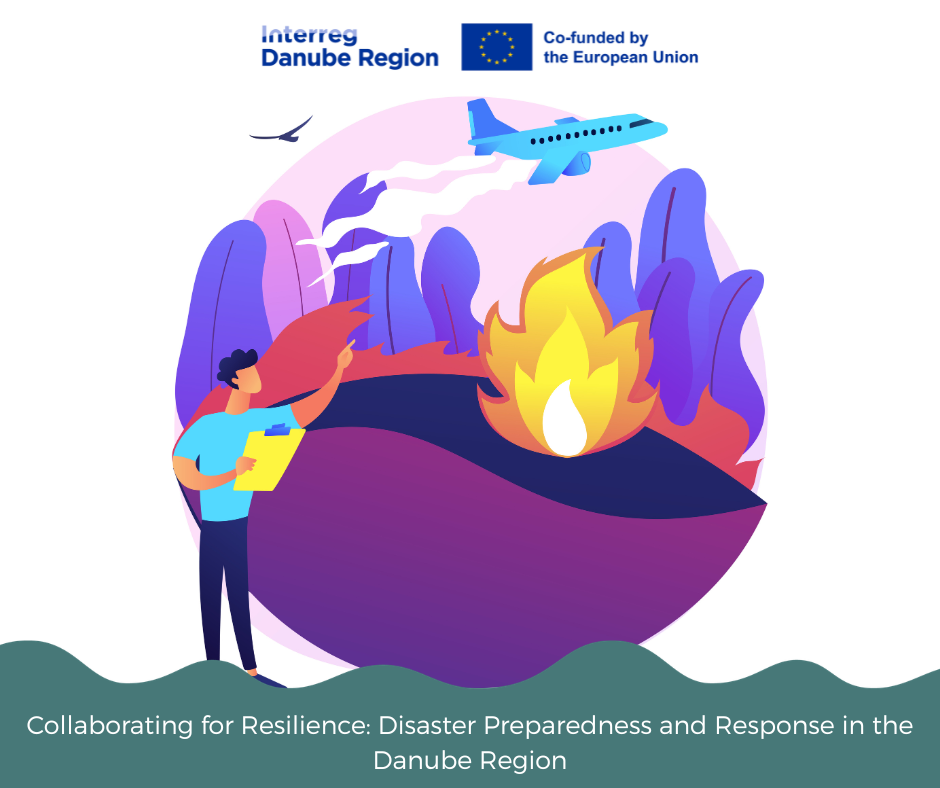
Collaborating for Resilience: Disaster Preparedness and Response in the Danube Region
The Danube Region is increasingly exposed to a range of environmental and industrial risks that can lead to large-scale emergencies with impacts across borders. Climate change, ageing infrastructure, and complex industrial systems are intensifying the need for coordinated disaster risk management, preparedness, and response mechanisms. In this context, the Danube Region Programme supports collaborative initiatives that strengthen regional resilience and improve the capacity of institutions and responders to manage emergencies effectively.
Two projects in particular, InDiMaND and SAFETY4TMF, illustrate how transnational cooperation can enhance disaster preparedness and response across the region. Although they address different types of hazards, both initiatives contribute to a shared goal: improving prevention, coordination, and operational readiness for disasters that can affect multiple countries along the Danube.
Disaster risks in the Danube Region stem from both natural events and human activities. Floods, droughts, wildfires, and extreme weather events are becoming more frequent and severe, while industrial infrastructure such as mining waste storage sites presents additional safety challenges.
The InDiMaND project focuses on improving disaster management systems by strengthening collaboration among emergency services, civil protection organisations, and relevant authorities. The project examines how institutions can better anticipate and respond to complex emergencies by developing common procedures and improving cooperation between professional responders and volunteer organisations.
At the same time, SAFETY4TMF addresses a specific but highly significant industrial risk: the safety of tailings management facilities used to store mining waste. Failures of these facilities can lead to severe environmental contamination, flooding, and cross-border impacts on ecosystems and communities. The project works to improve monitoring, risk assessment, and governance frameworks to prevent accidents and ensure preparedness in case incidents occur.
Both projects place strong emphasis on strengthening preparedness and operational response capabilities. By developing common methodologies, tools, and standard operating procedures, they help ensure that authorities and emergency responders are better equipped to act quickly and effectively when disasters occur.
Training activities, workshops, and simulation exercises play an important role in this process. These activities allow stakeholders from different countries to test response strategies, identify gaps in coordination, and learn from each other’s experiences. By doing so, the projects help build a shared understanding of disaster management practices across borders.
Through knowledge exchange and collaborative pilot actions, the projects foster stronger networks among disaster management actors. This cooperation helps harmonise procedures, improve communication between institutions, and facilitate joint responses in emergency situations.
In addition to operational improvements, both projects contribute to strengthening governance frameworks related to disaster risk management. By analysing existing policies and identifying gaps in coordination, they provide recommendations for more integrated and effective strategies at local, national, and regional levels. Additionally, the two projects contribute to the Disaster Management Working Group of the Priority Area 5 of the EU Strategy for the Danube Region.
As environmental and industrial risks continue to evolve, strengthening preparedness and response capacities has become a key priority for the Danube Region. Through initiatives such as InDiMaND and SAFETY4TMF, the Danube Region Programme demonstrates the value of transnational cooperation in addressing complex disaster challenges. By improving coordination, enhancing technical capacities, and fostering knowledge exchange, these projects contribute to building a more resilient region, one that is better prepared to prevent, manage, and respond to disasters that may affect communities and ecosystems across national borders.

13/03/2026
By admin 2
Share on social media:



News & Events
Explore our upcoming events and read news regarding our programme and project activities.




Would you like to receive programme updates?
You're already part of our community!
Welcome to our newsletter community!
Subscribe to our newsletter