

Moldova and the Interreg Danube Region Programme: A Partnership That Transforms Cities and Builds European Futures
For a country working hard to move closer to the European Union, the details matter. Not just the negotiations and policy frameworks, but the everyday, visible changes that show people what European integration looks like. Moldova's participation in the Interreg Danube Region Programme is one of those details — and it's proving to be more valuable than many might expect.
The Interreg Danube Region Programme brings together 14 countries across Danube Region to tackle shared challenges: how to make cities more livable, how to move people more sustainably, how to protect the environment while keeping economies growing. For most of the participating countries, it's another chapter in a long history of EU cooperation. For Moldova, it's something more. It's a seat at the table — a chance to co-develop solutions alongside EU member states, learn from them, and quietly but steadily align the country's institutions and cities with European ways of doing things.
Good for Moldova. Good for Europe too.
It might seem like a one-way street — EU funds flowing into a candidate country. But the reality is more interesting than that. Every time a Moldovan city implements a pilot action, every time a local official learns to manage a EU project, every time a street gets redesigned according to EU standards, Moldova becomes a little more ready for accession. And that matters to the EU just as much as it matters to Moldova.
A stable, well-governed, forward-looking Moldova on the EU's eastern border is in everyone's interest. The Interreg Danube Region Programme is one of the quieter but more effective tools for getting there — not through top-down reform, but through practical cooperation that builds capacity from the ground up.
A Street in Chișinău That Says a Lot
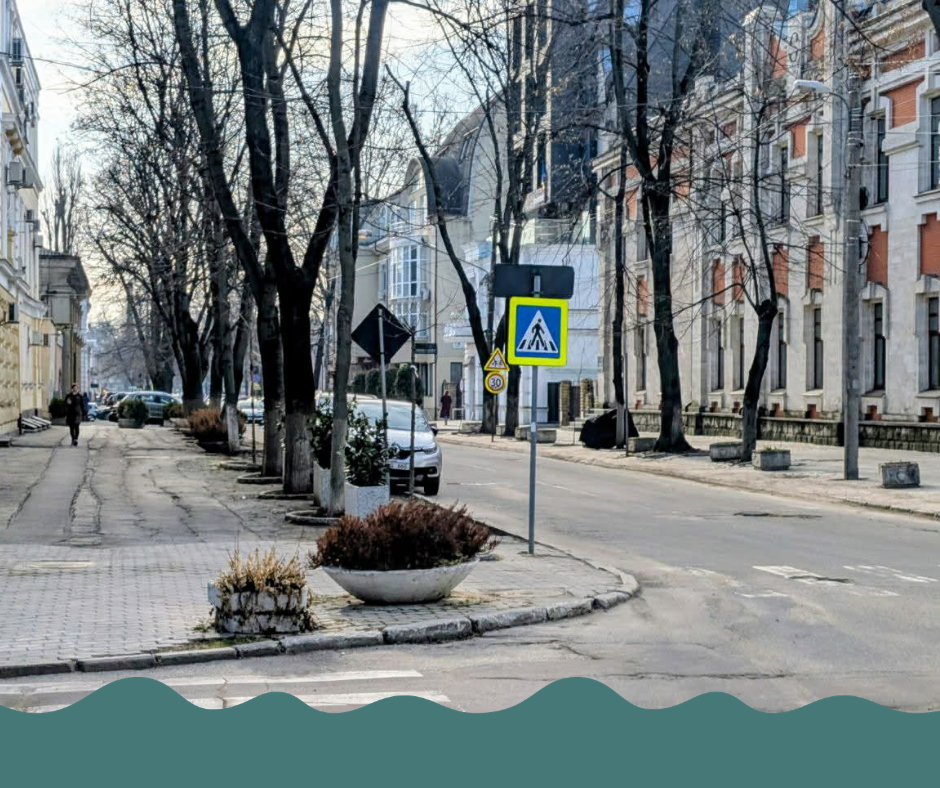
Of all the ways to illustrate what this programme means in practice, the CityWalk 2.0 pilot action in Chișinău might be the most compelling. Walk through the historic center of the Moldovan capital and you can see the change taking shape: a traditional urban street being reimagined as a green, pedestrian-friendly space that wouldn't look out of place in Vienna or Ljubljana.
That transformation didn't happen by accident. It started as a pilot action within the Interreg Danube Region Programme — a tested, transnational approach to urban mobility brought to life in a real neighborhood. And when the pilot was done, something telling happened: the Municipality of Chișinău decided to keep going. They extended the project and put their own money into it — nearly 600,000 euros, or just under 12 million Moldovan Lei. That's not a symbolic gesture. That's a serious municipal investment, and it reflects a genuine belief in what's being built.
The groundwork has already been laid. The construction permit was secured at the end of November, the procurement process is set to launch in early March, and actual works on the street are expected to begin in early April. The timeline is moving, the budget is committed, and the city is ready. That's not something local governments do out of obligation. They do it when they believe in what they're building.
In doing so, Chișinău sent a clear message — that European-quality public spaces aren't just something to aspire to, they're something worth investing in right now.
A Model Worth Following
What makes CityWalk 2.0 project stand out isn't just the physical transformation of a street. It's the story behind it: a European programme, a willing municipality, a shared vision, and a result that genuinely improves daily life for the people who live and work nearby. That combination is rarer than it should be, and when it comes together, it's worth talking about.
For other cities in the Danube Region — whether in EU member states or candidate countries — the project shows that this kind of change is achievable. You don't need an unlimited budget or decades of experience. You need a good idea, the right partners, and the willingness to follow through.
Moldova has shown it has all three. And that, in the end, is what the journey toward EU really looks like.

17/03/2026
By admin 2
Share on social media:



News & Events
Explore our upcoming events and read news regarding our programme and project activities.





Would you like to receive programme updates?
You're already part of our community!
Welcome to our newsletter community!
Subscribe to our newsletter