

When Forgotten Objects Become Design Questions
Before Designing, Look at What is Already There
A tool can stop being used without losing its story.
The same is true of household objects, agricultural equipment and the traces of crafts once embedded in everyday rural life.
In Karanac, in Croatia's Baranja region, these objects became the starting point for a design process.
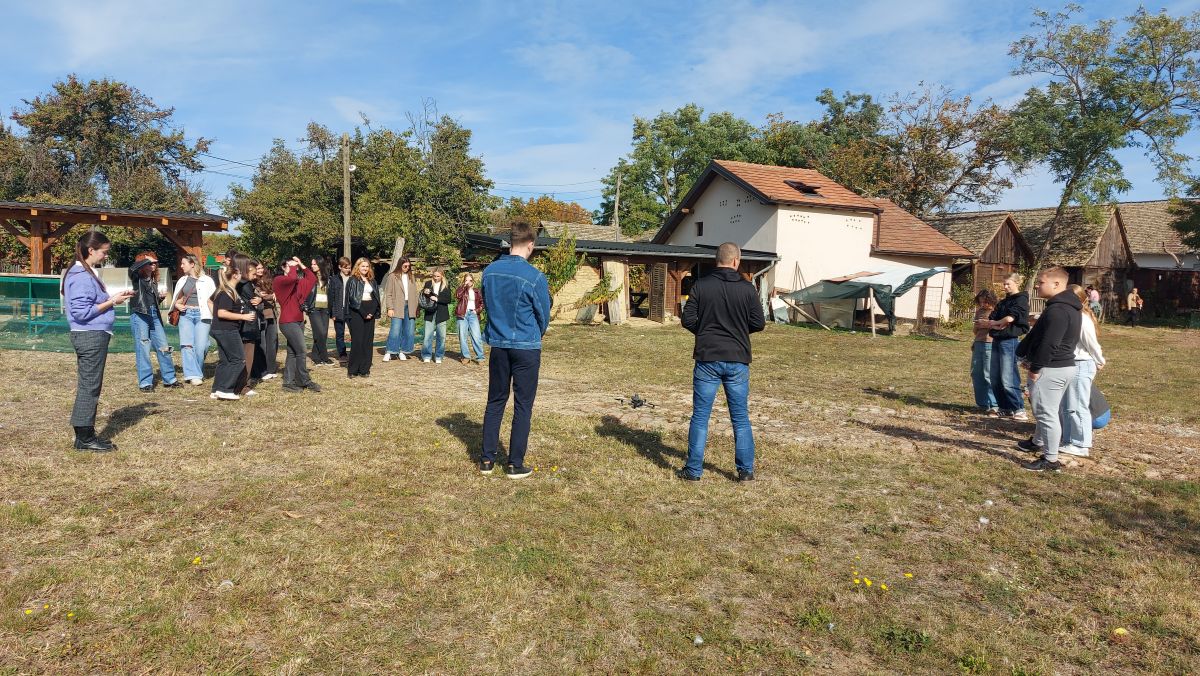
In October 2025, students from the Faculty of Civil Engineering and Architecture Osijek (GRAFOS) visited The Street of Forgotten Time (Ulica zaboravljenog vremena) - an ethnographic collection dedicated to preserving and presenting the region's rural heritage and traditional way of life.
Historic tools sit alongside household objects, agricultural equipment and other artefacts connected with the everyday activities, skills and crafts of previous generations.
The students did not arrive at an empty site.
They arrived somewhere already full of things to understand.
Through site analysis and direct discussions with the owner of the collection, they began exploring how the property could be expanded and enhanced while engaging with the values already held within it.
The visit was only the beginning.
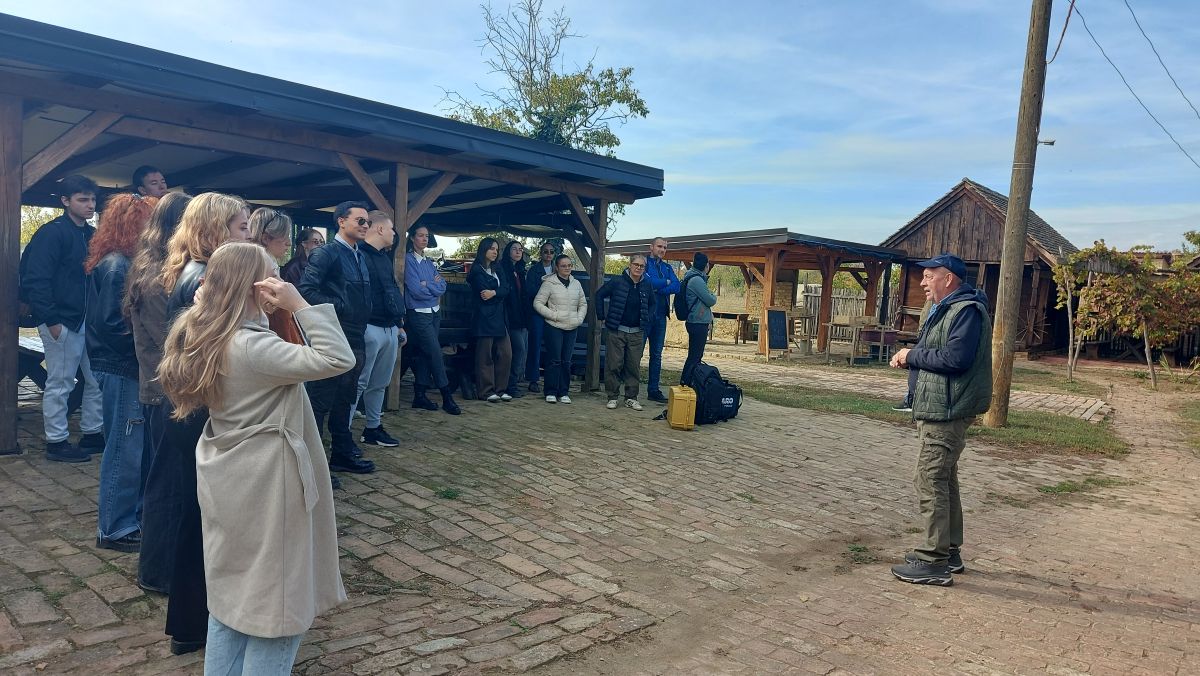
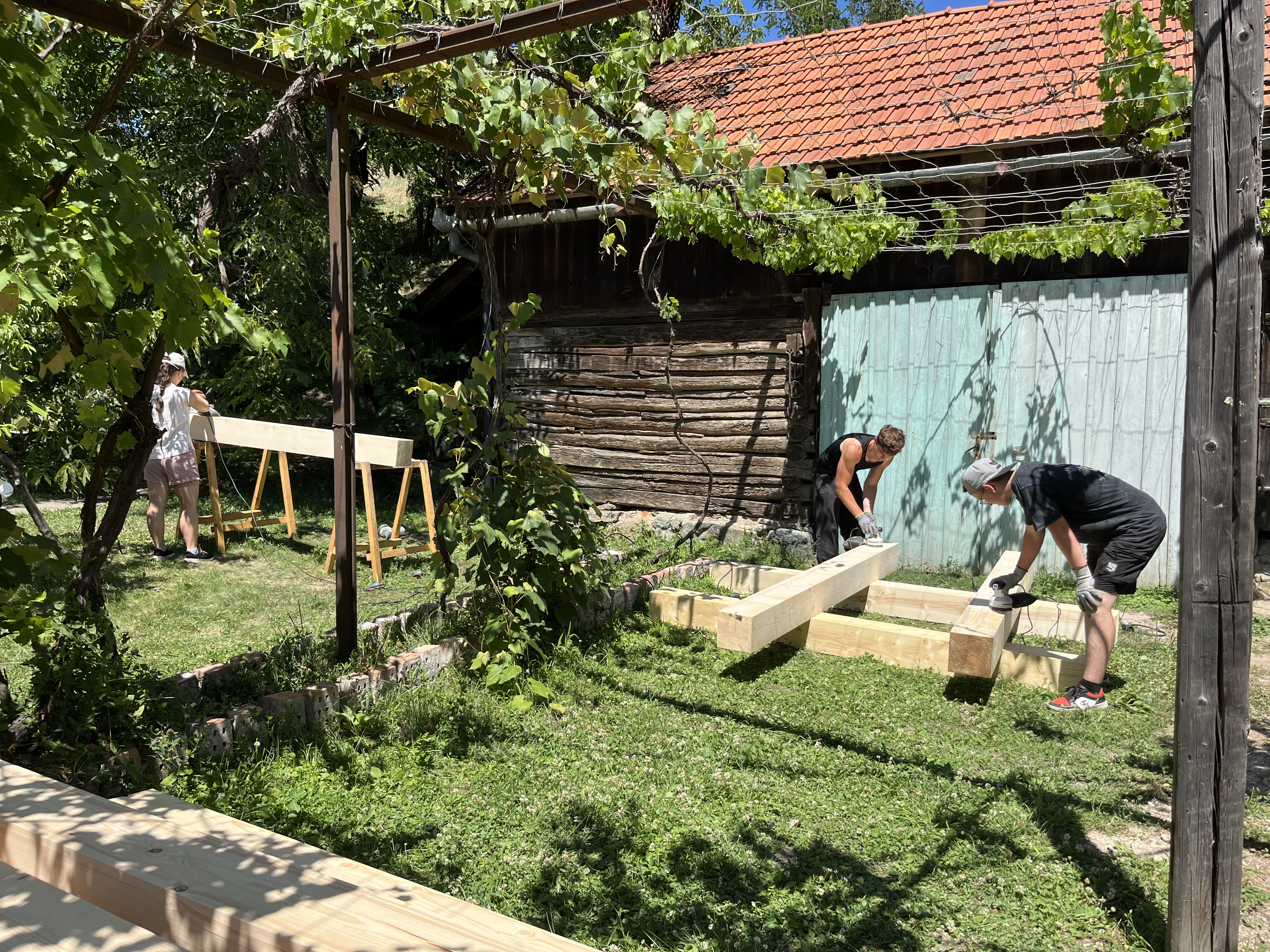
Learning from the place before designing. Photo: Dina Stober, GRAFOS
From Karanac to the Drawing Board
Back at GRAFOS, the site became part of the students' coursework.
Over the following months, they developed proposals for the expansion and enhancement of the property, examining its spatial, architectural and functional potential.
The process therefore moved in two directions.
First, students went to Karanac to encounter the place directly.
Then Karanac entered the classroom.
The collection became a point of departure for thinking about how design could engage with a place whose identity was already shaped by rural heritage and the material traces of everyday life.
At the end of the semester, in June 2026, the proposals travelled back into discussion. Students presented their final work at the Faculty to the owner of The Street of Forgotten Time, representatives of the local NGO Fatast, and tourism experts from the Institute for Tourism in Zagreb.
What began with looking and listening had become a set of design proposals ready to be discussed with people connected to the place.
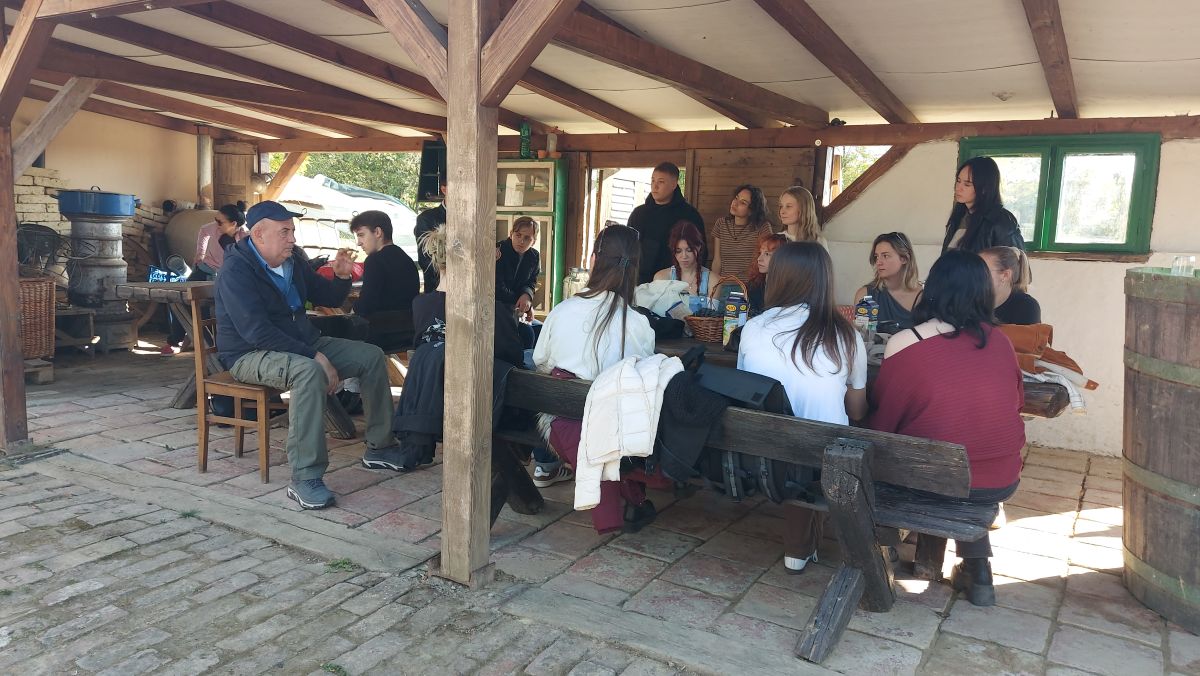
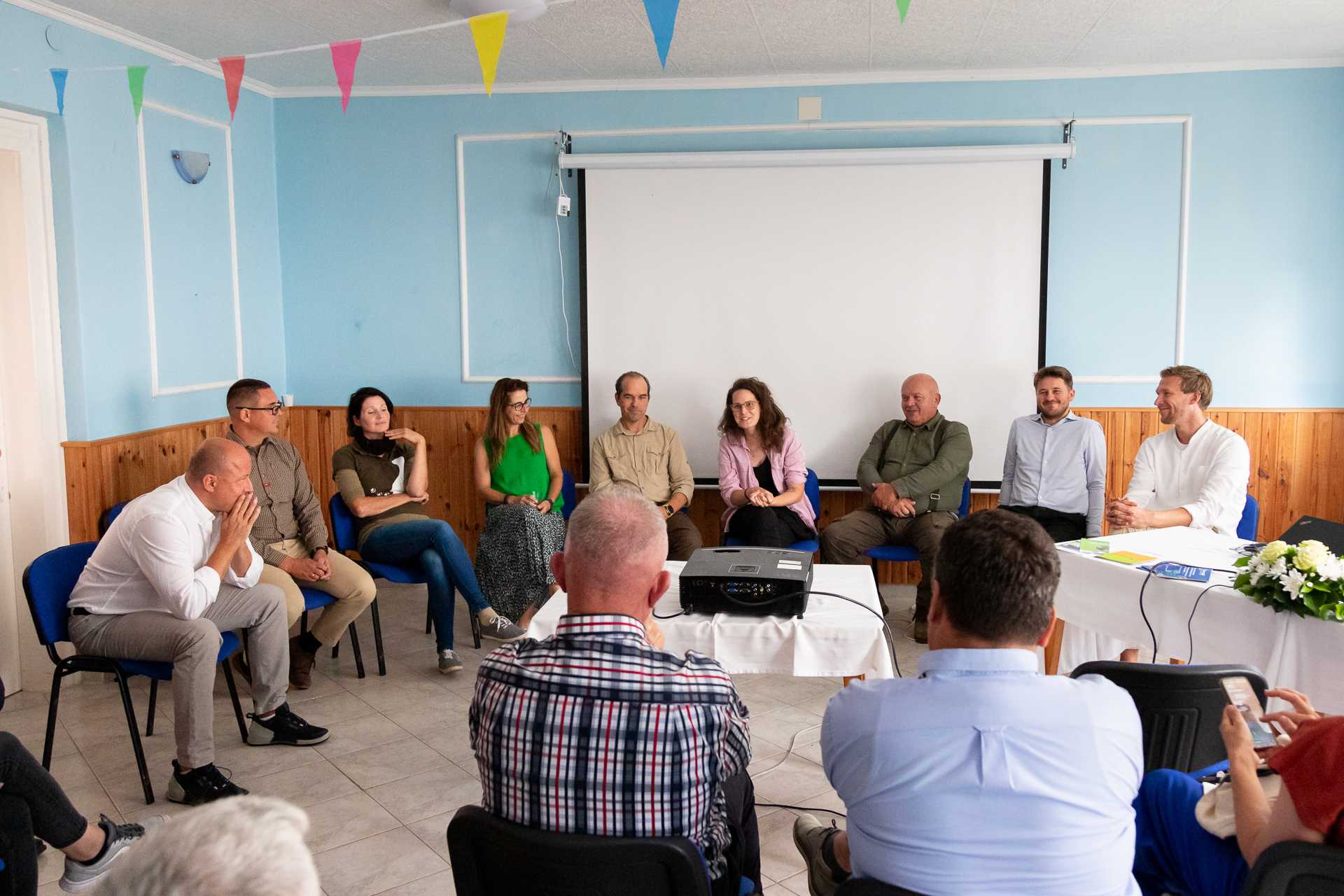
Discussing the site and its possibilities. Photo: Dina Stober, GRAFOS
What Can an Old Tool Still Tell Us?
There is another layer to the collection.
Its objects do more than document what rural life once looked like. They point towards the activities and knowledge associated with it.
As Prof. Jasenka Kranjčević of the Institute for Tourism in Zagreb reflected:
"Ethnographic collections of traditional tools are, in fact, tangible artefacts that encourage reflection on the hands-on activities and crafts once practised by our ancestors."
That idea shifts attention from the object itself to what once happened around it.
A tool suggests a skill.
Agricultural equipment points towards ways of working.
An everyday object can carry traces of routines and knowledge that belonged to village life.
Seen this way, rural heritage is not contained only in buildings and landscapes. It is also present in the things people made, handled and worked with - and in the practices those objects can still bring to mind.
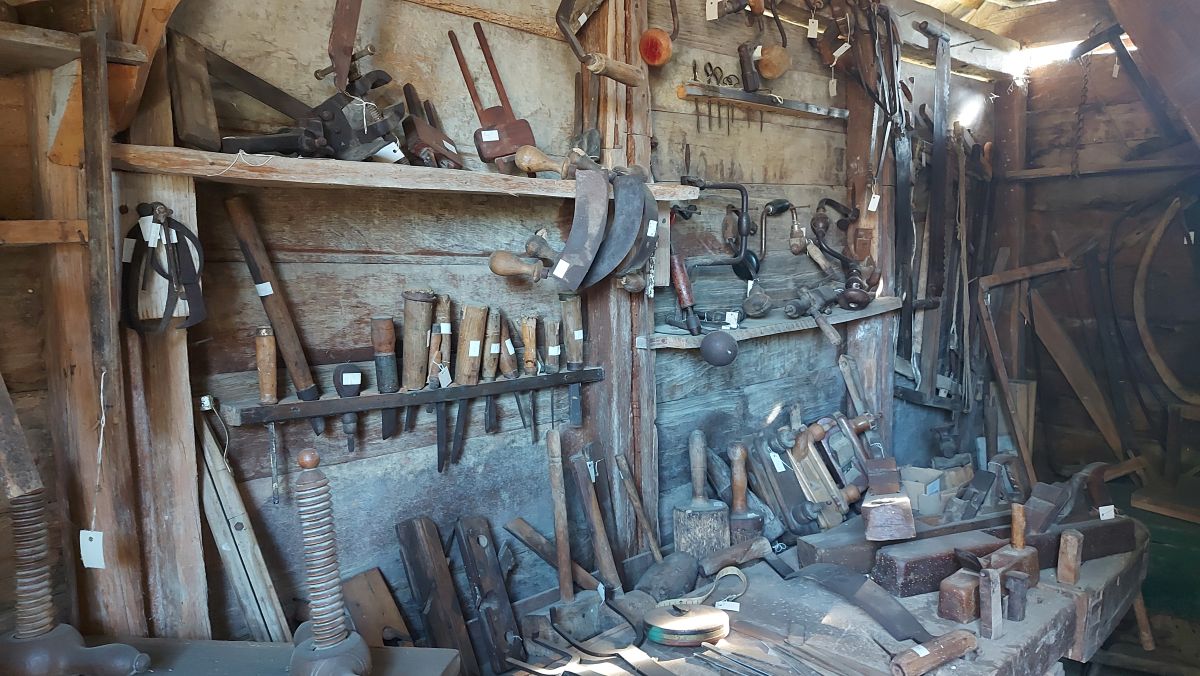
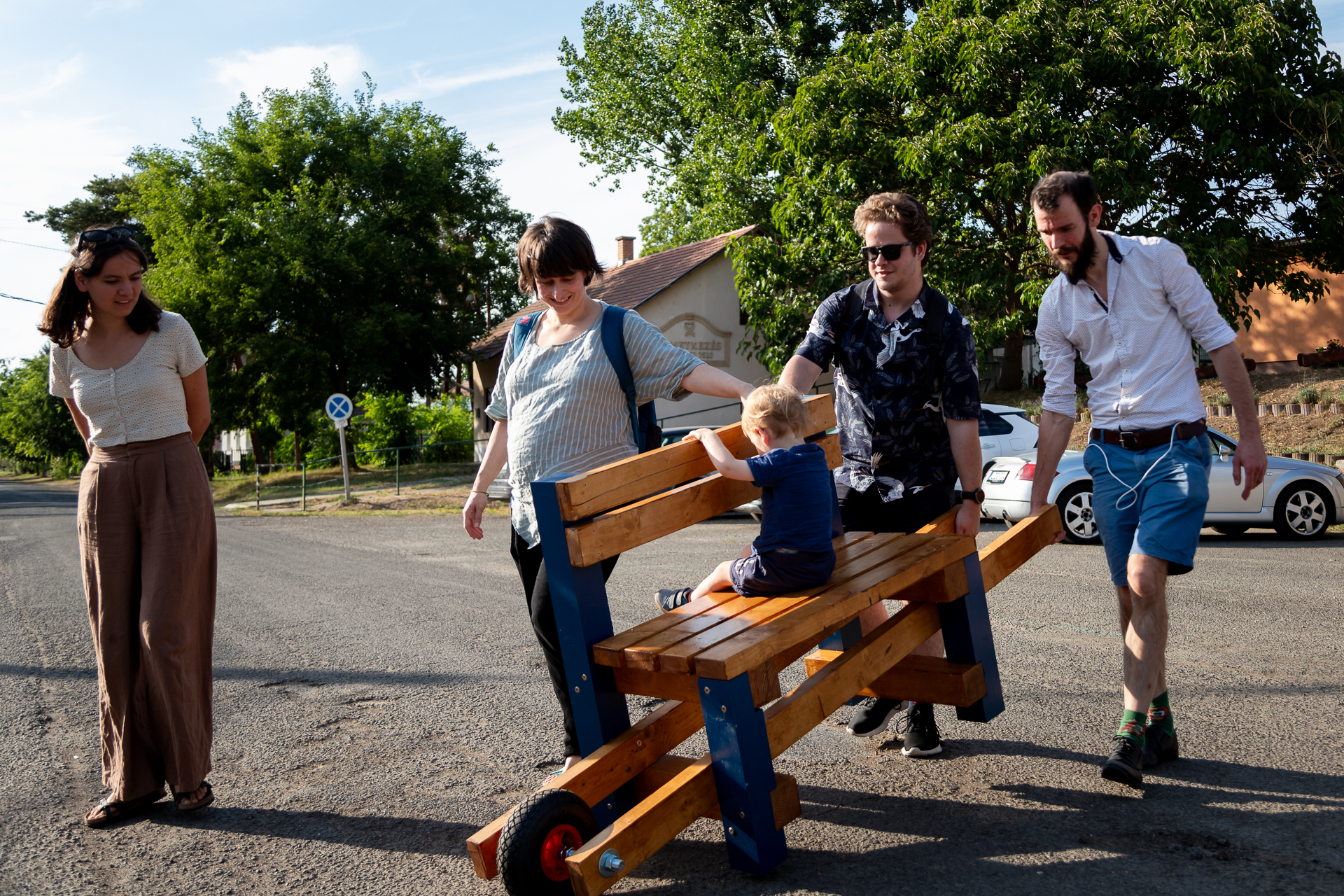
Tools and crafts of rural life. Photo: Dina Stober, GRAFOS
More Than a Student Exercise
Around 40 participants were involved in the activity, bringing together students, local communities, municipal representatives, craftspeople and tourism stakeholders.
The organisations and stakeholders involved included GRAFOS, the Municipality of Kneževi Vinogradi, Academy of Mud and Baranja house owners.
This widened what could otherwise have remained a university design exercise.
The process began on site, developed through academic work and returned to discussion with people connected to heritage and tourism.
The proposals are one outcome.
But the process behind them carries another lesson: before asking what could be added to a place, first understand what is already there.
In "The Street of Forgotten Time", objects preserved from rural life became more than reminders of the past.
They became questions for what might come next.
Discover another side of Karanac: revisit our "Rural Echoes from #DanubeRuralscapes - #5" and follow The Street of Forgotten Time
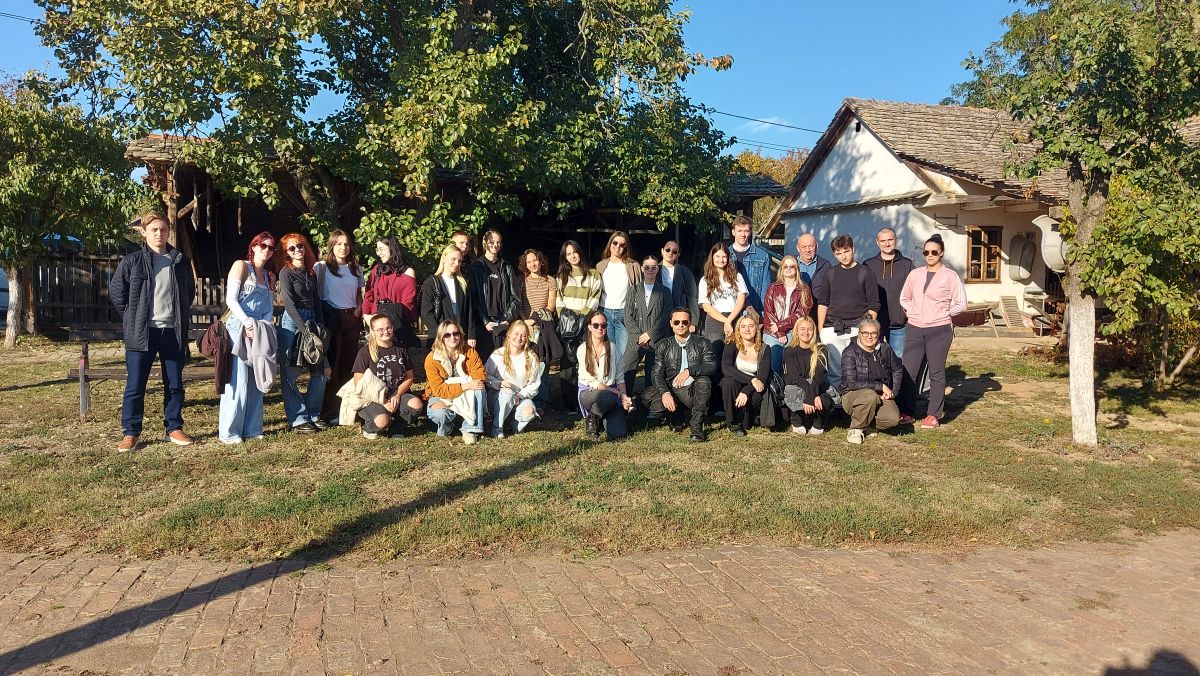
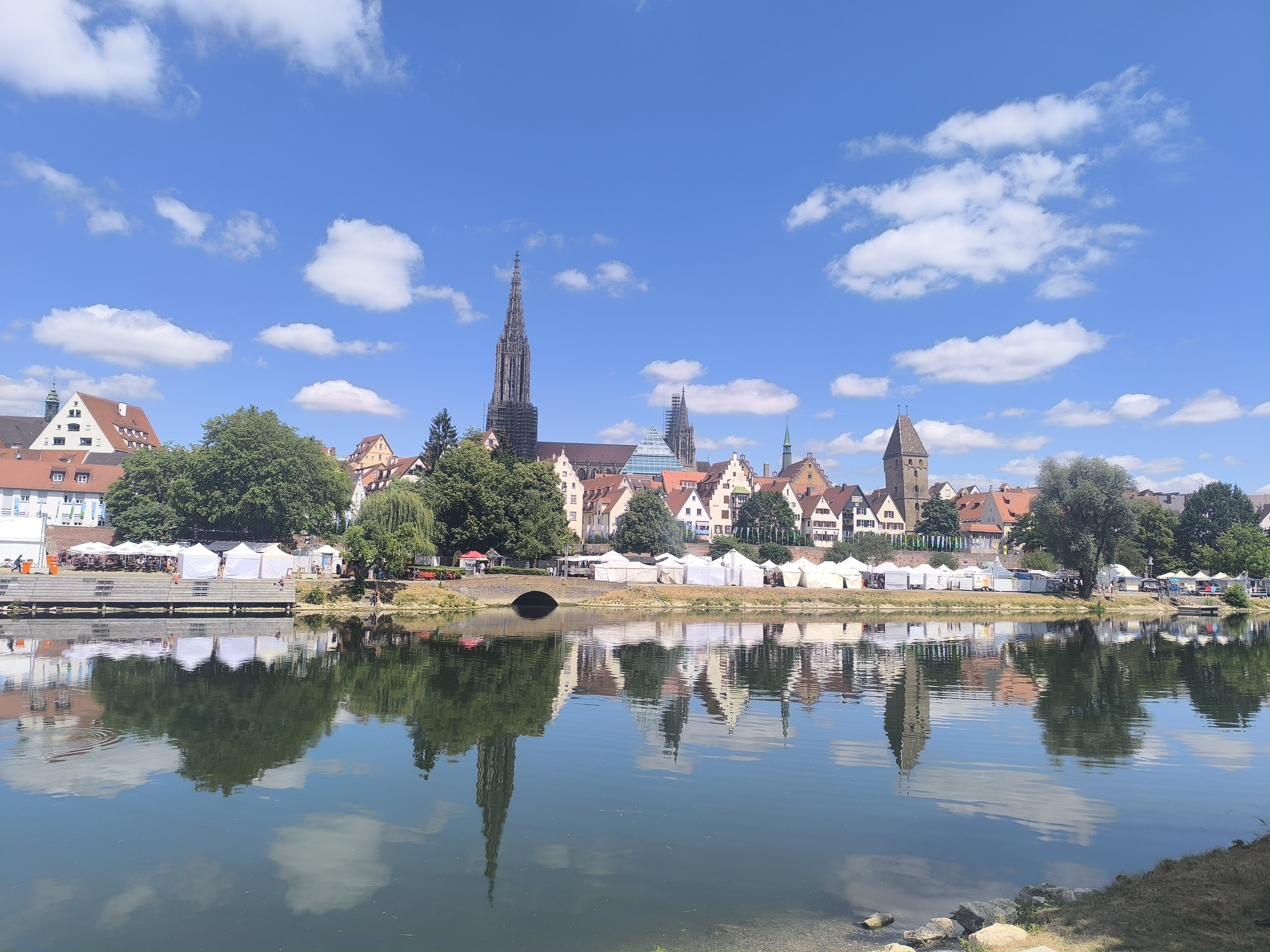
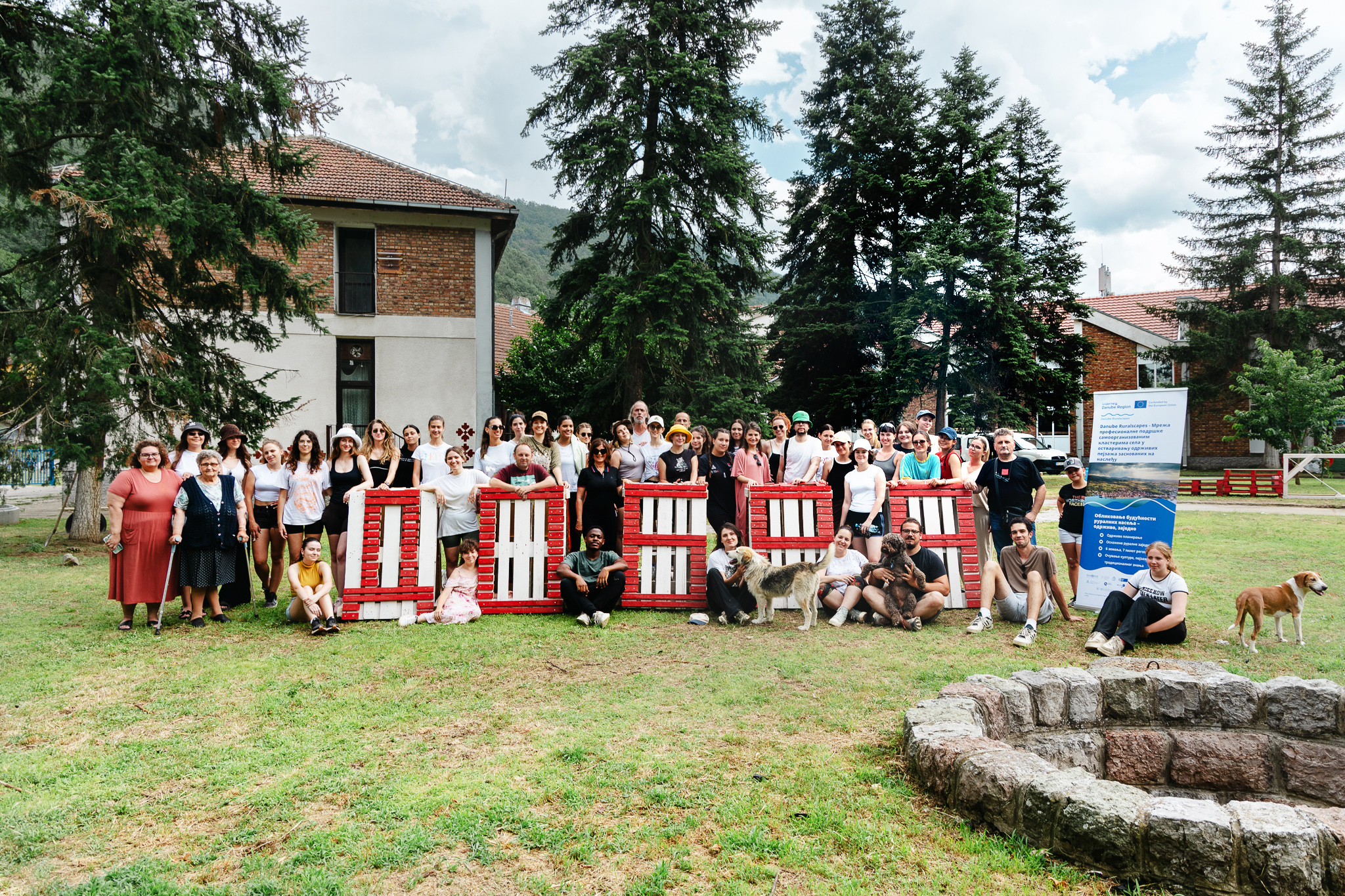
Students and participants in Karanac. Photo: Dina Stober, GRAFOS

29/09/2026
By Desislava Mincheva-Yordanova
Share on social media:


Cooperation

News & Events
Read the most recent updates and explore the upcoming events.


Would you like to receive project updates?
You're already part of our community!
Welcome to our newsletter community!
Subscribe to our newsletter