


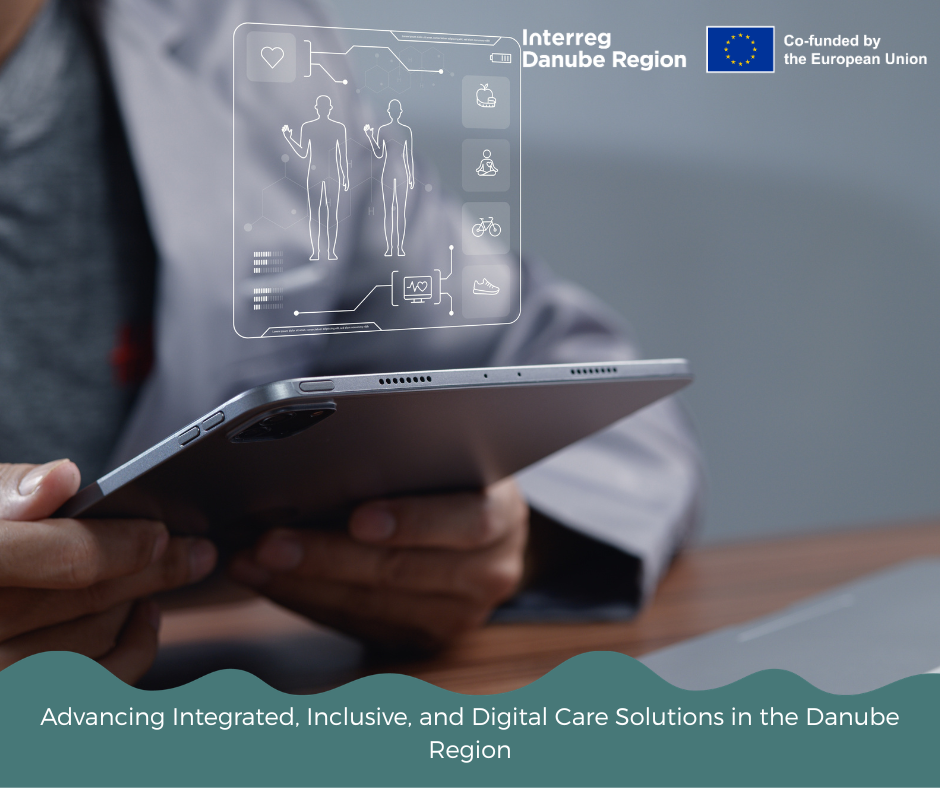
Advancing Integrated, Inclusive, and Digital Care Solutions in the Danube Region
Across the European Union, demographic ageing, rising prevalence of chronic conditions, and increasing demand for long-term care are placing sustained pressure on health and social care systems. In response, EU policy frameworks increasingly emphasise prevention, accessibility, digital transformation, and integrated, people-centred care as key pillars for ensuring resilient and sustainable systems. Within this context, the Danube Region Programme (DRP) supports transnational cooperation to develop, test, and scale innovative solutions that respond to shared health and care challenges across the region.
The BrAIn, DANOVA NEXT, and DIGI4Care projects contribute to this agenda by addressing complementary dimensions of care for ageing populations and vulnerable groups. While their thematic entry points differ (digital innovation, accessibility, and healthcare transformation) they are united by a common objective: to strengthen the capacity of health, care, and mobility systems to deliver inclusive, accessible, and future-ready services aligned with EU priorities.
The DIGI4Care focuses on improving the continuity and quality of care along the entire patient pathway, from prevention and early detection to treatment, rehabilitation, and long-term care. By piloting digital and artificial intelligence-based solutions for chronic and age-related conditions such as cardiovascular disease, diabetes, and dementia, the project promotes more personalised, proactive, and integrated care models. These approaches contribute to reducing avoidable hospitalisations, supporting independent living, and alleviating pressure on healthcare professionals and informal caregivers.
Ensuring equitable access to health and care services requires addressing not only medical provision but also physical and informational accessibility. The DANOVA NEXT project responds to European commitments on accessibility and the rights of persons with disabilities by improving transport services for people with reduced mobility and sensory impairments, including many older adults. By enhancing accessibility of passenger information, services, and institutional coordination, the project removes critical barriers to accessing healthcare, social services, and community life. In doing so, it supports social inclusion, autonomy, and equal access to essential services.
The BrAIn project contributes to strengthening the innovation capacity of the Danube Region by supporting the uptake of artificial intelligence in key sectors, including healthcare. Through training programmes, pilot actions, and transnational knowledge exchange, BrAIn helps health systems and related stakeholders adopt AI-based solutions that can improve diagnostics, optimise workflows, and support decision-making. These innovations are particularly relevant in the context of ageing societies, where workforce shortages and rising care needs require more efficient and technology-enabled service delivery.
These three DRP-funded projects illustrate how different policy domains (digital innovation, transport accessibility, and healthcare transformation) intersect in addressing the needs of older people and vulnerable groups. All three projects rely on transnational cooperation, knowledge exchange, and pilot implementation to develop solutions that are adaptable across diverse regional contexts. Their combined contribution lies in strengthening the Danube Region’s capacity to deliver care that is not only technologically advanced, but also accessible, inclusive, and centred on people’s real needs.

25/02/2026
By admin 2
Share on social media:



News & Events
Explore our upcoming events and read news regarding our programme and project activities.





Would you like to receive programme updates?
You're already part of our community!
Welcome to our newsletter community!
Subscribe to our newsletter