

Learning Circularity: DECIDE Turns Its Toolbox into an Open Digital Training Experience
Circular economy tools can only create impact if people know how to use them. With the completion of D2.3.3 – Digital Learning Concept, the DECIDE project has transformed its methods, tools and accumulated knowledge into a structured digital learning experience designed to make circular economy know-how easier to understand, teach and apply.
The deliverable was developed within Activity 2.3, Dissemination and Knowledge Sharing with SMEs, Start-ups, and Municipal/Regional Economic Developers, under the responsibility of PP8 – Sofia University, Faculty of Mathematics and Informatics / SU-NIS, with contributions from all DECIDE project partners.
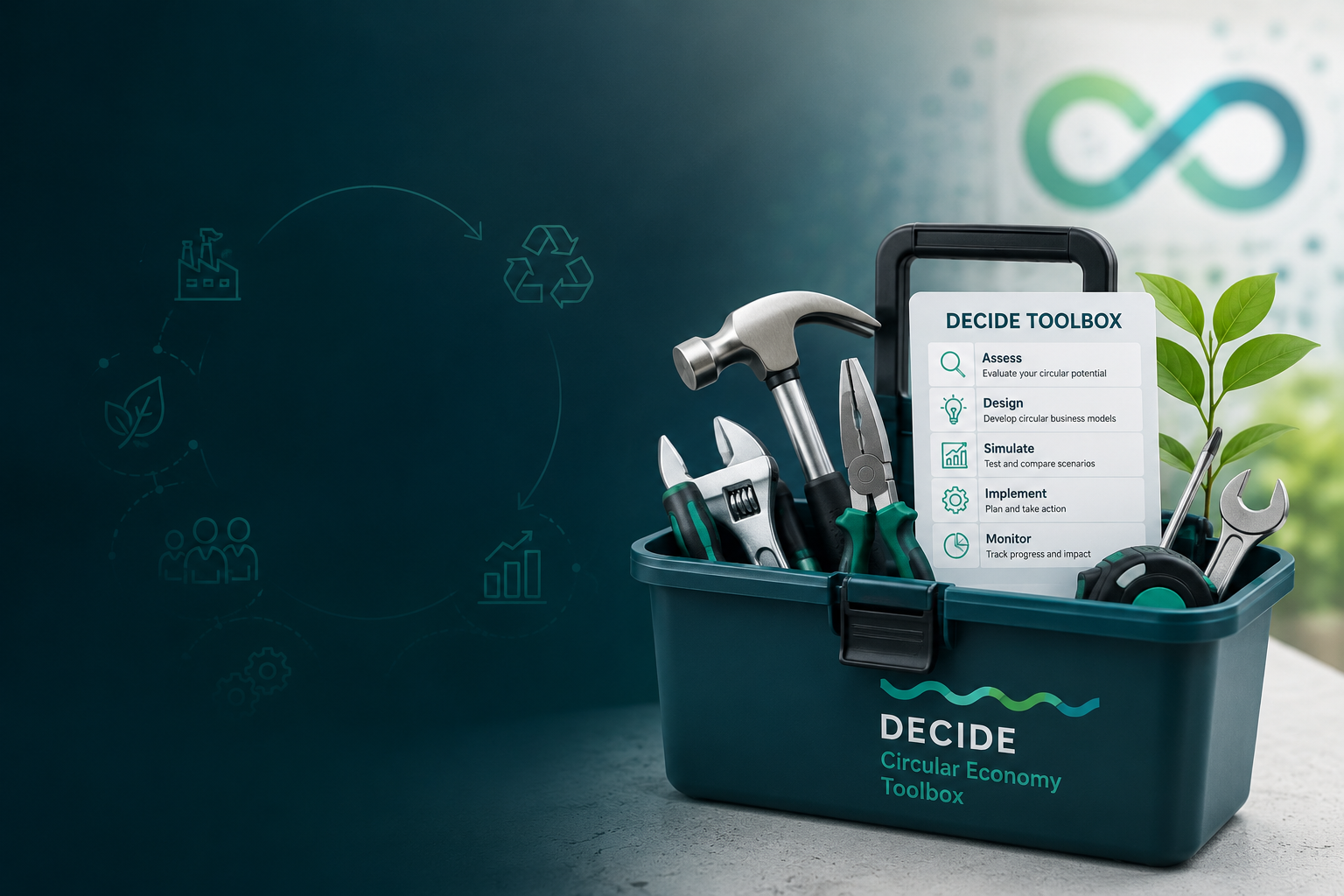
At the centre of DECIDE is the DECIDE Toolbox, which brings together methods and instruments that support the development and implementation of Circular Economy Business Models (CEBMs). Yet methods alone are not enough: SMEs, business support organisations, policymakers, lecturers and other users also need practical guidance on how to understand and apply them. The Digital Learning Concept addresses exactly this need by translating complex circular economy concepts and DECIDE tools into accessible, structured and practice-oriented online learning resources.
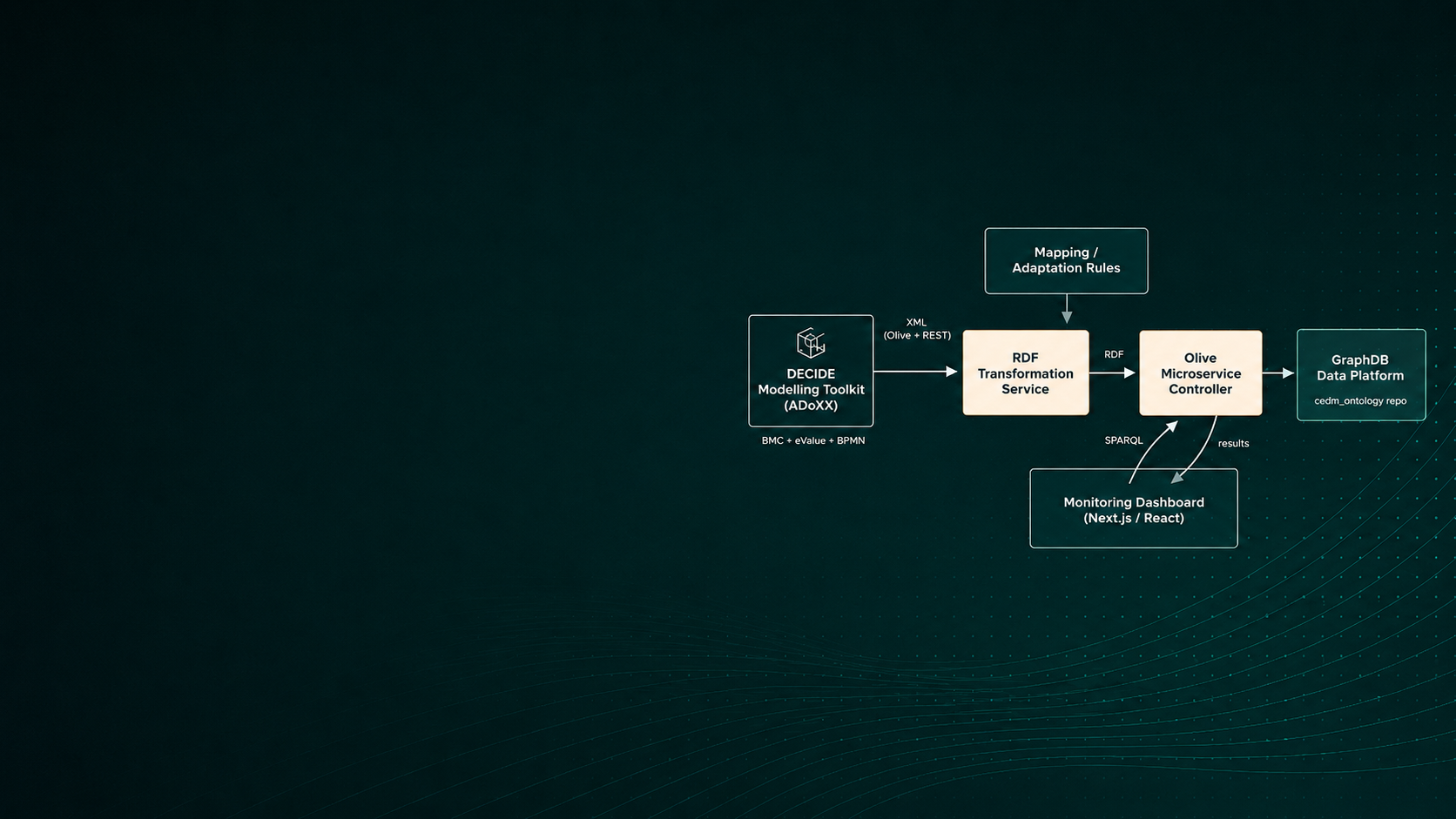
Rather than being a simple collection of presentations, the Digital Learning Concept provides a complete learning structure. It combines slides, videos, recordings and scripts with interactive elements such as quizzes, feedback activities and self-assessment exercises. Digital badges can be used to recognise course completion, while the learning pathway itself is hosted within the project’s Learning Management System.
One of its key strengths is flexibility. The material is organised into short, modular learning units that can be completed independently or combined into a full course. This allows a company manager interested in a specific circular economy tool to focus on one topic, while a business support organisation, university or project partner can use the complete learning pathway for structured training. Quizzes, practical exercises, downloadable templates and other interactive elements encourage active learning rather than passive consumption of information.
The Digital Learning Concept builds on and integrates other DECIDE results, including earlier e-learning materials, Toolbox developments and experiences from the project pilot cases. This connection to practical project work is important: users are not learning circular economy concepts in isolation, but are introduced to approaches developed and tested through DECIDE activities.
The result is particularly relevant for SMEs and larger companies, start-ups, business support organisations, regional policymakers, academic institutions, lecturers, NGOs and innovation intermediaries. For businesses, the learning materials can strengthen capacities for resource efficiency, value-chain collaboration and data-informed decision-making. For business support organisations and policymakers, they provide a reusable resource for supporting companies and regional circular economy initiatives. Universities and lecturers can use the modules as learning and teaching material, while individual users can follow the course independently.
The concept has been designed with the diversity of the Danube Region in mind. DECIDE works across five pilot fields - Batteries, Food, Packaging, Smart Cities and Textile - but the learning concept is not restricted to these sectors. Its modular structure allows materials to be translated, updated with local case studies and adapted for other industries, countries or regional and national circular economy initiatives.
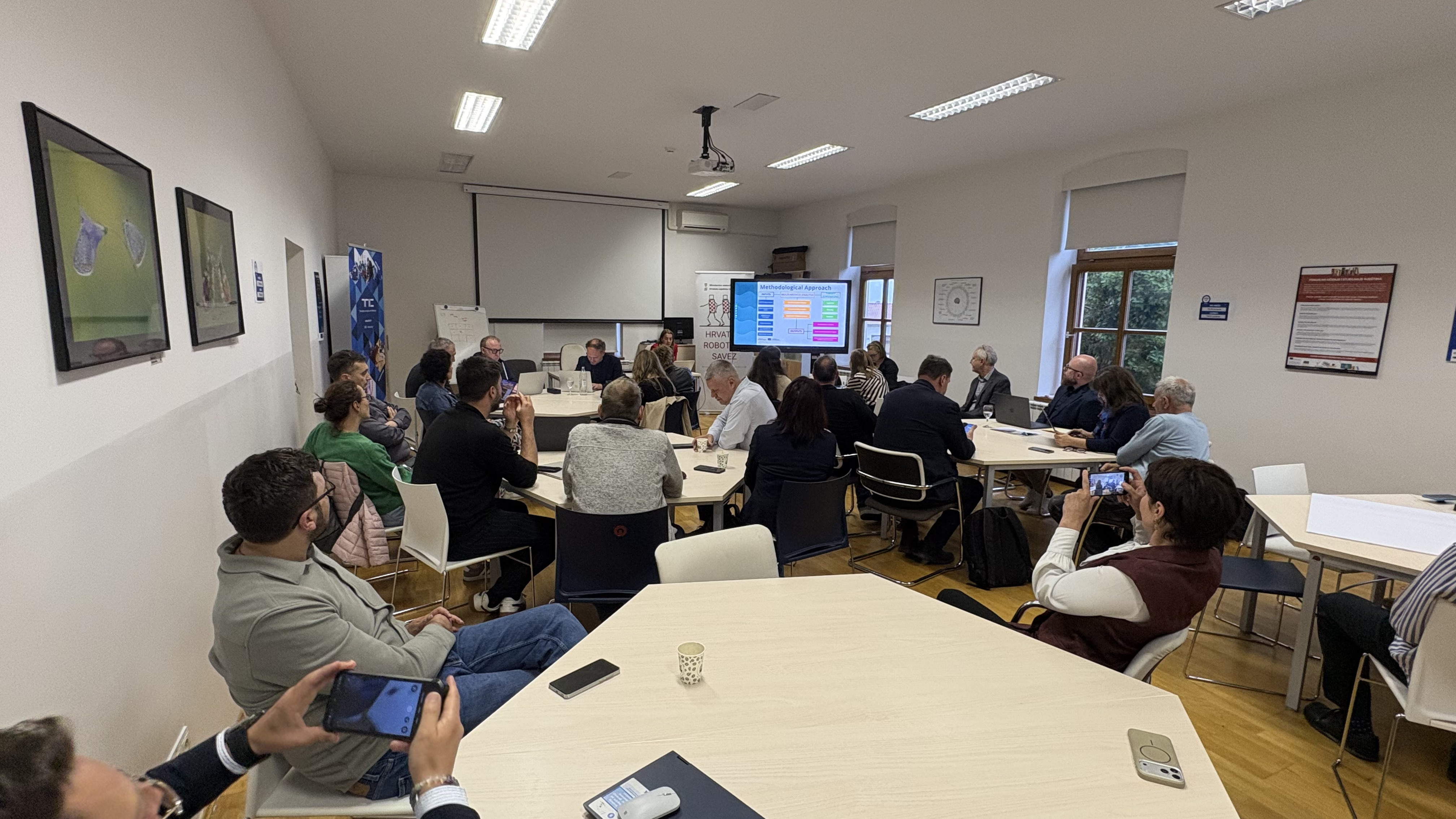
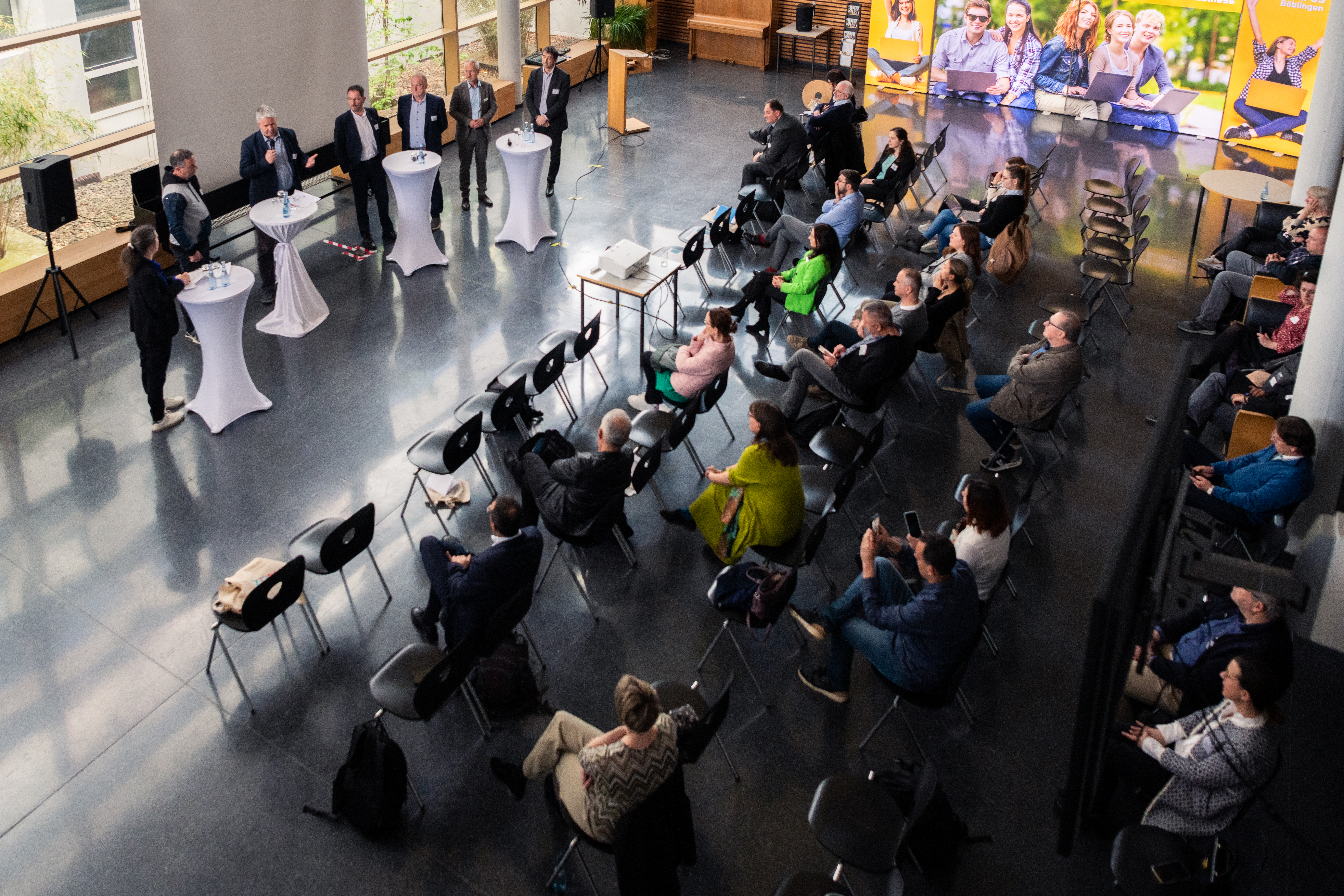
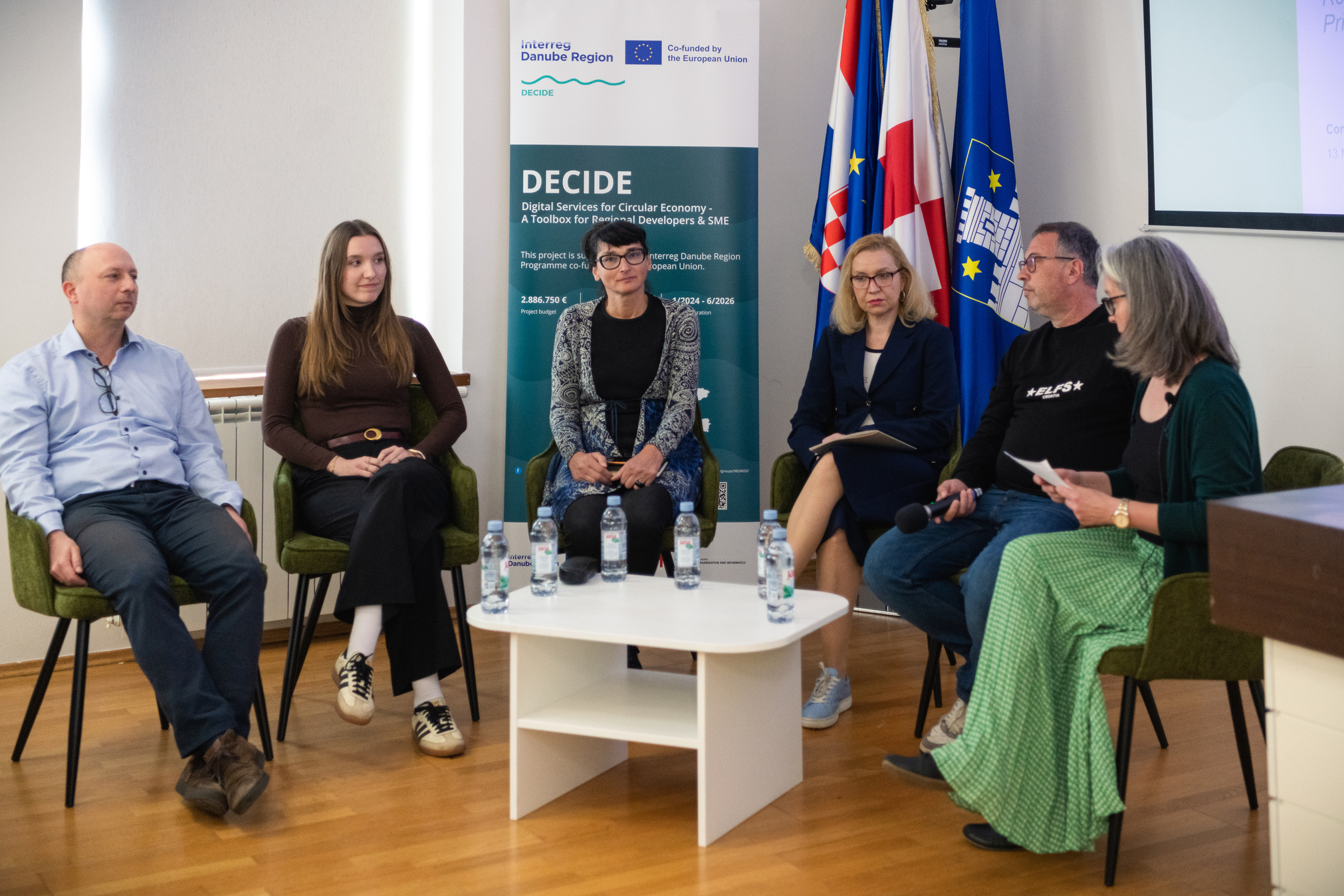
This makes D2.3.3 more than a communication output. It creates a mechanism for long-term knowledge transfer and capacity building. The Digital Learning Concept enables project partners to deliver consistent online training, webinars, workshops and face-to-face sessions, while external users can access the materials independently. As part of the DECIDE Service Catalogue, the learning resources are intended to remain publicly available beyond the immediate project activities.
Hosted on an open-source Moodle platform, the course can be continuously updated, maintained and further adapted by project partners or transferred to other relevant institutions. This provides a practical foundation for keeping DECIDE knowledge alive and usable after the project itself has ended.
With the Digital Learning Concept, DECIDE takes an important step from developing circular economy tools to building the skills needed to use them. By making the Toolbox easier to learn, teach and apply, the project helps turn circular economy knowledge into practical action across the Danube Region and beyond.
This article has been developed within the framework of the project Digital Services for Circular Economy - A Toolbox for Regional Developers & SMEs (DECIDE), co-financed by the Interreg Danube Region Programme under the 2021-2027 financial period. The content reflects the views of the authors and does not necessarily represent the official position of the DECIDE project, its partners, or the programme authorities.

18/08/2026
By Lea Trojnar Mustak
Share on social media:


Smart

News & Events
Read the most recent updates and explore the upcoming events.


Would you like to receive project updates?
You're already part of our community!
Welcome to our newsletter community!
Subscribe to our newsletter