
Exploring the impact of circular business models through simulation
Deliverable D1.2.4 – Circular Economy Value Chain Simulator (CEVCS) enables stakeholders to simulate circular value chains and assess their potential economic, environmental and social performance over time.
Developing a promising circular business model is only the first step. Before investing in its implementation or expansion, organisations need to understand whether it is economically viable, environmentally beneficial and socially sustainable. They must also consider how different factors within the value chain influence one another and how results may change over time.
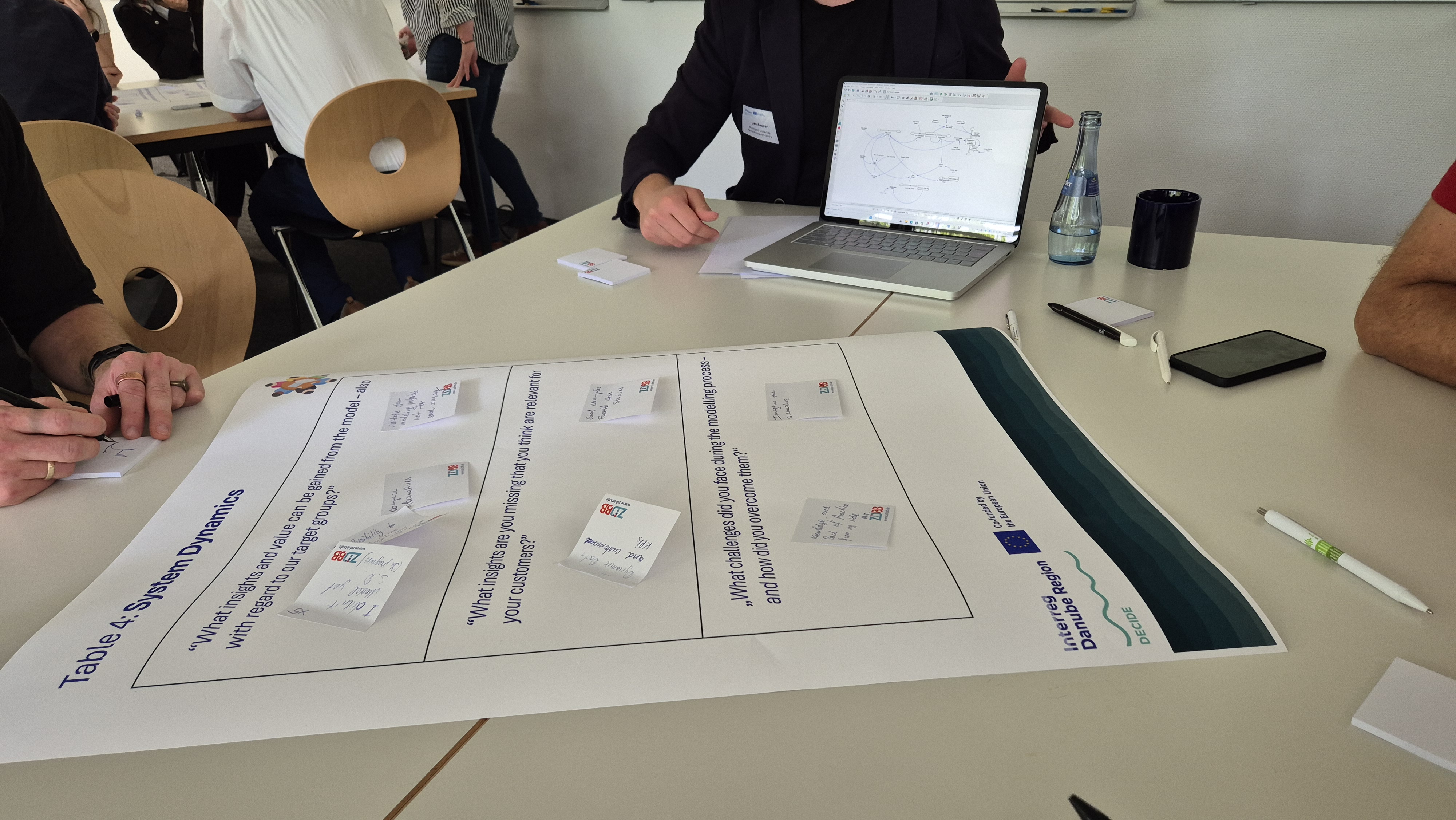
The Circular Economy Value Chain Simulator helps stakeholders address these questions by enabling the analysis and simulation of circular value chains using System Dynamics. This approach provides a structured way to explore how a business model may perform over time and to assess the potential consequences of different decisions and scenarios.
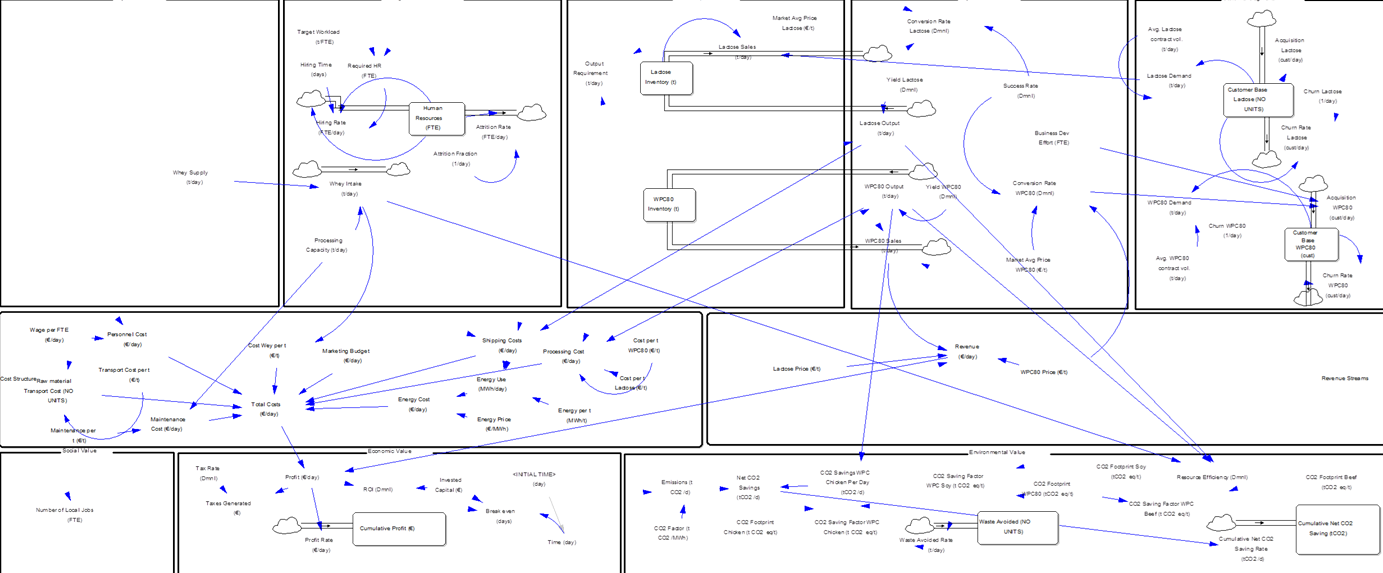
System Dynamics Modell Whey. Copyright: Fauser, Jan; Hertweck, Dieter; and Korovin, Tamara, "A Multi-Perspective Modelling Method for Circular Business Models" (2026). PACIS 2026 Proceedings. 5. (link:https://aisel.aisnet.org/pacis2026/di_entren/di_entren/5)
The simulator makes it possible to examine indicators such as return on investment, costs and benefits, break-even points, waste reduction, CO₂ emissions and job creation. By combining economic, environmental and social dimensions, it provides a more comprehensive basis for evaluating the feasibility and sustainability of circular business models.
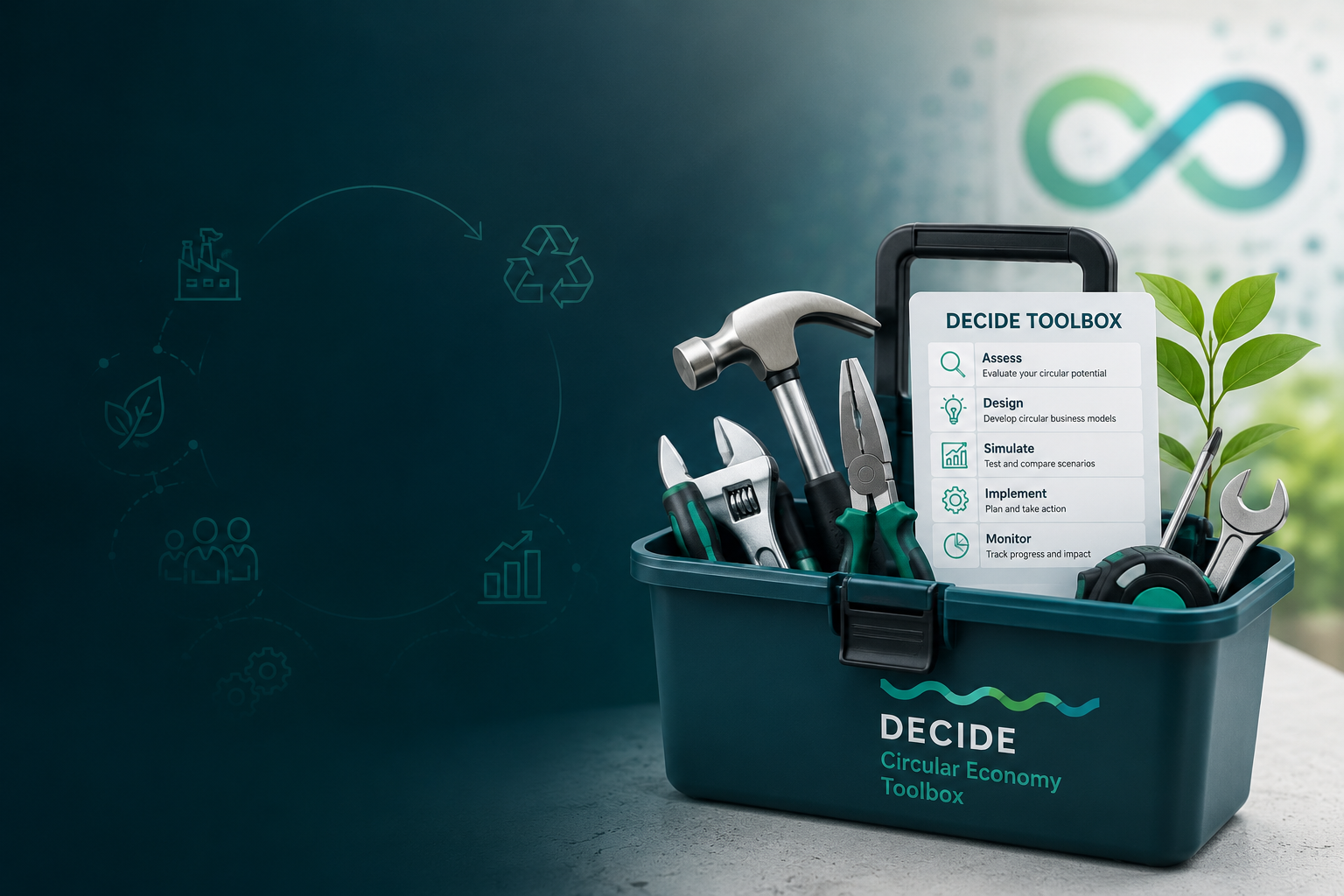
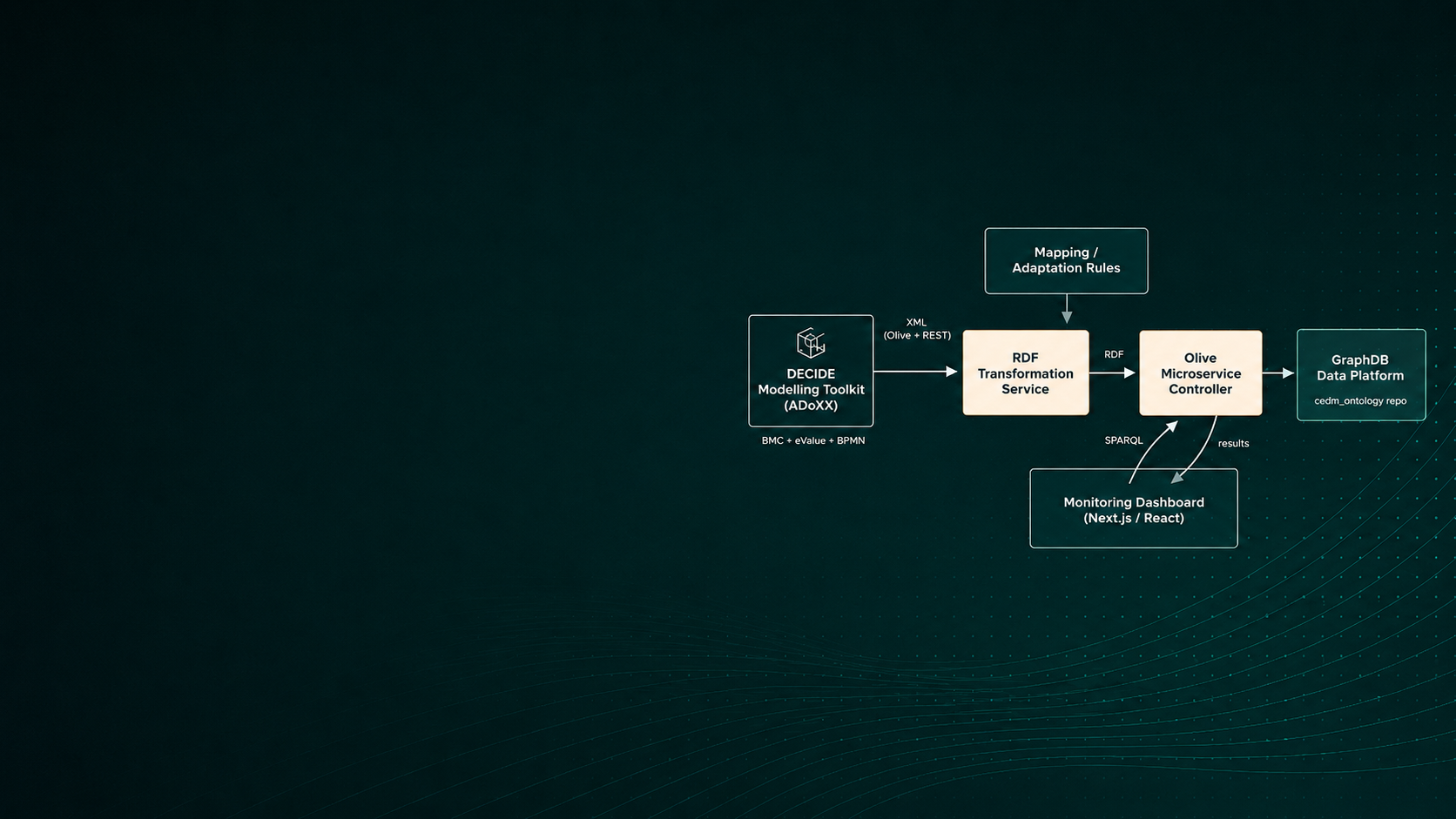
A key strength of the CEVCS is its integration with the other methods and tools included in the DECIDE Toolbox. The Toolbox combines the Business Model Canvas, e3Value, BPMN, capability-based implementation planning and System Dynamics. Together, these methods enable users to analyse a circular business model from several complementary perspectives.
The Business Model Canvas supports the initial definition of the business model, while e3Value helps users understand the actors involved and the exchange of value within the network. BPMN provides insight into the operational processes required to deliver the circular solution, and capability-based planning identifies the organisational and technological capabilities needed for implementation. The Circular Economy Value Chain Simulator adds a dynamic perspective by showing how the model and its impacts may develop over time.
To ensure that System Dynamics models are structured consistently and can be compared across different cases, the deliverable applies the Dynamic Business Modelling for Sustainability Canvas. This framework helps connect the main elements of a business model with the variables and relationships used in the simulation.
The methodology was demonstrated through two DECIDE pilot cases: transforming whey into high-value protein and lactose products and producing paper products from tomato stems. These cases illustrate how circular ideas can be examined step by step, from the initial business model and value network to operational processes and dynamic simulation.
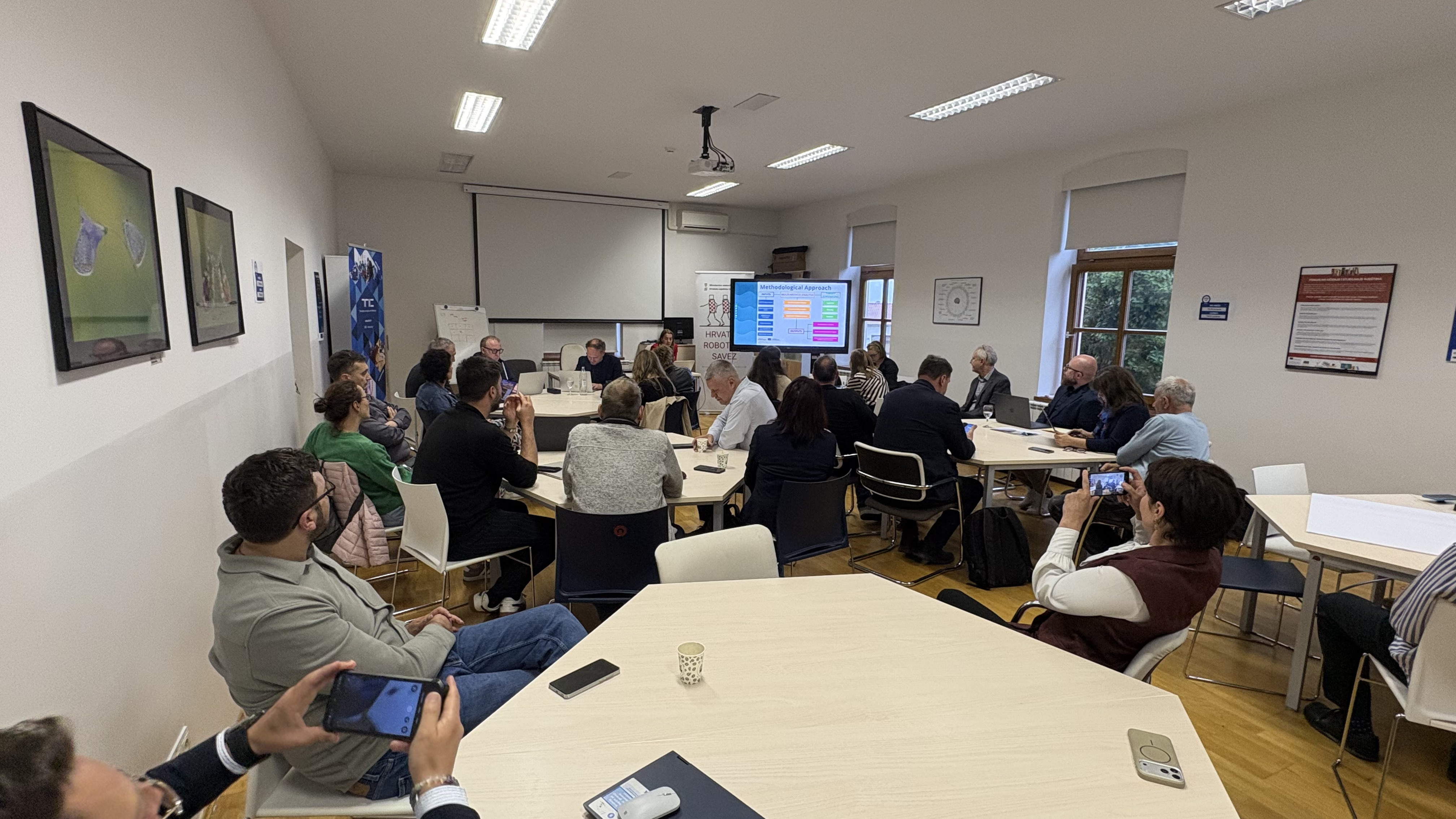
The pilot models were developed iteratively in cooperation with project partners and stakeholders. Their feedback helped refine both the methodology and the application of the DECIDE Toolbox, ensuring that the resulting approach responds to practical needs. Due to the confidential nature of case-specific business data and unpublished research results, detailed simulation findings are not presented publicly at this stage.
In practical terms, an SME can use the approach to assess the potential long-term performance of a circular solution before making a major investment. Business support organisations and cluster managers can apply it when assisting companies with business model development and strategic planning. Local and regional authorities and policymakers can use simulation results to better understand where financial support, infrastructure, partnerships or policy measures may be needed to enable circular value chains.
The simulator can also support regional catalysts in assessing whether a circular business model developed in one location or sector could be transferred or scaled to another. By making assumptions, dependencies and expected impacts more transparent, the tool supports more informed and evidence-based decision-making.
Because the methodology is modular and adaptable, it can be applied beyond the initial pilot cases and DECIDE sectors. It can be customised for different industries, organisational environments and geographical areas, including other European regions and macro-regions.
By adding dynamic simulation to the DECIDE Toolbox, the Circular Economy Value Chain Simulator helps stakeholders move beyond describing how a circular business model should work. It enables them to explore how the model could perform in practice, how its impacts may develop over time and what conditions are needed for successful implementation and scaling.
In this way, Deliverable D1.2.4 contributes to the wider objective of the DECIDE project: supporting the development, validation and uptake of sustainable and resource efficient business models across the Danube Region.
This article has been developed within the framework of the project Digital Services for Circular Economy - A Toolbox for Regional Developers & SMEs (DECIDE), co-financed by the Interreg Danube Region Programme under the 2021-2027 financial period. The content reflects the views of the authors and does not necessarily represent the official position of the DECIDE project, its partners, or the programme authorities

29/06/2026
By Lea Trojnar Mustak
Share on social media:


Smart

News & Events
Read the most recent updates and explore the upcoming events.


Would you like to receive project updates?
You're already part of our community!
Welcome to our newsletter community!
Subscribe to our newsletter